Garnet Meaning
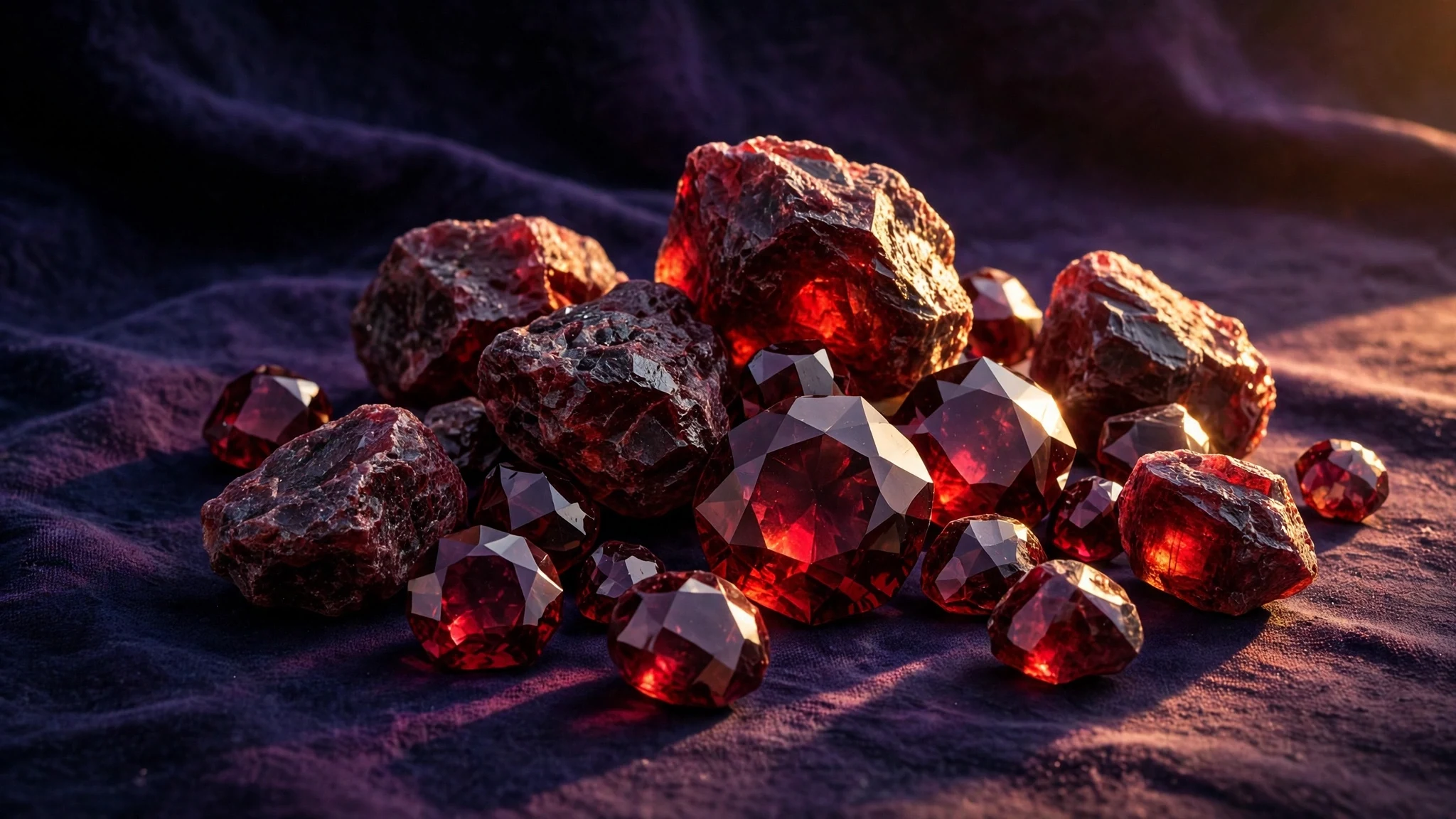
Garnet meaning is tied, before anything else, to the look of the stone itself: a deep red seed of color that seems to hold a small fire in reserve. People who search for garnet meaning are usually drawn by that glow first and by the calendar second, since garnet is the January birthstone, and they want to know what tradition has made of a gem that resembles a pomegranate seed lit from inside. This page separates the two kinds of answer. The mineral facts are given plainly as facts, and the meanings are given as what they are, a tradition of belief and practice that people use as a companion to reflection, in their own words and for their own reasons.
The Short Answer
In crystal tradition, garnet is linked with passion, courage, steady energy and commitment, a stone of the long vow rather than the brief spark. In chakra practice it is most often placed with the root and the heart, grounding and devotion side by side. As a material, it is a durable member of a large mineral family, hard enough for daily wear in jewelry, and its most familiar face is the deep red of almandine and pyrope. People tend to reach for it at thresholds: a commitment being made, a hard season being entered on purpose, a promise to the self that needs a weight in the pocket to match its weight on paper.
| At a glance | Garnet in fact and tradition |
|---|---|
| What it is | A family of related silicate minerals |
| Color | Deep red is the classic face, in almandine and pyrope |
| Tradition links it with | Passion, courage, steady energy and commitment |
| In practice | Kept as a reminder stone for vows, resolve and devotion |
| Care note | Fairly hard and durable, still store it apart from softer gems |
What Garnet Actually Is
Garnet is not a single mineral. It is a family, a group of closely related silicate minerals that share a crystal structure and differ in their chemistry, which is why garnets occur in more colors than the famous red, including green, orange and brown forms. The deep red stones that most people picture, the ones cut for rings and strung for January birthdays, are most often almandine or pyrope, the two members of the family that made the name famous. When a jeweler says garnet without further detail, one of those two reds is almost always what is meant.
The name carries its own small history. It comes from the Latin word granatum, meaning pomegranate, because rough garnet crystals reminded early observers of pomegranate seeds: red, rounded, packed with color, similar in size. It is one of the more honest gem names in the trade, since anyone who has opened the fruit can see the resemblance at once, seed for seed. Garnet is also comparatively hard for a colored gem, which is part of why it has such a long record in jewelry that was actually worn rather than merely kept. Seals, rings and brooches from many centuries survive because the stone could take daily life.
Its role as the January birthstone is a calendar tradition layered over that long material history. Birthstone lists are a custom, not a property of the mineral, and garnet's place at the head of the year has given it a second life as a gift stone: the red seed handed over in the coldest month, carrying whatever the giver intends it to carry. That gift custom matters for understanding the meaning sections that follow, because much of garnet's symbolism grew from being given, kept and worn, rather than from being studied in the abstract.
The Meaning in Tradition
In crystal practice, garnet is traditionally used for questions of fire that must last. Practitioners reach for it when they are thinking about passion in the durable sense, not the flash of a new attraction but the decision to keep choosing the same person, the same work or the same demanding goal after the early heat has done its work. Tradition links it with courage for the same reason. The courage garnet is asked to accompany is rarely the courage of a single dramatic moment. It is the slower kind, the resolve to begin a hard thing and to still be found doing it in the third month.
Steady energy is the third thread of its traditional meaning, and it explains the stone's place in chakra practice. In that system, garnet is placed with the root chakra, the point associated in the tradition with grounding, survival and the body's basic claim on the earth, and also with the heart chakra, where the tradition locates devotion and commitment. A stone asked to speak to both points at once is being asked to hold a particular combination: feet on the ground, heart in the vow. Practitioners who work with that pairing often describe garnet as a stone for people whose commitments are real but whose energy for them rises and falls, and who want a physical reminder that steadiness is a practice rather than a mood.
Lore adds an older layer. Medieval travelers are said in lore to have carried garnet for protection on the road, and the stone appears in old stories as a light kept close in dark places. Those tales are folklore, and this page reports them as folklore. What they show, read carefully, is the consistency of the association across centuries: garnet keeps being handed the jobs of courage, safe keeping and the road taken on purpose, long before modern crystal practice organized those jobs into lists. Seasonal writing gives the stone a modern echo of the same themes, as in our guide to the best crystals for Scorpio season, where deep red stones are matched to a sign the tradition describes in terms of intensity and loyalty.
Working With Garnet
Working with garnet, in the practical sense used on this site, means using the stone as a focus for reflection and intention, never as a substitute for action, advice or care. The most common practice is also the plainest. A person chooses the stone at the moment of making a commitment and keeps it where the commitment is carried out, on the desk where the work happens, in the pocket on the day of the hard conversation, beside the training shoes in the season when resolve tends to leak. The stone's job in that arrangement is modest and honest: it is a reminder that can be touched.
Journaling with the stone nearby is another reflective use practitioners describe. The prompt that suits garnet's tradition is a commitment audit, written in plain sentences. What have I promised, to whom, and which of those promises still has my full consent? Which promise is being kept from habit after its meaning has left? A red stone on the page does not answer those questions. It can hold the writer in the chair while the answers are written, which is the part of the exercise that tends to matter.
Garnet is also given, and the giving has its own practical grammar in the tradition. It is chosen for anniversaries of effort as much as of romance: the friend who finished the hard qualification, the partner at the start of a demanding year, the person entering January, their birthstone month, with a large intention. For readers working through the end of a bond rather than the deepening of one, our reflections on crystals for heartbreak and letting go take a gentler angle, and garnet appears there in its commitment to the self sense, the vow redirected toward the person who made it.
Cleansing, Charging and Care
The physical care of garnet is simple, and it rests on the stone's actual properties rather than on ritual. Garnet is fairly hard, so it tolerates ordinary handling well, but hard stones can still scratch softer gems and can be scratched by the few materials harder than themselves, so store garnet jewelry in its own pouch or compartment rather than loose in a mixed box. Warm water, a drop of mild soap and a soft cloth handle ordinary cleaning. Dry the stone fully before putting it away, and keep it out of long contact with harsh chemicals, which can dull a polish over time even when the stone itself is sturdy.
Cleansing and charging, in crystal practice, are ritual customs rather than physical needs, and practitioners describe them in those terms. Common customs include rinsing the stone briefly under water, resting it on a windowsill in morning light, or placing it with other stones overnight as a way of marking a fresh start with it. None of these customs changes the mineral. Their role in the practice is to mark intention, the way airing a room marks a new season. Garnet's deep color also makes it a forgiving stone for such customs, since it shows dust and handling less readily than a pale gem, though a quick polish before wear keeps the red at its best.
One care habit deserves emphasis because it protects the setting more than the stone. Rings and bracelets set with garnet take knocks that a loose tumbled stone never meets, and prongs loosen over years of wear. A jeweler's quick check of the setting, done when a piece is cleaned professionally, is the difference between a durable gem lasting decades in its mount and a durable gem lost from it.
Pairing Garnet With Other Stones
Pairing, in crystal practice, means choosing stones whose traditional meanings comment on each other, and garnet's steady red fire makes it a frequent base note. With carnelian meaning alongside it, the pairing is read as fire in two tempos: carnelian's tradition of spark, appetite and first moves set against garnet's tradition of the vow that continues after the move is made. People who feel they start well and finish poorly often describe choosing that pair as a small corrective story they can hold.
A grounding pairing sets garnet beside black tourmaline meaning, where the tradition places protection and the clearing of a personal boundary. The logic practitioners give is plain: a stone of commitment next to a stone of limits, so the vow does not become a leak. A related and quieter partner is found in hematite meaning, whose tradition centers on weight, focus and coming back down to earth after a scattered day. Hematite and garnet together are often described as the desk pair, red fire with iron gray ballast, chosen by people whose work demands both drive and steadiness in the same hour.
As with all pairing practice, the meanings are the tradition's language, not the stones' chemistry. Choose the pair whose story matches the reflection you actually need, and let the stones serve as the reminder of that story on the days when resolve is doing its quiet, unglamorous work.
One Plain Answer for a Fiery Stone
Garnet is a stone of commitment and steady fire, and committed questions are often yes or no at the root: stay or go, speak or wait, begin or release. Put yours to the free Yes/No Oracle and read your own reaction as carefully as the answer. Garnet rewards the decision you stop postponing.
Take the Question Further
A stone can hold a question in view, but it cannot sit with you while you turn the question over, and commitment questions in particular tend to deserve a conversation. If you are weighing a vow, a hard season or a promise you made to yourself in January light, a live reading at PsychicSmile lets you explore what steadiness should look like in your actual circumstances with a real reader. First 3 minutes FREE, every time, for every reading, with all advisors.
Frequently Asked Questions
What is garnet the birthstone for?
Garnet is the traditional birthstone for January. The custom is a calendar tradition rather than a property of the mineral, and it is one reason garnet is so often given as a gift at the start of the year, carrying the giver's wishes for the months ahead.
Is garnet always red?
No. Garnet is a mineral family, and its members occur in several colors, including green and orange forms. The deep red stones are the classic face of the name, and they are most often almandine or pyrope. When people picture garnet, that pomegranate seed red is what they are picturing.
What does garnet mean in crystal practice?
Tradition links it with passion that lasts, courage, steady energy and commitment. In chakra practice it is placed with the root and the heart. Practitioners reach for it as a reminder stone for vows and resolve. Those are beliefs and customs, offered here as tradition, not as effects a stone can promise.
How should I store and clean a garnet?
Store it in its own pouch or compartment so harder and softer pieces do not scratch each other, clean it with warm water, mild soap and a soft cloth, and dry it fully before putting it away. Have ring settings checked by a jeweler from time to time, since mounts loosen with wear.
What is a thoughtful way to give garnet as a gift?
Match the gift to the stone's traditional story: a commitment being honored, a hard season being entered with resolve, or a January birthday. A short note naming the intention tends to matter more than the size of the stone, because the tradition around garnet has always been about what the giving means.
Last updated: November 9, 2026