Hematite Meaning
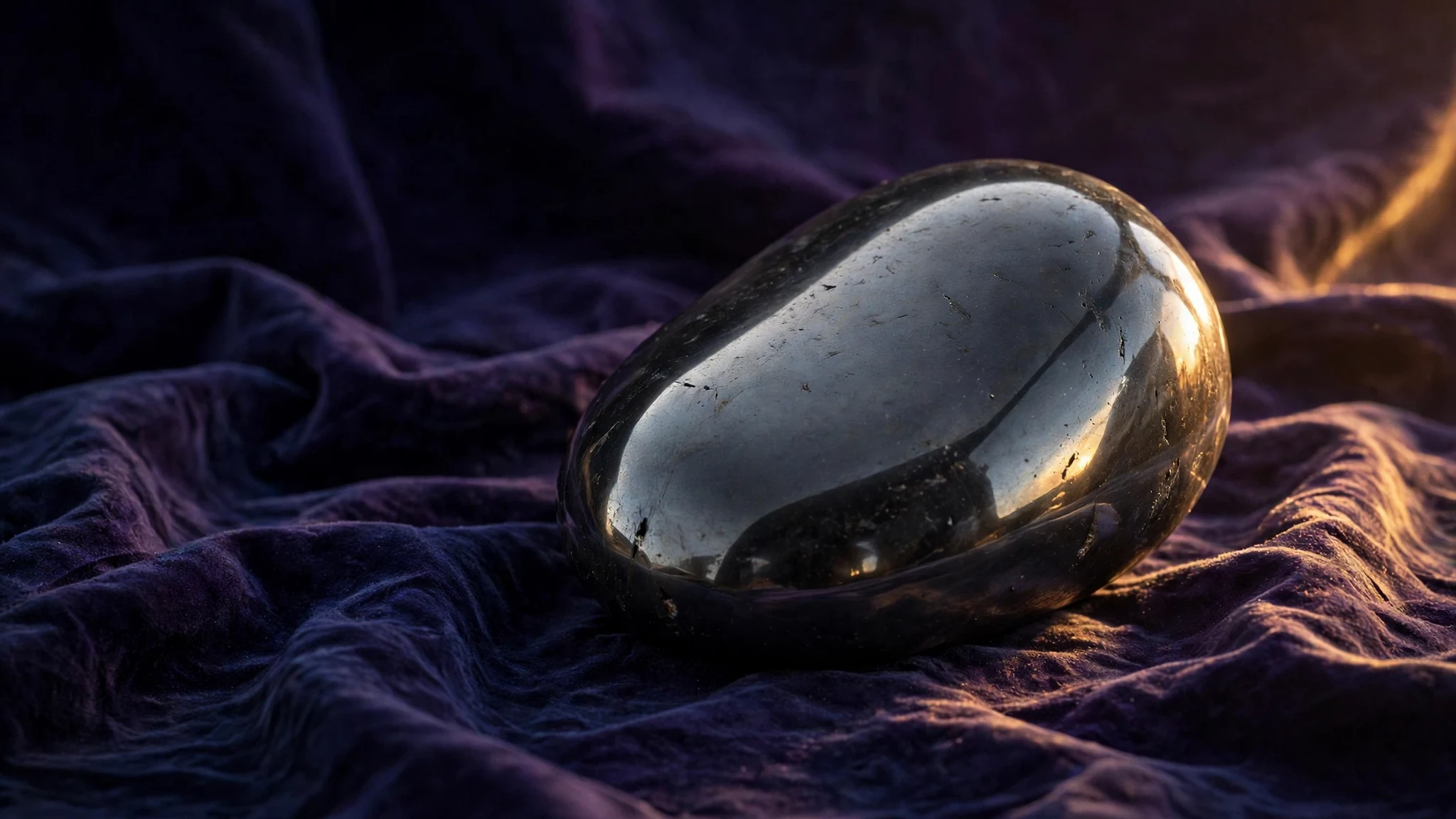
Pick up a polished piece of hematite and the first surprise is weight. A stone small enough to vanish in a fist feels dense and serious, with a steel gray shine like a fragment of dark mirror, and that heft has shaped its reputation for centuries. The hematite meaning in crystal tradition centers on grounding, focus and steadiness, and practitioners carry it in pockets as a worry stone, rubbing the smooth surface while they think. Behind the tradition sits a distinctive mineral, an iron oxide that leaves a red brown streak no matter how gray it looks, the trait that gave it a name drawn from the Greek word for blood.
The Short Answer
The hematite meaning, briefly, is steadiness you can hold. Tradition links the stone with the root chakra, the center chakra practice connects with ground, stability and presence, and lore treats hematite as the anchor stone, the piece you reach for when a day feels scattered and you need your attention back in the room. Modern practitioners carry it as a focus for reflection during commutes, meetings and study, and keep it on desks where concentration matters most. The practice is honest about its limits here. A pocket stone does not organize a calendar or finish a report.
| At a glance | Detail |
|---|---|
| What it is | An iron oxide mineral, steel gray and metallic when polished, noticeably heavy for its size |
| Color | Steel gray to near black polished surfaces, with a red brown streak when rubbed or scratched |
| Tradition links it with | Grounding, focus and steadiness, linked in practice with the root chakra |
| In practice | A pocket worry stone and desk anchor, held during commutes, meetings and study |
| Care note | Simple care with water and mild soap, dried well and stored apart from pieces it could scratch |
What Hematite Actually Is
Hematite is an iron oxide mineral, steel gray and metallic when polished, and it is one of the most important iron ores on Earth as well as a gem material. Hold two stones of the same size, one hematite and one quartz, and the difference announces itself at once. Hematite is noticeably heavy for its size, because iron is dense, and that weight is the fastest field test a buyer can learn.
The streak test is the stone's signature. Rubbed or scratched across unglazed porcelain, hematite leaves a red brown streak, always, even when the polished surface looks pure silver gray. Its name comes from the Greek haima, blood, for that streak, a name that startles people until they see the rust red line appear under a gray stone. Ground hematite is red ochre, one of the oldest pigments used by humans, ground and mixed for cave painting, pottery and ceremony long before written records.
One honest trade note belongs in every modern guide. Magnetic hematite jewelry in shops is usually a manufactured ceramic, a man made magnetic material sold in hematite colors and shapes, not natural hematite at all. Natural hematite itself is only weakly magnetic at best in typical specimens, so strongly magnetic beads and rings that snap together hard should be understood as the manufactured product. There is nothing shameful in buying the ceramic if you like it, but you deserve to know what you bought, and a seller who labels it clearly is a seller worth returning to.
The Meaning in Tradition
Grounding is the core word in the traditional account, and chakra practice makes the link explicit by connecting hematite with the root chakra, the base center associated in that system with stability, safety and the physical present. Practitioners reach for it when attention feels thin and scattered, the afternoon of too many tabs, the week of too many obligations, and they describe the practice in physical terms. The stone is cool, heavy and smooth. Holding it gives the senses a single clear signal, and the mind, given one signal, often settles enough to choose the next task. Tradition frames that settling as the stone's gift.
Focus follows grounding in the lore as effect follows cause. A person who feels steady can aim attention, and hematite is traditionally used for the aiming, placed at the top of a desk, held during the first ten minutes of study, kept in the hand that is not writing during a hard phone call. Steadiness completes the traditional trio, and it is the quality long term carriers mention most. Not a dramatic calm, just an even keel, the sense of ballast in a boat. Boats in the metaphor still meet weather.
The seasonal shelf gives the stone another context. Our guide to the best crystals for Scorpio season includes hematite among stones suited to intense weeks that demand composure, and the logic is the same as the desk logic. When a season, a job or a family chapter turns up the pressure, tradition reaches for the heaviest, plainest stone in the box, the one whose entire reputation is staying put.
Working With Hematite
Pocket carry is the defining practice for this stone, and the worry stone form was made for it. A flat oval with a thumb sized hollow invites exactly the rubbing motion that nervous hands want to make, and practitioners keep one in a coat pocket through winter, in a work bag, in the console of a car. The habit is discreet enough for meetings and waiting rooms, and many carriers say the stone has talked them out of a dozen reactive emails simply by giving the pause a texture.
On the desk, hematite works as a visual anchor. Its dark metallic shine stands out against paper and pale wood, and practitioners set it directly on the current task, the form to finish, the chapter to revise, moving it only when the task is done. Some keep a matched pair as bookends for a small row of notebooks. Others use a sphere or palm stone as a paperweight with a second job, picked up during calls, set down when notes resume.
Meditation with hematite, as this site uses the word, is a grounding reflection practice. Sit with feet flat on the floor, stone in palm, and inventory the physical present in order, the chair, the floor, the temperature of the stone as it warms in your hand. Practitioners who struggle with airy, drifting sessions often prefer this stone precisely because its weight keeps the exercise literal. Five minutes is a full session for most people. The measure of it is not depth of trance but the plain result, standing up knowing the next single thing you intend to do.
Cleansing, Charging and Care
Hematite is straightforward to keep. Wash it in water with a drop of mild soap when pocket carry leaves it smudged, rinse it and dry it thoroughly with a soft cloth, since an iron mineral left damp in a closed box is a poor idea even when the polished surface resists rust well. Buff it dry and the mirror shine returns at once. The stone is hard enough for daily carry but it can scratch softer neighbors and be scratched at edges by harder ones, so a pouch of its own or a separate compartment is the sensible home. Avoid dropping it on hard floors. The density that makes it satisfying in the hand also means it lands hard, and chipped edges are the most common injury owners report.
Cleansing and charging customs for hematite lean earthy, in keeping with its reputation. Practitioners who follow such customs often rest the stone on a cloth over soil or sand overnight, set it on a windowsill away from damp, or simply wash it, dry it and place it back in the pocket with a stated purpose for the week. If you bought the manufactured magnetic ceramic described above, treat it more gently, keep it dry, avoid soaking, and do not expect the streak test to apply. For natural hematite, any dry or brief water method suits. The ritual that matters is the regular one, a weekly wash and reset that keeps both the stone and the intention clean at the same time.
Pairing Hematite With Other Stones
Start with black tourmaline meaning, the most common partner. Black tourmaline holds the protective companion role in lore, and together the two form the classic grounding set found in entryways, cars and work bags across modern practice. The division is simple to remember. Tourmaline stands at the door in the traditional story, hematite sits in the pocket, one for the threshold and one for the person crossing it.
Add garnet meaning when steadiness needs warmth and endurance. Garnet brings a traditional link with devotion, commitment and the heart taken seriously, in a deep red that warms hematite's gray like embers beside iron. Practitioners in long projects and long relationships favor this pair, hematite for the daily even keel and garnet for the reason the keel matters, a set built for marathons rather than sprints.
Bring tigers eye meaning for directed will. Tigers eye carries the traditional themes of courage, focus and steady nerves, with its moving band of golden light, and beside hematite it adds aim to anchor. The pair shows up before negotiations, examinations and performances, hematite low in the pocket for ballast and tigers eye in hand during preparation, two different answers to the same demand for composure under observation.
Complete the shelf with black obsidian meaning for the most serious grounding set in this cluster. Obsidian, a natural volcanic glass, is traditionally used for stark self reflection and for cutting through comforting stories, and its black gloss beside hematite's steel makes a visually unified pair. Practitioners reserve this combination for honest inventory work, journaling through a hard chapter with both stones on the desk, and they tend to use it in short, deliberate sessions rather than as daily carry.
Ground the Question First
Hematite is used to come back down to earth, and some questions get simpler at ground level. If a decision has been spinning, state it as one plain yes or no question and put it to the free Yes/No Oracle. Then check the answer against the practical facts, which is where hematite does its real work.
Take the Question Further
Ballast helps a boat, but a captain still has to choose a heading. If your days have felt scattered across too many obligations and you want to talk through which ones deserve your steadiness and which ones are only noise, a live reading at PsychicSmile gives you a calm listener who will help you sort the list out loud. Bring the honest inventory, the one from the journal with the stone holding the page down, and expect plain questions in return. First 3 minutes FREE, every time, for every reading, with all advisors.
Frequently Asked Questions
What does hematite mean in crystal tradition?
In crystal tradition, hematite stands for grounding, focus and steadiness, and it is linked with the root chakra. Practitioners carry it in pockets as a worry stone and keep it on desks as an anchor for attention during demanding work. All of that comes from tradition and belief, and practitioners hold it on those terms. People use the stone as a focus for reflection and as a tactile reminder to return to the present task, not as a guarantee of any outcome.
Why does a gray stone leave a red streak?
The streak is the color of the mineral in powdered form, and for hematite that powder is red brown. Its name comes from the Greek haima, blood, for that streak. Polishing arranges the surface into a metallic gray mirror, but rubbing the stone on unglazed porcelain crushes a thin line of it back to powder, and the powder tells the truth about the iron oxide inside. Ground hematite is red ochre, among the oldest pigments humans ever used.
Is magnetic hematite jewelry made of real hematite?
Usually not. Magnetic hematite jewelry in shops is usually a manufactured ceramic, made to be strongly magnetic and finished in hematite colors. Natural hematite is at most weakly magnetic in typical pieces, so beads that snap together with real force are the manufactured material. Buy it happily if you like the look and feel, but price and label it as what it is, and ask sellers directly when a listing leaves the matter vague.
Why does hematite feel so heavy compared with other stones?
Hematite is an iron oxide, and iron is a dense element, so a hematite piece packs far more mass into the same volume than a quartz piece does. That noticeable weight is actually a useful authenticity cue. A palm stone should feel surprisingly serious in the hand, and an unexpectedly light gray stone is a reason to run the streak test or ask the seller more questions before you pay.
How should I store and clean a hematite worry stone?
Give it a pouch of its own or a separate compartment, wash it in water with mild soap when it gets smudged, and dry it thoroughly with a soft cloth before putting it away. Drying matters because the stone is an iron mineral, and a damp closed box is unkind storage even for a well polished piece. Avoid drops onto hard floors, since the stone's density makes impacts forceful and chipped edges are its most common injury.
Last updated: November 9, 2026