Fluorite Meaning
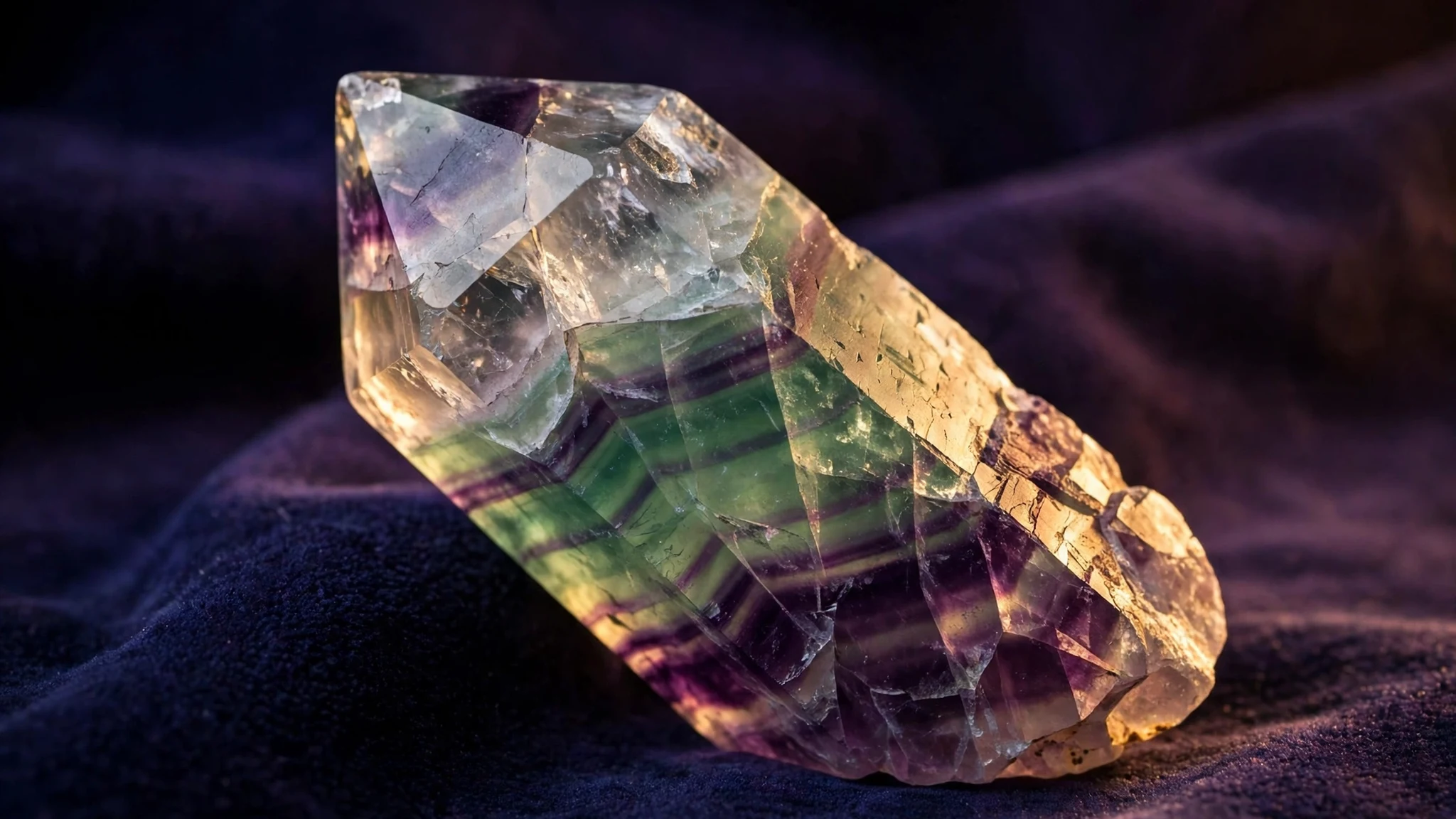
Few stones show off like fluorite. A single chunk can band purple into green into clear, like twilight caught in ice, and cut pieces form crisp cubes and pyramids that look engineered rather than grown. The fluorite meaning in crystal tradition matches that tidy, luminous character. Lore treats it as the study stone, linked with concentration, order and a clear head, and practitioners place it on desks where reading, writing and problem solving happen. It is also a soft mineral with a scientific claim to fame, the mineral that gave fluorescence its name, and it needs gentler handling than the quartz stones most beginners start with.
The Short Answer
In short, the fluorite meaning is mental order. Tradition links the stone with concentration and with clearing a cluttered head, and chakra practice connects it with the third eye chakra and the heart chakra, varying by the color of the piece. Students, writers and analysts in modern practice keep fluorite within sight while they work, using it as a focus for reflection and as a small emblem of the sorted state they are trying to reach. The stone does not do the studying, and no honest account claims otherwise.
| At a glance | Detail |
|---|---|
| What it is | The mineral calcium fluoride, commonly forming cubes and octahedrons with bands of purple, green and clear |
| Color | Purple, green, blue, yellow and clear, often banded together in a single piece |
| Tradition links it with | Concentration, order and a clear head, known in modern practice as the study stone |
| In practice | A desk stone for reading, writing and coursework, kept in sight during focused sessions |
| Care note | Soft at Mohs hardness 4 and cleaves easily, so it needs gentle handling without knocks or long soaking |
What Fluorite Actually Is
Fluorite is the mineral calcium fluoride, a simple compound of calcium and fluorine that crystallizes in forms collectors love. It commonly forms cubes and octahedrons, sharp geometric solids that emerge naturally from the chemistry, and a rough piece broken along its cleavage can show those shapes even without cutting. Color is the other half of its fame. Fluorite bands purple, green and clear in a single piece with remarkable frequency, and blue, yellow and pink material also occurs.
Science owes this mineral a word. Fluorite gives its name to fluorescence, because it was one of the first minerals observed glowing under ultraviolet light. Many specimens shine blue or violet under a UV lamp even when their daylight color is modest, and collectors test new pieces in the dark the way children test glow stars.
The fact that shapes ownership is softness. Fluorite rates Mohs hardness 4, well below quartz at 7, and it cleaves easily, meaning it can split along flat planes inside the crystal if it is knocked, dropped or shocked by sudden temperature change. A fluorite point that falls on a tile floor may come away with a cleaved tip or a new flat face where a corner used to be. This is not a defect or a sign of fake material. It is the mineral behaving exactly as its structure dictates, and it is why fluorite lives on desks and shelves rather than in pockets with keys.
The Meaning in Tradition
Concentration leads the traditional account, and the study stone nickname states the claim plainly. In modern practice fluorite is placed on desks by students during revision, by writers during drafting and by anyone facing a screen full of tabs that all claim urgency.
Order is the second strand, the natural partner of the first. Fluorite's geometry does quiet persuasive work here. A mineral that grows in cubes and perfect octahedrons, banded in clean layers, looks like order made visible, and lore leans on that appearance heavily. Practitioners use fluorite during sorting tasks in the symbolic sense as well as the literal one, planning a move, untangling a budget, deciding the order of a difficult week, with the stone present as an emblem of categories and clean edges.
A clear head completes the trio, and it is where honest framing matters most. Tradition says fluorite helps a person think clearly, and this page reports that as tradition. What practice can fairly claim is behavioral. Readers who follow lunar practice will find fluorite at home in our guide to charging crystals under the full moon, where desk stones get their monthly wipe, rest and reset alongside the rest of a collection.
Working With Fluorite
Desk placement is the practice, and position matters more than ritual complexity. Set fluorite where your eyes land during natural pauses, at the edge of the desk near the lamp, beside the monitor, on top of the current book. A small octahedron or a raw chunk suits beginners, since both show the color banding and geometry without the fragile tip of a tall point.
Journaling with fluorite takes a structured form that fits its reputation. Write the problem at the top of the page, then divide the page into three columns, known, unknown and next step, and fill each column honestly before any deciding happens. The stone rests at the top of the page like a paperweight with opinions. Students who use this layout during revision turn it sideways, topic, gap, drill, and report that the gaps column, written without flinching, is where the stone earns its shelf space. The method would work with any paperweight. Practitioners keep it with fluorite because the stone's traditional meaning and the method's purpose rhyme, and rhyme is a real force in habit building.
Meditation with fluorite, in the reflective sense used across this site, often takes the form of a visual pause. Hold a banded piece to the light, trace one band with your eyes from edge to edge, and let the tracing set a slow breathing pace for a minute or two. Then open the book. That modest sequence, repeated daily, is the entire meditation practice many desk workers keep, and its virtue is that it survives busy seasons when longer practices collapse. The stone does not need to be believed in to be useful in this role. It needs to be present, beautiful and associated in your mind with the first focused minute of work.
Cleansing, Charging and Care
Physical care for fluorite is gentle handling, stated as a rule with no exceptions worth risking. The mineral is soft, Mohs hardness 4, and cleaves easily, so it should not be knocked, dropped or rattled in a bag with harder stones, and it should not be soaked for long. Clean it with a soft dry cloth for routine dust, or with a cloth dampened in lukewarm water for a fuller wipe, and dry it at once. Avoid ultrasonic cleaners, steam, harsh chemicals and sudden moves from cold to hot water, since thermal shock can encourage cleavage cracks in a crystal that is already inclined to split along its planes. Store points and towers upright in a padded spot, octahedrons in a lined tray, and keep the whole collection off the edge of the desk where elbows sweep.
Ritual cleansing and charging, for a stone that dislikes soaking and sun bathing marathons, naturally take dry and gentle forms in practice. A night on a soft cloth under moonlight suits it, as does a rest on a selenite plate, a wipe with a dry cloth paired with a fresh page in the work journal, or a brief placement near a window for cool evening air. Practitioners who charge stones in sunlight keep fluorite sessions short or skip sun for this mineral entirely, partly from care for the crystal and partly because some colors are reported to fade with long harsh exposure. The governing principle is simple. Let the ritual fit the mineral, never the other way around, and a soft stone will reward you by staying whole and bright.
Pairing Fluorite With Other Stones
Lead with clear quartz meaning, the general purpose stone of modern practice. Clear quartz is traditionally used as the neutral focus stone, the piece practitioners add to aim a set at one theme, and with fluorite that theme is study itself. A clear point standing beside a banded fluorite chunk forms the classic revision desk in many photographs of practitioners' workspaces, quartz for aim, fluorite for order, both of them clear enough to keep a crowded desk feeling light.
Add amethyst meaning for calm within the work. Amethyst carries a traditional link with calm focus and evening reflection, and its purple deepens the purple bands of a fluorite piece into a matched set that many readers find beautiful enough to keep out permanently. The division practitioners describe is temporal, fluorite for the working hours, amethyst for the review at the end of them, one stone for solving the problem set and one for deciding what the results mean.
Rest it on selenite meaning when care and clarity need to share one habit. Selenite holds the cleansing companion role in tradition, and a fluorite piece resting on a selenite plate gains a safe padded home, a clean display and a place in the monthly reset ritual all at once. For a soft mineral that must never be rattled in a pouch, that plate is the most practical pairing on this page, whatever your beliefs about cleansing happen to be.
Complete the desk with labradorite meaning for the unpredictable part of intellectual work. Labradorite, a feldspar with flashing color, is traditionally linked with intuition and with insight that arrives sideways, mid problem and mid sentence. Fluorite handles the orderly hours, labradorite stands by for the insight that breaks the logjam, and together they describe how hard thinking actually feels, long stretches of structure lit by brief flashes that reorder everything.
Sort the Desk With Three Cards
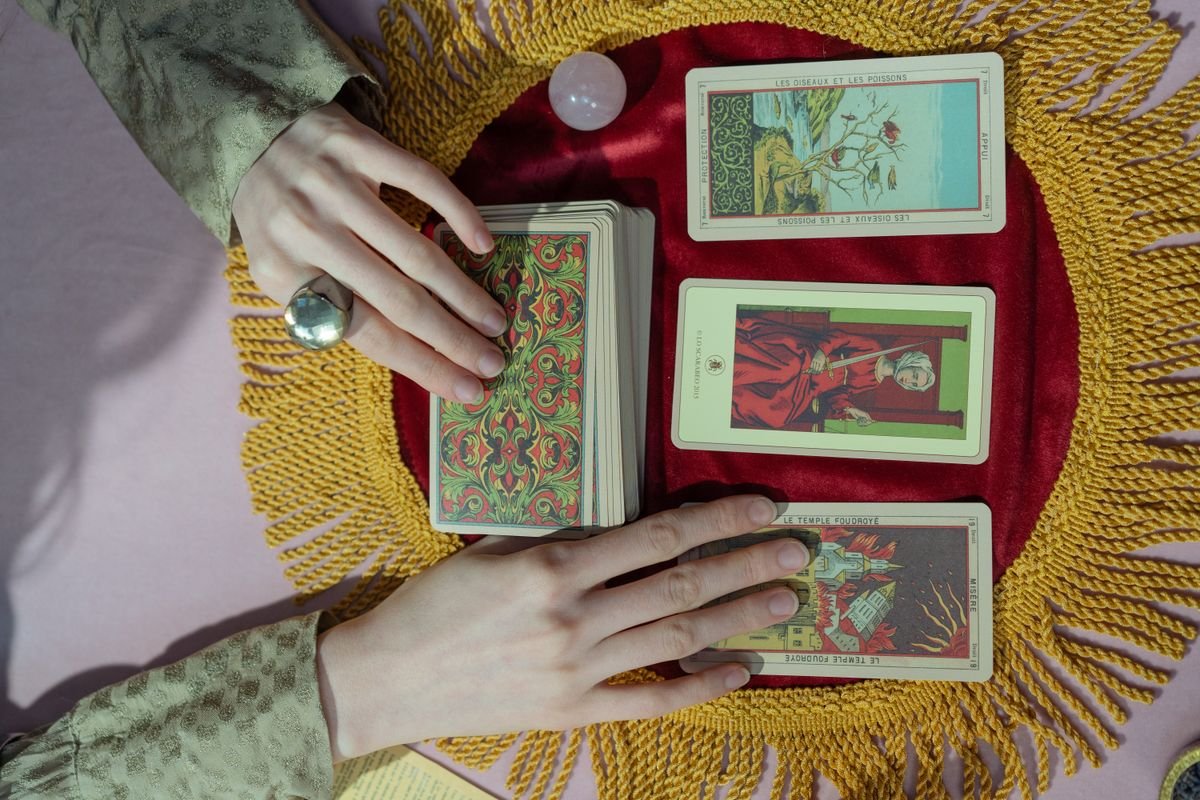
Fluorite is the focus stone, and a scattered week is its home territory. The free Tarot Three Card spread can sort the scatter: one card for the distraction to drop, one for the anchor task, and one for the next small step. Draw it at the desk, then let the stone keep the order where you can see it.
Take the Question Further
A sorted desk can still hold an unsorted decision. If your notes are in three honest columns and the next step column will not fill in, a live reading at PsychicSmile lets you talk the problem through with a reader who can hear the part that will not fit in a table. Students, writers and career changers bring study and work questions to readings every week, usually the human question underneath the coursework, and a fresh voice often finds the sentence the page was missing. First 3 minutes FREE, every time, for every reading, with all advisors.
Frequently Asked Questions
What does fluorite mean in crystal tradition?
In crystal tradition, fluorite stands for concentration, order and a clear head, and modern practice calls it the study stone. It is linked with the third eye chakra and the heart chakra by color in chakra practice, and practitioners place it on desks during reading, writing and coursework as a focus for reflection. Those meanings belong to tradition and belief, and honest practice treats the stone as a cue for focused habits rather than as a cause of results.
Why does fluorite glow under ultraviolet light?
Fluorite was one of the first minerals observed glowing under ultraviolet light, and the phenomenon of fluorescence takes its name from this mineral. Trace impurities and features of the crystal lattice absorb ultraviolet energy and release part of it as visible light, often blue or violet. Not every piece glows with equal strength, since the effect depends on the specimen's chemistry, but testing a new piece under a UV lamp in a dark room is a rite of passage for collectors.
How soft is fluorite, and what does that mean for daily use?
Fluorite rates Mohs hardness 4, much softer than quartz at 7, and it cleaves easily, so it can split along internal planes if knocked or dropped. In daily terms that means fluorite belongs on desks and shelves, not in pockets with keys, not in rings for busy hands and not in bags where harder stones can rattle against it. Handled gently, wiped with a soft cloth and stored padded, a piece keeps its color and shape indefinitely.
What colors does fluorite come in, and do the colors matter?
Fluorite occurs in purple, green, blue, yellow, pink and clear, and it commonly bands several colors in a single piece. In chakra practice the color guides the link practitioners make, purple pieces with the third eye chakra and green pieces with the heart chakra, while collectors simply favor the bands they find most beautiful. Geologically, the banding records changing conditions while the crystal grew, so a multicolor piece is a small timeline of its underground history.
How should I clean fluorite without damaging it?
Use a soft dry cloth for dust, or a cloth dampened with lukewarm water for a fuller clean, and dry the piece at once. Do not soak it for long, do not use ultrasonic or steam cleaners, and avoid harsh chemicals and sudden temperature changes, all of which risk the cleavage planes inside this soft mineral. Store it padded and apart from harder stones. Gentle and brief is the rule for every part of fluorite care.
Last updated: November 9, 2026