
Amethyst Meaning
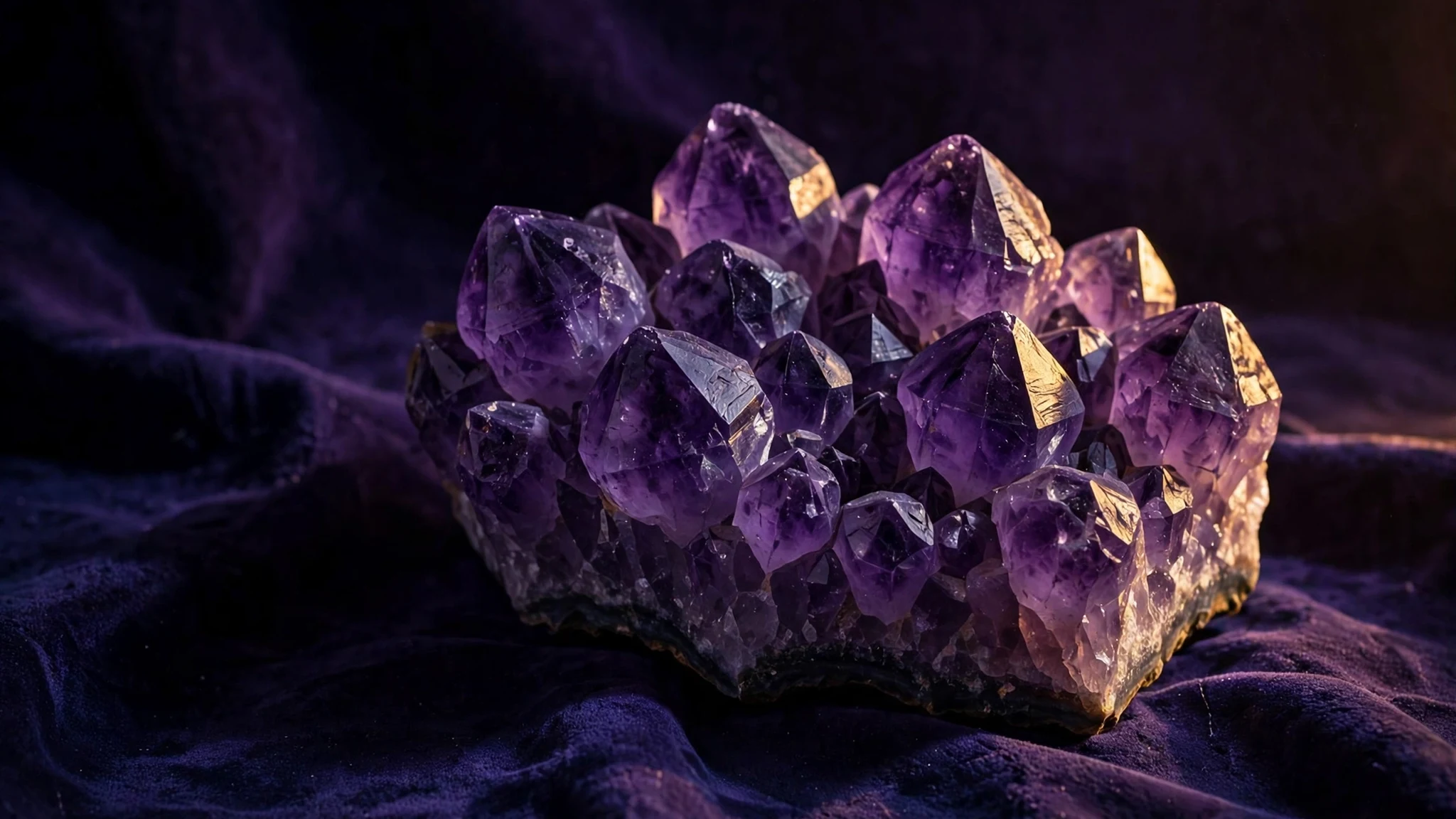
Most people who look up amethyst meaning have held the purple stone in a shop, liked the color at once, and then wondered why this one above so many others fills windows, pendants and bedside tables. Part of the answer is simple availability. Good amethyst is plentiful, fairly priced and hard to mistake for anything else. The larger part is history. Few stones carry a name that contains its own legend, a birthstone place, a role in church regalia and a modern reputation for steadiness, all at the same time.
This page keeps two kinds of information apart on purpose. The geology and the documented history come first, stated as plain fact. The meanings come second, stated as what they are, which is tradition and belief handed down through centuries of crystal practice. Readers deserve to know which kind of claim they are reading at any moment, and amethyst rewards that honesty because its factual story needs no help from invention.
The Short Answer
In brief, amethyst is the purple form of quartz, colored from pale lilac to deep violet, and tradition links it above all with calm, clear thinking and steadiness of mind. Practitioners keep it where they study, work and rest, not as a remedy for anything, but as a chosen focus for a quieter and more deliberate state of attention.
| At a glance | Amethyst |
|---|---|
| What it is | The purple variety of quartz |
| Color | Pale lilac through to deep violet |
| Tradition links it with | Calm, clear thought and steadiness of mind |
| In practice | A desk, bedside and study stone used as a focus for reflection |
| Care note | Its color can fade after long exposure to strong sunlight |
What Amethyst Actually Is
Amethyst is quartz, and quartz is silicon dioxide, one of the most common minerals on earth. What sets this variety apart is color alone. Specimens run from a wash of pale lilac so light it reads almost pink in some lights, through to a saturated violet dark enough to look nearly black until a lamp shows the purple inside it. Jewelers grade the deeper, evenly colored material highest, yet collectors often keep the pale stones too, because a gradient cluster that moves from white at the base to violet at the tips shows how the crystal grew.
The name carries the oldest story. It comes from the Greek word amethystos, which translates as not drunk. In the ancient world the stone was worn in the belief that it guarded the wearer against drunkenness, and drinking vessels were sometimes carved from it or set with it for the same reason. That belief is lore, not chemistry, and this page reports it as lore. What is documented is the wearing itself, across Greek and Roman jewelry, seals and amulets that survive in museums today.
Its calendar place is February. Amethyst is the birthstone for that month, a listing that gives it a steady presence in gift jewelry every winter. Its ceremonial place is older still in one specific setting. In the medieval church tradition, bishops wore amethyst in their rings, and the stone became tied in the public mind with clergy, ceremony and sober judgment. A purple stone that began with a Greek warning about wine ended up on the hands of the men expected to be the most temperate in the room, and the thread connecting those two facts is the reputation for a clear head.
The Meaning in Tradition
In crystal practice, amethyst is traditionally used for calm and for clear thinking, and those two associations explain nearly every modern placement of the stone. Practitioners reach for it when a desk has become a source of static, when a decision needs a slower pass, or when the evening needs a clear border between work and rest. The claim made by tradition is modest when it is stated honestly. The stone is a focus. A person who pauses, breathes and looks at a fixed point of violet before opening a difficult letter has built a small ritual of steadiness, and the ritual is the practice.
Chakra practice links amethyst with the crown chakra, the point tied in that system with thought, awareness and connection. That is why it so often appears in meditation corners and at the head of the bed in modern homes. In practice it functions as a bedside and desk stone more than as jewelry for many owners, kept within sight during the hours when the mind is busiest. People describe choosing it at the start of a demanding season, a new job, a course of study, a house move, as a marker that the season will be handled one deliberate step at a time.
Lore adds a protective shade to the stone as well, inherited from the old guarding belief behind its name. Modern tradition rarely repeats the wine story as fact, but it keeps the shape of it. Amethyst stands in lore for the person who stays clear while the room gets loud. That is a character ideal rather than a property of quartz, and owners who understand it that way tend to get the most from the stone, because they are using it to remind themselves of a standard they picked.
Working With Amethyst
The simplest working method is placement with intent. Put a cluster or a single point where the eye lands during the task the stone is meant to accompany, the corner of a desk, the edge of a study shelf, the table beside the chair used for reading. Each glance becomes a cue. Practitioners who journal beside amethyst often set it on the open notebook before writing, then record one page about whatever decision is currently circling, letting the stone mark the page as the place where the circling stops and the facts get listed.
Carrying the stone works differently. A tumbled piece in a coat pocket serves as a physical prompt during the day, touched before a meeting or a hard phone call as a reminder to speak slowly and listen fully. Meditation practice uses it in a similar way, held or set in front of the sitter while attention rests on the breath, with the stone acting as the visual anchor for a reflection practice rather than as any kind of instrument. None of these uses require belief in anything unusual. They require only a person, a chosen object and a repeated pause, which is why the tradition has lasted as long as it has.
A third use is the evening boundary. Some owners move a small amethyst from desk to bedside at the end of work, a tiny ceremony that says the desk self is done for the day. Others keep two pieces, one for each place, and let each stone belong to its room. Either version turns an ordinary object into a punctuation mark, and punctuation, used daily, changes how a text reads.
Cleansing, Charging and Care
Physical care for amethyst is gentle and brief. Wash the stone in lukewarm water with a drop of mild soap, use a soft cloth or a very soft brush for carved pieces, rinse it, and pat it dry. That is the whole routine for ordinary dust and handling. The one real enemy is light. Its color can fade after long exposure to strong sunlight, so a cluster that lives on a bright windowsill will lose depth over the years. Keep display pieces out of harsh direct sun and store loose stones wrapped apart from harder gems that could scratch their polish.
Ritual cleansing is a separate matter from washing, and owners follow the custom of their own practice. Many rest amethyst on a windowsill or a garden stone under a full moon as a symbolic fresh start, a habit covered in our guide to charging crystals under the full moon. Others simply hold the stone under running tap water for a few seconds while setting an intention for the next stretch of work. Quartz is hard and water safe, so the choice between methods is a matter of taste rather than risk, as long as the sunlight rule is respected during any daytime charging.
Pairing Amethyst With Other Stones
Amethyst pairs by temperament, and its classic partners each adjust the mood in a different direction. Clear quartz meaning belongs beside it when the goal is focus, because tradition treats clear quartz as an amplifier of whatever intention is set, and a point of each stone on a desk makes a small, tidy altar to getting one thing finished. The pairing is the most common in study spaces for a reason. One stone stands for steadiness, the other for clarity, and the work between them is the point.
For rest and for a softer room, selenite meaning is the partner practitioners pick, since selenite carries the cluster association of ritual cleansing and quiet, and its pale blades look calm next to violet points. Owners often rest amethyst on a selenite plate overnight as part of that cleansing custom. When the heart rather than the head is the subject, rose quartz meaning joins amethyst in many bedrooms, the pink stone standing in tradition for gentleness while the purple one stands for a steady mind, a pairing chosen by people who want both softness and composure in the same room.
The fourth partner is the grounding counterweight. Black obsidian meaning enters amethyst sets when reflection turns inward and honesty matters more than comfort, because obsidian holds the shadow work place in tradition. A violet cluster for calm on the desk and a black stone for candor in the journal corner is a deliberate balance, and practitioners who keep both say the contrast keeps either stone from becoming mere decoration.
One Card Before You Sleep On It
Amethyst is the stone people reach for when the mind will not quiet down. If a decision is still circling tonight, draw a single card with the free Tarot One Card tool and let it name the one consideration your tired brain keeps skipping. Treat the card as a prompt for reflection, then let the stone by the bed do its slower work.
Take the Question Further
A stone can hold a question still, but it cannot ask the question for you. If the matter on your desk is really about a person, a decision or a season that is ending, a live reading gives the reflection a second voice and a trained ear. PsychicSmile readers work with exactly these crossroads every day, and a short conversation often sorts what weeks of circling could not. First 3 minutes FREE, every time, for every reading, with all advisors.
Frequently Asked Questions
Why does the name amethyst refer to drunkenness?
The name comes from the Greek word amethystos, meaning not drunk. Ancient wearers believed the stone guarded against drunkenness and wore it as jewelry and amulets on that basis. Modern sources report the story as the origin of the name and as lore about ancient belief, not as an effect anyone should expect from quartz.
Is amethyst the February birthstone?
Yes. Amethyst holds the February place on the standard birthstone list, which is why purple jewelry appears in so many winter gift guides. The listing is a tradition of the jewelry trade with roots in older custom, and it remains the main reason many people own their first piece of the stone.
Can amethyst lose its color over time?
It can. Long exposure to strong sunlight can fade the violet, sometimes unevenly across a cluster. The fix is placement rather than treatment. Keep display pieces away from harsh direct sun, store loose stones in a drawer or a cloth pouch, and the color you bought is the color that stays.
How should a beginner use amethyst at a desk?
Place one piece where the eye rests during work, and let it serve as a cue for a slower, more deliberate pass at hard tasks. Some beginners journal beside it for ten minutes at the end of the day. The method matters less than the repetition, since the tradition treats the stone as a focus for attention you direct yourself.
Which chakra is amethyst linked with in chakra practice?
Chakra practice links amethyst with the crown chakra, the point that system associates with thought and awareness. That link explains its common places in meditation corners and at the head of a bed. The association belongs to the chakra tradition itself, and owners who do not follow that system still use the stone as a general emblem of clear thinking.
Last updated: November 9, 2026
