
What Is a Starseed? Origins, Signs and Types
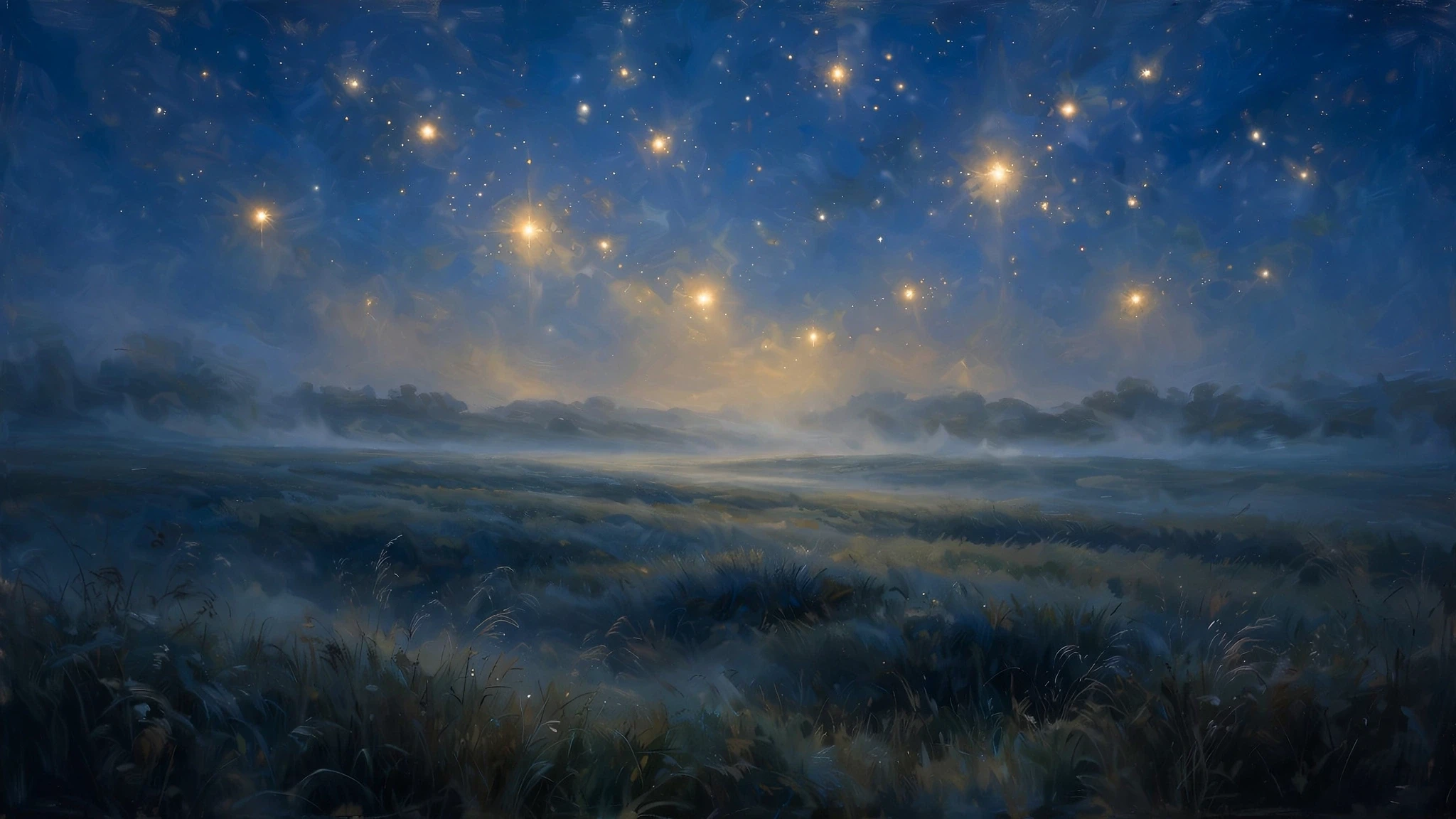
What Is a Starseed? A Soul That Came From Elsewhere
What is a starseed? In New Age belief, a starseed is a person whose soul is said to have originated on another planet, in another star system, or in another dimension, and who has come to Earth by being born here in a human body in order to help humanity and the planet. Starseeds are also called star people. The belief is that while most souls, sometimes called Earth souls, are said to reincarnate on Earth again and again, starseed souls have arrived from elsewhere, often for the first time or after only a few Earth lives, and they carry a sense of mission: to raise consciousness, to heal, to share knowledge, or to help humanity through a period of change.
That is the belief, stated plainly. It has no scientific support. No life beyond Earth has ever been found, and there is no evidence that alien life has ever visited Earth. The idea belongs to spirituality and fringe theory, not to astronomy or biology, and this page treats it that way throughout. The reason to write about it carefully, rather than to dismiss it, is that many people find real comfort and meaning in it, especially people who have always felt they do not quite belong here. ## Where the Idea Began: Brad Steiger and 1976
The starseed concept is widely credited to the American paranormal author Brad Steiger, in his 1976 book Gods of Aquarius: UFOs and the Transformation of Man. Steiger described Star People as humans who come from a special gene pool linked to visits by extraterrestrials, and he argued that certain people originated as extraterrestrials and arrived on Earth through birth or as a walk-in to an existing human body. A walk-in, in this belief, is a soul that enters a body later in life, replacing or joining the original soul, usually after a crisis or a near death experience.
Steiger was a prolific writer on the paranormal, and his book shifted the conversation about extraterrestrials in an important way. Before Steiger, the discussion was mostly about sightings and encounters, things that happened to people from outside. After Steiger, the discussion included identity, the idea that some humans might themselves be the extraterrestrials, living ordinary lives, working ordinary jobs, and quietly carrying a mission they only half remember. That shift, from external encounter to internal identity, is what made the idea spread.
The term star people itself was taken from an existing Native American spiritual concept, a borrowing that later writers have noted with unease. The Native concept and Steiger's use of the phrase are not the same thing, and the borrowing is a reminder that New Age ideas often take language from Indigenous traditions without carrying the full context with it. Steiger later wrote a further book on the topic with his wife Francie, published in 1981, and he recounted that the novelist Philip K. Dick had written to him in the late 1970s to say he thought he might be one of the star people, and that his novel VALIS contained related themes.
The idea remained a niche belief for decades, passed through books, small groups, and early internet forums. It grew sharply during the pandemic, when online interest surged and starseed content found a large audience on social media. Content tagged with the starseed hashtag has passed a billion views on TikTok, according to reporting by Religion News Service in 2026. The belief today is not an organized movement. It is a loose network of people building their own mythologies, sharing galactic histories, lore about alien species, and online rituals, and finding community in the shared feeling of being from somewhere else.
The Traits People Report
Writers on starseeds describe a cluster of traits that believers often recognize in themselves. The first is a lifelong feeling of not belonging. Starseeds often say they felt different from childhood, as though they were watching human life from a slight distance, or as though Earth customs were strange to them. The second is a deep empathy and sensitivity, similar to the empath experience, with a strong reaction to suffering, to crowds, and to conflict. The third is a sense of mission, a feeling that they are here for a purpose, even if they cannot name it, and that ordinary ambitions such as status and wealth feel less important than they seem to others.
The fourth is an interest in the stars, in space, in science fiction, and in ancient civilizations, often from an early age. The fifth is a feeling of homesickness with no home to name, a longing for a place that does not exist on any map. The sixth is a reported sensitivity to light, sound, and electromagnetic fields, and Steiger himself listed traits such as compelling eyes, low body temperature, sensitivity to electricity, unusual blood types, and psychic abilities in his questionnaire for identifying Star People. None of those physical traits has been verified, and they should be read as part of a belief system, not as a medical checklist.
It is worth pausing on the feeling of not belonging, because it is the trait that draws most people to the idea. Feeling different is a common human experience. It can come from being highly sensitive, from being neurodivergent, from growing up between cultures, from early loss, or simply from having a reflective mind in a busy world. The starseed story gives that feeling a grand explanation: you feel different because you are literally from somewhere else. That explanation can be comforting, and it can also be a way of avoiding a more ordinary and more workable explanation. The two explanations can sit side by side. You can honor the feeling of difference while also asking what practical support would help you feel more at home here.
The Types of Starseeds Believers Describe
Within the belief system, starseeds are sorted into types based on their supposed star of origin, and each type is given a set of qualities. These types are part of the mythology, not categories recognized by any science, and different writers list different types with different traits. The most commonly named are the following.
Pleiadian starseeds are said to come from the Pleiades, a star cluster in the constellation Taurus, and are described as gentle, loving, and healing oriented, with a strong connection to emotion and to the heart. Sirian starseeds are said to come from Sirius, the brightest star in the night sky, and are described as wise, spiritual, and connected to ancient knowledge, including the traditions of ancient Egypt in some accounts. Arcturian starseeds are said to come from Arcturus, and are described as logical, advanced, and focused on technology, healing, and raising consciousness through knowledge.
Andromedan starseeds are said to come from the Andromeda galaxy, and are described as freedom loving, independent, and drawn to travel and new ideas, with a dislike of routine and authority. Lyran starseeds are said to come from Lyra, and are described as among the oldest starseed souls, connected to the origins of humanoid life in the mythology, and marked by courage and a pioneering spirit. Orion starseeds are said to come from Orion, and are described as curious, knowledge seeking, and driven by questions about how the universe works. Other types appear in different lists, including Venusian, Martian, and Mintakan starseeds, and the lists keep growing as the mythology grows.
No test can tell you which type you are, and the types are not consistent across writers. A person who reads three starseed books will find three different descriptions of the same type, and that inconsistency is itself informative. The types function as stories people try on, the way people try on zodiac signs or personality types, to see which story fits their sense of themselves. If a type description helps you understand your strengths, use it. If it becomes a fixed identity that limits you, set it down.
How People Explore the Idea
People who are drawn to starseeds usually explore the idea in a few practical ways. The first is reading and community. Books, videos, and online groups offer language for the experience, and finding other people who feel the same way can be a relief in itself. The second is meditation and journaling. Some people meditate with the intention of remembering their origin, or keep a journal of dreams, feelings, and moments of recognition, looking for a pattern over time. The third is the birth chart. Some starseed writers connect the idea to astrology, looking at placements in the birth chart meaning page sense, such as the positions of outer planets or asteroids, and reading them as clues to a cosmic origin. The what is astrology page explains the system those readings draw on.
A fourth way is through past life regression or readings with a practitioner who works with starseed material. If you try this, go in with clear eyes. A reading that tells you that you are a rare and special type of soul can feel wonderful, and it can also be a form of flattery that keeps you coming back for more. A good practitioner will leave you with practical guidance and room to decide for yourself. A practitioner who insists that only they can confirm your origin, or who charges increasing amounts for deeper revelations, is selling certainty, not insight.
A grounded way to explore is to keep a simple record for a month. Note when the feeling of not belonging is strongest and when it eases. Note what helps: rest, nature, honest conversation, creative work, or time alone. Note what makes it worse: exhaustion, conflict, or too much screen time. When the month is over, go back through the notes. You may find that the feeling follows a pattern that has nothing to do with the stars and everything to do with sleep, boundaries, and connection. That finding does not disprove the belief, but it gives you something practical to work with, which is more useful than any label.
What Psychologists Say, and Why It Matters
Psychologists who have studied starseed belief, including Ken Drinkwater, Andrew Denovan, and Neil Dagnall, writing in The Conversation in 2023, describe it as a form of New Age belief that developed during the 1970s. They point to a well known psychological effect called the Forer effect, named after psychologist Bertram Forer, who showed that people readily agree with vague and flattering descriptions of themselves, the same effect that makes horoscopes feel personally accurate. Starseed descriptions are often broad and positive: sensitive, wise, here to help, misunderstood by ordinary people. Almost anyone who is reflective and kind could recognize themselves in that description, and that is part of why it spreads.
The psychologists also note that most starseeds are harmless, and that the belief often brings comfort, community, and a sense of purpose. They add a caution. In its more extreme forms, starseed belief can overlap with conspiracy thinking, including stories about reptilian beings, hidden wars, and secret control of humanity, and in extreme cases that overlap can create risk. Religion News Service made a similar point in 2026, noting that experts see most starseeds as harmless but warn that the ideology can overlap with conspiracies. That is a good reason to keep your reading broad. If a starseed source starts telling you who the enemy is, or asks you to distrust doctors, scientists, or your own family, step back. A belief that helps you feel at home in the world should not require you to fear it.
Starseeds, Soulmates, and Awakening
Starseed belief often travels with other spiritual ideas, and it helps to see the connections. Many starseeds describe a sense of recognition when they meet certain people, a feeling that they have known them before or that they share an origin. That experience is described in similar language on the soulmate page, and the difference is mostly in the story told about it. A soulmate reading says you knew each other in a past Earth life. A starseed reading says you knew each other on another world. The feeling is the same. The explanation is a choice.
Starseed belief also overlaps with spiritual awakening. Many people first encounter the idea during a period of questioning, when old beliefs no longer fit and new questions are opening. The spiritual awakening signs page describes the wider experiences people report at such times, and the what is clairvoyance page covers a form of intuition that some starseeds say they experience strongly. If you are in such a period, give yourself time. A new identity, even a cosmic one, is best tried on slowly, the way you would try on a new name, to see whether it fits after the first excitement fades.
A starseed, in the belief that names it, is a soul from another star who chose a human life in order to help. Whether you hold that literally, use it as a metaphor, or set it aside entirely, the feeling behind it deserves respect: the feeling of being different, of longing for a home you cannot name, and of wanting your life to matter. That feeling is real, and it is shared by far more people than the starseed label alone suggests. The work it points to is also real, and it is close at hand: rest, honest connection, boundaries, and a purpose you can act on today, in this world, with the people who are actually here. First 3 minutes FREE — every time, for every reading, with all advisors.
For a simple next step, try a One-Card Tarot reading and reflect on what would help you feel more at home in your life right now.
Frequently Asked Questions
What is a starseed in simple terms?
In New Age belief, a starseed is a person whose soul is said to have originated on another planet or star system and come to Earth in a human body to help humanity. The idea was introduced by Brad Steiger in his 1976 book Gods of Aquarius. It is a spiritual belief with no scientific evidence behind it.
What are the signs of a starseed?
Believers commonly list a lifelong feeling of not belonging, deep empathy, a sense of mission, an interest in space and ancient civilizations, and a homesickness with no named home. These traits also have ordinary explanations, such as high sensitivity or growing up between cultures, so they are descriptions of an experience, not proof of an origin.
What are the types of starseeds?
The most commonly named types are Pleiadian, Sirian, Arcturian, Andromedan, Lyran, and Orion starseeds, each linked to a star or galaxy and given a set of qualities. The lists differ between writers and have no scientific basis. They work best as stories people try on, not as fixed categories.
Is there any evidence that starseeds are real?
No. No life beyond Earth has ever been found, and there is no evidence that alien life has visited Earth. Psychologists describe starseed belief as a New Age belief from the 1970s and note that its descriptions often fit many people, an effect called the Forer effect. The belief can still bring comfort and community to those who hold it.
How do I know if I am a starseed?
No test exists that can confirm it. People usually decide based on the traits and the feeling of recognition. A grounded approach is to keep a record for a month of when the feeling of not belonging is strongest and what helps, since that often reveals practical patterns around rest, boundaries, and connection.
Last updated: November 11, 2026
