
What Is a Birth Chart and How to Read Yours
What Is a Birth Chart
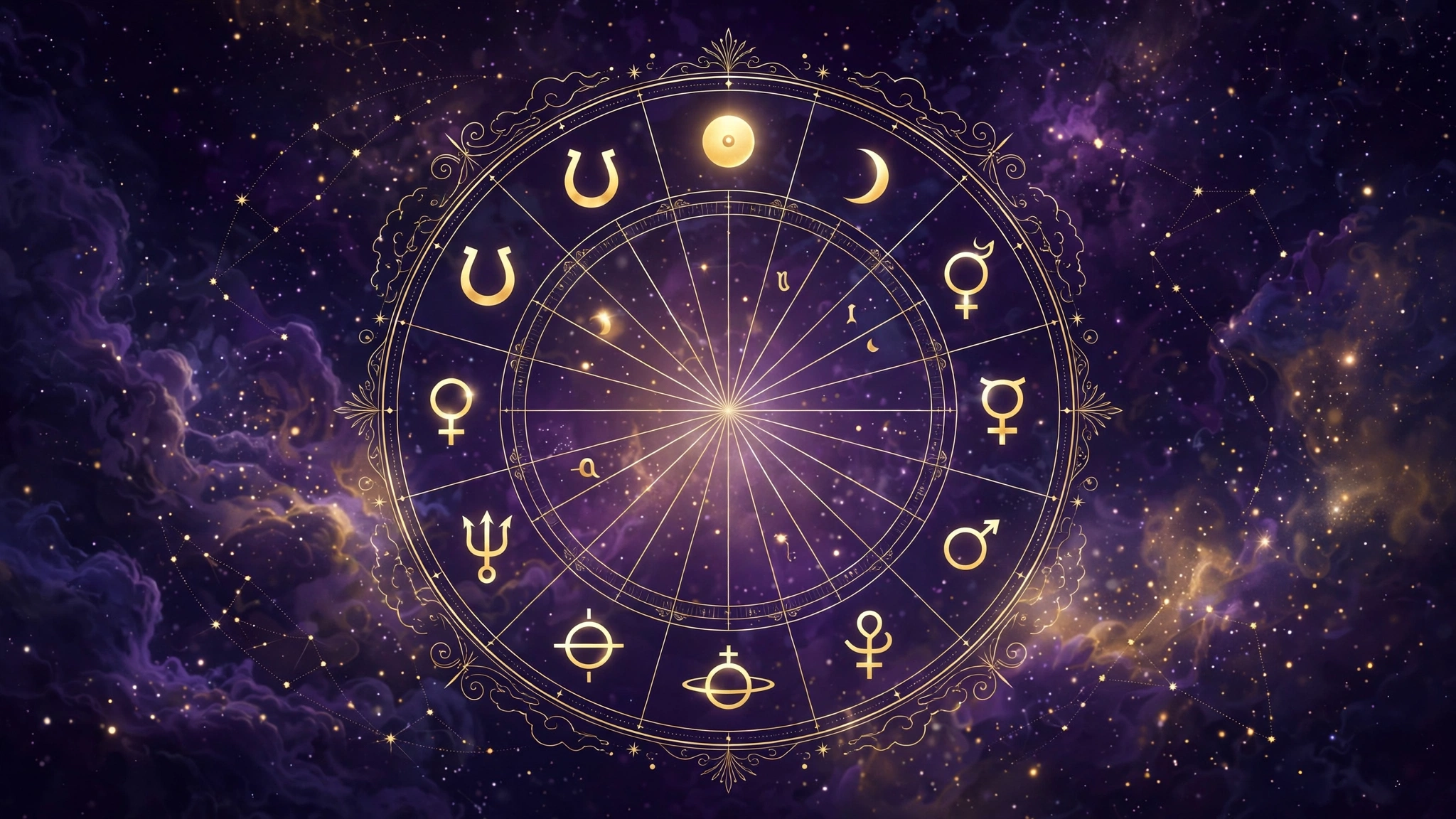
A birth chart, also called a natal chart, is a map of the sky at the exact moment and place you were born. It shows where the Sun, the Moon, and each planet stood, which sign was rising on the eastern horizon, and how the twelve houses were arranged around the wheel. Because the sky moves quickly, two people born on the same day can have different charts, and that difference is why a birth chart feels far more personal than a sun sign alone.
Think of the chart as a snapshot rather than a verdict. It captures a starting pattern, not a fixed fate. Your choices, family, and life history shape how that pattern develops, and the same placement can show up in more than one way. The chart names the energy, and you decide the form it takes.
What You Need to Cast Your Chart
To cast an accurate birth chart you need three facts: your birth date, your birth time, and your birth place. The date places the Sun and the slower planets. The time sets the rising sign and the houses, because the horizon changes by about one degree every four minutes. The place fixes the local horizon and the house cusps. With those three facts, a chart calculator can draw your wheel in seconds.
If you do not know your birth time, you can still learn a great deal. Your Sun sign and most planet signs will still be clear, and your Moon sign will often be clear unless the Moon changed sign that day. What you will miss is an accurate rising sign and accurate house placements, so treat those parts as uncertain until you find the time. A birth certificate or a hospital record is often the best source for the time.
How to Read the Chart Wheel
A birth chart is drawn as a circle divided into twelve sections, called houses, with the zodiac signs running around the outside edge. The planets sit inside the wheel in the sign and house they occupied at your birth. The ascendant, or rising sign, is marked near the left hand side of the wheel. The top of the wheel marks the midheaven, which relates to career and public direction. Once you know those two anchors, the rest of the wheel starts to make sense.
Read the wheel in layers. First, find the Sun, the Moon, and the rising sign. Next, find Mercury, Venus, and Mars. Then notice which houses hold the most planets, because a crowded house often marks an area of life that keeps asking for your time.
The Sun, Moon, and Rising Sign
The Sun in your chart points to core identity, direction, and vitality. It describes the style you return to when you feel most like yourself, and the kind of purpose that gives you energy. The Moon points to emotional needs, comfort, and memory. It describes what helps you feel safe, how you react under stress, and what you need after a hard day. The rising sign, or ascendant, points to your first impression, your manner, and your approach to new situations. It is the sign that was rising on the eastern horizon when you were born.
Together, these three points form the core of most beginner readings. The Sun is who you are becoming, the Moon is what you need to feel at home in yourself, and the rising sign is how you meet the world. When they pull in different directions, learning to name that tension is one of the most useful things a chart can do. For a closer comparison, read sun sign versus moon sign versus rising sign, and for the emotional layer alone, read what your moon sign is.
Mercury, Venus, and Mars: Thinking, Loving, Acting
After the big three, turn to Mercury, Venus, and Mars. Mercury describes how you think, learn, and communicate. Mercury in Gemini often thinks quickly and out loud, while Mercury in Capricorn often thinks carefully and plans ahead. Neither style is better. Each one suits different tasks, and each one has a blind spot to watch. Venus describes love, pleasure, values, and what you find beautiful. It shows how you give affection, what you enjoy spending time and money on, and what you look for in a partner. Mars describes drive, desire, and courage. It shows how you pursue goals, handle conflict, and protect what matters to you.
Read these three as a team. Mercury shapes the words you use, Venus shapes what you value, and Mars shapes how you act on those values. A person with gentle Venus and strong Mars, for example, may love softly and pursue goals firmly, and that combination makes sense once you see the two planets side by side. Keep the reading practical. Ask how each planet shows up at work, at home, and in love, and notice which one feels easiest and which one needs more care.
The Twelve Houses: Where Life Happens
The houses show where in life a planet expresses itself. The first house covers identity and first impressions. The second covers money and values. The third covers learning and conversation. The fourth covers home and family. The fifth covers creativity and romance. The sixth covers health and daily work. The seventh covers partnership. The eighth covers shared resources and deep change. The ninth covers travel and meaning. The tenth covers career and reputation. The eleventh covers friendship and community. The twelfth covers rest, privacy, and reflection.
A planet in a house brings its energy into that area of life. Venus in the seventh house, for example, often shows up strongly in partnership, while Venus in the tenth house may show up more in career and public work. Look for the houses with the most planets first, because they often mark the themes that keep returning. A house with no planet in it is not a blank part of your life. It simply points to an area that may run more quietly, or that becomes active when a planet passes through by transit. For a fuller tour, read the twelve astrology houses.
Aspects and Patterns Worth Noticing
Aspects are the angles between planets in a chart, and they describe how different parts of you relate to each other. A conjunction, when two planets sit close together, blends their energies into one strong theme. A trine, at about 120 degrees, usually feels easy and flowing. A square, at about 90 degrees, usually feels tense and demanding, and it often points to growth. An opposition, at about 180 degrees, often feels like a pull between two needs that must both be honored.
Do not try to learn every aspect at once. Start by noticing the closest aspects in your chart, especially those involving the Sun, Moon, Mercury, Venus, and Mars. A close square between the Moon and Saturn, for example, might describe a need to balance emotional honesty with discipline and boundaries. A close trine between Venus and Jupiter might describe an easy warmth in love and friendship. Read each aspect as a conversation between two planets, and ask what each side needs. That simple frame keeps aspect reading human and practical.
Using Your Birth Chart in Love, Work, and Daily Life
In love, a birth chart helps you name needs and styles before they become arguments. Your Venus shows how you give love, your Moon shows what you need to feel safe, and your seventh house shows what you look for in partnership. A partner chart adds a second set of needs, and comparing the two can explain why one person needs words while the other needs quiet presence. Use the chart to start honest conversations, not to score a relationship. For a broad view of sign pairing, see zodiac compatibility.
In work, a chart helps you name your natural strengths and your working style. The tenth house and the midheaven point to career direction, Saturn points to discipline and responsibility, and Jupiter points to growth and meaning. Together they can help you notice which environments bring out your best and which ones drain you. A chart cannot choose a job for you, and it cannot replace skills or experience, but it can help you ask better questions about the kind of work that fits. In daily life, the chart supports small reflective habits, such as noticing when the Moon moves through your sign.
Common Mistakes When Reading a Chart
The most common mistake is treating one placement as the whole story. A single difficult placement does not define a person, and a single easy placement does not promise an easy life. Read placements together, and give weight to the Sun, Moon, rising sign, and the most crowded houses before you judge a smaller detail. A second mistake is reading a chart as a prediction that cannot change. A chart describes tendencies and timing, not a fixed outcome, and your choices still shape what happens next.
A third mistake is using the chart to excuse unkind behavior. A placement may explain a tendency, such as a quick temper or a fear of closeness, but it does not make that behavior acceptable. The useful question is what the placement asks you to practice, such as pausing before you speak, or asking for space kindly. A fourth mistake is comparing charts as if one were better than another. Every chart has strengths and strains, and the most helpful reading is the one that helps you work with your own pattern rather than wishing for someone else's.
Your Next Step With Your Chart
Start simply. Write down your Sun, Moon, and rising signs, plus the signs of Mercury, Venus, and Mars, and keep that short list somewhere you can see it. Spend a week noticing how each placement shows up, with one line a day in a notebook or on your phone. Notice which house holds the most planets, and whether that area of life feels busy right now. This slow observation builds more understanding than reading a dozen long interpretations in one sitting, and it keeps the chart tied to your real life.
When you feel ready, go deeper one layer at a time. Learn the houses in order, then learn the aspects, then follow the Moon through the signs for a month and note how your mood shifts. Return to the basics whenever you feel lost, because the Sun, Moon, and rising sign remain the heart of the chart. For the wider system behind the chart, read what astrology is and check your sun sign dates in zodiac signs dates. For timing and cycles, you may also like moon phases explained.
If a question in your chart feels hard to untangle alone, a live advisor can help you talk it through in your own words. First 3 minutes FREE — every time, for every reading, with all advisors.
For a simple reflection prompt, try a One-Card Tarot reading and see how its message connects with the part of your chart you are exploring today.
Frequently Asked Questions
What is a birth chart?
A birth chart is a map of the sky at the exact moment and place you were born. It shows the positions of the Sun, Moon, and planets, your rising sign, and the twelve houses, and it is used as a tool for reflection about personality, relationships, and timing.
What do I need to calculate my birth chart?
You need your birth date, birth time, and birth place. The date sets the Sun and planets, the time sets the rising sign and houses, and the place fixes the local horizon. Without a birth time, the Sun and most planets are still clear, but the rising sign and houses are uncertain.
How do I read my birth chart as a beginner?
Start with the Sun, Moon, and rising sign, then add Mercury, Venus, and Mars. Notice which houses hold the most planets, and take notes over a few weeks about how those placements show up in daily life before you study aspects in detail.
What is the difference between my sun sign and my birth chart?
Your sun sign is one placement in your chart, showing where the Sun stood on your birthday. Your birth chart includes the Moon, rising sign, all the planets, and the twelve houses, so it gives a much fuller picture than the sun sign alone.
Can a birth chart predict my future?
A birth chart is best used for reflection about patterns, needs, and timing. It can highlight themes and seasons, but it cannot promise a specific outcome, and your choices and circumstances still shape what happens next.
Last updated: November 11, 2026
