
Justice and Devil Tarot Combination
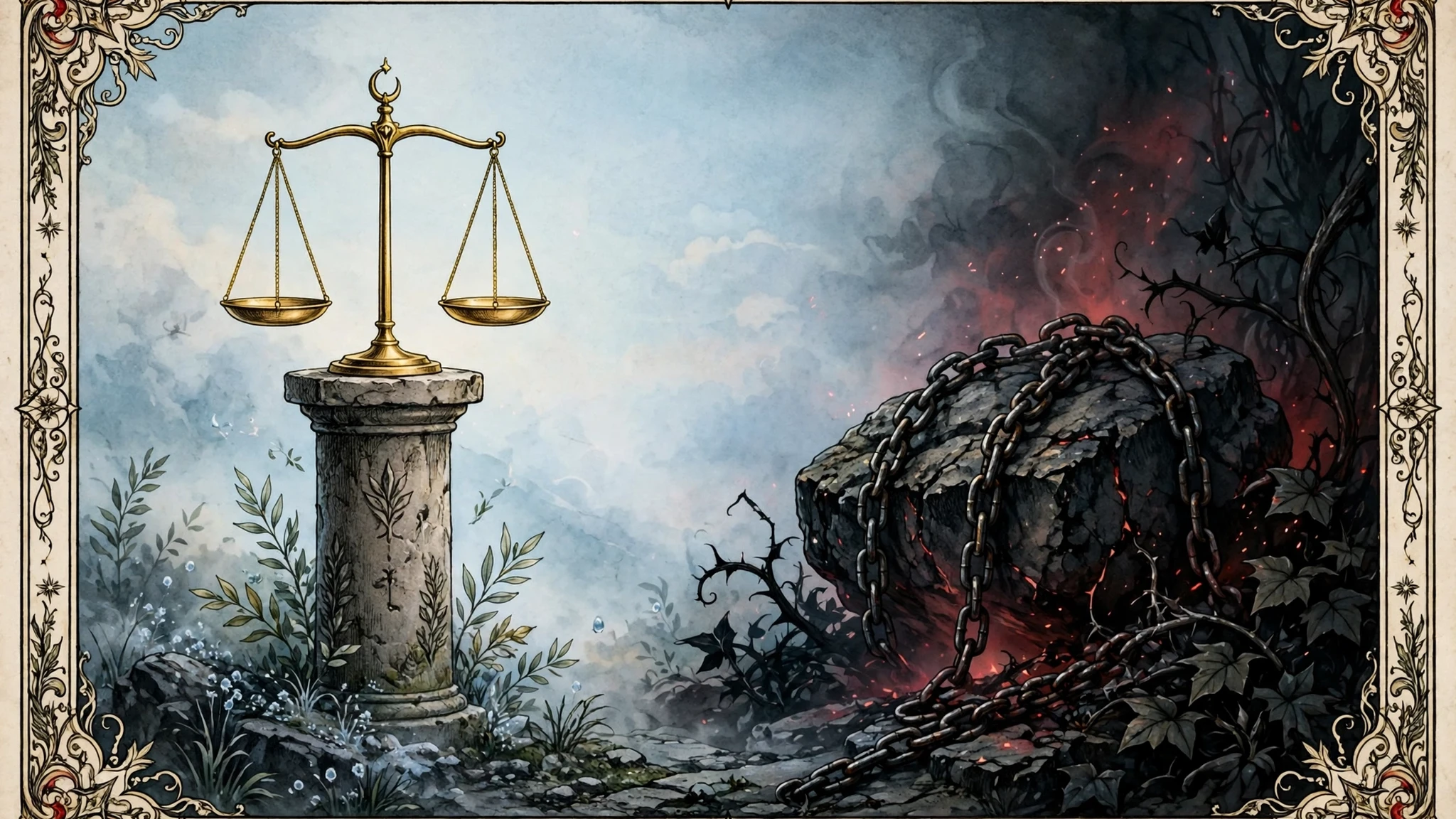
The Reckoning: The Justice and Devil Tarot Combination
The justice and devil tarot combination is the pair of accountability. Justice holds the scales and weighs what is true. The Devil holds the chain and names what binds you. Together they say that a consequence is arriving, and that it is connected to a choice you made, a deal you signed, or a pattern you kept. This pair is often feared, and the fear is understandable, because it does not offer comfort. It offers clarity. The reckoning it describes is rarely a punishment from outside. It is the natural result of a binding arrangement meeting the facts. A contract with a hidden clause, a relationship built on a secret, a debt that was ignored, or a habit that was indulged all reach a day of accounting. The pair asks you to face that day honestly, to look at the chain, to read the scales, and to decide what you will do next. The good news inside this stern pair is real: consequences end. A chain that is faced can be broken. A debt that is counted can be paid. The reckoning is not the end of the story. It is the middle, and what comes after it depends on what you do now.
How a Binding Deal Meets the Facts
Justice without the Devil is abstract: a principle of fairness with nothing at stake. The Devil without Justice is a bond with no accounting: a chain that feels permanent because no one has weighed it. Combined, they force the question that both cards alone avoid. What did you agree to, and what is it actually costing. A marriage, a business partnership, a loan, a non disclosure agreement, or a long standing family arrangement all carry terms, written or unwritten. Justice reads the terms. The Devil shows the grip. The combination often appears when the terms and the grip no longer match: the deal was fair once and is not fair now, or the deal was never fair and the bill has come due. In a reading, the order adds a shade. Justice first often means the reckoning came first, a letter, a verdict, a demand, and the bond is what you must now examine. The Devil first often means the bond came first and the reckoning is the result, as when a pattern you indulged finally produces a consequence you cannot ignore. Either way, the task is the same: gather the facts, name the bond, and make a decision based on both. For single card background, see Justice tarot card meaning and The Devil tarot card meaning.
Love: The Binding Relationship and Its Cost
In love, this pair describes a relationship where the bond and the accounting have collided. A marriage with a prenuptial agreement, a divorce in progress, a partnership where one person controls the money, or a long affair that has finally surfaced all fit. The Justice side asks for honesty about the facts: who did what, who paid for what, who kept which promise. The Devil side asks for honesty about the bond: why you stayed, what you feared losing, and what the attachment is actually made of. For a couple trying to repair, the pair offers a hard but useful method. Write down the facts together, without blame, then write down what each person needs to stay. If the two lists can be reconciled, the repair has a foundation. If they cannot, the fair ending is better than the unfair continuation. For a single person, the pair often points to a pattern of binding yourself to unavailable people, or to a past relationship whose legal or financial threads are still tied to you. The work is to cut the practical threads first: the shared account, the shared lease, the unresolved message. Emotional freedom usually follows practical freedom, not the other way around. The pair does not ask you to feel ready. It asks you to act on the facts, and to let the feelings catch up.
Contracts, Debt, and Legal Consequences
Outside love, the justice and devil tarot combination is the pair to respect whenever a binding agreement meets a deadline. A loan in default, a contract breached, a tax matter ignored, a workplace policy violated, or a business deal that has gone wrong all sit in its territory. The advice is practical and urgent in the calm sense. Read the agreement again, in full, including the clauses about default and termination. Write down the numbers: what is owed, to whom, by when, and what the penalties are. Then get advice from a professional before you act, a lawyer, an accountant, or a debt counselor, depending on the matter. The pair warns against two common mistakes. The first is hiding from the reckoning, which only adds interest, penalties, and lost options. The second is accepting a bad deal in a panic, which trades one chain for another. Between those extremes sits the honest middle: face the facts, get advice, negotiate from the documented position, and put the agreement in writing. For money, the pair favors a written repayment plan over a vague promise, and a negotiated settlement over a court fight that costs more than the debt. It also favors telling the truth to the people affected, early, because a hard truth told early is easier to work with than a hard truth discovered late. Readers new to the cards can start with tarot for beginners before tackling a pair this heavy.
Owning Your Part Without Destroying Yourself
There is an inner version of this pair that is just as important as the outer one. Justice asks you to own your part in a situation. The Devil shows you the pattern that made the part possible. Together they describe accountability without self destruction. A person who has hurt someone, broken a promise, or made a costly mistake often swings between denial and self punishment. Denial says it was not my fault. Self punishment says I am the fault. The pair offers a third position. Write down what you did, in plain sentences, without adjectives and without excuses. Write down what it cost the other person. Then write down what repair is possible: an apology, a repayment, a changed behavior, or a boundary that prevents a repeat. Then do the repair, and stop the punishment once it is done. The repair is Justice. The stopping is Strength's cousin, the Devil's chain loosened by honesty. If the other person will not accept the repair, that is their choice, and the pair says to accept it without using it as a reason to keep punishing yourself. You are responsible for the repair you can make. You are not responsible for the forgiveness you cannot force. That distinction is the whole teaching of this pair in the inner life.
An Illustrative Example: The Loan That Came Due
This example is illustrative, not a real person's story.
Picture a woman named Nina, a 35 year old salon owner, who borrows money from a relative to expand her business. The loan is informal, no paperwork, no interest, no date. For two years it works. The salon grows. Then the relative needs the money back for a medical bill, and the request feels sudden and unfair to Nina, who has been paying in small, irregular amounts. In a reading about the dispute, she pulls Justice and the Devil. Justice names the facts: the loan was real, the amount is known, and the lack of paperwork hurts them both. The Devil names the bond: family loyalty mixed with money, a combination that makes honest talk feel like betrayal. Nina does three things. She writes down every payment she has made, with dates. She sits with her relative and agrees a written repayment plan, with a monthly amount and an end date. She tells her staff nothing about the family side, only that a loan is being repaid on schedule. The relationship is strained for a season, then it recovers, because the money is now a plan instead of a wound. The cards did not erase the debt. They showed Nina that the chain was not the loan. The chain was the silence around the loan, and breaking the silence was the first payment.
When the Reckoning Is Unfair
Sometimes this pair appears when the reckoning itself is the problem: a punishment that does not fit the act, a contract that was signed under pressure, a system that applies its rules to some people and not to others. In those cases the pair is not telling you to accept the verdict. It is showing you the bond and the scales together, so you can challenge the verdict properly. Three steps help. First, document the facts in writing, with dates and names, before you argue about them. Second, find the rule that was broken or misapplied, in the contract, the policy, or the law, and quote it exactly. Third, use the formal route to challenge it: an appeal, a complaint, a mediation, or legal advice. The Devil's chain in this version is not your mistake. It is the unfair term, and Justice is on your side of the argument, not against you. If the formal route fails, the pair may point to a clean exit: leave the agreement, the job, or the group, with records and notice, and build the next chapter on fairer terms. A fair exit is a form of justice too, and it is one you can give yourself even when no one else will.
Reading This Pair by Position
The position sets the clock for this pair. In the past, it often points to a binding choice you made, a deal, a marriage, a debt, and the lesson is in the terms you accepted then. In the present, it means the reckoning is active now, and the task is to gather the facts and name the bond. In the future, it warns of a consequence coming, often through a letter, a deadline, or a demand, and the wise move is to prepare the paperwork and the advice before it arrives. As advice, the pair says to face the facts and the chain together, and to act on both. As an obstacle, it can mean denial about a bond, or a refusal to accept a fair consequence. As an outcome, it suggests a reckoning that ends a chapter: a settlement, a verdict, a repayment plan, or a clean break. A third card names the field: Cups for a relationship or a family matter, Pentacles for money or a contract, Swords for a legal matter or a written decision, Wands for a business or creative agreement. Position changes everything in a reading, and how to read tarot cards walks through that shift step by step. Note the date when this pair appears. Reckonings have deadlines, and the pair is often an early warning to meet one while you still have options. You can explore the other pair readings in the tarot card combinations collection.
A reckoning is easier to face with a clear head and a calm witness. If a binding situation in your life is coming due, a live reader can help you sort the facts from the fear. First 3 minutes FREE — every time, for every reading, with all advisors.
For a simple next step, try a One-Card Tarot reading and reflect on the one agreement in your life whose real cost you have not yet counted.
Frequently Asked Questions
What does the justice and devil tarot combination mean?
It means accountability for a binding deal or pattern. Justice weighs the facts and the terms, while the Devil names the chain that holds you. Together they describe a consequence arriving, usually the natural result of a choice, a contract, or a habit, and they ask you to face it honestly so it can end.
Does this combination mean punishment?
Not necessarily. It usually means a natural consequence, such as a debt coming due, a contract term taking effect, or a secret surfacing. The reckoning is not the end of the story. A chain that is faced can be broken, and a debt that is counted can be paid.
What does this pair mean in love?
It describes a relationship where the bond and the accounting have collided, such as a divorce in progress, a marriage with a controlling money dynamic, or a long affair surfacing. Write down the facts together without blame, then what each person needs to stay. A fair ending is better than an unfair continuation.
What does this pair mean for contracts and debt?
It asks you to read the agreement in full, write down the numbers, and get professional advice before acting. Do not hide from the reckoning, which adds penalties, and do not accept a bad deal in a panic. A written repayment plan or a negotiated settlement usually beats a vague promise or a costly fight.
What if the reckoning I face is unfair?
Then document the facts with dates and names, find the rule that was broken or misapplied and quote it exactly, and use the formal route to challenge it, such as an appeal, a complaint, or mediation. If that fails, a clean, documented exit is a form of justice you can give yourself.
Last updated: November 12, 2026
