
Harvest Moon Meaning: The Full Moon Near Autumn
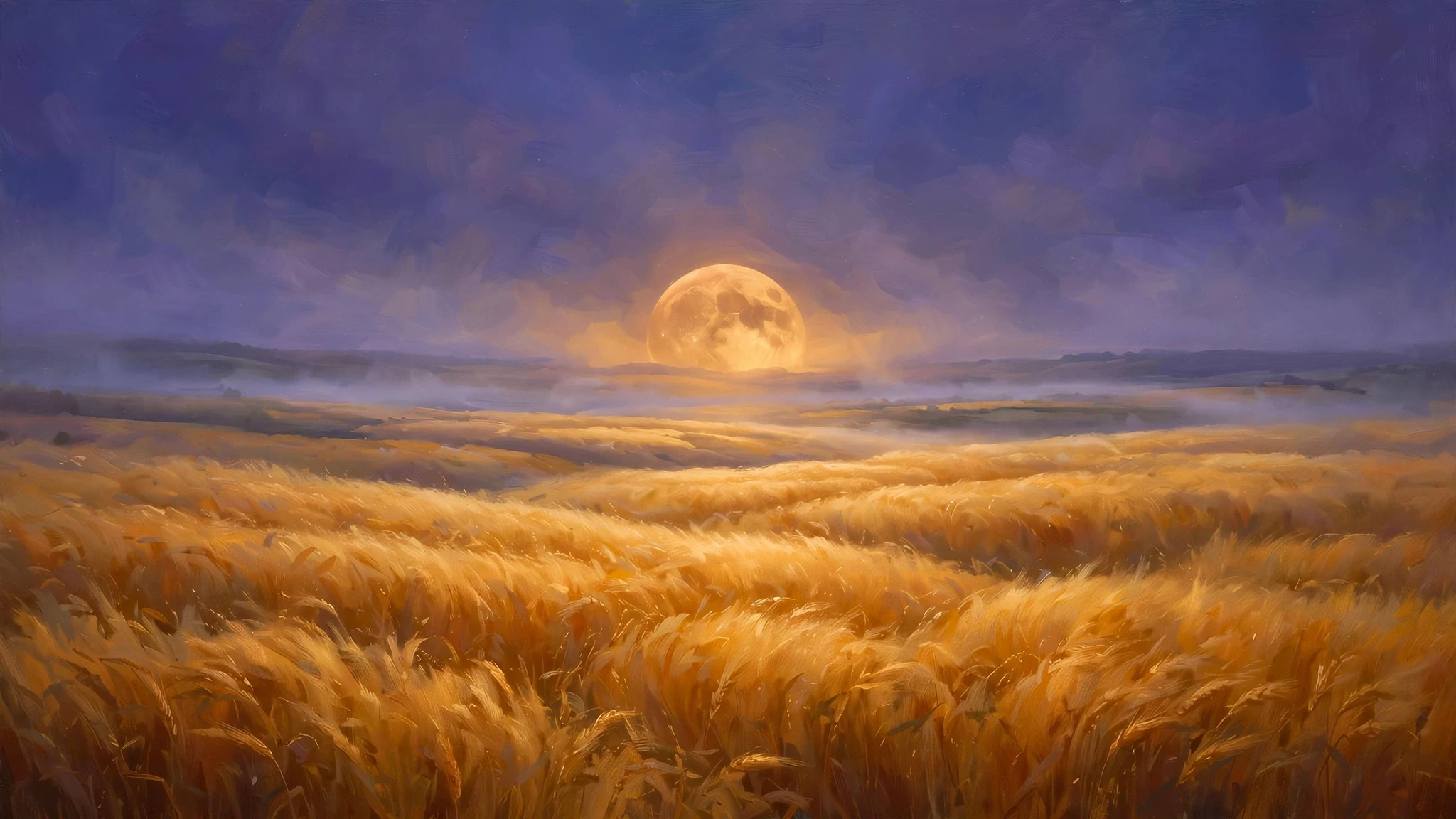
Harvest Moon Meaning: The Full Moon That Gave Farmers Light
The harvest moon meaning starts in a field at dusk, centuries ago, when the Sun had set and the work was not yet done. The Harvest Moon is the full moon closest to the September equinox, the moment when day and night are nearly equal and autumn begins. In 2026, that full moon falls on September 26, a Saturday, at 9:49 in the morning Pacific time. What made it precious to farmers was not its date. It was its behavior. Around the Harvest Moon, the Moon rises only a little later each evening for several nights in a row, instead of the usual fifty minutes later, so it gives bright light just after sunset for night after night, exactly when the harvest needs gathering. That extra light is the whole reason the moon has a name.
The Harvest Moon is not always the September full moon, and that is the first thing to get right. It is the full moon closest to the September equinox, and in most years that falls in September, but in some years it falls in early October. In 2026 it falls on September 26, three days after the equinox. In other years it has fallen as early as September 8 and as late as October 7. The name follows the equinox, not the calendar month, which is why the September full moon is sometimes called the Corn Moon instead, when the Harvest Moon falls in October. The rule is simple: find the September equinox, find the full moon nearest to it, and that moon is the Harvest Moon. The complete cycle, with all eight phases and their dates, is set out on moon phases explained.
The Astronomy: Why the Harvest Moon Rises Differently
The Harvest Moon's famous behavior has a plain astronomical cause, and it is worth understanding because it explains the name better than any story does. The Moon rises about fifty minutes later each day on average, because it moves about thirteen degrees along its orbit each day and Earth has to turn a little further to bring it over the horizon. Around the September equinox, in the northern hemisphere, the Moon's path makes a shallow angle with the eastern horizon, so the extra thirteen degrees of orbital motion translates into only a small delay in moonrise. For several nights around the Harvest Moon, the Moon rises only about twenty to thirty minutes later each evening, instead of fifty.
The result is several evenings in a row when a bright, nearly full Moon is already up as the Sun sets. Before electric light, that mattered enormously. Harvest work could continue after dark, and the Moon did the job of a lantern that no one had to carry. The effect is strongest in the northern hemisphere, and it reverses in the southern hemisphere, where the shallow angle happens around the March equinox instead. The Moon itself is no brighter or larger than any other full moon. Its orbit and the season do the work, and the name honors the help.
The Harvest Moon of 2026 is a good example to study. It reaches its exact full moment on September 26 at 16:49 UTC, which is 9:49 in the morning Pacific time and 12:49 in the afternoon Eastern time. The Moon is in Aries at about 3 degrees and 38 minutes, and it is about 379,400 kilometers from Earth. Because the exact moment falls in the morning in North America, the Moon looks full on both the night of September 25 to 26 and the night of September 26 to 27. The nights around it, from about September 24 to September 28, are the ones when the Moon rises close to sunset, night after night, and gives the long light the Harvest Moon is named for.
The Harvest Moon in History and Tradition
The Harvest Moon has been named in almanacs for centuries, and its name is one of the oldest in the lunar calendar. The Maine Farmers Almanac, which gave many full moons their traditional names, listed the Harvest Moon as the full moon nearest the autumnal equinox, and the name spread from there into common use. Before that, farming communities across Europe and North America knew the moon by its behavior, even when they called it by different names. The Corn Moon, the Barley Moon, and the Fruit Moon are all names for the same season's full moons, and in some traditions the Harvest Moon and the Corn Moon are the same moon under different names.
The harvest itself is the context that gives the moon its meaning. September is the month when grain, corn, apples, and pumpkins are gathered in the northern hemisphere, and the work is urgent: a crop left in the field too long can be lost to rain or frost. The Moon's extra light was not decoration. It was working light, and the gratitude attached to the Harvest Moon in folk tradition is gratitude for a practical gift. Harvest festivals, from the English harvest home to the American Thanksgiving season, cluster around this time of year for the same reason: the gathering is done, the store is full, and there is something to be thankful for.
In other traditions, the same moon carries different names and different stories. In Chinese tradition, the full moon nearest the autumnal equinox is the Mid Autumn Festival moon, a time for family reunion and mooncakes, and it falls on the fifteenth day of the eighth lunar month. In Jewish tradition, the full moon of the month of Tishrei brings Sukkot, the harvest festival of booths. In Hindu tradition, the autumn full moon brings Sharad Purnima, a night for harvest and for the goddess Lakshmi. The names differ, but the season is the same, and the Moon is the same. Every culture that farmed in the northern hemisphere learned to watch the autumn moon.
What the Harvest Moon Means in Astrology
In astrology, the Harvest Moon is read as a full moon of completion and gratitude, with the season's themes added in. The full moon is always a moment of culmination, when the work of the last two weeks becomes visible and ready to be gathered or released. The Harvest Moon adds the autumn themes to that: reaping what was sown, taking stock of the year, and preparing for the quieter months ahead. The reading is not about farming. It is about the same pattern in any life: the projects started in spring and worked on through summer are now ready to be finished, judged, and either kept or let go.
The sign the Harvest Moon falls in changes from year to year, and it colors the reading. In 2026, the Harvest Moon falls in Aries, at about 3 degrees and 38 minutes, a sign of courage, initiative, and new beginnings. That gives the 2026 Harvest Moon a particular flavor: a harvest of brave decisions, of things begun boldly and now ready to be gathered. In other years the Harvest Moon has fallen in Pisces, Virgo, Libra, and other signs, and each one shifts the emphasis. The sign matters, but the season matters more. Whatever the sign, the Harvest Moon is a full moon of gathering and gratitude, and its advice is always practical: finish what is ripe, store what will keep, and let the rest go. The year's other rare full moon was the blue moon meaning of May 31, and the two weeks before any full moon are the waxing moon meaning while the two weeks after are the waning moon meaning.
The Harvest Moon also marks a turning point in the lunar year. After it comes the Hunter's Moon, the full moon of October, which in 2026 falls on October 25 in United States time. After that come the Beaver Moon of November 24 and the Cold Moon of December 23. The Harvest Moon is the last full moon of the warm season, and the moons that follow it belong to the darkening year. That is why the Harvest Moon feels like a threshold: it is the last bright moon of summer's work, and the first moon of autumn's reckoning. For the Moon's role in the chart, see Moon in astrology.
How to Watch the Harvest Moon in 2026
The Harvest Moon is one of the easiest full moons to watch well, because its gift is time. You do not need to be outside at the exact moment of fullness, which in 2026 falls in the morning. You need to be outside at sunset, on the evenings around September 26, and to look east as the Sun goes down. The Moon will already be rising, large and orange near the horizon, and it will climb through the evening while the sky darkens. The orange color near the horizon is not special to the Harvest Moon. Any full moon looks orange when it is low, because its light passes through more of Earth's atmosphere, which scatters the blue light and leaves the warm colors. The Harvest Moon looks orange more often than most, simply because people watch it at moonrise more often than most.
The best nights to watch in 2026 are September 25, 26, and 27. On each of those evenings, step outside at sunset and look east. Notice how little later the Moon rises each night compared with an ordinary week, and how bright the early evening stays. If you have a camera, the Harvest Moon is a forgiving subject: it is bright, it is low, and it looks best with something on the horizon for scale, a tree, a roofline, or a hill. If you have no camera, the memory is enough. The Harvest Moon is a moon for looking, not for photographing, and the sight of it rising over a field at dusk is the whole point of its name.
The next Harvest Moon after 2026 falls in 2027, on the full moon nearest that year's September equinox. The date will be announced in the almanacs as the year approaches, and it will follow the same rule: the full moon closest to the equinox, rising close to sunset for several nights in a row. Mark September 26, 2026 on your calendar, step outside at dusk, and watch the moon that once lit the harvest. First 3 minutes FREE — every time, for every reading, with all advisors.
For a simple next step, try a One-Card Tarot reading and reflect on what the card says about the harvest you are gathering this season.
Frequently Asked Questions
What is a harvest moon?
The Harvest Moon is the full moon closest to the September equinox, the moment when day and night are nearly equal and autumn begins. In 2026 it falls on September 26. It is named for the way it rises only a little later each evening for several nights, giving bright light just after sunset when the harvest needs gathering.
When is the harvest moon in 2026?
September 26, 2026, a Saturday. The exact full moment is 9:49 in the morning Pacific time, 12:49 in the afternoon Eastern time. The Moon is in Aries at about 3 degrees and 38 minutes, about 379,400 kilometers from Earth. It looks full on the nights of September 25 to 26 and September 26 to 27.
Is the harvest moon always in September?
No. The Harvest Moon is the full moon closest to the September equinox, and in most years that falls in September, but in some years it falls in early October. When the September full moon is not the Harvest Moon, it is often called the Corn Moon instead. The name follows the equinox, not the calendar month.
Why does the harvest moon rise at sunset for several nights?
Around the September equinox in the northern hemisphere, the Moon's path makes a shallow angle with the eastern horizon, so the Moon rises only about twenty to thirty minutes later each evening instead of the usual fifty. That gives several evenings in a row with a bright, nearly full Moon up just after sunset.
What does the harvest moon mean in astrology?
In astrology, the Harvest Moon is read as a full moon of completion and gratitude, with autumn themes of reaping what was sown and taking stock of the year. In 2026 it falls in Aries, which adds themes of courage and initiative. The reading is about finishing what is ripe and preparing for the quieter months ahead.
Last updated: November 11, 2026
