
Blue Moon Meaning: Why Two Full Moons Matter
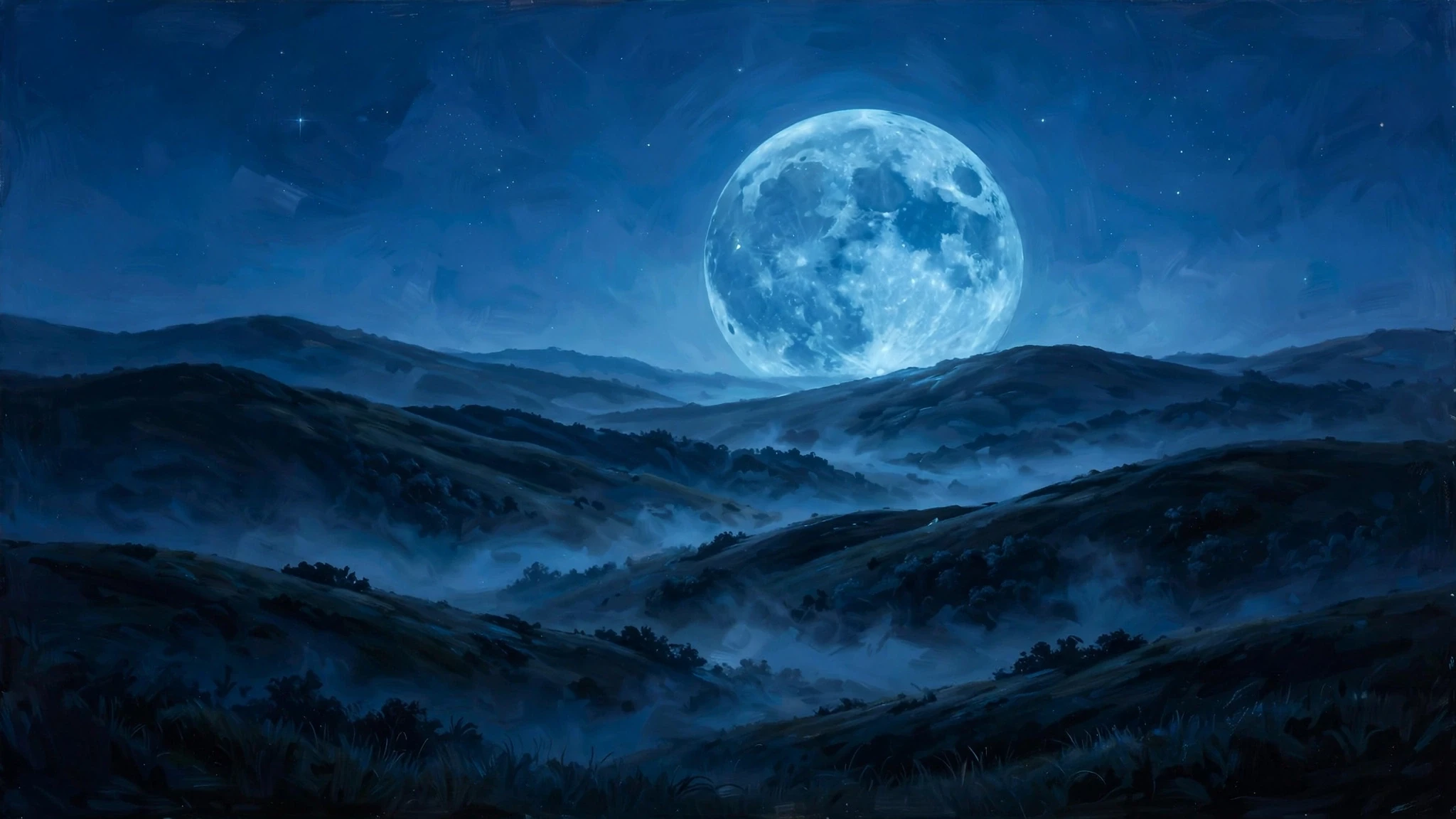
Blue Moon Meaning: A Second Full Moon in One Month
The blue moon meaning is one of the most misunderstood ideas in the whole lunar calendar, and the misunderstanding starts with the name. A blue moon is not blue. It does not look different from any other full moon. It is simply the second full moon in a single calendar month, and it happens because the lunar cycle and the calendar month do not line up. The Moon takes about 29 and a half days to go from full to full, while most calendar months have 30 or 31 days, so every two or three years a month gets two full moons instead of one. The second one is the blue moon. That is the whole definition, in the form most people use today, and it is the definition this page uses.
The most recent blue moon fell on May 31, 2026, a Sunday. May 2026 had two full moons: the Flower Moon on May 1 and a second full moon on May 31, at 1:45 in the morning Pacific time, 4:45 in the morning Eastern time. That second full moon was the blue moon, and it was also the most distant full moon of 2026, sitting near apogee, the farthest point of the Moon's orbit from Earth, about 406,100 kilometers away. The full cycle, with all eight phases and their dates, is covered on moon phases explained, and the growing half of the cycle is the waxing moon meaning while the shrinking half is the waning moon meaning. Because it was so distant, it was also the smallest looking full moon of the year, a micromoon, though the difference is too small for most eyes to notice. The Moon that night was in Sagittarius, at about 10 degrees of the sign, and it rose on a Sunday evening in late spring, ordinary in every way except its place in the calendar.
The Two Definitions: Monthly Blue Moon and Seasonal Blue Moon
There are two definitions of a blue moon, and knowing both clears up most of the confusion. The monthly blue moon is the one used today: the second full moon in a single calendar month. The seasonal blue moon is the older one: the third full moon in a season that has four full moons instead of the usual three. A season is the three month stretch between a solstice and an equinox, and because a season lasts about three months and a lunar cycle lasts about 29 and a half days, a season usually holds three full moons. Every two or three years, a season holds four, and the third of the four is the seasonal blue moon.
The two definitions rarely point to the same night, and they come from different histories. The seasonal definition is older, and it comes from the Maine Farmers Almanac, which used it to name the moons of each season. The monthly definition is newer, and it comes from a mistake. In 1946, an article in Sky and Telescope magazine misread the almanac's rule and described a blue moon as the second full moon in a month. The mistake spread, was repeated in a popular radio program and a board game, and by the 1980s the monthly definition had become the common one. Astronomers still note both, but when most people say blue moon today, they mean the monthly kind: two full moons in one calendar month.
The next seasonal blue moon falls on May 20, 2027, which is the third full moon in a spring season that holds four. The next monthly blue moon falls on December 31, 2028, which is the second full moon in December 2028 and happens to fall on the same night as a total lunar eclipse. The two definitions are worth keeping separate, because they answer different questions. If you are asking when the next blue moon is, the answer depends on which definition you mean.
Why Blue Moons Are Rare, and How Rare They Really Are
A blue moon is rare in the way the phrase "once in a blue moon" suggests, but it is not as rare as the phrase implies. A monthly blue moon happens about once every two to three years, because the mismatch between the 29 and a half day lunar cycle and the 30 and 31 day calendar months builds up to an extra full moon on that schedule. In 2026, the extra full moon fell in May, giving the year thirteen full moons instead of the usual twelve. The year 2026 has thirteen full moons and twelve new moons, and the extra one is the blue moon of May 31.
The phrase itself is older than either definition. "Once in a blue moon" has been used in English since the sixteenth century to mean something that happens very rarely or never, and it originally referred to the idea of a moon that looked blue, which almost never happens. A moon can look blue when smoke or dust in the atmosphere scatters red light, as it did after the eruption of Krakatoa in 1883, when people around the world reported blue moons for months. That is a real optical effect, but it has nothing to do with the calendar definition. The blue moon of May 31, 2026 looked the same pale gold as any other full moon rising. The blue in its name is a calendar label, not a color.
The rarity is also a matter of which months can hold two full moons. February can never hold a blue moon, because it has only 28 or 29 days, shorter than a lunar cycle. A month with 31 days can hold two full moons only if the first one falls on the first or second day of the month. May 2026 qualified because the first full moon fell on May 1. December 2028 will qualify for the same reason. That is why blue moons cluster in the long months and skip February entirely.
The Blue Moon of May 31, 2026: What Actually Happened That Night
The blue moon of May 31, 2026 deserves a close look, because it is the one readers of this page most recently lived through, and its details show what a blue moon really is. The first full moon of May 2026 was the Flower Moon on May 1. The second, the blue moon, reached its exact full moment on May 31 at 08:45 UTC, which was 1:45 in the morning Pacific time and 4:45 in the morning Eastern time. It was a Sunday. The Moon was in Sagittarius at about 10 degrees, and it was about 406,100 kilometers from Earth, near apogee, making it the most distant and smallest looking full moon of 2026.
Because the exact moment fell in the early morning hours in North America, the Moon looked full on both the night of May 30 to 31 and the night of May 31 to June 1. That is normal for any full moon: the Moon looks full to the eye for about three nights around the exact moment. What made May 31 special was not the way the Moon looked. It was the calendar: two full moons in one month, thirteen full moons in one year, and a date that will not repeat in the same form until December 31, 2028. If you watched it, you watched an ordinary full moon with an extraordinary label, and that is the honest way to describe it.
The blue moon also fell in a year with three supermoons, on January 3, November 24, and December 23 in United States time, and with two lunar eclipses, a total eclipse on March 3 and a partial eclipse on August 28. The blue moon was not an eclipse and not a supermoon. It was a calendar event, and its meaning comes from the calendar, not from the sky. The next named full moon after May is the harvest moon meaning of September 26, the full moon closest to the autumn equinox.
What the Blue Moon Means in Astrology and Tradition
In astrology, a blue moon is read as a doubled full moon, a second chance to work with the themes of the month. The full moon is the climax of the lunar cycle, the moment of completion, release, and seeing clearly. A month with two full moons has two climaxes, and astrologers read the second one as an opportunity to finish what the first one started, or to revisit a release that did not quite take the first time. The blue moon of May 31, 2026 fell in Sagittarius, a sign of truth, travel, and belief, so its astrological reading centered on those themes: a second chance to be honest about what you believe and where you are going.
In folk tradition, the blue moon carries a simpler meaning: rarity itself. "Once in a blue moon" means something that happens so seldom it is worth marking. That is why blue moons attract rituals, wishes, and intentions in modern spiritual practice. The tradition is new, not ancient, and this page does not pretend otherwise. The monthly definition is less than a century old, and the rituals attached to it are newer still. But the impulse behind them is old: when the calendar gives you an extra full moon, it feels like a gift of time, and people naturally want to use it well.
The honest way to use a blue moon is the same as the honest way to use any full moon: review what the month brought, release what no longer belongs, and notice what is now clear that was not clear two weeks ago. The blue moon adds one thing to that: a second opportunity in the same month to do it properly. That is a modest claim, and it is the one this page stands behind. The Moon's role in the chart is covered on Moon in astrology.
The next monthly blue moon is December 31, 2028, a New Year's Eve full moon that is also a total lunar eclipse. The next seasonal blue moon is May 20, 2027. Mark one or both, step outside, and look at the Moon. It will look like any other full moon, and that is the point. A blue moon is not a different Moon. It is the same Moon, arriving twice in one month, and reminding you that even the sky keeps a calendar you can learn to read. First 3 minutes FREE — every time, for every reading, with all advisors.
For a simple next step, try a One-Card Tarot reading and reflect on what the card says about the second chance this rare moon is offering you.
Frequently Asked Questions
What is a blue moon?
A blue moon is the second full moon in a single calendar month. It happens because the lunar cycle lasts about 29 and a half days while most months have 30 or 31 days, so every two or three years a month gets two full moons. The second one is the blue moon. A blue moon is not actually blue.
When was the last blue moon?
The most recent blue moon was May 31, 2026, a Sunday. May 2026 had two full moons, the Flower Moon on May 1 and a second full moon on May 31, at 1:45 in the morning Pacific time. It was also the most distant full moon of 2026, about 406,100 kilometers from Earth.
When is the next blue moon?
The next monthly blue moon is December 31, 2028, the second full moon in December 2028, on the same night as a total lunar eclipse. The next seasonal blue moon, the third full moon in a season of four, is May 20, 2027.
Why is it called a blue moon if it is not blue?
The name comes from the old phrase "once in a blue moon," used since the sixteenth century to mean something very rare. A moon can look blue when smoke or dust scatters red light, as after the Krakatoa eruption in 1883, but the calendar blue moon is a date, not a color. The monthly definition spread from a 1946 magazine article that misread an older almanac rule.
How often does a blue moon happen?
About once every two to three years. The mismatch between the 29 and a half day lunar cycle and the calendar builds up to an extra full moon on that schedule. February can never hold a blue moon, because it has only 28 or 29 days, and a 31 day month can hold two full moons only if the first falls on the first or second day.
Last updated: November 11, 2026
