
Emerald Meaning: The May Birthstone Explained
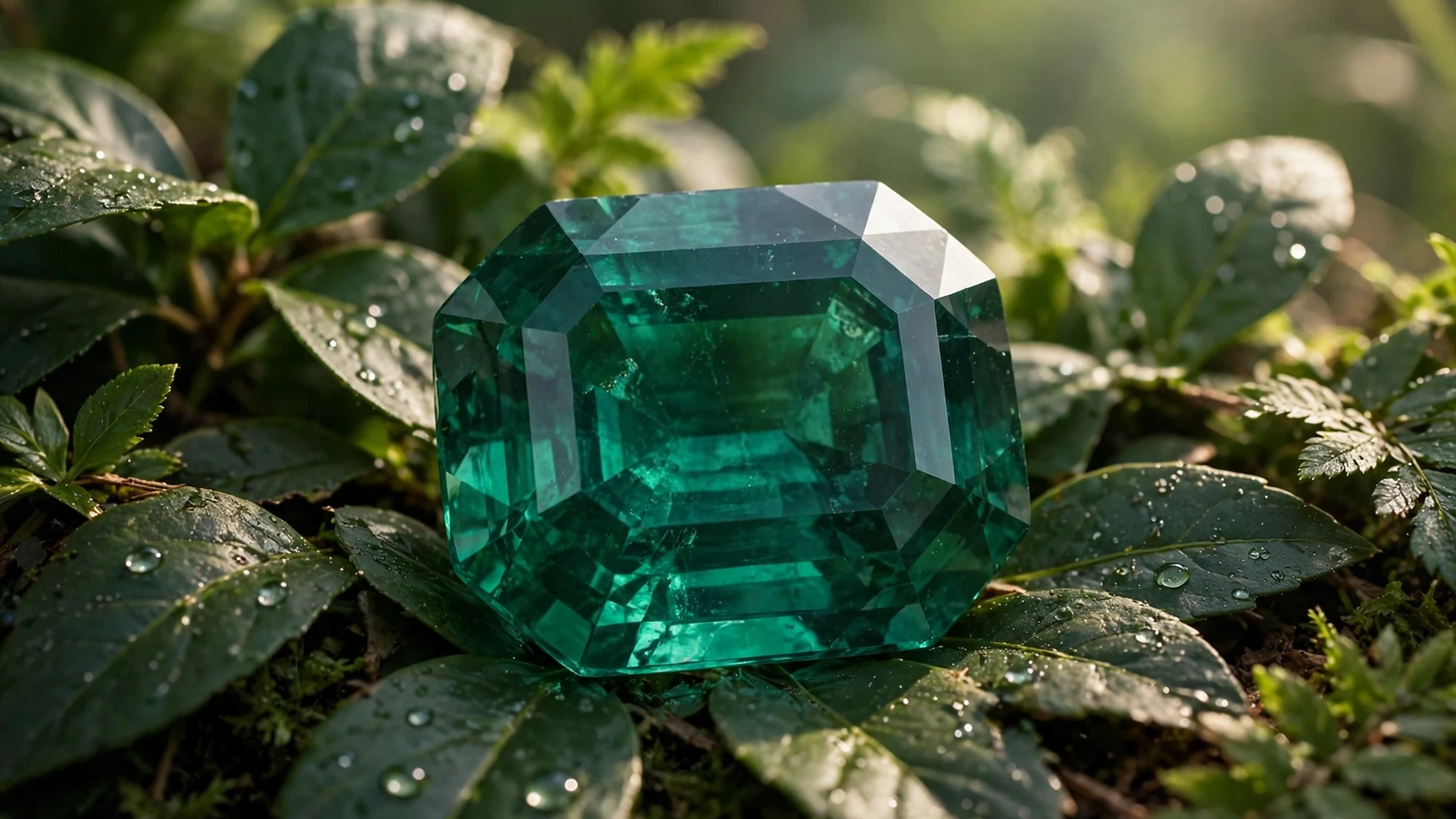
Emerald Meaning: The Standard of Green
Emerald is the standard by which other green gemstones are measured. Its green is deep, rich, and slightly bluish, and it has been the standard for thousands of years, since the first emeralds were mined in Egypt. Emerald is the birthstone for May, the green variety of the mineral beryl, and one of the big three colored gemstones, alongside ruby and sapphire. The spiritual awakening signs hub counts it among the stones it covers. This page covers what emerald actually is, why it is almost always included, where the finest stones come from, how most emeralds are treated, and how to look after a stone that is hard yet fragile.
Emerald is the green to bluish green variety of beryl, a mineral species that also includes aquamarine and morganite. Beryl is a beryllium aluminum silicate, and emerald's green comes from trace amounts of chromium or vanadium. The Gemological Institute of America settles the question of what counts as emerald by using lab graded comparison stones: the green must be sufficiently dark and saturated to be called emerald, and a pale green beryl, however pretty, is green beryl rather than emerald. That line is a matter of judgment among gem experts, and GIA's comparison stones are the standard the trade uses.
Emerald rates 7.5 to 8 on the Mohs hardness scale, harder than quartz and harder than peridot, but hardness is not the whole story. GIA rates emerald's toughness as fair to good, and calls it more brittle than corundum, because almost every emerald is full of fractures. The stone is hard, in the sense that it resists scratching, and fragile, in the sense that it can break if it is knocked. That combination is the central fact of emerald care, and it shapes everything else on this page.
Jardin: The Garden Inside the Stone
Emerald inclusions have a name, jardin, the French word for garden, because the fractures and inclusions inside an emerald look like moss or foliage. Almost every emerald has them. Unlike diamond, where inclusions lower the value sharply, emerald inclusions are expected and accepted, and a completely clean emerald is so rare that it is either very small or very expensive. The jardin is part of the stone's character, and it is one of the ways gemologists recognize a natural emerald: the pattern of inclusions is as individual as a fingerprint.
Colombian emeralds can have a distinctive inclusion called a three phase inclusion, which consists of tiny crystals of rock salt, a liquid, and a bubble of gas, all trapped together inside the stone. Three phase inclusions are a hallmark of Colombian material, and they are one of the features gemologists look for when determining where an emerald was mined. Other sources have their own inclusion patterns, and a laboratory report will often note them. If you buy an emerald, ask for a lab report on any stone of significant value. The report will state the treatment level, the origin if it can be determined, and whether the stone is natural or lab grown.
Lab grown emerald is real emerald. It is real beryl, grown in a laboratory, with the same chemical composition and the same crystal structure as a natural stone. It is not a simulant. Green cubic zirconia and green glass are simulants, a different material, and sellers in the United States are required to say so. A lab grown emerald costs far less than a natural stone of the same size and color, and it is a good choice for a person who wants the look of emerald without the price. An honest seller says straight out whether the stone grew in the ground or in a laboratory, and sets the price to match.
Colombia: Muzo, Chivor, and Coscuez
Colombia has been the source of the finest emeralds for more than 500 years, and Colombian stones have been the standard by which all others are measured. Three mining sites in Colombia are particularly noteworthy: Muzo, Chivor, and Coscuez. Each locality produces a range of colors, but generally speaking, darker tones of pure green come from Muzo, lighter tones with a blue green tint come from Chivor, and slightly yellow tinted stones come from Coscuez. A 47 carat rough emerald crystal from the Muzo mine, photographed by GIA, is so beautiful that it may put to rest all debates about color, and a 38 carat cluster of emerald crystals from the same mine shows the same deep green.
Colombia is by far the world's largest producer of fine emeralds, with Zambia second, and emeralds are also found in Brazil, Ethiopia, and elsewhere. Zambian emeralds tend to be a slightly darker, more bluish green, and they are often cleaner than Colombian stones. Brazilian emeralds tend to be lighter. Ethiopian material, a newer source, is often a bright, vivid green. When you buy an emerald, the origin matters for price and for color, and a lab report that states the origin adds value. An emerald with a documented Colombian origin, a deep green color, and a good clarity will cost more than a similar stone from another source, and that premium is the market's judgment, not a seller's invention.
Emerald mining in Colombia has a long history, going back to the indigenous Muzo people before the Spanish arrived, and the mines have been worked, fought over, and romanticized for centuries. The stones that came out of Muzo in the sixteenth century went to the Spanish court and then to the rest of Europe, and they set the standard for what an emerald should look like. That standard has not changed: a deep, pure green, with a slight blue tint, and a glow that seems to come from inside the stone.
Oiling: The Treatment Almost Every Emerald Has
Most emeralds are treated, and the treatment is oiling. The Gemological Institute of America reports estimates that 90 percent or more of emeralds are fracture filled with oil, wax, or resin, to hide surface reaching fractures and to improve apparent clarity. The practice is traditional, accepted, and expected, and it should be disclosed. An emerald that has never been oiled is rare and expensive, and a seller who claims an untreated stone should have a lab report to prove it.
Oiling is also the reason emerald care is strict. Oil can be removed by heat, by steam, by ultrasonic cleaning, and by solvents, including household cleaners and even hot dishwater. Once the oil is gone, the fractures it was hiding become visible, and the stone looks worse than it did before. That is why the care rules for emerald are absolute: warm soapy water and a soft cloth only, never ultrasonic, never steam, no heat, no solvents, not even hot dishwater. If an emerald needs professional cleaning, take it to a jeweler who knows emeralds, and tell them it is oiled. A jeweler who does not know will clean it the wrong way, and the stone will suffer for it.
When you buy an emerald, ask about the treatment level. Laboratories grade oiling as minor, moderate, or significant, and the grade affects the price. A stone with minor oiling costs more than a stone with significant oiling, because less of its apparent clarity comes from the treatment. A reputable seller will state the treatment level and will offer a lab report on a valuable stone. If a seller cannot tell you whether an emerald is oiled, or claims it is untreated without a report, be cautious. The treatment is normal. Hiding it is not.
What Emerald Means in Crystal Tradition
In crystal tradition, emerald is linked with love, renewal, and clear sight. Its green is the color of spring, and its traditional uses center on the heart: love, fidelity, loyalty, and fresh growth. Emerald is the traditional gift for the 20th and 35th wedding anniversaries in some lists, and it is often chosen for engagements by people who want a stone that says something different from a diamond. Those are traditional associations, not scientific claims, and this page gives them as tradition handed down over centuries, not as fact.
Emerald's history supports its meaning. In ancient Egypt, emeralds were mined in the Eastern Desert and associated with fertility and rebirth, and they were buried with pharaohs as symbols of eternal youth. In Rome, emerald was believed to soothe the eyes, and the emperor Nero is said to have watched gladiatorial games through an emerald, though whether that stone was emerald or another green gem is debated. In India, emerald was associated with the god Vishnu and with wisdom. In each culture, the green of emerald meant life, growth, and renewal, and that meaning has survived for thousands of years because the color itself suggests it.
If you use emerald in intention work, tie the practice to a relationship or a renewal. Hold the stone, name one relationship you want to tend, or one part of your life you want to renew, and name one concrete move you will make this week. Put the relationship and the move on paper, because a note you have written in plain words is a note you can return to and test, while a thought kept only in your head is easy to let slide. An emerald kept beside that written plan can jog your memory each morning. It cannot mend a relationship for you, and asking it to would miss the point.
Wearing and Caring for Emerald
Emerald is best worn where it is protected. Pendants and earrings are ideal, because they rarely knock against hard surfaces. Rings are possible if the setting protects the stone, so choose a bezel that encloses the edges fully, and slip the ring off before gardening, cleaning, sport, or any job that works the hands hard. Emerald is more brittle than sapphire or diamond, and a hard knock can chip or crack it. Because most emeralds are oiled, a knock that opens a fracture can also let the oil out, which makes the damage worse.
Wash emerald with lukewarm soapy water and a soft cloth only, then hold it under clean running water and dry it with a clean cloth. Never use an ultrasonic cleaner, never use steam, never use heat, and never use solvents. Keep an emerald ring out of hot dishwater, and keep perfume and hairspray off it. Spray scent and hair products first and let them settle, then put the jewelry on. Store emerald apart from harder stones, in a soft pouch or a lined box, so it neither scratches nor gets scratched. Take a ring to a jeweler once a year for a check, so a loose setting is found before the stone is lost.
When you buy emerald, judge it by its toughness, not its Mohs number. The monthly routine is in how to charge crystals, and for another green stone with a very different character, read jade. A stone that is 7.5 to 8 on the Mohs scale can still be fragile, and the price should reflect the clarity, the color, and the treatment level, not just the size. Look for a deep, pure green with good saturation, a jardin that is attractive rather than cloudy, and a treatment level that is minor or moderate. Ask for a lab report on any stone of significant value, and buy from a seller who answers questions about treatment and origin clearly. A seller who claims an emerald will change your luck or your health is one to leave behind. Its green is reason enough to own it, and it needs no promise on top.
An Illustrative Example: The May Birthday Ring
This example is illustrative, not a real person's story.
A woman named Sofia, a 44 year old nurse, wanted a ring for her own May birthday, and she chose an emerald, not because she believed the stone would change her life, but because she was born in May, she loved green, and the stone's history appealed to her. She chose a small stone, set in a bezel, and she asked the jeweler about oiling before she bought it. The jeweler told her the stone had minor oiling, showed her the lab report, and explained the care rules: warm soapy water only, no ultrasonic, no steam. Sofia wore the ring on days off, took it off for work, and cleaned it herself once a month. Five years later, the stone looked the same as the day she bought it, because she had cared for it the way the jeweler taught her. The lesson is simple: a fragile stone, cared for correctly, lasts as long as a tough one, and the care is part of owning it.
Emerald is a stone of contradictions: hard but fragile, common in its mineral family but rare in its fine form, green by a trace of chromium and judged by a garden of inclusions. It is the May birthstone, the standard of green, and the stone of love and renewal in tradition. Care for it the way its fractures demand, choose it with open eyes, and it will serve you for years. That is everything it offers, and it is plenty.
If you would like guidance on choosing an emerald or a stone for a May birthday, remember that you can speak with a real advisor about it. First 3 minutes FREE — every time, for every reading, with all advisors.
For a simple next step, try a One-Card Tarot reading and reflect on what the card suggests about renewing something you love this week.
Frequently Asked Questions
What is emerald?
Emerald is the green to bluish green variety of beryl, a beryllium aluminum silicate, colored green by trace amounts of chromium or vanadium. It rates 7.5 to 8 on the Mohs hardness scale, and it is the birthstone for May and one of the big three colored gemstones, alongside ruby and sapphire.
Where do the finest emeralds come from?
Colombia has been the source of the finest emeralds for more than 500 years, with three notable mines: Muzo, Chivor, and Coscuez. Muzo stones are generally the darkest pure green. Zambia is the second largest producer, and Brazil, Ethiopia, and other countries also produce emeralds.
Are most emeralds treated?
Yes. The Gemological Institute of America reports estimates that 90 percent or more of emeralds are fracture filled with oil, wax, or resin to hide surface reaching fractures and improve apparent clarity. The treatment is traditional and accepted, and it should be disclosed, with the level graded as minor, moderate, or significant.
How do I clean an emerald?
Use warm soapy water and a soft cloth only, rinse well, and dry with a soft towel. Never use an ultrasonic cleaner, never use steam, no heat, no solvents, and not even hot dishwater, because heat and solvents can remove the oil that fills the stone's fractures. Take it to a jeweler who knows emeralds for professional cleaning.
What does emerald mean in crystal tradition?
In crystal tradition, emerald is linked with love, renewal, and clear sight, and with fidelity and fresh growth. It is often chosen for engagements and for anniversaries. In crystal lore these are symbolic links, not findings science has confirmed. The stone's green has meant life and renewal in many cultures for thousands of years.
Last updated: November 12, 2026
