Aquamarine Meaning
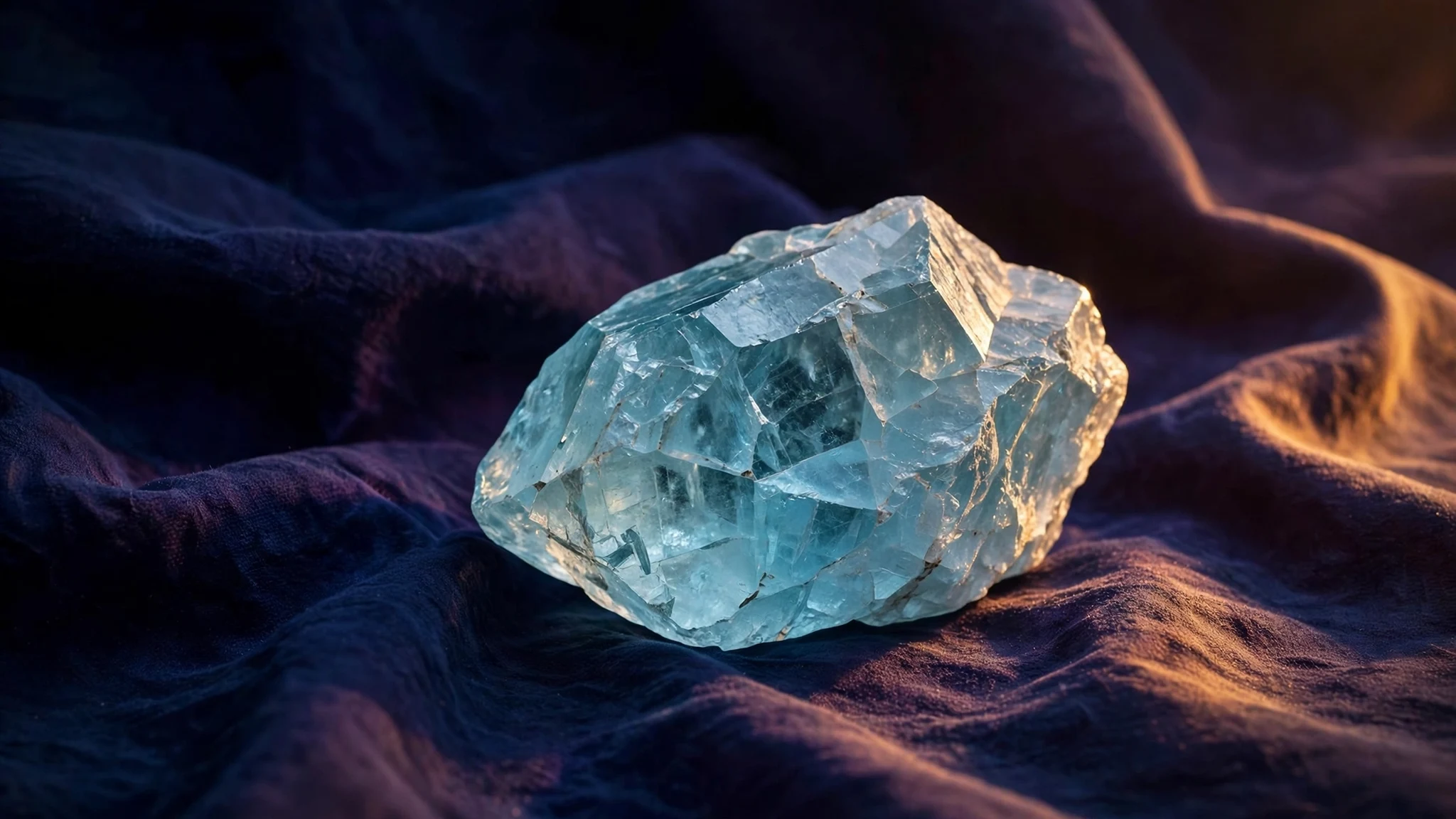
The aquamarine meaning is carried in its name before any tradition gets a chance to speak. Aqua marina is Latin for sea water, and the stone earns the title on sight, a clear blue or blue green that looks like shallow tropical water held still. People reach for aquamarine when a conversation needs cooling, when words matter and tempers are running warm, and when they want the feeling of a deep breath taken at the shoreline. In the crystal tradition, this beryl has become the emblem of calm, clear and gentle communication, and of courage that speaks softly instead of shouting.
Unlike stones whose beauty hides until the light is right, aquamarine shows itself plainly. Good material is transparent, bright and even in color, the kind of gem that jewelers have set in rings for centuries because it stands up to daily wear. This page follows the stone from its mineral family to its sailor lore, through the meanings tradition assigns it, and into the simple care that keeps its color at its best.
The Short Answer
Tradition holds aquamarine as a stone of calm and clarity in speech. It is the March birthstone, a member of the beryl family alongside emerald, and in chakra based practice it is linked with the throat. Practitioners keep it near for conversations that deserve a level voice, and lore remembers it in the pockets of sailors who wanted calm seas and a safe return.
| Point | Detail |
|---|---|
| What it is | The blue to blue green variety of beryl, the mineral family that includes emerald |
| Color | Pale sky blue through sea green, usually clear and transparent |
| Tradition links it with | Calm, clear and gentle communication, courage spoken softly |
| In practice | Worn or kept nearby for talks, teaching, writing and public speaking |
| Care note | Hard and durable with simple care, though long harsh light can soften fine color |
What Aquamarine Actually Is
Aquamarine is the blue to blue green variety of beryl. That single sentence places it in distinguished company, because emerald is the green variety of the same mineral, and morganite supplies the pink. Iron within the crystal structure produces aquamarine's color, and the balance of that iron decides whether a given stone leans toward pure blue or toward the greener tones the trade calls sea green.
Fine stones have been mined in Brazil for generations, with material also coming from Pakistan, Nigeria, Madagascar and several other sources. Large crystals are not rare for this species, which is why museums hold aquamarine gems of astonishing size and why the stone has a history in bold, architectural jewelry. Most commercial pieces are heat treated to reduce green or yellow tones and settle the color toward a cleaner blue, a standard and permanent treatment that honest sellers disclose as routine.
Durability explains the stone's long career in rings. Beryl ranks high enough in hardness to resist everyday scratching, and aquamarine has no delicate cleavage habit to fear, so a well cut stone in a sound setting handles normal life with little fuss. Care is simple. Warm water, a drop of mild soap and a soft brush handle most cleaning, followed by a rinse and a pat dry.
One caution belongs in any honest account. Very fine, deeply colored material can soften in color after long exposure to harsh light, so a prized piece kept on a sunny windowsill for years may come back a shade paler than it went out. Ordinary indoor display and normal wearing cause no concern. It is the permanent sunbathing spot that owners of top color stones are advised to skip.
The March birthstone title rounds out the facts. In the modern list, aquamarine owns the first month of spring in the northern hemisphere, which suits its reputation nicely. Jewelers lean on the pairing of stone and season in their displays, all pale blue and new growth, and the association has kept the gem a default choice for March birthdays and for spring weddings that want a blue with a story attached.
The Meaning in Tradition
Sailors stand at the head of the tradition. Lore holds that seafarers carried aquamarine for calm seas and safe return, some believing the gem belonged to the treasure stores of mermaids and would protect those who traveled over water. The tales are told here as lore, and they explain the stone's enduring place in travel charms and in the gift customs around anyone leaving on a long voyage.
Calm communication is the meaning modern practice emphasizes most. In the tradition's framing, aquamarine belongs to the pause before the sentence, the moment when a speaker chooses the accurate word instead of the available one. Teachers, mediators, customer facing professionals and nervous best men all appear in crystal shop stories about this stone, each of them drawn by the same promise stated as belief, that a level voice carries further than a raised one.
Courage spoken softly is the companion theme. The tradition does not picture aquamarine on the loudest person in the room. It pictures the stone with the person who says the necessary thing at a normal volume while everyone else is performing, the manager delivering hard news without cruelty, the friend naming a problem without turning it into a trial. That quiet register is treated as a skill the stone symbolizes and reminds its owner to practice.
Cooling a heated moment, in this tradition, is a reflective practice rather than any kind of effect on the body. A practitioner holding a disagreement in mind will sit with the stone and rehearse the conversation at a slower tempo, letting the color and the sea association set the pace. The ritual works the way a walk around the block works, by giving the mind a structured pause, and the tradition is content to describe it that way.
In chakra based practice, aquamarine is linked with the throat chakra, as one of several blue stones assigned to the center of voice and expression. Its particular place in that group comes from the water imagery, speech imagined as a clear stream rather than a shout across a canyon.
Working With Aquamarine
Public speakers give this stone its most practical modern role. A small tumbled piece in a jacket pocket, touched once before stepping up, becomes a private signal to begin at a measured pace. Some lecturers keep a faceted stone on the podium beside their notes. The practice costs nothing, disturbs no one, and ties a large abstract intention, speak clearly and stay composed, to a small object the hand can find.
At home, aquamarine is used in what practitioners call the kitchen table practice. The stone sits in the middle of the table during family discussions that need fairness, money talks, care decisions, the planning of a move. Its presence is a household agreement in mineral form, a reminder that everyone gets a full sentence and that the goal is a decision, not a victory.
Writers adopt it for a different reason. Set beside a keyboard during the drafting of a difficult letter, an apology, a resignation, a delicate email to a landlord, the stone marks the writing session as one where tone is the assignment. Next to clear quartz, kept for single pointed focus, aquamarine becomes the editor of a pair, quartz holding the goal steady while the blue stone minds the wording.
During bright nights, owners often add aquamarine to a sill of stones set out for the full moon charging ritual, partly because its sea color looks at home in moonlight and partly because the monthly reset matches its role as a stone of fresh starts in conversation.
Cleansing, Charging and Care
Everyday care could hardly be simpler, which is part of this stone's appeal for people who wear their crystals rather than shelve them. Wash with warm water and mild soap, use a soft brush behind the setting where lotion and dust collect, rinse well and dry with a lint free cloth. Aquamarine tolerates this routine indefinitely, and no special products are required.
For the ritual reset practitioners call cleansing, the traditional options suit the stone well. Moonlight is a favorite, gentle and thematically perfect for a sea colored gem, and it carries none of the fading risk that long harsh sun can bring to fine color. A brief pass through herb smoke works for owners who prefer a dry method. Salt water soaks, sometimes recommended in old books because of the sea association, are unnecessary and can work into settings and stringing material, so modern guides usually steer owners toward the simpler choices.
Storage asks only for ordinary sense. A separate pouch or compartment keeps harder stones, especially diamonds and sapphires in neighboring jewelry, from scuffing the surface. Because aquamarine is tough, it is more often the scratcher than the scratched in a crowded box, one more reason to give each piece its own small territory.
Check settings once a year if the stone is worn daily. Prongs loosen on every ring eventually, and a jeweler's quick inspection costs little compared with replacing a lost gem, particularly one chosen for a March birthday or a wedding.
Pairing Aquamarine With Other Stones
Aquamarine pairs most naturally with the lunar stones. Beside moonstone, the shimmering feldspar of cycles, the combination reads as tide and moon together, suited to people whose communication work follows rhythms, monthly reports, seasonal teaching, the check in call that keeps a long distance friendship alive.
With turquoise, the older traveler's blue, the pairing builds a small history of speech and roads. Turquoise brings the ancient, social weight of the pair, while aquamarine brings transparency and polish. Travelers who carry stones often choose exactly these two, one for the journey out and one for the story told when they return.
Beside selenite, the pale stone of quiet rooms, aquamarine takes part in the calmest arrangement in this cluster, a pairing practitioners set out when a home office needs to feel less like a courtroom. The contrast is visual as much as symbolic, clear blue against soft white, each making the other look more itself.
With clear quartz, mentioned earlier as an editing partner, the pairing serves study and examination seasons, when a student wants both a steady aim and a composed voice for the oral defense or the interview at the end of the course.
A Plain Answer Before the Hard Conversation
Aquamarine is linked in tradition with clear speech and steady nerves. When the question underneath the nerves is a simple one, should I say it now or wait, the free Yes/No Oracle gives one plain answer to react to. Your reaction to that answer usually tells you what you actually wanted to say.
Take the Question Further
A blue stone beside your notes can remind you to slow a sentence down, yet it cannot ask the follow up question your situation needs. If you are preparing for a talk that matters, a reconciliation, a confession, a negotiation across distance, a live reader can help you hear how the story sounds from outside your own head. Arrive with the words you have been rehearsing, and leave with a clearer sense of when to say them. First 3 minutes FREE, every time, for every reading, with all advisors.
Frequently Asked Questions
Is aquamarine a good stone for someone who dislikes delicate jewelry?
Yes, it is one of the better choices for everyday wear. Beryl is hard, aquamarine lacks a fragile cleavage habit, and cleaning needs only warm water, mild soap and a soft brush. A sound setting and a yearly prong check cover the realistic risks of daily use.
Why do some aquamarines look green while others look pure blue?
Iron in the crystal produces the color, and its balance shifts the hue between blue and sea green. Much commercial material is heat treated to settle toward blue, a standard permanent treatment. Greener stones are not lesser goods, and many collectors prefer the natural sea toned material.
Did sailors really carry aquamarine, or is that a modern story?
The sailor connection belongs to lore with old roots. Tales describe seafarers carrying the stone for calm seas and safe return, and mermaid treasure stories grew around it. Historians treat the details as folklore, while the tradition of giving it to travelers continues in modern gift custom.
Can aquamarine fade if I leave it in a window?
Fine, deeply colored stones can soften in color after long exposure to harsh light, so a permanent sunny sill is a poor home for top material. Normal wearing and indoor display are not a concern. Moonlight, notably, carries no such risk and is the traditional choice for this stone.
What is the difference between aquamarine and blue topaz?
They are different minerals that can share a similar blue. Aquamarine is beryl, colored by iron, and usually shows a softer, sea toned blue. Most blue topaz on the market owes its color to treatment. A jeweler can separate them quickly with standard testing, and price per carat often tells part of the story.
Last updated: November 9, 2026