
Sloth Dream Meaning: Rest, Pace and Quiet Strength
What a Sloth Dream Meaning Usually Points To
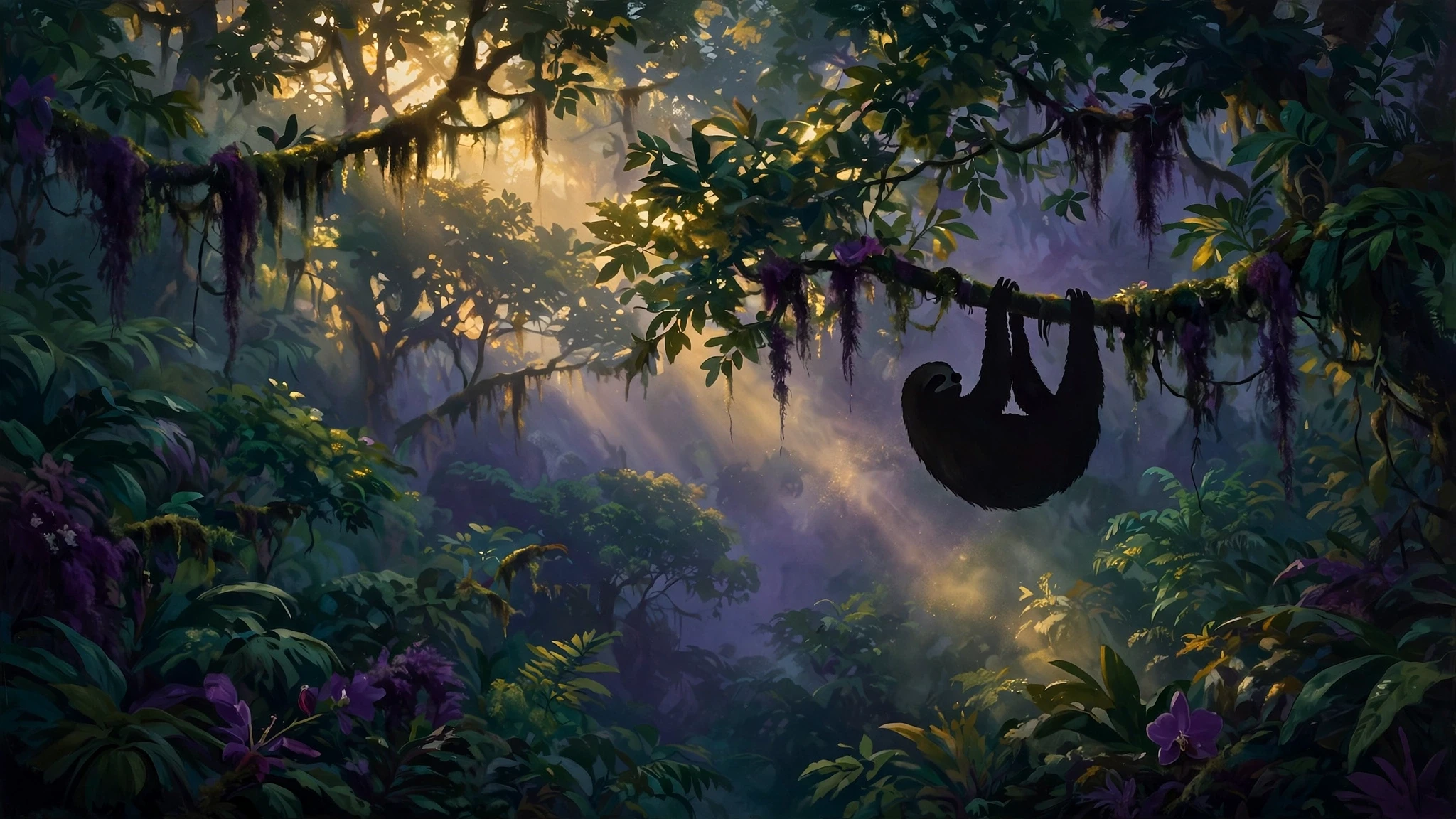
A sloth dream meaning often starts with pace, and with the relief of slowing down. A sloth does not hurry, and it does not pretend to hurry. It hangs upside down from a branch, moves a few meters in a day, and lets the forest move around it. In a dream, that picture can point to a part of your life that needs a slower pace, a rest you have been putting off, or a decision that does not need to be made today. The sloth is not stuck. It is living at the speed its body and its food allow, and the dream may be asking whether you are living at a speed your own life allows.
The sloth in the dream is a tree dweller of the rainforests of Central and South America. There are seven living sloth species in two groups, the three toed sloths and the two toed sloths. They spend most of their lives hanging upside down, and they eat, sleep and even give birth in that position. Their food is mainly leaves, which are low in energy and hard to digest, so they save energy by moving little and slowly. The Smithsonian Tropical Research Institute notes that food can take up to a month to pass through a sloth's digestive system, and that a three toed sloth may spend up to 18 hours a day hardly moving. That is not a flaw in the animal. It is the whole design.
A sloth dream meaning also carries a quiet kind of strength. A sloth's claws are long and curved, and they let the animal hang without effort. Its fur grows in a way that suits an upside down life, and green algae can grow in the grooves of its hair, helping it blend into the canopy. A sloth is hard to spot, hard to catch, and surprisingly strong in the water. In a dream, a sloth can point to a strength that does not look like strength from the outside, the ability to hold on, to wait, and to survive by spending very little.
Hanging Upside Down: Seeing the World the Other Way
A sloth spends its life upside down, and that simple fact gives a sloth dream a useful picture. When you hang upside down, the world looks different, and the things you thought were urgent may look less urgent from that angle. In a dream, a sloth hanging above you can point to a perspective you have not tried yet, a way of looking at a problem that turns it over and shows you a different side. It can also point to a time when you feel upside down yourself, when the normal order of your day has been reversed and you are trying to find your footing in a new arrangement.
Notice how the sloth looks in the dream. A sloth hanging calmly, eyes half closed, can point to rest and trust, a time when you can let go and let the branch hold you. A sloth struggling to climb, or slipping from a branch, can point to a hold that is weakening, a routine or a relationship that no longer supports your weight. A sloth on the ground is a different picture again. Sloths are almost helpless on the ground, and they only come down about once a week to relieve themselves, digging a small hole at the base of a tree. A sloth on the ground in a dream can point to a moment when you feel out of your element, slow and exposed, and the dream may be asking you to get back to the branch that suits you.
The upside down position also points to rest that is built into the day. Sloths do not rest after work. Rest is the work, in a sense, because moving slowly is how they save the energy they need to live. A dreamer who has been pushing through exhaustion may dream of a sloth as a permission slip, a picture of an animal that rests without guilt. The dream does not tell you to stop everything. It shows you a creature that treats rest as a strategy, not as a failure, and asks whether you could do the same for a day or a week.
The Slow Stomach and the Slow Life
A sloth's slowness is not only in its limbs. Its whole body runs slowly, from its metabolism to its digestion. Leaves are hard to digest, so sloths have large, multi chambered stomachs where bacteria break down tough leaves over weeks. Their body temperature runs lower than that of most mammals, and they bask in warm places to stay comfortable. In a dream, that slow inner life can point to a process in you that is taking longer than you expected, a grief, a healing, a learning, a decision that needs weeks rather than days.
That picture can be comforting if you have been judging yourself for being slow. A sloth does not digest faster by trying harder. It digests at the pace its stomach allows, and it survives because it does not waste energy on speed it does not need. A dreamer who is healing from a loss, learning a new skill, or growing out of an old habit may dream of a sloth when the process feels too slow to others. The dream may be showing you that slow is not the same as stuck, and that a long digestion is still a digestion.
The slow life also points to what the sloth does not do. It does not chase, it does not hunt, it does not compete for the fastest branch. It eats the leaves that are close, it stays in a few favorite trees, and it lets predators pass by because it is hard to see and hard to reach. In a dream, that can point to a choice to step out of a race, to stop competing for something you do not actually want. Ask what race you are in right now, and whether the sloth in your dream is showing you a way to step out of it without losing anything that matters.
Camouflage, Algae and Being Hard to Find
A sloth is hard to find on purpose. Its shaggy coat has grooved hairs that host green algae, and that green tint helps the animal blend into the leaves around it. Moths also live in its fur, and the whole small ecosystem on its back helps it disappear into the canopy. In a dream, a sloth that blends in can point to a wish to be unseen for a while, a time when you want privacy, quiet or a break from being noticed. It can also point to a part of you that has been hiding, not out of fear but out of a need for rest.
Watch whether the sloth in your dream is easy to see or hard to find. A sloth you spot right away, hanging in plain view, can point to a slow part of your life that is ready to be seen, a need for rest or a change of pace that you no longer need to hide. A sloth you have to search for, hidden among leaves, can point to a need that is still quiet, a feeling or a wish you have not named yet. A sloth that turns green in the dream, or that seems to become part of the tree, can point to a time when you feel merged with your surroundings, comfortable and unnoticed, and the dream may be asking whether that comfort is rest or disappearance.
The camouflage also points to safety. A sloth survives not by fighting or fleeing, but by being hard to notice. Predators that hunt by sight, such as hawks and cats, often pass it by. In a dream, that can point to a strategy you are already using, staying quiet, staying still, letting a difficult situation pass without engaging it. That strategy can be wise for a while, and it can also become a habit that keeps you hidden long after the danger has passed. The dream may be asking you to notice which one it is.
Dream Scenarios: Climbing, Swimming, Falling and Waking
A sloth climbing slowly in a dream often points to steady progress, the kind that does not look impressive from the ground but adds up over time. If the climb felt calm, the dream may be reflecting a project or a change that is moving at the right pace for you. If the climb felt endless, the dream may be reflecting a goal that feels too far away, and it may be asking you to break the climb into smaller branches, one tree at a time, instead of looking at the whole canopy at once.
A sloth swimming is a surprising dream image, because sloths are strong swimmers even though they are slow on land. They can hold their breath under water for up to 40 minutes by slowing their heart rate, according to research summarized in sloth references. In a dream, a swimming sloth can point to a hidden ability, a strength you have in a setting where you usually feel slow. It can point to emotions, too, because water in dreams often stands for feeling, and a sloth moving easily through water can point to a feeling you are learning to move through without rushing it.
A sloth falling from a tree can feel alarming, and it can point to a fear of losing your hold, a job, a relationship, a routine that has held you up. It can also point to a hold you need to release on purpose, a branch that is no longer strong enough for you. A sloth waking up in a dream, opening its eyes and looking at you, can point to attention returning after a long rest, a part of you that is ready to move again, slowly, when it is ready.
An Illustrative Example: One Branch at a Time
This example is illustrative, not a real person's story.
Marcus, a 38 year old graphic designer, dreamed that he was a sloth hanging from a branch over a slow river. He was not doing anything in the dream. He was just hanging there, watching leaves drift past, and he felt no urge to move. When he woke, he felt guilty for enjoying the stillness, because he had a deadline that week and a list of emails he had not answered. He had been working late for a month, and his sleep had grown short.
Over the next few days Marcus thought about the dream and about how the sloth in it had not been lazy. It had been living at the pace its body allowed. He decided to try a slower week, not a stopped week. He kept his deadline, but he stopped answering emails after 7 in the evening, he took a walk at lunch instead of eating at his desk, and he told his manager that one smaller task would need an extra day. The work still got done, and he slept better. The dream was not telling him to leave his job. It showed him a creature that treats rest as part of the work, and it gave him a picture he could return to when the urge to hurry came back. One branch at a time, he told himself, and the phrase helped him slow down without feeling that he had failed.
What to Do After a Sloth Dream
Start with pace. Write down one thing you have been rushing, a decision, a recovery, a project, and ask what would happen if you gave it a week longer than you planned. A sloth does not move faster by worrying about its speed. It moves at the pace its food and its body allow, and it still gets where it needs to go. Try one slower day, with fewer tasks and more rest, and notice whether the work that matters still gets done.
Next, look at your branch. Name the one support that is holding you right now, a routine, a person, a place, a practice, and ask whether it still holds your weight. If it does, rest on it without guilt. If it does not, look for a stronger branch nearby, not a whole new tree, just a closer, sturdier hold. A sloth stays in a few favorite trees for a reason. It knows where it is safe, and it returns there.
Finally, check what you are digesting. Name one experience you are still processing, a loss, a change, a piece of news, and give it the time it needs. Slow digestion is still digestion, and a process that takes a month is not a process that has failed. A short reading can help you sort rest from avoidance, and a slow pace from a stuck one, so you can move again when you are ready, at your own speed.
Sloths share their canopy with climbers that move faster, and a dream of a monkey or a bear can sharpen the contrast, while the dream dictionary hub lets you compare a slow pace with a quicker one.
If this dream has stayed with you, a short reading can help you tell rest from hiding and patience from delay. First 3 minutes FREE — every time, for every reading, with all advisors.
For a simple next step, try a One-Card Tarot reading and reflect on what needs more time and which branch is strong enough to hold you.
Frequently Asked Questions
What does a sloth dream meaning usually point to?
It usually points to pace, rest and patience. A sloth moves slowly because its leaf diet gives it little energy, so the dream can reflect a part of your life that needs more time, more rest, or a slower approach instead of a faster one.
Is a sloth dream a sign I am lazy?
No. A sloth is not lazy, it is built for a low energy life, and it survives by spending very little. A sloth dream often points to rest as a strategy, not as a failure, and it can ask you to treat sleep, quiet and a slower day as part of the work rather than a break from it.
What does it mean to dream of a sloth hanging upside down?
It often points to a new perspective, a way of looking at a problem that turns it over and shows a different side. It can also point to feeling upside down yourself, when the normal order of your day has changed and you are finding your footing in a new arrangement.
What does a sloth on the ground mean in a dream?
It can point to feeling out of your element, slow and exposed, because sloths are almost helpless on the ground and only come down about once a week. The dream may be asking you to return to the branch, routine or place that suits you best.
Why would I dream of a sloth if I am busy?
Dreams often bring the opposite of your waking life, and a busy person may dream of a slow animal precisely because rest is what is missing. The sloth can be a picture of the pace your body and mind are asking for, even when your schedule says otherwise.
Last updated: November 12, 2026
