
Dreaming About an Island: Escape or Alone
Dreaming About an Island: Surrounded by Water, Surrounded by Questions
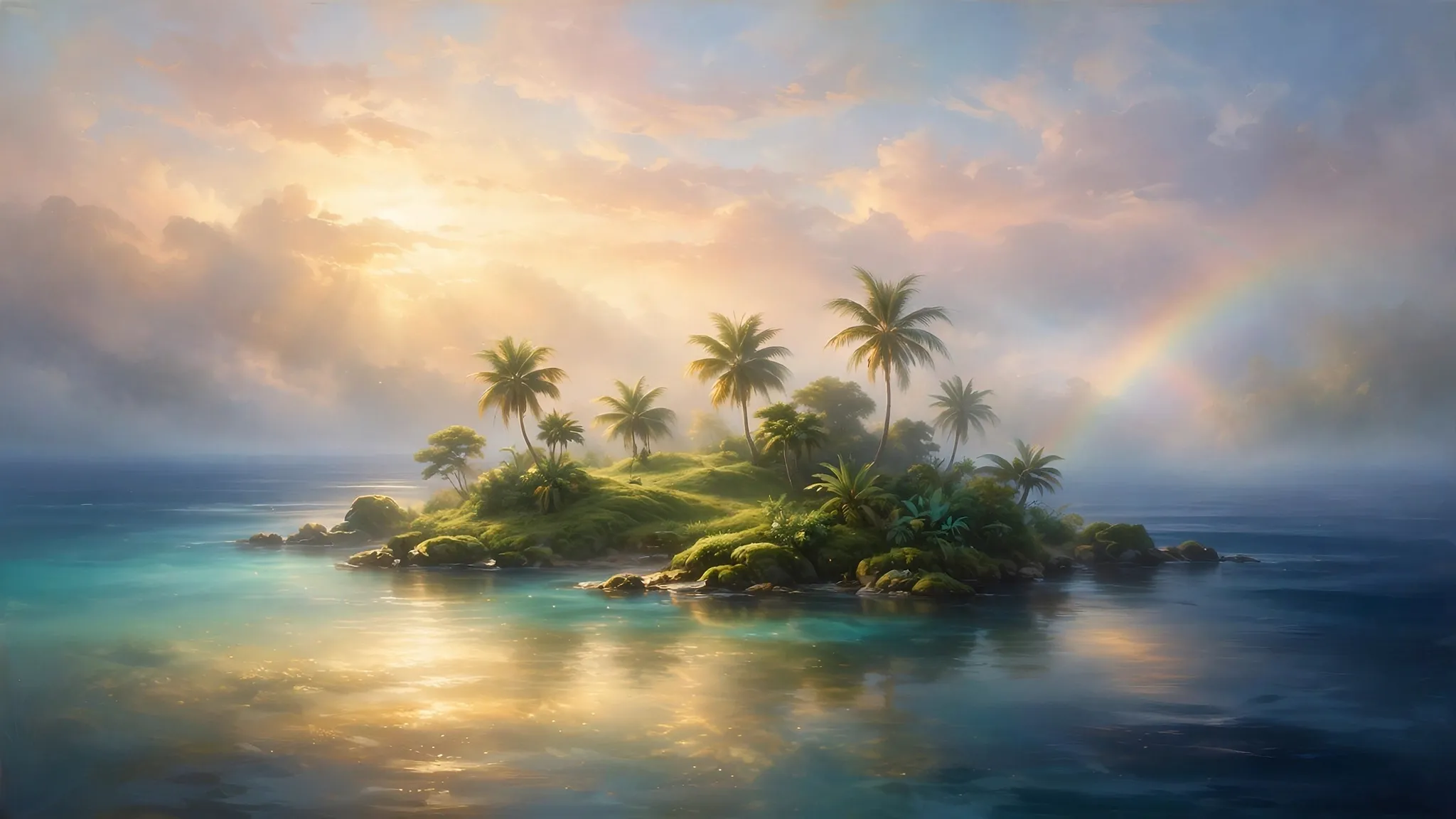
Dreaming about an island is a dream about being set apart. An island is land with water on every side, in dreaming about water, and that shape gives the dream its two faces. On one side, the island is escape: a quiet place away from noise, a fresh start, a holiday from a life that has become too crowded. On the other side, the island is isolation: being cut off, being alone, or feeling that no one can reach you. If an island came into your sleep last night, that tension may be what you are working through. Do you want to get away, or do you want to be found? Are you enjoying the quiet, or are you stranded in it? The island itself will tell you, if you look at its details. A tropical island with palm trees is a different dream from a bare rock in a gray sea, and an island you choose to visit is a different dream from an island you cannot leave. Below come the island variations, the two readings, and the modifiers. The dream meanings dictionary lists it beside the others.
Island Dream Variations and What Each One Suggests
A tropical island with palm trees, white sand, and clear water is the most pleasant version of this dream, and it is usually read as a wish for rest, escape, or a fresh start. People often report this dream when they are tired, overworked, or in need of a break. The island is not necessarily a place you want to move to. It is often a picture of what rest would feel like: warm, quiet, and far from the demands of daily life. The sandy edge is dreaming about a beach. A deserted island, with no people and no buildings, points to a deeper kind of aloneness. It can suggest a feeling of being stranded, a period of loneliness, or a wish to be left alone. How the dream feels is what separates the two. If the deserted island feels peaceful, the dream leans toward a needed solitude. If it feels frightening, it leans toward isolation that needs attention.
Being stranded on an island is a sharper variation. It points toward a feeling of being stuck, cut off, or unable to reach help. It often arrives during a period when support feels far away, such as after a move, a breakup, or a loss. Leaving an island, by boat or by swimming, points to the opposite: a return, a reconnection, or a decision to rejoin the world. An island with a single house, a lighthouse, or a small village points to a life that is small, quiet, and self-contained. It can suggest a wish for simplicity, or a feeling that your world has become very small. An island that sinks, or an island in a storm, points to a feeling of insecurity, a foundation that feels shaky, or a situation that is under pressure.
An island you discover, one that is not on any map, points to a new part of yourself, a hidden talent, or an opportunity you did not know existed. An island with a volcano points to strong feeling beneath a calm surface, often anger or passion that has been hidden. An island at sunset points to a closing chapter, a beautiful ending, or a moment of reflection. An island at dawn points to a beginning, a fresh start, or a new day after a long night. An island with other people on it points to a community, a family, or a group that shares your isolation, and the dream can suggest that you are not as alone as you feel.
A Psychological Reading: Escape, Isolation, and the Need for Space
From a psychological point of view, the island is an image of escape and isolation, two feelings that often arrive together. Freud read dreams as wishes in disguise. An island fits that idea because the wish to escape and the fear of being alone are two feelings people set aside again and again. They keep telling themselves they are fine, and then an island appears at night to show them how much they want space, or how alone they feel. Carl Jung read the island as a symbol of the self, a whole world set apart from the mainland, and he treated island dreams as signs of a need for wholeness or for a retreat into the inner life. REM sleep, identified in 1953, is the stage where vivid dreams happen, and the feelings of the day return in it.
The real island explains why the symbol feels so true. Greenland, the largest island in the world, covers about 2.16 million square kilometers, and most of it is covered in ice. Islands range from tiny rocks that disappear at high tide to landmasses the size of continents, and they have been home to some of the most distinct cultures on Earth, from Hawaii to Madagascar to Japan. Islands are separated from the mainland by water, in dreaming about the ocean, which is why they have become the universal image of being set apart. The dream borrows the island's shape to describe your own state: surrounded, set apart, and wondering whether the water around you is a protection or a prison.
A Spiritual Reading: Retreat, Refuge, and the Sacred Shore
In spiritual traditions, the island is often treated as a place of retreat, refuge, and sacred meeting. In Celtic tradition, islands were sometimes seen as thin places, where the boundary between the ordinary world and the spirit world was thinner than usual. The island of Iona, off the west coast of Scotland, has been a place of pilgrimage for more than fourteen hundred years, since Saint Columba founded a monastery there in the year 563. In Greek myth, islands were the homes of gods and monsters, from Delos, the birthplace of Apollo and Artemis, to the island where Odysseus was held by the nymph Calypso for seven years. In Buddhist tradition, the island is sometimes used as an image of refuge, a place of safety in the midst of a sea of suffering. In the stories of the South Pacific, islands are places of origin, of arrival, and of new beginnings.
A spiritual reading of your island dream starts by asking whether the island is a refuge or a prison. When a tropical island feels peaceful, the dream can be read as an invitation to step back and clear room for prayer, reflection, or rest. When a deserted island feels frightening, the dream can be read as a trial, a stretch of loneliness with a purpose behind it, or a sign that support is needed. A lighthouse on the island can be read as guidance, a light in the dark, or a sign that help is closer than you think. An island at dawn can be read as a new beginning, a fresh start after a long night. Use these readings as lenses, and keep the one that rings true. When the refuge frame rings true, rest may be what the dream is asking for. When the prison frame rings true, reaching out may be what it asks for.
What Changes the Meaning of an Island Dream
Your feeling comes first here, and it carries the most weight. Peace points to a needed rest or a welcome solitude. Joy points to a fresh start or a holiday from a crowded life. Fear points to isolation or a feeling of being stranded. Loneliness points to a need for connection. Hope points to a new beginning. The kind of island is the second modifier. A tropical island points to rest and escape. A deserted island points to aloneness. A rocky island points to a hard, bare situation. An island with a village points to a small, close community. An island with a volcano points to strong feeling beneath a calm surface. The water around the island is the third modifier. Calm water suggests a peaceful separation. Rough water suggests a difficult isolation, or a barrier that is hard to cross. Clear water suggests clarity. Dark water suggests the unknown. Still water ringed by land is dreaming about a lake.
Your position is the fourth modifier. Visiting an island points to a temporary escape, a holiday, or a short retreat. Living on an island points to a life that is set apart, whether by choice or by circumstance. Being stranded points to feeling stuck or cut off. Leaving an island points to a return or a reconnection. Arriving at an island points to a new chapter or a discovery. Who is with you is the fifth modifier. Being alone on an island points to solitude, whether welcome or painful. Being with loved ones points to a shared retreat or a family matter. Being with strangers points to a new community or a feeling of being among people who do not know you. The time of day is the sixth modifier. An island at dawn points to a beginning. An island at sunset points to an ending. An island at night points toward the unknown, or toward a stretch of waiting in the dark.
A Worked Example: Reading One Island Dream Step by Step
Here is one dream to work through: a woman in her late thirties, who works as a teacher and has felt burned out for months, dreams that she is sitting on a small tropical island with white sand and a single palm tree. The water is calm and clear, and she feels peaceful for the first time in weeks. She wakes up feeling rested, even though she only slept for a few hours. First, the bare facts: a small tropical island, white sand, a single palm tree, calm and clear water, peace, rest. Second, hold it up against waking life. She has been working long hours, she has not taken a holiday in two years, and she has been asking herself how much longer she can keep going. Third, test the kind of island. A tropical island points to rest and escape, which fits a need for a break.
Fourth, test the water. Calm and clear water suggests a peaceful separation, a rest that is not troubled by guilt or worry. Fifth, read the two together. Her mind seems to be offering her a picture of what rest would feel like, a small, quiet place where no one needs anything from her. Spiritually, the island reads as a refuge, a sacred shore where she can recover. Sixth, one changed detail. If the island had been deserted and frightening, the dream would point to isolation rather than rest. If the water had been rough, the reading would lean toward a barrier that is hard to cross. The exercise shows how a simple dream can hold both a practical question and a deeper one, and the life of the dreamer decides the fit.
If the Island Dream Keeps Coming Back
An island dream that returns usually points to a need for space, or a loneliness that is still going on. The island returns because the question it points to, rest or connection, has not yet been answered. If the repeated dream is peaceful, the task is simple: take the rest. A tropical island returning night after night can keep reminding you that you need a break, and that a break is not a luxury. Take one small step toward rest this week, such as clearing an evening, taking a walk, or saying no to one obligation. Small rests matter, and a single quiet evening can change the dream.
If the repeat frightens you, ask a different question instead. An island that is always deserted, always stormy, or always impossible to leave points to a loneliness that needs attention. Ask who you wish could reach you, and whether you have told them. Reaching out, even with a short message, can shift the dream within a few nights. When the dream involves leaving the island, the question is about return. The dream may be telling you that you are ready to rejoin the world, to reconnect, or to take up a life you set aside. If the dream involves arriving at an island, the question is about discovery. The dream may be pointing to a new part of yourself, a hidden talent, or an opportunity you did not know existed. An island dream is seldom a warning. It is a reminder that you are set apart, and that the water around you can be either a protection or a prison, depending on how you choose to cross it.
If this dream has you wondering whether to rest or reach out, a reading can help you find the shore. First 3 minutes FREE — every time, for every reading, with all advisors.
Try a One-Card Tarot reading for the island your dream keeps showing you.
Frequently Asked Questions
What does dreaming about an island mean?
Escape, loneliness, or a fresh start are the usual readings, and the feeling in the dream picks the one that leads. A tropical island suggests a wish for rest, while a deserted island suggests a feeling of being cut off. The kind of island, the water around it, and your feeling add the finer detail.
What does being stranded on an island mean in a dream?
Being stranded on an island often points to a feeling of being stuck, cut off, or unable to reach help. It usually arrives during a period when support feels far away, such as after a move, a breakup, or a loss. It is a prompt to reach out or to find a way back, not a prediction of harm.
What does a tropical island mean in a dream?
A tropical island is usually read as a wish for rest, escape, or a fresh start. It often appears when you are tired, overworked, or in need of a break. The island is often a picture of what rest would feel like: warm, quiet, and far from the demands of daily life.
Is dreaming about an island a bad sign?
Not always. In many traditions the island is a place of retreat and refuge, a sacred shore where people go to recover or to find clarity. Fear in the dream points toward a loneliness that needs attention, while peace in the dream points toward a rest that is overdue or a solitude that feels welcome.
Why do I keep dreaming about islands?
A repeated island dream usually means a question about rest or connection is still open in waking life. The island returns because the need for space, or the loneliness, has not yet been answered. Noticing what changes, the kind of island, the water, and your feeling, often shows what the question is and what would answer it.
Last updated: November 11, 2026
