Ocean Dream Meaning
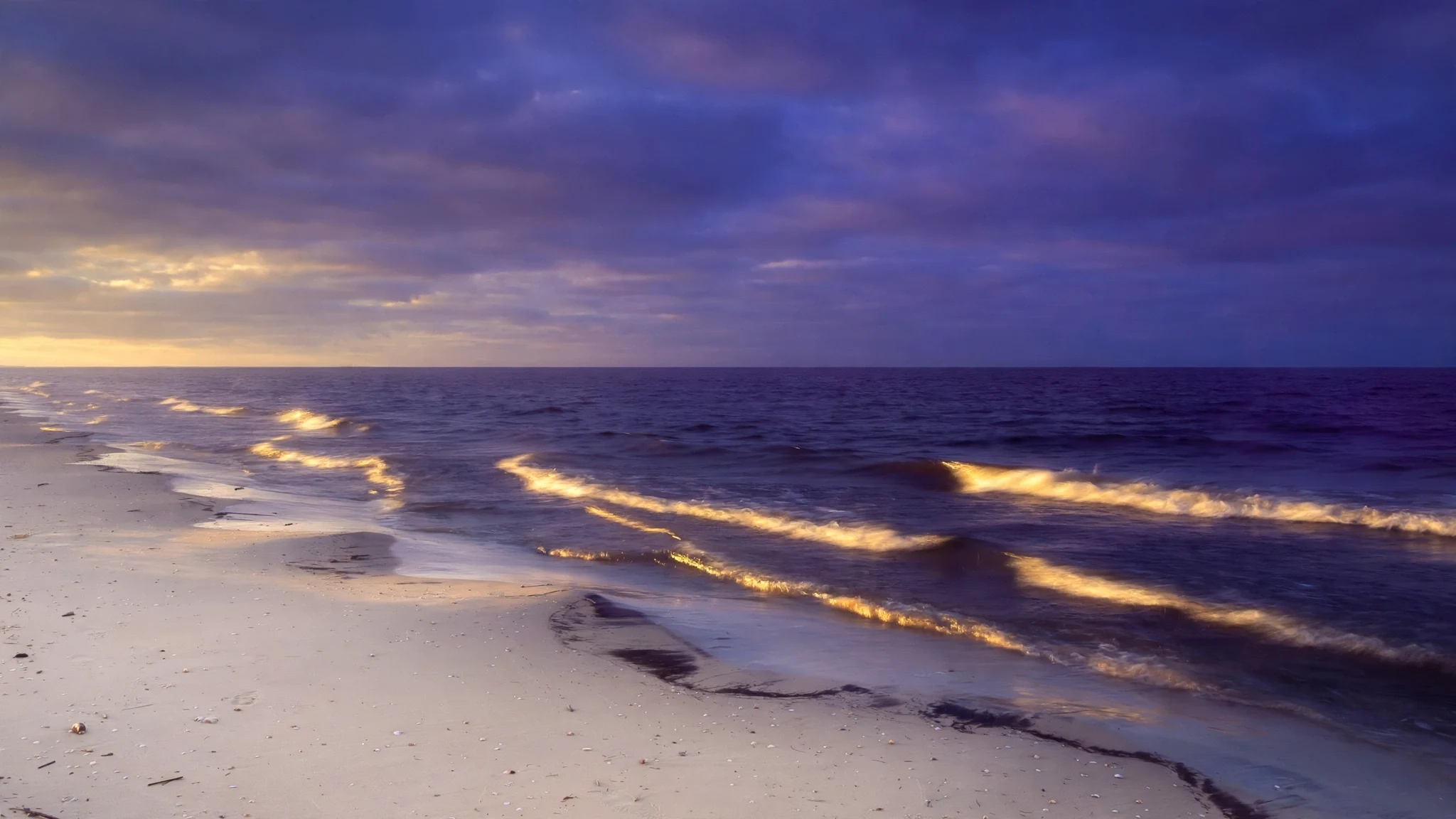
An ocean dream meaning turns on scale before it turns on anything else. A pond fits in a glance and a river has two banks, but the ocean in a dream keeps going past the frame, and your dream self knows it. Whether that vastness felt like peace, like freedom, or like a warning depends on the sea's mood, your distance from it, and what the tide was doing while you watched.
Tradition treats the ocean as feeling at full size: the whole of a person's emotional life, memory, and unconscious habit gathered into one moving body. That is why ocean dreams often arrive during large seasons, bereavement, falling in love, emigration, a career sea change, the months when a whole life rearranges rather than a single week going wrong. This entry separates the ocean from ordinary water dreams by that scale. A tap, a glass, and a flooded kitchen belong to the water dream entry, where containment is part of the point. Here, nothing contains the water. The horizon is the point.
Find this entry in context through the dream meanings collection if your ocean arrived with a boat, a creature, or a shoreline house that also needs reading.
The Sea in Its Main Moods
| State of the sea | Reflection direction in tradition |
|---|---|
| Calm sea, flat and bright | Emotional steadiness at scale, a life in a settled season |
| Rough sea, whitecaps and wind | Large feelings in motion, conflict or change with real force |
| Huge waves approaching shore | An event or feeling arriving that feels bigger than your defenses |
| Gentle waves lapping a beach | Regular, survivable feeling, life arriving in manageable rhythm |
| Tide going out, revealing sand | Withdrawal, loss, or a season of less that exposes what was hidden |
| Tide coming in over your feet | A new influence entering your life whether invited or not |
Mood sets the headline. Your position, on the sand, in the surf, out in a boat, or under the surface, writes the rest of the story.
Calm Sea Versus Rough Sea
A calm ocean in a dream can hold a whole morning together. The surface barely moves, color runs from deep blue to glassy green, and dreamers often simply stand and look, doing nothing, needing nothing. Readings of calm seas tend toward integration: grief that has settled into memory, love that no longer needs daily proof, work that finally matches the person doing it. The calm is not emptiness. It is fullness without turbulence, and dreamers who have crossed rough years often treasure this version precisely because nothing happens in it.
A rough sea reverses the energy. Wind tears the surface, waves stack and break out of rhythm, spray reaches places that should stay dry. Tradition reads rough water at ocean scale as forces larger than personal mood: family systems in conflict, markets and workplaces in upheaval, a body going through hormonal or health weather, history itself feeling loud. The useful question is not how to calm a dream sea. It is where you stood in relation to it, because watching a storm sea from a lighthouse, from a clifftop, and from a small boat are three different statements about how exposed you feel to the large forces in your life right now.
Between calm and rough sits the working sea, ordinary waves, a swim that takes effort, a crossing that proceeds. Many ocean dreams live there, and their reading is usually the plainest: life at scale, under way, neither blessed nor threatened, simply big and moving.
Big Waves, Tsunamis, and the Shoreline
A giant wave is the ocean dream people search for at 4 a.m. The wave stands up far out, taller than the houses, and the dream gives you those long seconds of watching it come. Readings tend to gather around overwhelm with a date on it: a known event approaching whose size you keep re-estimating, a revelation traveling toward a family, a feeling you have dammed that has built beyond the dam. Our separate entry on tsunami dreams and the wave that covers everything treats that extreme version on its own, because a tsunami dream's total coverage and aftermath ask different questions from a single large breaker.
Where you are when the wave comes refines it. Running uphill with others suggests shared alarm and shared effort. Frozen on the sand watching suggests a part of you that has stopped believing movement helps. Being swept and surviving, tumbled and deposited somewhere new, often shows up in accounts from people mid-upheaval who are discovering that the feared event, once arrived, rearranged rather than ended them. A wave that stops, hangs, or dissolves before reaching you can mirror a dreaded event that kept being postponed until it lost its size.
The shoreline itself is a working symbol. The beach is the border where your conscious, daily, dry land life meets the deep water of everything else. Dreams that keep you exactly at the waterline, feet wet and dry by turns, tend to picture a person living at that border on purpose or by circumstance: caregivers, counselors, new parents, the recently bereaved, anyone whose days alternate between ordinary tasks and very deep water.
Tides, Swimming Out, and Boats
Tides give ocean dreams a clock. An outgoing tide exposes rock pools, wreckage, lost objects, and long stretches of shining sand, and readings often connect that reveal with seasons of less: after a move, after a death, after money tightens, when what remains visible is what the full season used to cover. Dreamers sometimes find things on the exposed sand, and those found objects repay attention, since the tide chose to uncover exactly that. An incoming tide works in reverse, covering footprints, erasing sand writing, reaching the towels no matter how far up the beach you placed them, a picture of influence or feeling arriving on its own schedule.
Swimming out to sea, away from shore under your own power, tends to stage a deliberate venture into deep feeling or deep ambition. How far out you got, and whether the shore still looked reachable, measures the venture's felt risk. Turning back easily suggests a healthy test. Discovering the current owns you now connects this dream to the struggle family in water dreams about depth and being over your head, where the body's effort becomes the honest center of the reading.
Boats translate the ocean into a joint human project. A sturdy ship with a crew reads differently from a leaking rowboat you bail alone. Ferries suggest scheduled transitions between two shores of a life. A boat that never leaves harbor, a cruise that circles, or a vessel taking on water each name a different relationship between you and the large crossing you are attempting. If flying over the sea was part of the same dream, the height and steering details in the flying dream entry complete the picture from above.
Night Sea, Underwater Ocean, and Waking Mood
A night ocean removes color and leaves sound and scale. Many dreamers find it the most solemn version: black water, a moon path, surf heard more than seen. Readings lean toward mystery being lived with rather than solved, and toward the parts of a life that continue powerfully out of sight. Underwater ocean scenes, coral, wrecks, whales passing like weather, tend to feel like visiting the deep rather than fighting it, especially when breathing comes easily and light filters down in shafts.
The mood on waking is the final instrument. Ocean dreams that leave awe tend to be remembered for years and retold accurately, which suggests they marked a genuine season boundary. Ones that leave dread tend to cluster around a specific dated worry, and checking the calendar against the cluster often names it faster than symbol hunting does. Ones that leave homesickness for a shore you have never visited can reflect a longing for scale itself, for a life that feels large enough, which is useful information about an ordinary week that has felt too small.
Ordinary Explanations for a Very Large Symbol
Ocean dreams also have shoreline plain causes. A beach holiday booked or remembered, a documentary's drone footage, a storm in the news with real waves hitting a real coast near you, the sound of actual surf through an open window on a coastal night: the mind's stockroom explains the casting without touching the meaning. Sleep broken by heat or noise favors vast, drifting scenery of every kind.
Personal history loads the symbol too. A person who nearly drowned as a child dreams a different ocean from a lifelong sailor, and any honest reading starts from the dreamer's own sea biography before it borrows tradition at all. Held in that order, body and biography first, symbol second, an ocean dream can still do its reflective work: asking how large your current feelings actually are, and whether your daily arrangements respect that size.
A Brief Pause on the Shore
If your sea dream narrowed down to one practical question about a crossing, a move, or a timing choice, our free Yes/No Oracle offers a single clear prompt for reflection and entertainment, a small dry stone to stand on while you think.
For a fuller conversation about the tide, the wave, or the calm after rough years, a PsychicSmile advisor can hear the whole seascape in a live chat reading and explore its season with you. First 3 minutes FREE, every time, for every reading, with all advisors.
Frequently Asked Questions
What does a calm ocean mean in a dream?
A calm sea tends to be read as emotional steadiness at life scale: a settled season, grief integrated into memory, or love and work no longer in daily turbulence. Dreamers often do very little in these dreams, and that peaceful inactivity is part of the meaning.
What does it mean to dream of huge waves coming toward you?
A huge approaching wave often pictures an event or feeling that feels bigger than your current defenses, especially one you can see coming. Whether you ran, froze, or were swept and survived each steers the reflection in a different direction.
How is an ocean dream different from a water dream?
Scale and containment. Water dreams involve glasses, rivers, rain, and floods, water in human sized settings. Ocean dreams remove the container entirely, and tradition reads that vastness as feeling, memory, and life seasons at full size.
What does the tide going out mean in a dream?
An outgoing tide often reflects a season of less that exposes what fullness used to cover: after a loss, a move, or a tightening budget. Objects the dream tide uncovers on the sand are worth noting, since they often name what the season has revealed.
What if I am swimming far out in the ocean in a dream?
Swimming out under your own power tends to stage a deliberate venture into deep feeling or ambition. Note how far you went, whether the shore stayed reachable, and whether the current helped or owned you, since those details measure how risky the venture feels.
Last updated: November 9, 2026