
Dreaming About Ice: Meaning and Frozen Feelings
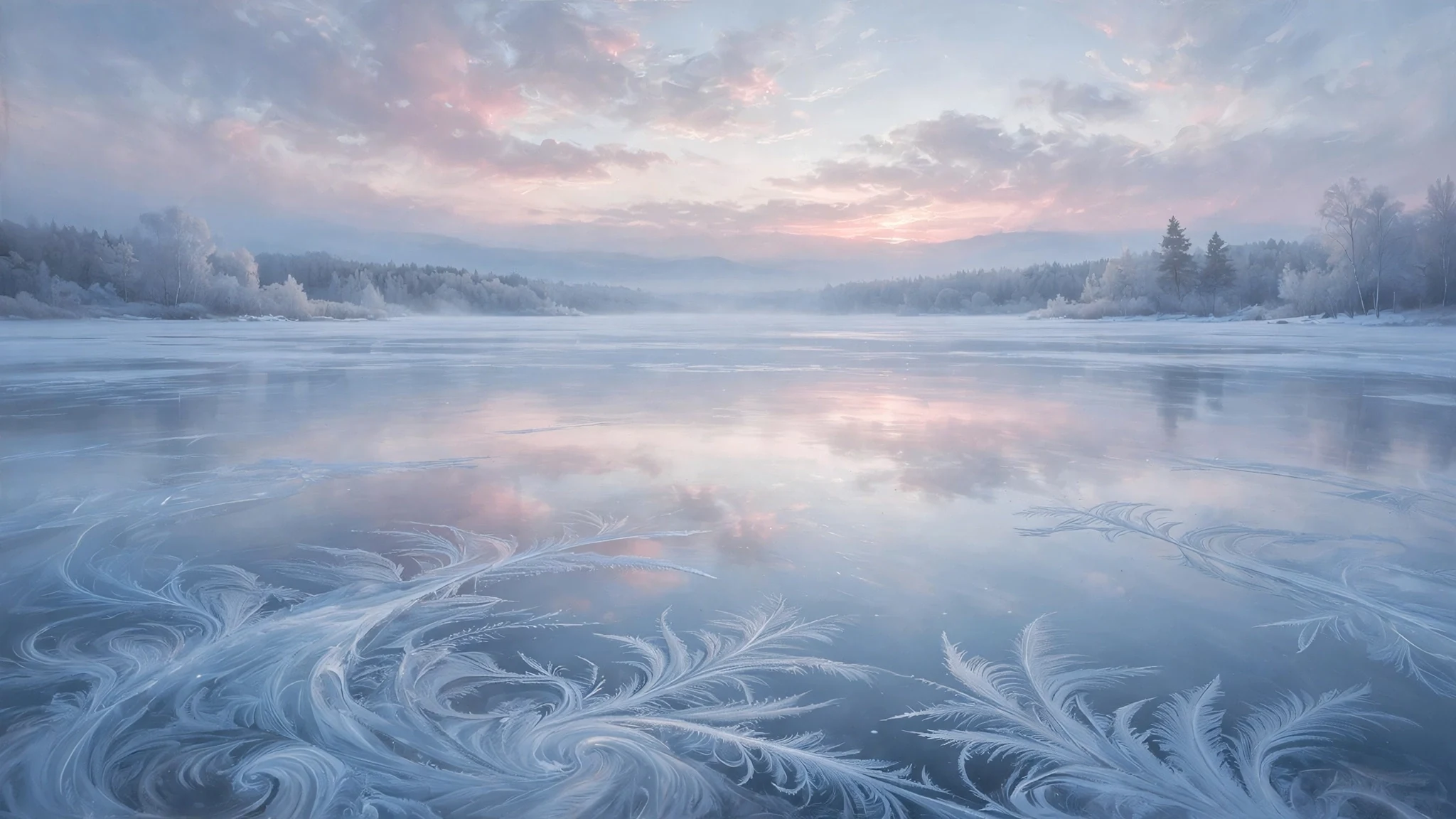
Dreaming About Ice: Stillness, Cold and What Is Frozen
Dreaming about ice is a dream about something that has stopped moving. Ice is water that has frozen, which means it is the same substance in a different state: flowing feeling turned solid, a situation that was moving and now is not, a relationship that was warm and now feels cold. People who dream about ice usually remember the cold, the slipperiness, or the stillness, and each of those is a different clue to the meaning.
The first question after an ice dream is what was frozen. A frozen lake is a different dream from an ice cube, a snowstorm is different from a single icicle, and walking on ice is different from watching it melt. The second question is about your feeling: were you cold, afraid of falling, or strangely calm in the frozen landscape? The third question is about movement: was the ice melting, cracking, or holding firm? Ice that melts is a different dream from ice that never thaws.
This page keeps ice distinct from snow, because the live snow page already covers cold weather, and this page is about frozen stillness rather than falling snow. It starts with the real science of ice, from the freezing point of water to the glaciers that hold most of the world's fresh water. Then it works through an illustrative example of a frozen river, the psychological reading, and the symbolic reading, and it finishes with the variations that change the meaning, from slipping on ice to breaking through it to watching it melt.
An Illustrative Example: The Frozen River She Could Not Cross
This example is illustrative, not a real person's story.
A woman named Ingrid, 46, dreamed she was standing on the bank of a river that had frozen solid. She needed to reach the other side, where she could see lights in the windows of a house. She stepped onto the ice, and it held, but every step made a cracking sound, and she was afraid it would break. She took three steps, stopped, and woke up before she reached the middle.
The frozen river matters, because a river is a crossing, and ice turns the crossing from a journey into a risk. The house with lights on the other side matters too, because it is a goal that is visible and warm, which makes the cold crossing feel worthwhile. The cracking sound is the heart of the dream: the ice holds, but it warns, and every step is a negotiation between the goal and the risk. And the fact that Ingrid stops after three steps matters most, because the dream ends in a pause, not in a fall and not in a crossing.
In Ingrid's waking life, she had been thinking about leaving a long-term relationship that had become cold and distant. She could see a warmer life on the other side, a home of her own, friends, a routine that felt alive, but the step of leaving felt risky, financially and emotionally, and she had been pausing for months. The frozen river was the relationship itself: once flowing, now frozen, and the crossing was the decision to leave. The cracking ice was the fear that the decision would break something, her finances, her family, her sense of stability. The dream did not tell her to cross or to stay. It showed her the pause, three steps in, and asked her to notice that she was already on the ice, and that standing still in the middle is also a choice.
The Real Ice: Freezing Water, Floating Ice and Ancient Glaciers
Water freezes at 0 degrees Celsius, 32 degrees Fahrenheit, at normal pressure, and when it freezes, it does something unusual: it expands. Most substances shrink when they freeze, but water expands by about 9 percent, which is why ice floats. Ice is less dense than liquid water, so it rises to the surface, and that is why lakes freeze from the top down, leaving liquid water underneath where fish can survive the winter. If ice sank, lakes would freeze solid from the bottom up, and much of the life in them would die each winter. The fact that ice floats is one of the quiet reasons life on earth works the way it does.
Ice on a large scale is stored in glaciers and ice sheets, which hold about two thirds of the world's fresh water. The Antarctic ice sheet alone holds most of that, and the Greenland ice sheet holds much of the rest. Glaciers move, but they move slowly, a few centimeters to a few meters a day, which makes them an image of time on a scale that humans can barely feel. An ice cube melts in minutes. A glacier takes centuries to respond to a change in temperature. That range, from the quick melt to the slow glacier, is part of why ice is such a flexible dream symbol: it can stand for a feeling that thaws quickly or a situation that has been frozen for a very long time.
Ice also has a famous place in history. In 1912, the passenger ship Titanic struck an iceberg in the North Atlantic and sank, with the loss of more than 1,500 lives. The iceberg that sank it was only partly visible above the water, which is true of all icebergs: most of their mass is hidden below the surface. That fact has become a common image for a problem whose visible part is small compared to what lies underneath, and it is worth remembering when an ice dream feels larger than the visible situation.
The Psychological Reading: Frozen Feeling, Cold Distance and the Thaw
The psychological reading of an ice dream starts with the idea of frozen feeling. When a feeling is too painful, too frightening, or too inconvenient to feel, the mind can freeze it, the way water freezes when the temperature drops. That freezing is protective at first, but if it lasts too long, the feeling becomes a block, and the dream shows it as ice. A dream about ice often appears when a feeling has been frozen for a while, whether that is grief, anger, love, or fear, and the dream asks whether it is time to let it thaw.
Cold distance is the second psychological layer. Ice is cold to the touch, and a cold person, a cold relationship, or a cold reception all borrow the same image. An ice dream can point to a relationship that has become distant, a home that feels cold, or a part of yourself that has gone numb. The dream asks whether the cold is a protection, a withdrawal, or a sign that warmth has left, and the answer is often different for each relationship in your life.
Psychologists describe emotional suppression as a real strategy: pushing a feeling down can protect you in the moment, but the feeling often returns later, sometimes in dreams. REM sleep, the vivid dreaming stage identified by Aserinsky and Kleitman in 1953, is when the brain processes emotional memories, and a frozen feeling is a natural image for one that has been set aside. Hobson and McCarley argued in 1977 that dreams are the brain making sense of signals firing during sleep, with the meaning supplied by the dreamer's own concerns, so an ice dream is your mind choosing the clearest picture for a feeling that has stopped moving. Freud, in 1900, would have looked for the repressed feeling behind the ice, and Jung would have seen it as a part of the self grown rigid and in need of thawing. Both ask the same thing: what have you frozen, and what would happen if you let it melt?
The Symbolic Reading: The Freeze, the Crossing and the Hidden Mass
In symbolic terms, ice is a freeze, a pause in the natural flow of things. Water flows, and ice does not, so a dream about ice can stand for any part of life that has stopped flowing: a conversation that has stalled, a project that has frozen, a relationship that no longer moves. The dream asks whether the freeze is temporary, like a winter that will pass, or whether it has become permanent, like a glacier that no longer responds to the seasons.
The crossing is the second symbolic layer. Ice turns water into a surface you can walk on, which is both a gift and a risk. A frozen river can be crossed on foot, which would be impossible when the river is flowing, but the crossing depends on the ice holding, and the ice can break. A dream about walking on ice can therefore stand for a risky crossing in your life, a decision that feels possible but fragile, or a situation where the ground beneath you is not as solid as it looks.
The hidden mass is the third symbolic layer, and it comes from the iceberg. Most of an iceberg is below the water, invisible from the surface, which makes it an image for a problem, a feeling, or a history that is larger than it appears. An ice dream that feels bigger than the visible situation may be pointing to that hidden mass: a grief that is deeper than the event that triggered it, a fear that is older than the current worry, or a pattern that runs further back than you thought.
Variations That Change the Meaning
Slipping on ice is the most common variation, and it usually points to a loss of footing in waking life, a situation where the ground feels uncertain, or a confidence that has been shaken. The slip is sudden, which matches the way such moments feel: one moment you are walking steadily, the next you are falling. Falling through ice is sharper, and it usually points to a situation that looked solid but was not, such as a plan, a relationship, or a belief that broke under your weight. The cold water underneath is the feeling that follows the break.
Watching ice melt is the most hopeful variation. It usually points to a thaw, a feeling returning, a relationship warming, or a situation starting to move again after a long freeze. The melting can be slow, a drip at a time, or sudden, a whole landscape changing in a day, and the speed in the dream often matches the speed of the thaw in waking life. An ice storm, with freezing rain and ice on every surface, is a different dream, and it often points to a situation that has become frozen all at once, a cold snap in a relationship or a project that has seized up entirely.
An ice cube is a small and specific variation, and it often points to a small coldness, a minor freeze, or a feeling that is contained and manageable. A frozen lake, by contrast, is a large variation, and it often points to a whole area of life that has frozen, such as a career, a marriage, or a creative life. And ice in a drink, a common and ordinary image, can point to a small pleasure, a refreshment, or a social moment, and it is usually one of the gentlest versions of this dream.
What to Do After an Ice Dream
Write down what was frozen and whether it was melting, cracking, or holding, because those details carry most of the meaning. Then name the feeling or the situation in your life that feels frozen, and ask how long it has been frozen. A recent freeze, like a winter, may pass on its own. A long freeze, like a glacier, may need a deliberate thaw: a conversation, a change of routine, or a decision to feel something you have been avoiding.
If the dream was about a risky crossing, like Ingrid's frozen river, look at the crossing in practical terms: what is the goal on the other side, and what would make the ice safer to cross? Sometimes the answer is to wait for warmer weather, which means waiting for the right time. Sometimes the answer is to find another way across, a bridge, a different route, or a guide. And if the dream was about a thaw, notice what is melting, and give it room. A thaw is a hopeful dream, and it deserves to be welcomed rather than rushed.
If you dreamed of ice, notice whether it was melting, cracking, or holding firm, because that state usually names whether the frozen part of your life is thawing, at risk, or still waiting. First 3 minutes FREE — every time, for every reading, with all advisors.
On thin and frozen ground, try a One-Card Tarot reading and test which cracks are safe to step across. Notice whether the ice was melting, cracking, or holding firm.
Cold dreams share one question, whether the surface will hold, and the Dream dictionary sets this one beside dreaming about snow and dreaming about water, the two states ice moves between. The wider weather is in dreaming about a river, dreaming about a storm, and dreaming about the ocean, where cold turns into current and swell.
Frequently Asked Questions
What does dreaming about ice mean?
Dreaming about ice usually points to something that has stopped moving, such as a frozen feeling, a cold distance in a relationship, or a situation that has stalled. Ice is water that has frozen, so the dream often reflects a feeling or a part of life that was once flowing and is now solid and still.
What does it mean to dream about walking on ice?
Walking on ice usually points to a risky crossing in your life, a decision or a situation that feels possible but fragile. The ice holding suggests the crossing can be made, while cracking ice suggests the ground is less solid than it looks. The dream often asks whether the risk is worth the goal on the other side.
What does it mean to dream about slipping on ice?
Slipping on ice usually reflects a loss of footing, such as a confidence shaken, a plan that went wrong suddenly, or a situation where the ground feels uncertain. The slip is sudden in the dream, which matches how such moments feel in waking life: steady one moment, falling the next.
What does melting ice mean in a dream?
Melting ice is usually a hopeful image, pointing to a thaw: a feeling returning, a relationship warming, or a situation starting to move again after a long freeze. The speed of the melting often matches the speed of the thaw in waking life, whether that is a slow drip or a sudden change.
How is dreaming about ice different from dreaming about snow?
Ice and snow are related but different in dreams. Snow is falling weather, often about a season, a mood, or a covering. Ice is frozen stillness, about a feeling or a situation that has stopped moving. A snow dream often points to atmosphere, while an ice dream often points to a specific freeze, a crossing, or a thaw.
Last updated: November 11, 2026
