
Hummingbird Dream Meaning: Joy in Small Things
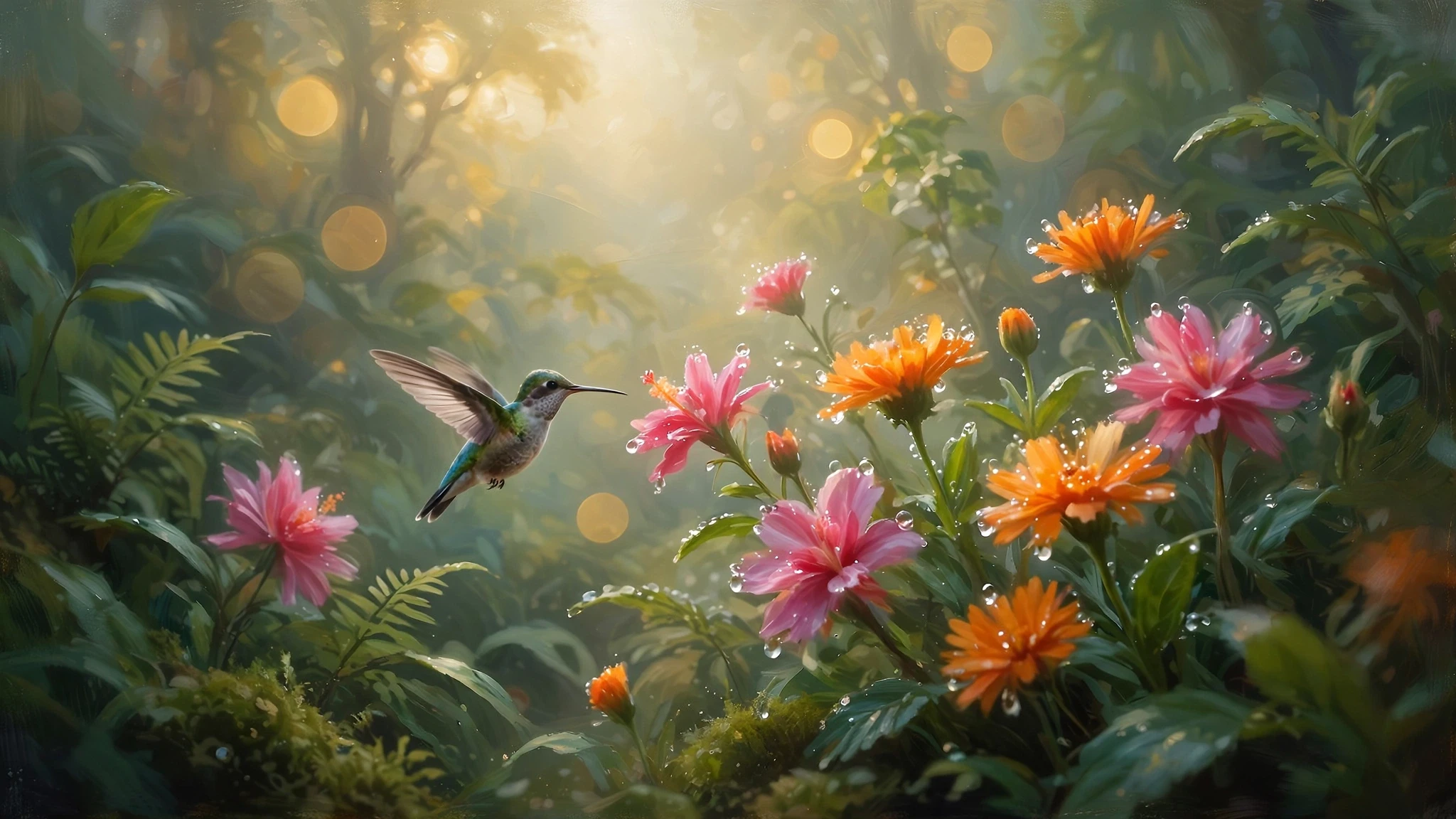
A Hummingbird Dream Meaning Arrives Lightly
A hummingbird dream meaning arrives lightly, the way the bird itself arrives, with a hum, a flash of color, and a hover that seems to defy gravity. You may dream of a hummingbird at a feeder, in a garden, hovering near your face, or darting between flowers so fast you can barely follow it. The feeling is often delight, surprise, and a little wonder. That lightness is the heart of the symbol. A hummingbird dream meaning often appears when joy has become small and easy to miss, when energy is precious, when hope feels fragile, or when a brief, beautiful moment deserves attention before it passes. It can point to delight in small things, to a lightness that is not the same as carelessness, and to a kind of hope that moves quickly and does not stay still for long. When you wake from a hummingbird dream, the first question is what made you smile in it. Was it the color, the hover, the speed, or the simple fact that the bird was there? That small smile is the reading, and it is worth following into your waking day.
The real bird behind the symbol earns that wonder. Hummingbirds are the only birds that can hover in place for a sustained time, fly backward, and fly upside down for short bursts. They do it by beating their wings about 50 to 80 times per second during hovering, depending on the species. The ruby-throated hummingbird, common in eastern North America, beats its wings about 53 times per second while hovering. The tiny bee hummingbird of Cuba, the smallest bird in the world, can reach about 80 beats per second. That speed creates the hum that gives the bird its name. Hummingbirds also have an extraordinary metabolism. They need to feed often, visiting hundreds of flowers a day, and at night many enter a state called torpor, slowing their body down to save energy. Some species migrate remarkable distances. The ruby-throated hummingbird, which weighs only a few grams, flies across the Gulf of Mexico, a journey of about 500 miles without stopping. That mix, tiny body, huge energy, long journey, is the reason the hummingbird feels like a symbol of joy that is also brave. It is small, and it does not let smallness stop it.
Joy in Small Things: Why Lightness Matters
Joy in small things is not a minor theme. It is the theme that holds a life together when large joys are far away. A hummingbird does not wait for a feast. It visits one flower at a time, takes a small sip of nectar, and moves on to the next. In waking life, that can mirror a person who is learning to find delight in a morning coffee, a short walk, a kind word, a flower on a windowsill, or a few minutes of quiet. Those small joys do not solve large problems, but they give you energy to face them. A hummingbird dream can appear when you have been waiting for a large joy, a promotion, a move, a reconciliation, a recovery, and you have stopped noticing the small ones that are already here. The dream does not tell you to stop wanting the large joy. It asks you to notice the small ones while you wait, because they are the fuel that keeps you flying.
There is also a lesson in energy. Hummingbirds use a lot of energy to hover, and they must eat often or they will run out. In a dream, that can mirror a person who gives a lot, works hard, loves hard, and needs to refuel often. If you have been running on empty, a hummingbird dream may be a gentle reminder to feed yourself, not with a large feast once a month, but with small sips throughout the day. A short rest, a glass of water, a breath of fresh air, a moment of laughter. The bird's torpor at night adds another shade. Even the most energetic creature needs to slow down and save energy. If you have been afraid to rest, because rest feels like laziness, the hummingbird offers a different idea. Rest is not the opposite of flight. It is what makes flight possible the next morning. Lightness, in this reading, is not about ignoring heavy things. It is about carrying them with a lighter step, and about finding the small flowers that give you strength along the way.
Scenario One: A Hummingbird Hovering at a Feeder or a Flower
A hummingbird hovering at a feeder, its wings a blur, its beak in a flower, is the classic hummingbird dream, and it often feels peaceful. The bird is feeding, and you are watching, and for a moment nothing else matters. This scenario often appears when you are in need of nourishment, not only food, but also rest, kindness, beauty, or encouragement. The feeder or the flower is the source, and the hummingbird's hover is the act of receiving. If you put out the feeder in the dream, the reading may be about something you have provided for yourself or for others, a small source of joy that you have set up and that is now being used. If someone else put out the feeder, it may be about a kindness you have received, or a kindness you need to ask for. If the feeder was empty, the dream may be about a source that has run dry, a friendship, a job, a routine, that once fed you and now needs refilling.
Look at the flowers. Were they bright and full, or few and fading? Bright flowers suggest joy that is present and available. Few flowers suggest a time when joy is scarce, and the hummingbird's search becomes more urgent. That search is not a failure. It is the bird doing what it does, visiting flower after flower until it finds nectar. A practical response is to name one small flower in your day, one thing that gives you a sip of joy, and to make sure it is available tomorrow. That might be a favorite song, a short walk, a call to a friend, or a few minutes in a garden. You do not need a field of flowers. You need one feeder, kept full, and the willingness to hover there for a moment.
Scenario Two: A Hummingbird Flying Backward, Darting, or Moving Too Fast to Follow
A hummingbird darting from flower to flower, flying backward, or moving so fast you cannot follow it, carries a feeling of energy and a little overwhelm. The bird is everywhere at once, and you cannot keep up. This scenario often appears when life feels fast, when you have many small tasks, many small joys, and many small worries, all moving at once. It can mirror a busy period, a time of excitement, or a mind that is racing. The dream does not say to slow the bird down. It says to notice how you feel watching it. If you felt delighted, the dream may be reflecting a period of energy and aliveness, a time when you are engaged and moving. If you felt dizzy or anxious, the dream may be reflecting a pace that is too fast for you right now, and it may be asking you to choose one flower to hover at, rather than trying to visit them all.
Flying backward is a special detail, because hummingbirds are the only birds that can do it for a sustained time. In a dream, flying backward can suggest looking back, revisiting a memory, or returning to a place, a person, or a version of yourself that you thought you had left behind. It can also suggest a need to step back from a situation, to create a little distance so you can see it clearly. If the hummingbird flew backward toward you, the dream may be about a memory or a feeling that is returning, asking for attention. If it flew backward away from you, it may be about a letting go, a small, quick departure that you did not expect. A practical step is to choose one thing to focus on today, one flower, one task, one conversation, and to give it your full hover for a few minutes. The hummingbird visits many flowers, but it visits them one at a time.
Scenario Three: A Hummingbird Landing on You, or One That Stays Still
A hummingbird landing on your hand, your shoulder, or your finger is a rare and tender dream. In real life, hummingbirds rarely land on people, and when they do, it is usually for a moment, because they are light and curious. In a dream, that landing can feel like a gift, a small, bright thing choosing you. It often appears when you need reassurance, when you have been doubting yourself, or when a small hope has arrived and you are afraid to trust it. The landing says, in the language of the dream, that joy can come close, that it is not always far away or fast. It can rest on you, lightly, for a moment. If you felt still and calm when it landed, the dream may be about a growing trust in small joys, or a readiness to receive kindness without pushing it away. If you felt afraid to move, as if you might scare it off, the dream may be about a hope that feels fragile, and a fear that one wrong move will lose it.
A hummingbird that stays still, perched on a branch with its wings folded, is even rarer in a dream, because hummingbirds are almost always moving. Stillness in this bird can suggest rest after a long flight, or a moment of pause in a busy life. It might appear after a migration, a move, a long project, or a period of intense effort, when your body and mind need to perch for a while. The stillness does not mean the bird has stopped being a hummingbird. It means it is saving energy for the next flight. A practical response is to give yourself a perch, a short period of stillness with no goal, and to see whether that stillness helps you feel ready to fly again. If the hummingbird landed and then flew away, the dream may be about a brief visit, a joy that was always meant to be short. Try not to turn that brevity into a loss. A short visit can still be a real one, and it can still leave a hum in your day.
Scenario Four: A Hummingbird in a Storm, or One That Cannot Find a Flower
A hummingbird in a storm, buffeted by wind and rain, is a picture of fragility and resilience at the same time. The bird is tiny, the storm is large, and yet the bird keeps flying, finding shelter, and waiting for the rain to pass. This scenario often appears when you are in a hard period and you feel small in it. It might be an illness, a loss, a financial strain, or a conflict that feels larger than you. The dream does not pretend the storm is small. It shows the storm clearly, and it shows the hummingbird still in it, still moving, still looking for a flower. That can be a picture of hope that is not naive, but stubborn. Hope that knows the storm is real and still looks for a place to land. If the hummingbird found shelter in the dream, under a leaf or in a quiet corner, the dream may be about the shelter you need right now, a person, a place, or a routine that can hold you while the storm passes.
A hummingbird that cannot find a flower, searching a garden with no blooms, carries a sadder feeling. It can mirror a time when joy feels scarce, when the things that used to feed you no longer do, or when you are in a new place and have not found your flowers yet. The dream is not saying joy is gone forever. It is saying the garden is empty right now, and the bird is still searching. A practical response is to look for a new flower, a new source of small joy that you have not tried yet. That might be a new walk, a new book, a new recipe, a new friend, or an old joy you have forgotten. If the garden is truly empty, it may be time to plant something, even a small pot on a windowsill. The hummingbird does not need a large garden. It needs one flower, and it will keep searching until it finds it. Your dream may be inviting you to keep searching too, gently, one flower at a time.
What a Hummingbird Dream Does NOT Mean
A hummingbird dream does not mean that a dead loved one is visiting you, that a specific wish will come true, or that joy will arrive on a particular day. In some traditions, hummingbirds are seen as messengers or as signs of a loved one's presence, and that belief is meaningful to many people. A dream may echo that belief, and the comfort it brings is real, but comfort is not evidence of a visit or a message from one person in particular. The dream is better used as a prompt to notice joy, energy, and hope in your own life, rather than as a prediction about who will appear or what will happen. It also does not mean that you must be happy all the time, or that lightness is the same as ignoring pain. Hummingbirds migrate across the Gulf of Mexico, a journey of about 500 miles, and they do it by being small, fast, and persistent, not by pretending the journey is easy. The dream does not ask you to be cheerful when you are sad. It asks you to notice the small flowers that can give you a sip of strength, even in a hard season. If the dream left you feeling sad because joy feels far away, treat that feeling as a prompt to care for yourself, and to talk with a trusted person if the sadness stays.
An Illustrative Example: Ana and the Hummingbird at the Window
This example is illustrative, not a real person's story. Ana, a 44 year old teacher in Arizona, dreamed that a hummingbird with a bright red throat was hovering outside her classroom window, looking in at her while she graded papers alone after school. The bird hovered for a long time, then darted to a feeder outside the window and drank. Ana woke up feeling oddly hopeful, and she thought about how long it had been since she had enjoyed teaching. She had been grading, planning, and worrying for months, and she had stopped noticing the small moments that used to make her smile, a student's question, a joke in the hallway, a flower on her desk. After the dream, she decided to keep a small notebook on her desk and write down one small joy from each school day, just one sentence. She also put a feeder outside her classroom window, and over the next few weeks she saw real hummingbirds visit it during her lunch break. She did not solve every problem at school, and she did not stop feeling tired. She gave herself a way to notice small joys again, and the hummingbird dream stayed with her as a reminder that joy can be small, fast, and still real.
How to Work With a Hummingbird Dream After You Wake
After a hummingbird dream, write down the color first. Was it green, red, blue, or a flash you could not name? Then write down what it was doing: hovering, darting, landing, or searching. Those two observations, the color and the motion, are what the rest of the reading builds on. Let the color and the hovering motion lead to one direct question about the small joys in your day. What is one small flower in my day, one thing that gives me a sip of joy? Name it, and make sure it is available tomorrow. If you feel low on energy, ask what small sip would help you refuel, a rest, a walk, a laugh, a glass of water. Leave the note by your bed, and a week later see whether the same hummingbird picture visits again. A returning hummingbird often means the question of joy or energy is still open, not that you have failed. Sharing the dream with a friend, or with a reader who listens with a light touch and no hurry, can help the joy land. A light chat can help you keep the sip of joy and let the rest, the low hum of sleep, fade. Hummingbird dreams work best as gentle prompts: notice the small flowers, feed yourself often, rest when you need to, and let joy be light, fast, and real.
Small winged visitors belong together. After this page, the dream meanings hub can lead you to a bird dream, where flight is broader and less hurried, a butterfly dream, where change is the point rather than the hover, a bee dream, where sweetness comes with work, and a garden dream, where the flowers a hummingbird feeds on are growing.
If you would like a quiet space to talk through what brings you joy and what has been draining your energy, a reading can help you reflect without pressure. First 3 minutes FREE — every time, for every reading, with all advisors.
For a simple next step, try a One-Card Tarot reading and reflect on what small flower it brings to mind for today.
Frequently Asked Questions
What does dreaming of a hummingbird mean?
Dreaming of a hummingbird often points to joy, lightness, and small wonders. It can reflect delight in small things, energy that needs refueling, hope that moves quickly, or a brief, beautiful moment that deserves attention.
Is a hummingbird dream a sign from a loved one?
In some traditions, hummingbirds are seen as messengers or signs of a loved one's presence, and that belief is meaningful to many people. A dream can mirror that belief and bring comfort, but it is not proof of a visit. It is better used as a prompt to notice joy and hope in your own life.
What does a hummingbird hovering mean in a dream?
A hummingbird hovering, often at a feeder or a flower, usually suggests nourishment and receiving. It can reflect a need for rest, kindness, beauty, or encouragement, or a small source of joy that you have provided for yourself or received from someone else.
What does a hummingbird landing on you mean in a dream?
A hummingbird landing on you often feels like a gift, a small, bright thing choosing you. It can reflect reassurance, a small hope arriving, or a readiness to receive kindness without pushing it away. If you felt afraid to move, it may point to a hope that feels fragile.
Why do I keep dreaming of hummingbirds?
A repeating hummingbird dream often means a question about joy or energy is still open, usually about finding small delights while you wait for a larger one, or about refueling when you feel drained. Try naming one small flower in your day and keeping it available. If low mood or exhaustion continues, talk with a trusted person or a health professional.
Last updated: November 12, 2026
