
Dreaming About a Bee: Meaning and Symbolism
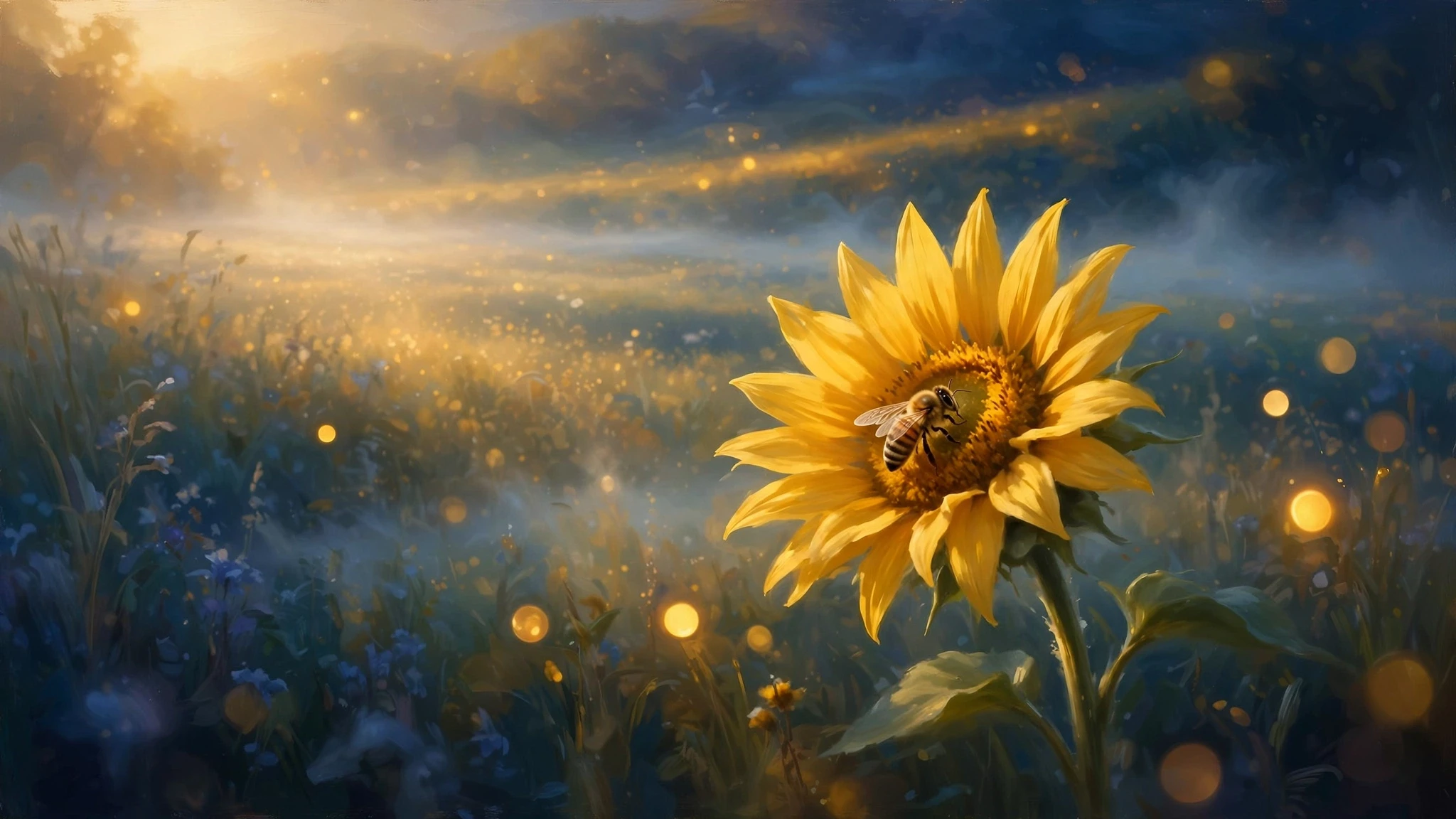
Dreaming About a Bee: What It Usually Means
Dreaming about a bee usually points to work, effort, and the results of effort. A bee in a dream can stand for a busy period in your life, a team you belong to, or a small task that keeps returning until you finish it. The feeling in the dream matters as much as the bee itself. A calm bee moving from flower to flower reads very differently from a bee chasing you through a house. Start with that feeling, then look at what the bee was doing. That combination gives you the most honest reading of the dream.
Bees carry a double meaning in waking life, and the dream keeps both sides. On one side there is industry, order, and sweetness. On the other side there is the sting, the swarm, and the warning to keep your distance. A dream bee can hold both at once, which is why the same symbol can feel encouraging one night and threatening the next. The context decides which side is speaking to you.
The Real Bee Behind the Symbol
A honeybee colony is a working community, not a crowd of identical insects. A healthy colony holds about 20,000 to 80,000 bees, with a single queen, hundreds of male drones, and tens of thousands of female workers. Workers live only about three to six weeks during the busy summer season, and a queen can lay up to 2,000 eggs in a single day at peak season. A single worker produces only about one twelfth of a teaspoon of honey in her whole lifetime, yet the colony together fills the hive. That math is the heart of the bee symbol: small, repeated effort that adds up to something large.
Bees also navigate by a dance. A foraging bee that finds a good source of nectar returns to the hive and performs a waggle dance that tells other bees the direction and distance of the food. This was studied by Karl von Frisch, whose work on bee communication won a share of the Nobel Prize in 1973. When a bee appears in your dream, it may be pointing at communication in your own life, a message you need to pass on, or information that is traveling through your family or workplace in a way you have not noticed yet.
The Most Common Bee Dream Variations
A single bee flying calmly past you is the gentlest version of this dream. It often points to a small piece of work going well, or a message arriving at the right time. It can also mark a person who works quietly and gets things done without fuss. If you watched the bee without fear, the dream is usually about steady progress rather than drama.
A bee landing on you asks for a closer look. Where it landed matters. A bee on your hand points to work and skill, something you are making or doing with your hands. A bee on your face or head points to a thought that will not leave you alone, an idea buzzing at the edge of your attention. A bee on your arm or leg points to a task that is following you around, something you keep meaning to finish.
Being stung by a bee in a dream is a variation people search for often, and it usually points to a sharp comment, a small betrayal, or a consequence you did not expect. The sting is small but memorable, and that is the point. The dream is often about something minor that hurt more than you admitted at the time. A sting on the hand can signal work friction, while a sting on the mouth or face can signal words, yours or someone else's, that left a mark.
A swarm of bees changes the scale completely. A swarm points to feeling overwhelmed, to too many demands arriving at once, or to a group that feels hard to manage. A swarm can also point to gossip or to a crowd whose mood you cannot predict. If the swarm stayed calm and moved past you, the dream may be about a busy period that will pass. If the swarm chased you, the dream is more likely about pressure you are running from instead of facing.
A bee in your house is a domestic variation. The house in a dream usually stands for your private life, so a bee inside it signals work that has followed you home, or a small worry living in your daily routine. A bee in the kitchen points to the daily work of feeding and caring for a household. A bee trapped against a window points to a solution that is visible but out of reach, something you can see clearly but cannot yet get to.
A dead bee in a dream often points to a project that ended, a job that ran its course, or energy that was spent. It is rarely a dark omen. It reads more like a finished season. A beehive, by contrast, points to a group, a family, or a workplace with a clear structure. A full, active hive suggests a team working well together. An empty or broken hive suggests a group that has lost its center or a plan that fell apart.
The Psychological Reading
In psychological terms, a bee dream often reflects how you feel about your own effort and your place in a group. Dream researchers often say a single image can hold a whole waking worry, and the bee holds the entire question of work in one small flying body. Are you doing too much? Are you doing too little? Is your effort being noticed? The bee gives those questions a shape.
If you are in a busy period at work or at home, a bee dream can be your mind sorting through the load. A calm bee suggests you feel in control of the pace. A swarm suggests the pace is controlling you. A sting suggests one specific part of the load hurt, even if the rest of the work is fine. This reading does not require any belief in the supernatural. It only asks you to match the dream image to the week you just lived.
There is also a social layer. Bees live in a colony where every worker has a role, and that can mirror how you feel inside a family, a team, or a friendship group. Dreaming of a bee can surface the question of whether you feel like a valued member of your group or like a worker whose effort goes unseen. If you dreamed of a queen bee, the question may be about leadership, or about someone in your life who holds the center of a group. If you dreamed of being the only bee in an empty hive, the question may be about loneliness inside a role that looks busy from the outside.
The Spiritual Reading
In spiritual terms, the bee has been a symbol of diligence, community, and the sweetness that follows honest labor for a very long time. In several old traditions the bee stands for the soul at work, moving between the material world and a sweeter one, gathering what it needs and bringing it home. Some spiritual readers link a bee dream to a message arriving from a guide or a loved one, especially when the bee appears calmly and then leaves without harm.
A bee dream is also read by some as a sign of fertility and abundance, because the hive produces honey from flowers, turning something scattered into something stored and sweet. In this reading, a bee landing on you can be a nudge to trust that your small daily efforts are building toward something. A swarm, in the same reading, can be a warning that your energy is scattered across too many flowers, and that you need to choose one source of nectar and stay with it.
Take these spiritual readings as possibilities to sit with, not as facts to accept, and let the one that fits your life do the talking. If the spiritual reading feels true to you, use it as a prompt: what small effort have I been avoiding, and what sweetness might follow if I returned to it? If it does not feel true, the psychological reading may fit better. Both readings can be useful without either one being the only correct answer.
What Changes the Meaning
The number of bees is the first modifier. One bee is personal and specific. A few bees suggest a small team or a handful of tasks. A swarm suggests scale, noise, and pressure. A hive suggests structure and belonging. Before you settle on a meaning, count the bees in the dream as best you can, because the number changes the story.
The bee's behavior is the second modifier. A bee gathering nectar points to productive work and good timing. A bee buzzing loudly near your ear points to a message or a warning you have been ignoring. A bee that stings and dies points to a cost, something that hurt you and the other person at the same time. A bee that follows you calmly points to an idea or a task that is not going away until you deal with it.
Your own reaction is the third modifier. Fear in the dream usually means the bee stands for something you are avoiding in waking life. Calm curiosity usually means the bee stands for something you are ready to look at. If you felt fond of the bee, the dream may be about work you genuinely enjoy. If you felt irritated, it may be about work that drains you. The emotion is data, not decoration, and it should weigh as much as the image itself.
The setting is the fourth modifier. A bee outdoors, in a garden or a field, usually points to your public life, your work, or your wider community. A bee indoors points to private life and home. A bee at work points to the job directly. A bee near water points to feelings mixed into the work, because water in dreams often stands for emotion.
A Worked Example: Reading Your Own Bee Dream
Picture a dream people often describe: you are sitting in a kitchen in the morning, and a single bee comes in through an open window, circles once, and lands on the table beside your coffee. You watch it, you do not swat it, and then it flies out again. Read it in four short moves.
First, note the facts of the dream. One bee, calm, indoors, in the kitchen, in the morning, no sting, no fear. Second, match the setting to your life. The kitchen is the domestic center, and the morning is the start of the day, so the dream is probably about your daily routine rather than a crisis. Third, read the bee's behavior. It arrives, it pauses, it leaves. That pattern suggests a message or a task that visits briefly and then moves on. Fourth, check your feeling. Watching without fear suggests you are ready to hear whatever the message is. A fair reading would be: a small piece of work or a small piece of news is coming into your daily life, it needs a moment of attention, and it will not harm you if you give it that moment.
Swap one detail and see how the meaning moves. If the bee had stung you as it left, the reading would shift toward a small hurt attached to that message. If there had been twenty bees instead of one, the reading would shift toward a busy morning or a household under pressure. If you had been afraid, the reading would shift toward a task you are avoiding. This is why dream dictionaries that give one fixed meaning for "bee" are of limited use. The dream is a sentence, not a word, and the modifiers are the grammar.
What to Do After a Bee Dream
Catch the dream on paper the morning you have it, in as much detail as you can remember, before the day washes it away. Note the number of bees, what they did, where you were, and how you felt. Then ask yourself three plain questions. What work in my life feels unfinished right now? Who in my group or family is doing quiet work that I have not thanked? Is there a small sting, a comment or a disappointment, that I have been pretending did not hurt?
If the dream pointed to overload, the practical step is small and concrete: pick one task, finish it, and let the rest wait. Bees do not gather all the nectar in a day. They make trip after trip, and the hive fills one load at a time. If the dream pointed to a sting, the practical step is to name it, either to yourself in writing or to the person involved, in a calm moment rather than in the heat of the feeling. If the dream pointed to a message, the practical step is to listen for it, because a bee dream often arrives just before a piece of news, an offer, or a decision that needs your attention.
If bee dreams keep repeating, look at your work pattern rather than the symbol. Repeated bee dreams often arrive during periods of sustained effort, when a person is working hard and wondering whether it matters. Read that way, the dream works less like a forecast and more like a status report: you are in the hive, you are doing the work, and the question is whether the work is feeding you or only draining you. That question deserves a real answer, not a symbolic one, so use the dream as a nudge to ask it properly.
If another dream came to mind while you read this, these are the closest matches: dreaming about a frog, dreaming about a bird, and dreaming about a garden, or wander through the full dream meanings hub until one lands.
If you would like a person to talk this through with, remember: First 3 minutes FREE — every time, for every reading, with all advisors.
A good way to carry this forward is to draw a One-Card Tarot reading and sit with what small piece of work deserves your attention today.
Frequently Asked Questions
What does it mean to dream about a bee stinging you?
A bee sting in a dream usually points to a small hurt that stayed with you, such as a sharp comment, a broken promise, or an unexpected consequence at work. The sting is minor but memorable, so the dream often highlights something you minimized at the time. Ask what stung you recently and whether it still needs a response.
What does it mean to dream about a swarm of bees?
A swarm usually points to feeling overwhelmed by many demands at once, or to a group whose mood feels hard to predict. If the swarm stayed calm, the busy period may pass on its own. If it chased you, the dream more likely points to pressure you are avoiding rather than facing directly.
Is dreaming about a bee a good sign?
A calm bee is generally read as a positive sign of steady work, teamwork, and results building up over time. A bee that stings, a swarm, or a dead bee points to a cost, pressure, or a finished season instead. The feeling in the dream and the bee's behavior decide whether the sign feels good or warning.
What does a bee in your house mean in a dream?
A bee inside your house usually points to work that has followed you home, or a small worry living in your private life. A bee in the kitchen points to daily household effort, while a bee trapped at a window points to a solution you can see but cannot yet reach.
Why do I keep dreaming about bees?
Repeated bee dreams often arrive during long periods of hard work, when you are putting in steady effort and wondering whether it matters. They can also repeat when a small task keeps returning unfinished. Look at your workload and your routine first, and ask whether the work is feeding you or only draining you.
Last updated: November 11, 2026
