
Dreaming About a Desert: Empty Spaces
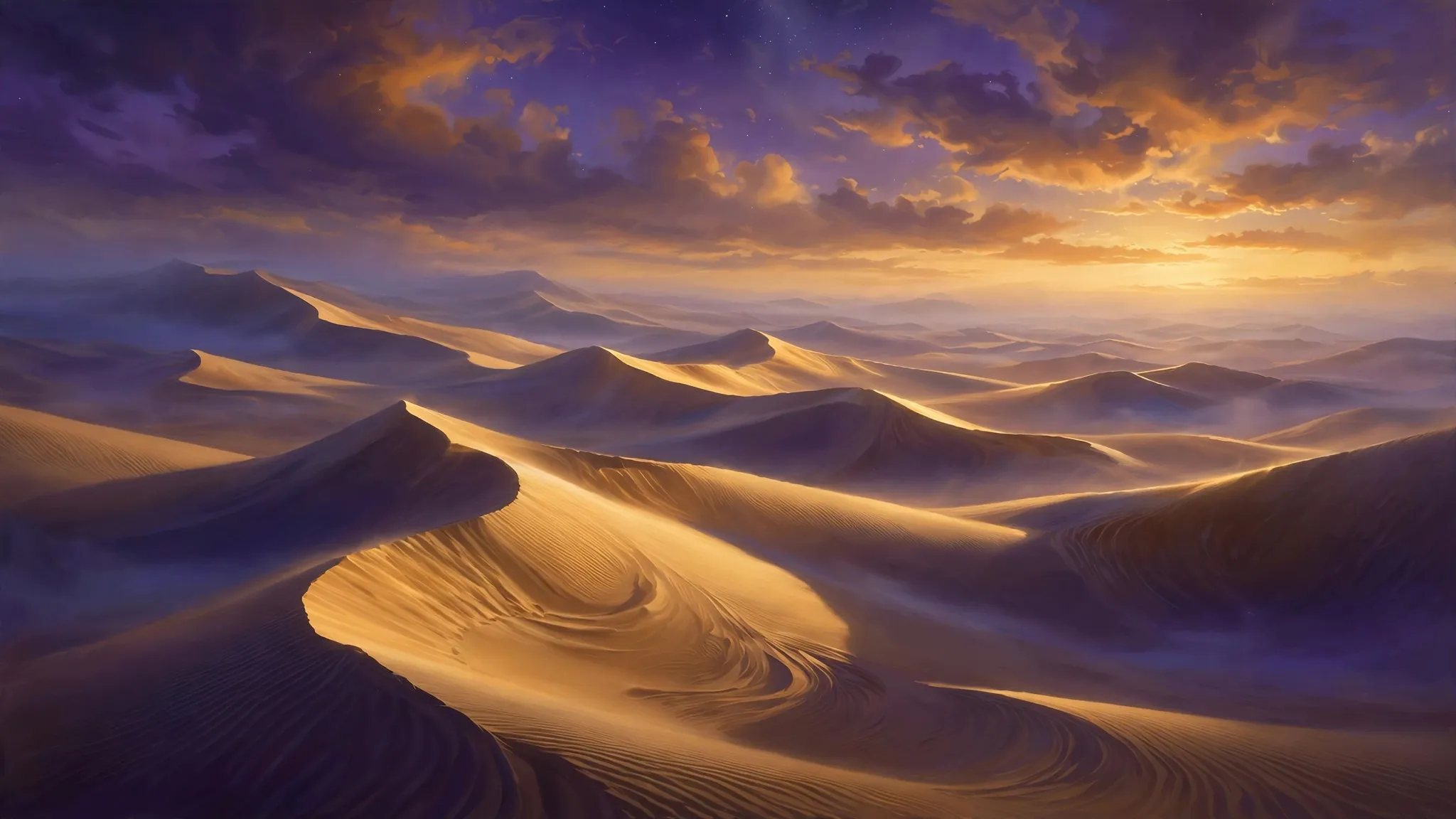
Dreaming About a Desert: When the Landscape Goes Quiet
Dreaming about a desert is a dream about emptiness, and emptiness in a dream is rarely just empty. It can mean loneliness, a dry season in your emotional life, or a search for something real in a place that seems to offer nothing. It can also mean clarity. A desert strips away noise, and what is left is what matters. If a desert visited your sleep last night, you may be working through a part of your life that feels dry: a relationship that has lost its warmth, a job that has lost its meaning, or a stretch of days that feels the same, one after another, with nothing to look forward to. The desert also carries a second meaning that sits close beside the first, which is testing. Deserts are where people in many traditions go to be tested, to find themselves, or to hear something they cannot hear in a crowded place. The desert variations, the two readings, and the modifiers are covered next. It sits in the dream meanings dictionary with the rest.
Desert Dream Variations and What Each One Suggests
Walking alone through a desert is the most common version of this dream, and it often means loneliness or a long, dry season. It can point to a feeling of being on your own, a period of waiting, or a search for direction. The feeling in the dream matters more than the distance. If the walk feels peaceful, the dream leans toward a quiet search, a time of reflection that is hard but honest. If the walk feels frightening, the dream leans toward a loneliness that needs attention, a sign that support is needed. Being lost in a desert, in dreaming about being lost, is a sharper variation. It points to a loss of direction, a decision that has gone wrong, or a feeling of being far from where you want to be. It often arrives during a period of confusion, when the next step is unclear and every direction looks the same.
An oasis in a desert is the most hopeful variation in this family. It points to relief, refreshment, and a source of life in a dry place. People often report this dream after a small kindness, a new friendship, or a moment of rest in a hard season. The oasis matters because it shows that the desert is not all there is. A sandstorm in a desert points to confusion, chaos, or a situation that has become hard to see through. It can suggest a conflict, a period of rapid change, or a feeling of being overwhelmed by something you cannot control. A desert at night points to a different kind of emptiness, one that is quiet and cold, and it can suggest a fear of the unknown or a period of waiting in the dark. A desert with a single tree, a single building, or a single person in it points to a small hope, a single point of life in a large emptiness, and it is worth noticing what that one thing is.
A desert that blooms, with flowers appearing in the sand after rain, is a rare and beautiful variation. It points to renewal, a dry season ending, or a hope that seemed dead coming back to life. Some deserts do bloom after rare rains, and the dream borrows that real fact to describe a feeling. A desert with ancient ruins points to the past, to history, or to a part of your life that has been left behind. A desert with a road running through it points to a journey, a decision about direction, or a path that continues even when the landscape is empty. A desert with no water at all points to a thirst, emotional or spiritual, that has not been met. A desert where you find water, whether a well, a spring, or a sudden rain, points to a need being met, often in an unexpected way.
A Psychological Reading: Loneliness, Depletion, and the Search
From a psychological point of view, the desert is an image of loneliness and depletion. Freud read dreams as wishes in disguise. A desert fits that idea because loneliness is one of the feelings people push aside most often: they tell themselves they are fine, and then a desert appears at night to show them how empty the days have felt. Carl Jung read the desert as a symbol of the unconscious, a vast, quiet place where the self can be found when the noise of daily life is stripped away. REM sleep was identified in 1953, and it is the stage of vivid dreaming, when the feelings of the day come back.
The real desert explains why the symbol feels so true. The Sahara, the largest hot desert in the world, covers about 9.2 million square kilometers across North Africa, an area roughly the size of the United States. The Atacama Desert in Chile is the driest place on Earth, with some areas receiving less than a millimeter of rain in a year. Deserts cover about one fifth of the Earth's land surface, and they are defined not by heat but by dryness: a desert is a place that receives very little rain. The dream borrows the desert's scale to describe your own feeling: a loneliness that feels as large as a landscape, a dryness that feels as wide as a horizon.
A Spiritual Reading: Testing, Clarity, and the Voice in the Silence
In spiritual traditions, the desert is often treated as a place of testing and clarity. In the Bible, Moses led the Israelites through the desert for forty years, and Jesus spent forty days in the desert before beginning his public work. In Islamic tradition, the Prophet Muhammad received his first revelation in a cave on a mountain near Mecca, and the desert has long been a place of retreat and prayer. In Buddhist tradition, the Buddha left his palace and spent years in austerity before finding the middle way, and the desert has been read as a symbol of the stripping away of comfort. In the stories of the Desert Fathers and Mothers, early Christian monks and nuns went into the Egyptian desert to pray, to face their demons, and to find a clarity they could not find in the city. The pattern is steady across traditions: the desert is where you go when you need to hear yourself think.
A spiritual reading of your desert dream starts by asking what the silence is offering. A desert that feels peaceful can be read as a call to retreat, to make space for prayer, reflection, or rest. A desert that feels frightening can be read as a test, a season that is hard but purposeful, or a sign that support is needed. An oasis can be read as grace, a gift arriving in a dry place, or as a reminder that life continues even in the hardest seasons. A desert that blooms can be read as renewal, a sign that a dry season is ending. Take these readings as lenses, and hold on to the one that rings true. If the testing frame rings true, the dream may be asking you to endure. If the clarity frame rings true, it may be asking you to listen to the quiet.
What Changes the Meaning of a Desert Dream
Start with your feeling, because it matters most. Peace points to a quiet search or a needed retreat. Fear points to a loneliness that needs attention. Thirst points to a need that has not been met, emotional or spiritual. Hope points to a dry season that is ending. The water in the dream, in dreaming about water, is the second modifier. No water at all points to a deep thirst. An oasis points to relief and a source of life. A well or a spring points to a need being met, often in an unexpected way. Rain in a desert points to renewal, a blessing arriving in a dry place. The still-water version is dreaming about a lake. The weather is the third modifier. A sandstorm points to confusion or chaos. A clear sky points to clarity. A desert at night points to the unknown or a period of waiting in the dark. A desert at dawn points to a beginning, a new day after a long night.
Your position is the fourth modifier. Walking alone points to a solitary journey. Walking with someone points to a shared hardship or a shared search. Being lost points to a loss of direction. Finding a road points to a path forward. Standing still points to a pause, a moment of waiting or reflection. What you find in the desert is the fifth modifier. A single tree points to a small hope. Ancient ruins point to the past. A road points to a journey. A person points to a connection, a guide, or a part of yourself that has been waiting in the empty place. A building points to shelter, safety, or a part of your life that still stands even in a dry season. The water-ringed opposite is dreaming about an island.
A Worked Example: Reading One Desert Dream Step by Step
Take this dream: A woman in her early fifties, who has been caring for her husband through a long illness, dreams that she is walking through a desert at noon. The sun is high, the sand is pale, and in the distance she sees a small oasis with a single palm tree. She walks toward it, and she wakes up feeling tired but hopeful. First, the bare facts: a desert, noon, high sun, pale sand, a distant oasis, a single palm tree, a walk toward it, tiredness and hope. Second, set it against waking life. She has been caregiving for two years, she is exhausted, and she has been wondering how much longer she can continue. Third, test the time. Noon is the hottest part of the day, which fits the hardest part of a long season.
Fourth, test the oasis. An oasis points to relief and a source of life, which fits a small hope: a respite, a helper, or a moment of rest. Fifth, the two readings together. Her mind seems to be naming the exhaustion honestly and then offering a hope: the desert is real, but so is the oasis. Spiritually, the desert at noon reads as a test, and the oasis reads as grace, a gift arriving in a dry place. Sixth, one changed detail. If there had been no oasis, the dream would point to a loneliness without relief. If there had been a sandstorm, the reading would lean toward confusion or chaos. The exercise shows how a stark dream can hold both a hard truth and a hope, and the dreamer's own life decides the fit.
If the Desert Dream Keeps Coming Back
A desert dream that returns usually points to a dry season that is still going on. The desert returns because the loneliness, the waiting, or the search is not yet finished. If the repeated dream is calm, the task is simple: keep walking, and keep looking for water. A desert that appears night after night can be a steady reminder that you are in a hard season, and that hard seasons end. Take one small step toward refreshment this week, such as calling a friend, taking a walk, making time for rest, or asking for help. Small sources of water matter in a desert, and a single conversation can be an oasis.
If the repeat scares you, the question changes with it. A desert that is always empty, always hot, or always without water points to a need that has not been met. Ask what you are thirsty for, and whether the thirst is for rest, for connection, for meaning, or for help. Naming the thirst out loud, writing it down, or telling a friend often changes the dream within a few nights. If the dream involves being lost, the question is about direction. Sit down with a piece of paper and write down what you want the next chapter to look like, even in rough words. A map does not have to be perfect to be useful. If the dream involves an oasis, the question is about receiving. The dream may be telling you that help is available, and that accepting it is not weakness. A desert dream is rarely a warning. It is a reminder that dry seasons are real, that they end, and that water, when it comes, is worth walking toward.
If this dream has you wondering how to cross a dry season, a reading can help you find the water. First 3 minutes FREE — every time, for every reading, with all advisors.
Try a One-Card Tarot reading for the dry season your desert dream keeps showing you.
Frequently Asked Questions
What does dreaming about a desert mean?
It usually points to loneliness, emptiness, or a search for meaning, and the feeling in the dream decides which one leads. A peaceful walk suggests a quiet time of reflection, while being lost suggests a loss of direction. The water in the dream, or the lack of it, adds the finer detail.
What does an oasis mean in a desert dream?
An oasis is usually read as a hopeful sign, pointing to relief, refreshment, and a source of life in a dry place. It often appears after a small kindness, a new friendship, or a moment of rest in a hard season. It shows that the desert is not all there is.
What does being lost in a desert mean in a dream?
Being lost in a desert often points to a loss of direction, a decision that has gone wrong, or a feeling of being far from where you want to be. It usually arrives during a period of confusion, when the next step is unclear. It is a prompt to pause and find a direction, not a prediction of harm.
Is dreaming about a desert a bad sign?
Not necessarily. In many traditions the desert is a place of testing and clarity, where people go to find themselves or to hear something they cannot hear in a crowded place. A frightening feeling points to a loneliness that needs attention, while a peaceful feeling points to a needed retreat or a quiet search.
Why do I keep dreaming about deserts?
A repeated desert dream usually means a dry season in waking life is still going on. The desert returns because the loneliness, the waiting, or the search is not yet finished. Noticing what changes, the water, the weather, and your feeling, often shows how the season is moving and what would bring relief.
Last updated: November 11, 2026
