Car Dream Meaning
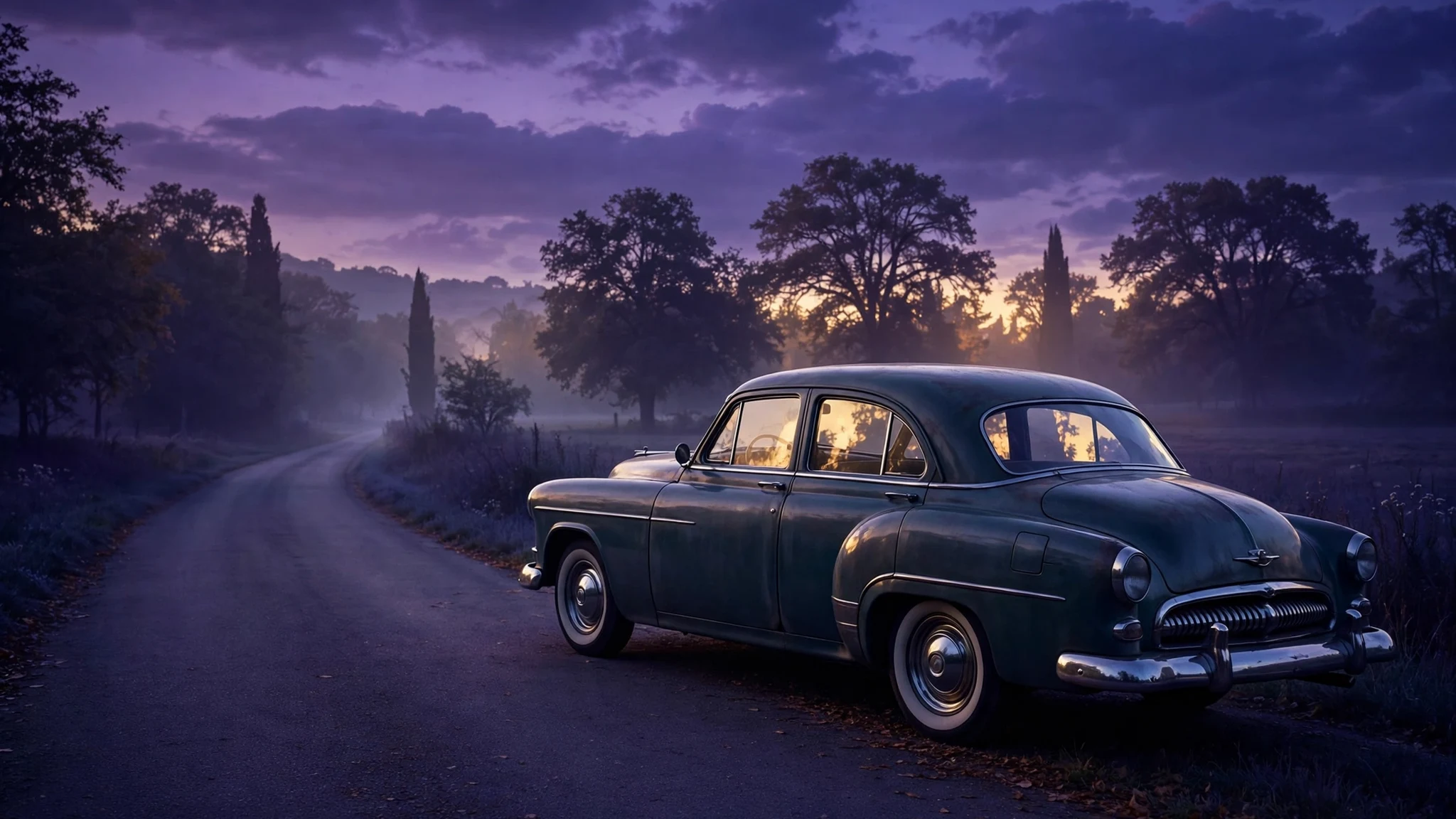
A car dream puts your life in motion and then tests how much of that motion you actually steer. Any workable car dream meaning starts with that steering question. In dictionary tradition, a car pictures personal direction, daily drive, and the machinery you rely on to get from where you are to where you claim you want to be. Roads, speed, passengers, and breakdowns decorate the central issue, which is control shared, seized, surrendered, or lost.
Control in these dreams is rarely absolute, and that realism is part of their value. Traffic lights, weather, other drivers, fuel levels, and unfamiliar streets all limit the driver, just as budgets, employers, family needs, and health limit waking plans. The dream shows your relationship with those limits. A calm driver in heavy traffic reads differently than a calm driver on an empty highway, because patience under constraint is a different skill than freedom under open conditions.
Use the complete dream meanings library sorted by symbol to set a car night beside related travel and pursuit symbols when the same week brings several kinds of motion.
In the Driver's Seat: Hands on the Wheel
Driving yourself places you in the role of decision maker, and the quality of the drive carries the reading. Smooth handling on a familiar route can mirror competence in a routine you have mastered, commuting, managing a team stand up, running a household schedule. You may not love the routine, yet your hands know it, and the dream honors that earned ease by keeping the road predictable and the mirrors clear.
A difficult drive in the front seat splits into several dialects. Gripping the wheel on a steep descent can mirror a phase where slowing down requires constant effort, such as spending less, saying no more often, or easing out of an intense project without dropping it. Driving at night without headlights can mirror progress made with poor information, where you advance by habit and hope because the data you need has not arrived. Driving while exhausted, with eyes closing at red lights, can mirror a schedule whose costs you minimize during the day and confess at night.
Passengers while you drive add a social steering layer. Calm passengers who trust your route picture support that lets you concentrate. Back seat drivers who shout directions picture advice overload, where every stakeholder believes your life needs their navigation. Children in the back who need snacks, stops, and reassurance picture the truth that leadership in families and teams includes care work that never appears on the destination poster. Note whether you resent that care or accept it as part of the trip, because that attitude often mirrors your waking morale.
Riding as a Passenger: Letting Someone Else Steer
Passenger dreams reverse the power picture, and the identity of the driver becomes the headline. Riding with a trusted driver at a relaxed pace can mirror a season when delegation works. A mentor handles a negotiation, a partner handles logistics, a colleague handles a client, and you discover that trust can feel like rest rather than risk. Your comfort in the seat measures how fully you believe that trust is earned.
Riding with a reckless, distracted, or unfamiliar driver flips the feeling. Speeding through lights, texting at the wheel, or ignoring your requests to slow down can mirror any arrangement where someone else's choices set your risk level, a manager's deadline, a relative's financial gamble, a friend's driving in literal life, or a platform algorithm steering your income. The dream rarely names a villain. It stages a sensation, your hands empty while consequences approach, and asks where that sensation also lives in daylight.
Trying to steer from the passenger seat is its own classic scene. Grabbing the wheel, pressing an imaginary brake, or shouting warnings can mirror a role where responsibility and authority have split apart. You may end up blamed for outcomes you cannot direct, or end up directing in secret while another person takes public credit. Both splits corrode morale over time. If this scene repeats, the waking fix usually involves renegotiating the split openly rather than gripping harder from the wrong seat.
Lost Brakes, Stuck Accelerators, and Other Control Failures
Brake failure is the signature anxiety scene in this entry, and it deserves a precise reading. Brakes represent your ability to pause, refuse, rest, and end things. A pedal that sinks uselessly while the car gathers speed can mirror a life area where stopping mechanisms have eroded, spending without a budget pause, work without an out of office boundary, scrolling without a stopping cue, or a conflict style where every discussion accelerates because nobody can call a break that the other side respects.
Context around the failure decides the recommendation hidden inside it. Brakes that fail on a hill but return on flat ground suggest situational overload. Your stopping power works in ordinary conditions and fails under extra load, which points toward load reduction rather than character blame. Brakes that fail because the car was never maintained suggest neglected systems, a calendar never reviewed, a body never rested, a budget never reconciled. Brakes sabotaged by another figure in the dream suggest interference, someone who benefits when you cannot slow down, though the dream alone cannot prove such a motive in waking life.
Accident scenes, when they appear, should be read as impact language rather than as forecasts. A minor scrape while parking can picture a low stakes collision of schedules or egos. A major crash with injuries carries heavier emotional freight and often follows periods of dread about consequences finally arriving. What matters most for the reading is aftermath behavior. Exchanging details, calling for help, and checking on others picture accountability. Fleeing the scene pictures avoidance that you already recognize. Dreams cannot predict road events, and anxious drivers should ground themselves in training, rest, and vehicle care rather than in symbols.
A Parked Car, a Stolen Car, and a Car You Cannot Find
A parked car looks inactive, yet its details speak about pause and readiness. A car parked safely in your own driveway with fuel and clean windows pictures a deliberate rest, capacity held in reserve. A car parked illegally with tickets gathering on the windshield pictures a pause whose costs keep accruing, a delayed decision billed by the week. A car buried under snow, dust, or boxes in a garage pictures a capability shelved for so long that restarting will require clearing work before driving work.
A stolen car shifts the theme from pause to loss of agency through outside action. Discovering an empty space where you left the vehicle can mirror credit taken by another person, a role reassigned without consultation, or an opportunity that vanished while you prepared. Chasing the thief on foot can mirror a wish to recover control personally rather than through systems. Reporting the theft and waiting can mirror reliance on process, insurance, human resources, an appeal, whose pace you cannot hurry. Each response style likely matches how you handle waking losses of control.
Searching for a car you parked and cannot locate is the quieter cousin of theft, and it fills parking garages in dreams around the world. Aisles that repeat, levels mislabeled, a key fob whose signal never answers picture a mind that has stored a capability or a plan somewhere sensible and then lost the index. Students before exams, parents in large venues, and professionals mid reorganization report this scene often. It tends to accompany information overload rather than true loss. The car exists. The map back to it needs rebuilding.
Speed, Roads, and Weather as Modifiers
Speed calibrates urgency across all car scenes. Pleasant speed with clear sight lines can mirror flow, work that matches skill and stretches it gently. Excess speed that thrills in the moment and frightens in recall can mirror risk taken for sensation or status. Crawling speed in a car built for highways can mirror underuse, a strong person assigned a narrow task, or a careful person trapped behind collective hesitation. Speed limits, police lights, and toll booths add authority and cost to the calibration.
Weather and light finish the modifiers. Rain that the wipers handle pictures manageable sadness or complication. Fog that erases landmarks pictures decisions made during grief, illness, or market confusion, where slow travel and short horizons are wisdom rather than failure. Ice pictures control promised by the wheel and betrayed by the surface, a warning to respect conditions over confidence. Clear dawn driving after a night plot often arrives as the mind's own resolution image, visibility returning as rest ends.
When a pursuit joins the drive, compare this entry with the being chased dream meaning guide to pressure and pursuit. When the road runs beside deep water or crosses it, compare with the ocean dream meaning notes on scale and feeling. Each comparison isolates what the car adds, namely your steering role inside the motion.
Ordinary Miles Behind Car Dreams
Commute residue stocks car dreams with embarrassing fidelity. A day of traffic, a near miss, a parking ticket, a rental counter delay, or a dashboard warning can replay at night with minor costume changes. Memory favors the tense fragments and discards the uneventful miles, so recall exaggerates danger relative to the full drive. Learner drivers, new parents driving infants, and professionals who drive for income often dream in cars simply because their waking attention lives there for hours.
Stress converts easily into vehicle language because vehicles dramatize agency. A mind worried about a project's pace may borrow a speeding car. A mind worried about a team's direction may borrow a detached wheel. A mind worried about exhaustion may borrow an empty tank. Those conversions are metaphors built overnight, not diagnostics of any machine or body. Checking real brakes, real rest, and real budgets in daylight answers the practical layer, leaving the metaphor free to do its reflective work without pretending to be a mechanic.
A Morning Checklist for Car Dreams
Record five facts before interpretation. Your seat, the driver if it was not you, the condition of brakes and steering, the road and weather, and the final state of the car. Those five facts organize nearly every variation in this entry. Then translate each fact into a waking counterpart. Seat becomes role, driver becomes influence, brakes become boundaries, road becomes context, and final state becomes current capacity.
One Quick Signal Check Before a Direction Decision
When a route choice narrows to one yes or no, such as whether to accept a longer commute for a new role, the free Yes/No Oracle provides a single reflective signal. Notice whether the result brings relief or a urge to argue, because that flash often exposes the direction you trust. For a choice among several routes, a single card through the Tarot One Card tool for route framing can name the tradeoff in one image.
When car dreams keep placing you in the wrong seat or stripping your brakes night after night, a live chat reading at PsychicSmile can help you map role, influence, and boundaries onto a calmer plan. First 3 minutes FREE, every time, for every reading, with all advisors.
Frequently Asked Questions
What does driving a car in a dream say about control?
Driving places you as decision maker, so handling, visibility, and traffic show how control feels in practice. Smooth travel on a known route can mirror mastered routine, while night driving without lights can mirror progress on poor information and an exhausting grip on the wheel can mirror a phase where slowing down takes constant effort.
What if someone else drives and I feel unsafe as a passenger?
An unsafe passenger ride pictures risk set by another person's choices while your hands stay empty. The driver's identity, your seat, and whether you could ask for a stop or an exit supply the waking parallel, which may involve a manager, a relative, or any system steering outcomes that affect you.
What do brakes failing in a dream mean?
Brakes stand for pausing, refusing, resting, and ending, so failure pictures stopping power eroded in some life area. Brakes lost only on hills suggest overload in steep conditions, brakes lost through neglect suggest systems never maintained, and aftermath details show whether you seek help, improvise, or keep rolling while hoping for flat ground.
What does a parked or missing car suggest?
A parked car speaks about pause, with a safe driveway suggesting deliberate rest and tickets or dust suggesting a pause whose costs keep growing. A car you cannot find in a garage often pictures information overload, a plan stored sensibly whose index you lost, while a stolen car pictures agency removed by outside action and a response style worth noticing.
Should a crash in a car dream worry me about real driving?
Treat a crash as impact language about consequences, dread, or a collision of schedules and egos, not as a prediction about the road. Note aftermath behavior in the dream, accountability or avoidance, for the reflective point, and handle real driving safety through rest, training, and vehicle maintenance, which protect you in ways symbols cannot.
Last updated: November 9, 2026