Tarot Self-Reflection Reading

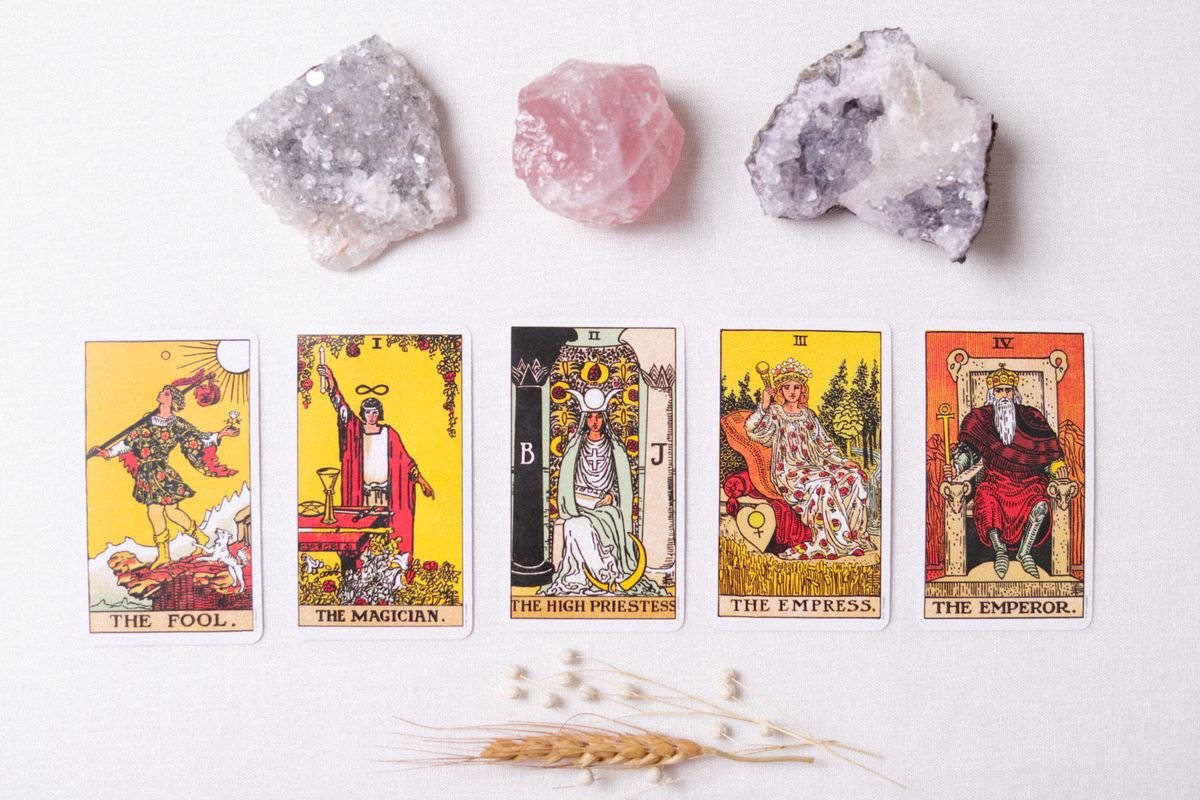
Tarot self-reflection reading is a quieter use of the cards, and it is growing fast. Instead of asking what will happen next, the reader asks what is happening inside: which habit keeps returning, which feeling is being avoided, and which small step would bring more honesty to a week. Karma tarot reading sits beside it, and it asks a similar question over a longer span: which patterns keep coming back in a life, and what can be learned from them this time. Karma here means pattern and consequence, not fate and not punishment.
What a Self-Reflection Reading Is
A self-reflection reading turns the cards inward. The reader shuffles with a question about the self, lays out a small spread, and treats each card as a mirror rather than as a forecast. The Hermit may point to a need for quiet time. The Ten of Wands may point to a load that has grown too heavy to carry alone. The Star may point to a hope that has survived a hard season. None of these cards predicts an event. Each one offers a picture, and the reader asks whether the picture fits the life in front of them. When it fits, the card has done its work. When it does not fit, the honest answer is to set it aside and try a clearer question.
The difference from a predictive reading is the question, not the deck. The same cards can be used for either purpose, and the same reader may use both in different sessions. A predictive question asks what will happen, and it puts the power outside the reader. A reflective question asks what is true now, and it puts the power back with the reader. That shift matters, because it changes what a person does after the reading. A prediction invites waiting. A reflection invites a choice. The how tarot card reading works guide explains the wider practice, and this page focuses on the reflective half of it.
Self-reflection readings also differ from a daily card pull. A daily pull takes one card as a theme for the day, which is a light and pleasant habit. A self-reflection reading takes several cards in named positions, and the positions give the reading a shape that one card cannot give. The shape holds the reader to a full look: a strength as well as a blind spot, a pattern as well as a next step. The daily tarot spread page covers the lighter daily habit, while the spread below covers the deeper weekly or monthly session.
Why This Kind of Reading Is Growing
Short video has made the growth visible. A count of more than 900 viral tarot reels, published by Aubrium on 12 November 2026, found that self-reflection reels grew from 8 percent to 16 percent of viral tarot reels in the sixty days before that date, the fastest growth in the whole count. In the same count, karma and intuition reels grew from 1 percent to 5 percent. The two figures describe shares of viral reels, not the whole of tarot, but they point in the same direction: more creators are filming readings that look inward, and more viewers are watching them.
The growth also fits the way people now talk about mental health. Journaling, therapy, and honest talks with friends have all become more open subjects, and tarot reflection sits comfortably beside them as one more way to look inward. The cards give a person words for feelings that are hard to name, and the spread gives those words an order. That order is the real gift. A feeling named and placed is easier to carry than a feeling that floats unnamed, and a spread that places five feelings in five positions can turn a tangled week into a page that makes sense.
Karma as Pattern, Not Punishment
Karma in this reading means pattern and consequence, not fate and not punishment. The idea is simple: actions have effects, habits repeat, and a life shows the same lesson in new forms until the lesson is learned. A person who avoids hard talks may meet the same silence in every relationship. A person who spends to soothe stress may meet the same shortfall at the end of every month. A person who gives too much too fast may meet the same exhaustion in every friendship. The pattern is the karma, and the consequence is the life that the pattern builds, day by day.
It helps to keep the language careful here. A tarot reading can show that a pattern looks karmic, because the same shape keeps returning with new faces and new settings. It cannot prove a past life, name a debt from another lifetime, or fix a date for a consequence. Those claims belong to belief, not to the cards, and a reader should treat them as belief rather than as fact. The forgiveness tarot spread page shows one gentle use of the same idea, where a past hurt is read as a pattern to release rather than as a debt to repay.
The Lantern Within Spread
The Lantern Within spread is a five card spread made for self-reflection, and each of its five positions has a name and one question. The spread is laid out in a single row, from left to right, and it is read in the same order. The five positions are The Lantern, The Shadow, The Thread, The Gift, and The Door. Together they describe a pattern and one small next step, and none of them asks about the future. The spread takes about fifteen minutes, and it works best with a journal open beside the cards.
Position 1: The Lantern
The Lantern asks what lights your way right now. It names the hope, value, or strength that is already guiding you, even if you have not named it out loud. It may point to a value like honesty, a hope like rest, or a strength like patience. Ask the card this: what is already true and good in my life that I can lean on this week? The answer sets a kind note for the whole reading, and it stops the spread from becoming a list of faults.
Position 2: The Shadow
The Shadow asks what you are avoiding seeing. It names the feeling, habit, or truth that has been pushed aside, often because it is uncomfortable. It may name anger that has not been spoken, a fear that has not been faced, or a need that has not been admitted. Put the question gently: what am I not looking at, and what would change if I looked at it for one minute? The Shadow is not an accusation. It is the part of the reading that makes the rest honest.
Position 3: The Thread
The Thread asks which pattern keeps returning. This is the karma position, and it names the habit or theme that has appeared before in a different form. It may show rushing, overgiving, waiting too long, or choosing the familiar over the true. Ask it plainly: where have I seen this shape before, and what did it cost me last time? The Thread turns the reading from a snapshot into a story, and the story is where the learning lives.
Position 4: The Gift
The Gift asks which strength you underuse. It names a quality that is real but neglected, often because it feels too small to count or because no one has ever praised it. It may name humor, steady patience, clear speech, or the ability to sit with a hard feeling without fixing it. Frame it as a practical ask: how could I use this strength once this week, in a small and concrete way? The Gift balances the Shadow, and it reminds the reader that a reflection is not only about faults.
Position 5: The Door
The Door asks for one small next step. It names a single action, small enough to finish in a day, that loosens the pattern named by the Thread. Keep the question narrow: what is the smallest honest step I can take before tomorrow night? A good Door card gives an action, not a hope. Send the message, take the walk, say the no, book the call, or put the phone away for one hour. One small step, taken and finished, teaches more than a grand plan that never starts.
A Worked Example Reading
The example below uses five cards drawn for a made-up reader, and it shows how the positions talk to each other. The Lantern is The Star, which speaks of hope that has survived a hard season and of a wish to feel lighter again. The Shadow is the Five of Cups, which names grief over what has been lost and a habit of looking only at the spilled cups while the full ones stand behind. The Thread is the Ten of Wands, which shows carrying too much for too long, a pattern of saying yes to every load and then wondering why the week feels heavy. The Gift is The Hermit, which marks a quiet strength: the ability to sit alone with a thought and hear it clearly. The Door is the Page of Pentacles, which calls for one small practical step, like starting a short daily note or taking a single class.
Notice how the reading treats the hard cards with care. The Five of Cups is not read as a verdict, and the Ten of Wands is not read as a life sentence. Each hard card is read as a pattern with a cost, and each cost is paired with a gift and a step. That pairing is what makes a self-reflection reading kind rather than harsh. A reading that names only faults will leave a person smaller than before, while a reading that names a fault beside a strength and a step will leave a person clearer than before. The coping with a bad tarot reading guide offers more ways to sit with a hard card without letting it set the mood for a whole week.
How to Do a Session Step by Step
Begin by choosing one clear question about yourself, and write it at the top of a journal page. A good question is narrow and honest, such as what pattern is shaping my week, or what am I avoiding in my closest relationship. A vague question, such as what should I know, will give a vague reading, so take a minute to make the question specific. Write the date beside it, so the reading can be found again later and compared with the next one.
Shuffle the deck slowly, and think about the question while you shuffle. There is no special count and no special cut, and any calm shuffle will do. Lay five cards face down in a row, from left to right, and turn them over one at a time, from The Lantern to The Door. Write one line for each card before moving to the next, so the first impression is kept before the later cards can change it. One line is enough, and a short line is often more honest than a long one.
Questions Worth Asking
Questions to avoid are the ones that hand the power away. Questions about whether a named person will return, whether a date is fixed, or whether a hidden event will happen all ask the cards to decide a future that belongs to people and choices. A self-reflection reading cannot answer those questions, and forcing it to try will only produce a guess dressed as a message. The Celtic Cross tarot spread page covers a larger spread that many readers use for wider questions, and it is a good next step for readers who want more positions to work with. The history of the cards, told on the history of tarot page, also helps here, because it shows how a deck made for play became a tool for reflection over centuries.
What the Cards Cannot Do
The cards cannot prove a past life, name a karmic debt, or fix a date for a consequence, and a reading that claims to do so has left reflection behind. The cards cannot diagnose a health problem, settle a legal question, or replace a talk with a doctor, a counselor, or a trusted friend. The cards cannot make a choice for you, and they cannot carry the weight of a choice once it is made. These limits are not a weakness of the practice. They are what make the practice honest, because a tool that claims everything can be trusted for nothing.
Keeping a Journal
A journal page can hold a pattern too heavy to carry alone. First 3 minutes FREE — every time, for every reading, with all advisors. Bring the page that stood out most, and talk it through with a live reader.
Frequently Asked Questions
What is a tarot self-reflection reading?
A tarot self-reflection reading is a reading done for insight into your own thoughts, habits, and choices, rather than for a prediction about the future. The cards are used as prompts for honest thinking, and the value comes from what you notice about yourself.
What is karma tarot reading?
Karma tarot reading looks at repeating patterns in a life, such as the same kind of relationship or the same hard choice returning in a new form. Karma here means pattern and consequence, not fate and not punishment.
How does the Lantern Within spread work?
The Lantern Within spread uses five cards in named positions: The Lantern, The Shadow, The Thread, The Gift, and The Door. Each position asks one question, and the five answers together describe a pattern and one small next step.
Can tarot show my karma?
Tarot can show patterns that look karmic, such as a habit that keeps returning with new faces and new settings. It cannot prove a past life, name a debt, or fix a date for a consequence, and any reading that claims to do so goes beyond what the cards can show.
How often should I do a self-reflection reading?
Once a week or once a month is enough for most people. A reading done daily can turn into a habit of asking the cards about every small choice, and that habit weakens the quiet thinking that self-reflection is meant to build.
Last updated: November 27, 2026