Samhain 2026: What the Night of the Thinning Veil Means

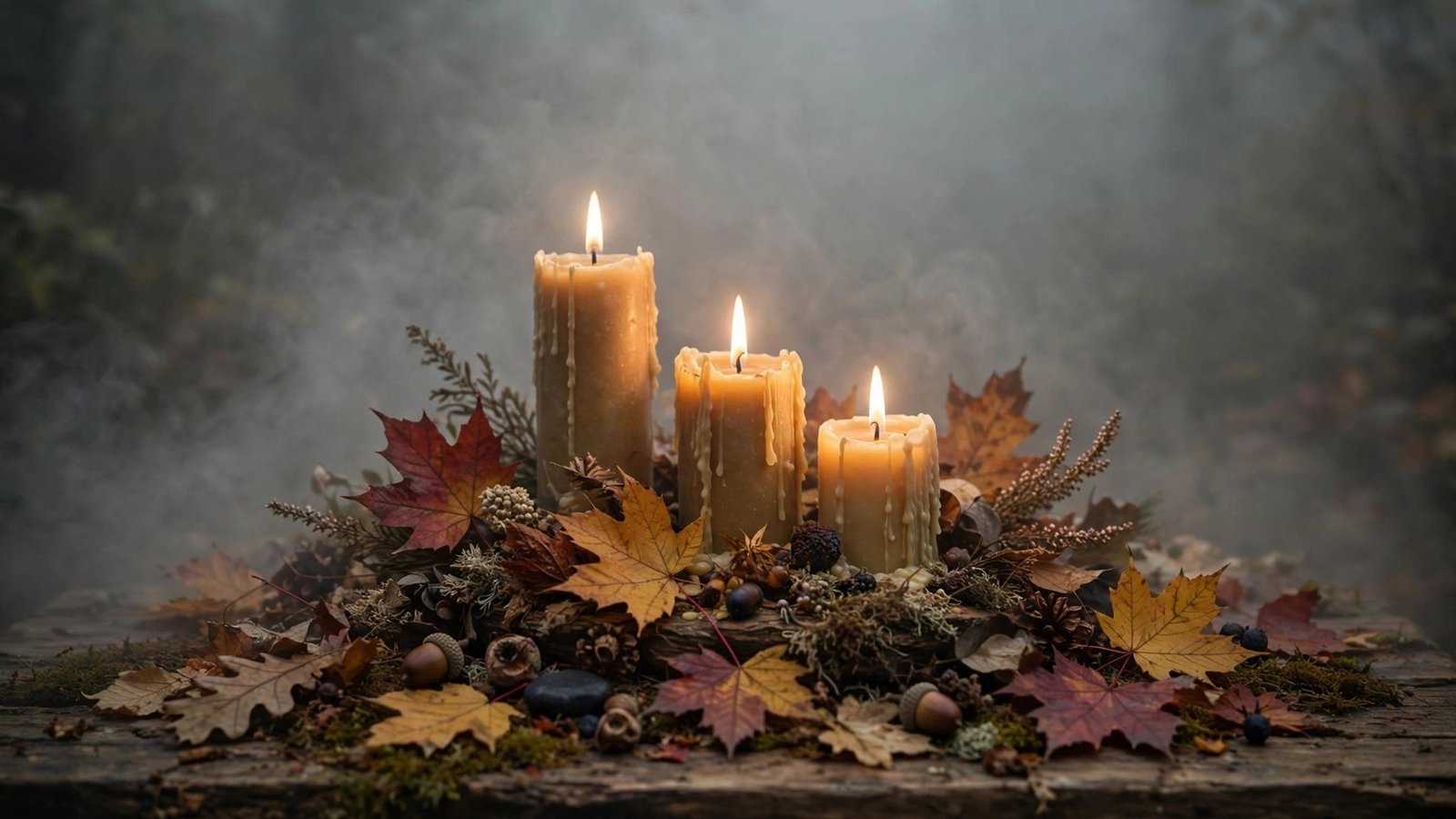
On the night of October 31, the veil between worlds is said to be at its thinnest. Samhain (pronounced "sow-in") is the ancient Celtic festival marking the end of harvest and the beginning of winter and spiritually, it's considered the most powerful night of the year for connecting with ancestors and the unseen. Here's what it means and how to honor it. For another angle on the same question, see the dumb supper.
If Halloween is the costume, Samhain is the bone underneath. Long before it became a night of candy and horror movies, October 31 was one of the four great fire festivals of the Celtic year, a threshold moment when the old year died and the new one hadn't yet been born. That in-between quality is everything. This article walks through what Samhain actually is, where it comes from, why people still observe it, and how you can mark it in a way that feels real rather than performative.
The thinning veil often triggers spiritual awakening signs, here's how to recognize them. Dreams intensify near Samhain; our guide to dreaming of the deceased helps you interpret them.
What Is Samhain, Exactly?
The word Samhain comes from Old Irish samain, generally understood to mean "summer's end." It marks the hinge of the Celtic wheel of the year: the harvest is in, the light is failing, and the dark half of the year begins. The ancient Celts divided the year into two seasons, not four the light half (starting at Beltane, around May 1) and the dark half (starting at Samhain, around November 1). October 31 was the eve, the liminal night before the new year began.
For a culture that lived by the agricultural calendar, this was not abstract. Livestock that couldn't be fed through winter were slaughtered and salted. Fires were extinguished and re-lit from a communal sacred flame. The community took stock: what survived the summer, what was lost, who was still here. Samhain was practical and spiritual at once, the way most genuinely old traditions are.
Why It's Called the Celtic New Year
Modern pagans and Wiccans often describe Samhain as the Celtic New Year, and there's real substance to that with one important nuance. Celtic days were understood to begin at sunset, not sunrise, so the new year would have begun on the eve of November 1, our October 31. The festival lasted through November 1 itself.
This is why the "veil" concept centers on October 31 rather than November 1. The night belonged to the transition. The old year was dying; the new year wasn't yet born. And in that gap, in that breath between, the boundaries were believed to soften between the living and the dead, between the ordinary and the sacred, between what is and what might be. It's worth noting that ancient Celtic conceptions of time were cyclical rather than linear, so this wasn't an ending so much as a turning. The wheel doesn't stop; it rotates. Death feeds life, darkness feeds light, and Samhain is the hinge on which it all swings.
The wheel of the year in brief
Samhain is one of four major Gaelic fire festivals, spaced roughly evenly through the year: Imbolc (early February), Beltane (early May), Lughnasadh (early August), and Samhain (early November). Each one marked an agricultural and pastoral threshold. Samhain's position, the descent into winter made it the most solemn of the four, the one most associated with ancestors, the dead, and the mysteries of what lies beyond. If you've heard Samhain described as the "witch's new year," that's the modern Wiccan lineage speaking, which adopted the Celtic calendar wholesale and gave Samhain pride of place as the start of the ritual year.
The Thinning Veil: What It Actually Means
The "veil between the worlds" is the phrase most associated with Samhain, and it's worth unpacking rather than just repeating. The image comes from a cluster of Celtic and later folk beliefs: that on this night, the dead could walk among the living, that the Aos Sí (the fairy folk, understood in older tradition as something closer to ancestral spirits than storybook creatures) were abroad, and that the normal rules of separation between realms loosened.
But the veil was never understood as a wall being knocked down. It was more like a curtain in a breeze. People didn't treat Samhain night as a free-for-all portal; they treated it with ritual caution. Doors were opened literally, in some traditions, to let ancestral spirits in and offerings were left. Divination was practiced because answers were believed to come more easily. But there were also protective customs: guising (the ancestor of trick-or-treating) may partly have originated as a way to blend in with wandering spirits, and bonfires served as both beacon and boundary.
A note on respect versus appropriation
Samhain is a living tradition for many modern pagans, Wiccans, and people of Celtic heritage. If you don't come from that background, there's nothing wrong with drawing inspiration from it but there's a difference between honoring the roots and wearing the aesthetic. Taking time to understand the history, speaking the name correctly ("sow-in," not "sam-hane"), and approaching ancestor work with genuine reverence rather than spooky theatrics is the line. Curiosity with humility lands well. Costume-shop mysticism doesn't.
Honor Your Ancestors: The Heart of Samhain
If Samhain has one central practice, it's this: remembering the dead. Not in a morbid way in a relational one. The underlying idea is that those who came before you are not gone in any absolute sense; they persist in your blood, your name, your habits, your face in the mirror. Samhain is the night to acknowledge that openly.
Light a candle for those who came before you. One candle per person, or one candle for all of them. The number matters less than the intention. As you light it, speak their names aloud. There's something about saying a name out loud that writing it never quite captures; it puts the person back in the room, briefly, in the only way that still works.
You don't need elaborate ritual remembrance is the ritual. Look at old photographs. Cook a dish someone used to make. Tell a story about them to someone who never met them. Visit a grave if you can, or simply sit quietly and let yourself miss them. Grief that gets a designated night often feels less heavy the other 364 days, because it's been given somewhere to live.
Building a simple ancestor altar
Many people set up a small Samhain altar a shelf, a windowsill, a corner of a table. There's no required inventory, but the traditional elements include photographs of the dead, a candle, something they liked (a particular food, a drink, tobacco, flowers), and something of yours that connects you to them. Leave it up through the night of October 31 and take it down when it feels right, often November 1 or 2. The point isn't display; it's hospitality. You're setting a place at the table for people who can't pull up a chair anymore.
What if your family history is complicated?
Not everyone has warm feelings toward their ancestors, and Samhain practice has room for that. You can honor the dead without pretending every relationship was good. Some people specifically use Samhain to acknowledge difficult ancestors not to forgive on command, but to name what happened and consciously choose not to carry it forward. "I see what you passed down, and I'm putting it down here" is a complete and valid Samhain working. Honesty counts as reverence.
Release the Old Year: Samhain as a Letting-Go Ritual
The Celtic new year begins in darkness, which makes Samhain the natural counterpart to the January resolutions most of us abandon by February. Instead of resolving to become someone new, Samhain asks you to bury what needs burying.
Write down what you're ready to let die with the old year habits, grudges, fears, versions of yourself that no longer fit. Be specific. "Procrastination" is vague; "the story that I'm someone who can't finish things" is the actual thing. Write it by hand if you can; handwriting engages something typing doesn't.
Burn the paper safely (or tear it up) as a symbol of release. Fire is the traditional element Samhain is a fire festival, after all but safety and legality come first. A fireplace, a fireproof bowl outdoors, or even a sink works. If fire isn't an option, tearing the paper into small pieces and throwing them away, or burying them, carries the same symbolic weight. The mechanism matters less than the decisiveness: you're not filing this away for later. You're done with it.
A release ritual for October 31 night
If you want something with a little more structure, try this. After dark on October 31, sit with your list and a candle. Read each item aloud, then say out loud "I release this. It dies with the old year." Burn or tear each one as you go. When you're done, sit in the quiet for a few minutes. Don't rush to fill the space with what comes next. Samhain teaches that emptiness is a legitimate phase, not a problem to solve. The new year will fill it in its own time.
Listen for Messages: Dreams, Divination, and Synchronicity
Dreams around Samhain are said to carry extra weight. Whether you attribute that to a thinning veil or to the psychological reality that ritual nights prime the subconscious, the practical advice is the same: keep a journal by your bed for the nights around October 31. Write down whatever you remember immediately on waking, before the day washes it away. Look for visitors. The dead appearing in dreams near Samhain is one of the most commonly reported experiences in the tradition, and many practitioners treat such dreams as genuine contact rather than mere symbolism.
Pay attention to synchronicities. The song on the radio that was "their" song. The name that keeps appearing. The object you find in an unexpected place. Skeptics call this pattern-seeking; practitioners call it the veil doing its work. You don't have to decide which it is to find it meaningful. Noticing is the practice.
The thinning veil means you're more receptive not more vulnerable. This is worth stating clearly because Samhain gets tangled up with fear in the popular imagination. The tradition doesn't frame this night as dangerous; it frames it as porous. Receptivity is a capacity, not a weakness. That said, the old customs included grounding for a reason: eat well that day, stay present in your body, and if you do any kind of spirit communication, open and close it deliberately light the candle with intention, blow it out with intention. Bookends matter.
Traditional Samhain divination
Divination at Samhain is genuinely old, not a modern invention. Apple-based fortune-telling (bobbing for apples, paring an apple peel in one strip to reveal an initial) was widespread in the British Isles. Nut divination placing two hazelnuts in the fire, one for each lover, and reading how they burned appears in folk records. Dream incubation (sleeping with a question in mind) was practiced. If you read tarot or runes, Samhain night is considered prime time: do a year-ahead spread, or simply pull one card with the question "What does the dark half of the year ask of me?" and sit with it through November.
How to Observe Samhain on October 31: A Simple Plan
You don't need to be pagan, Wiccan, or Celtic to mark Samhain meaningfully. Here's a straightforward way to spend the evening that draws on the actual traditions without requiring initiation into anything:
During the day: Tidy your home. The old custom of cleaning before the new year has parallels in many cultures. Cook something seasonal and hearty; the traditional Samhain table featured apples, nuts, root vegetables, and the last of the harvest. If you have photos of deceased loved ones, bring them out.
At sunset: This is when the festival begins. Light a candle one for the new year, or one per ancestor. Some traditions extinguish all the lights in the house first and re-light from a single flame, symbolizing the old year ending and the new one beginning. Even one candle, lit deliberately, does the work.
In the evening: Eat the seasonal meal. Speak the names of the dead. Do your release ritual the written list, the fire or tearing. If you practice divination, this is the night for it. Take a walk after dark if you feel like it; Samhain night walks, feeling the cold air and the particular quality of late-October darkness, are their own kind of observance.
Before sleep: Put the journal by the bed. Blow out the candle with intention. The festival night is ending, the new year has begun. Note whatever dreams come.
Samhain and Halloween: What's the Real Relationship?
They're related, but they're not the same thing, and the difference matters. Halloween (All Hallows' Eve) is the Christian overlay: the eve of All Saints' Day, November 1. When Christianity spread through Celtic lands, the church routinely placed its feasts on top of existing festivals, a practical strategy for conversion. Samhain's themes of the dead mapped neatly onto a feast honoring saints and martyrs, and later the dead more broadly (All Souls' Day, November 2).
The folk customs blended over centuries: guising became trick-or-treating, the bonfires stayed, the divination games survived as party games. Modern Halloween is the commercial, secularized descendant fun, but spiritually hollow for most people who celebrate it. Samhain is the older root, and it never went away; it just went quiet for a while. The current revival pagan, Wiccan, and cultural is a reclamation, not an invention.
There's no conflict in enjoying both. Plenty of people take their kids trick-or-treating at dusk and sit with their ancestors at midnight. The sacred and the playful have always coexisted on this night; the Celts themselves mixed solemnity with feasting. Just know which one you're doing at any given moment, and give each its due.
What Samhain Asks of You (Beyond One Night)
Here's the thing most articles about Samhain miss: the festival isn't really about October 31. It's about the dark half of the year that October 31 opens. The Celts understood something we've mostly forgotten that darkness isn't the absence of life but a phase of it. Seeds need winter. Grief needs its season. Rest isn't laziness; it's the other half of growth.
Samhain asks you to stop treating the dark as an enemy. The nights are getting longer whether you make peace with that or not. You can spend the next six months fighting the dark more light, more noise, more busyness or you can do what the festival suggests: turn inward, take stock, tend your inner fire, and let some things die so that other things can be born in spring. That's not mysticism. That's just paying attention to the actual rhythm of the year, the way people did for thousands of years before electric light made us forget there was a rhythm at all.
So on October 31, light the candle. Say the names. Write the list. Burn what needs burning. And then step into the dark half of the year the way the Celts did, not afraid of it, but fluent in it. The veil is thin, the ancestors are near, and the new year is waiting on the other side of the dark. If the questions this night raises feel too big to sit with alone, about a loved one who has passed, a pattern you are trying to break, or what the coming year holds, bring them to a reading. Samhain night is as good a time as any to ask. First 3 minutes FREE — every time, for every reading, with all advisors.
Frequently Asked Questions
When is Samhain, and why does it start in the evening?
Samhain is marked from sunset on October 31 into November 1. In older Celtic reckoning, a day was understood to begin as darkness fell, so the festival opened on that eve rather than at dawn. That timing also fits its meaning: the harvest is finished, nights are lengthening, and the darker half of the year is beginning. You do not need to stay up all night to honor it. A quiet evening observance, a candle, or time with memories can be enough.
Is Samhain just another name for Halloween?
No, although the two share roots and a date. Halloween today is largely a playful, commercial celebration built around costumes, candy, and parties. Samhain is an older Celtic fire festival focused on harvest's end, remembrance, and the turn toward winter. Many people enjoy both in different ways, trick-or-treating with family earlier and keeping a calmer, more reflective moment later. Knowing which mood you are in helps you give each its proper place.
What does the thinning veil mean in plain terms?
It is a traditional image for a time when ancestors and the unseen world were felt to be closer than usual. You do not have to take it literally to find value in it. For many people, late October naturally stirs memory, dreams, and thoughts about those who have died. Treat the idea as an invitation to pay closer attention, to remember, and to reflect, rather than as proof that a message will arrive or that anything frightening will happen.
How can I honor ancestors at Samhain without a complicated ritual?
Keep it simple and sincere. Light a candle, look at photographs, cook a dish a loved one used to enjoy, speak their name aloud, or tell a story about them to someone who never met them. You can also honor a difficult family history honestly, by naming what happened and choosing what you will not carry forward. Reverence here means care and attention, not elaborate display or spooky performance. Small, genuine gestures carry the evening.
Can a reading around Samhain help me reflect on dreams or a sense of closeness to someone who died?
Yes, as a space for reflection. A reading can help you talk through a vivid dream, a memory that keeps returning, or questions about letting go and beginning a new seasonal chapter, framed as perspective and entertainment rather than contact guaranteed or a prediction. Take what feels meaningful and leave the rest.
Last updated: November 12, 2026