
Robin Wood Tarot Deck Guide
The Robin Wood Tarot Deck: A Guide to the Pagan Classic
The robin wood tarot deck is one of the most loved tarot decks ever published, and it has held that place for more than three decades. Artist and author Robin Wood created it, and Llewellyn Publications first published it in 1991. It keeps the Rider Waite Smith frame, holding 78 cards split into 22 major arcana and 56 minor arcana, so a reader who knows the classic meanings can pick it up and use it at once. What sets it apart is the art: bright, detailed, and full of Pagan and nature symbolism, drawn in ink and colored with Prismacolor colored pencils, with a warmth that the older Rider Waite deck does not always have. The deck is often suggested as a first deck, and for good reason. The images are clear, the meanings are easy to see in the pictures, and the deck feels welcoming rather than daunting. This guide walks through the story behind the deck, the pictures, the makeup of the 78 cards, ways to read with it, and the readers it fits best, so you can judge whether it belongs on your shelf.
History: A Deck Drawn Far From Home
Robin Wood first grew interested in tarot in 1979, and the work that became her deck began soon after. She drew and redrew the cards over nearly ten years, much of it while living overseas on an Army base with her then husband in 1980 to 1982, with no tarot books or teachers at hand. She learned by studying the Rider Waite deck she owned and by drawing her own versions of the cards, one by one. The slow pace shows in the result: a deck that keeps the Rider Waite Smith system close while adding a clear Pagan and nature based vision of its own. Llewellyn Publications first published the deck in 1991, and it has stayed in print since, through many printings, including a 19th printing in 2011. Robin Wood later wrote a companion book, The Robin Wood Tarot: The Book, first published in July 1998, which tells the history of tarot, the history of her own deck, and the meanings of the cards in her own words. The little white book that comes with the deck was written by Robin Wood and her second husband, Michael Short, and it gives short upright and reversed meanings for each card, along with three spreads. Ten years of drawing went into the deck, and that slow care shows in every card.
The Art: Color, Nature, and a Pagan Eye
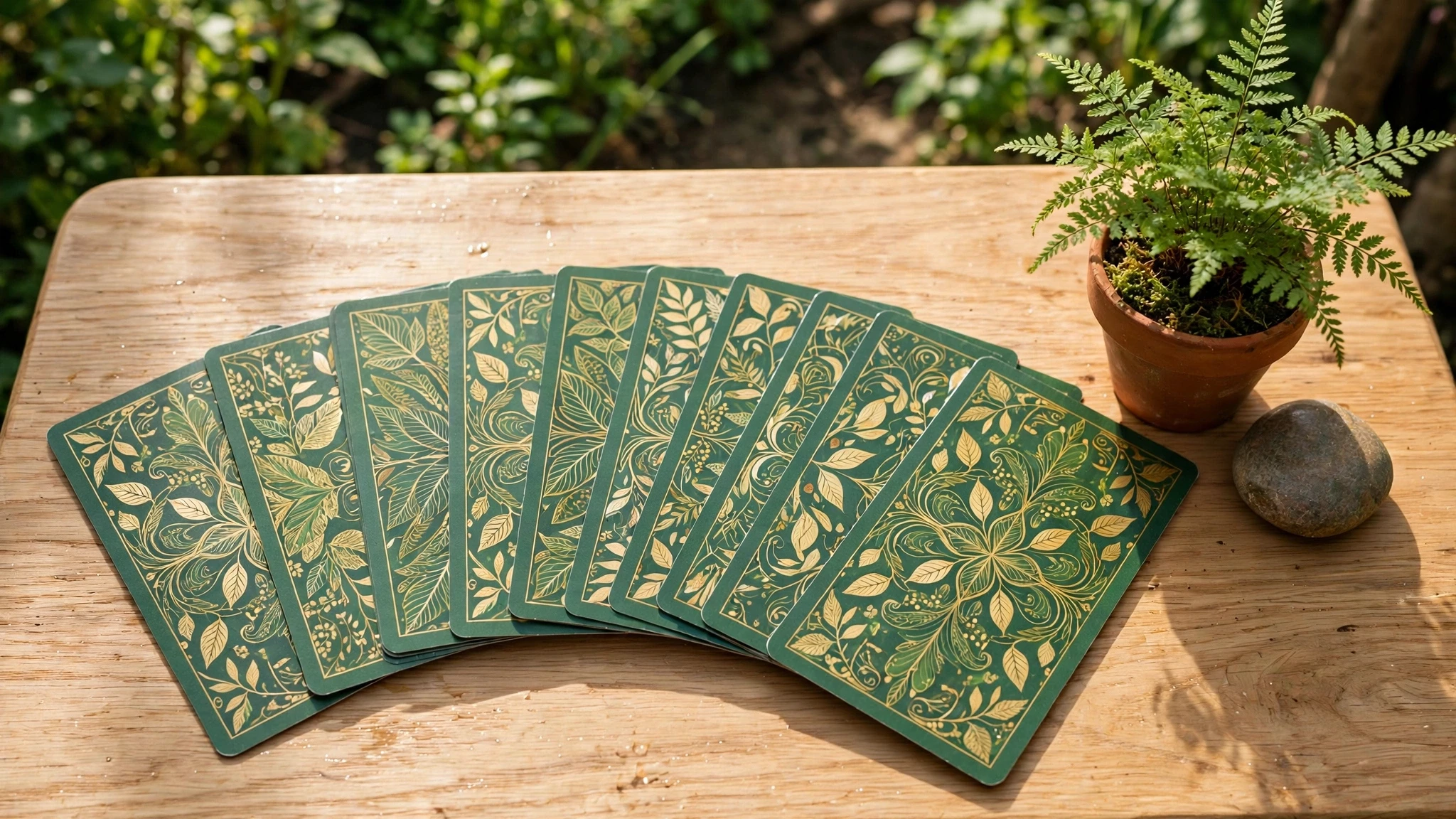
The first thing any reader notices about the Robin Wood deck is the color. Greens, golds, blues, and reds fill the cards with a warmth that feels alive, and the images are full of nature: trees, flowers, animals, streams, and open skies. The art was drawn in ink and colored with Prismacolor colored pencils, which gives the cards a soft, hand made quality that feels personal rather than printed. Pagan symbolism runs through the whole deck. The Magician is renamed the Wizard in some printings, and the major arcana carry small changes that reflect a Pagan view, such as the Hierophant shown with a different emphasis than the church centered Rider Waite image. The minor arcana scenes keep the Rider Waite compositions a reader already knows, but with added details: a Pentacles card may show a garden, a Wands card may show a forest path, a Cups card may show a stream. The court cards are Page, Knight, Queen, and King, and the figures wear medieval style clothing in bright colors. The card backs show a reversible Celtic knotwork design in green, white, and black, which looks the same upside down, so reversed cards are easy to use. The cards measure about 2.75 inches by 4.75 inches, a standard size that shuffles easily, and the deck comes in a flip top box with a 51 page little white book.
What the 78 Cards Hold
The Robin Wood deck holds to the Rider Waite Smith frame, which makes it easy to learn for anyone who already knows the classic deck. Like the classic deck behind it, it holds 78 cards: 22 major arcana, running from the Fool at 0 to the World at 21, and 56 minor arcana across four suits, each suit holding ten numbered cards and four court cards. The four suits are Cups, Swords, Wands, and Pentacles, and every suit runs from Ace through Ten, closing with a Page, Knight, Queen, and King at its court. The major arcana keep the Rider Waite names and numbering, Strength at position 8 and Justice at position 11, and the minor arcana stay close to the Rider Waite scenes, so standard meanings carry straight over and no new system needs learning. The differences sit in the details and the tone. The Pagan and nature symbolism adds a layer that the Rider Waite deck does not have, and the bright art makes the feeling of each card easier to see. A card of sorrow in this deck still shows sorrow, but it shows it in a landscape that feels alive, which helps a reader see the feeling without being overwhelmed by it. The deck holds a 51 page little white book in English, which gives short meanings and three spreads: a fifteen card spread, a ten card spread, and a five card spread. The companion book from 1998 gives longer meanings and the full history of the deck. For the classic system behind it, the Rider Waite tarot deck guide sets out the frame in full.
Reading With the Robin Wood Deck
The Robin Wood deck reads clearly for almost any question, and it is strongest for daily draws, for beginners learning the cards, and for readings about bonds, family, and practical life. The images are direct, so a reader can often see the meaning in the picture before checking a book, which builds confidence fast. The deck works well for three card spreads, for the Celtic Cross, and for the spreads in the little white book, including the fifteen card spread created by Barbara Johnson. The deck reads reversals well, because the little white book gives reversed meanings for each card and the reversible card back makes reversed cards easy to spot. For a daily draw, pull one card each morning, look at the image for a minute before reading the meaning, and write down one line about what the card shows you. The guide on how to journal your daily tarot card shows how to keep that daily note useful. If you are new to reading cards, the guide on how to read tarot cards takes you through shuffling, layouts, and reversals step by step. That simple practice builds a personal bond with the deck over weeks. For a larger reading, the deck rewards the same approach: look first, then read, then check the book. The bright art can make hard cards feel less frightening, which helps a reader face a hard message without flinching. A reader who keeps a journal of readings with this deck will find the journal becomes a record of growth, because the same card can mean something new as the reader changes.
Who the Deck Suits, and Why Beginners Love It
The Robin Wood deck suits beginners more than almost any other deck, and the reasons are practical. The tarot for beginners guide pairs well with this deck for the first month of learning. The images follow the Rider Waite Smith scenes, so any standard tarot book works alongside it. The pictures are clear and bright, so the meanings are easy to see. The cards are a standard size and shuffle easily. The little white book gives both upright and reversed meanings, so a beginner can read reversals from the first day. The deck also suits readers who love Pagan and nature symbolism, who want a deck that feels warm and alive, and who want a deck with a long history that is still in print. It suits readers who want a deck for daily use, for readings with friends and family, and for practical questions about work, love, and home. The deck is less suited to readers who want dark or surreal art, because the Robin Wood is bright and direct, and a reader who wants shadow work may prefer a darker deck. It is less suited to readers who want a deck that breaks from the Rider Waite system, because this deck follows that system closely. If you are unsure, look at ten card images before buying, and ask whether the art feels welcoming. A deck that feels welcoming is a deck you will actually use, and the Robin Wood has welcomed new readers for more than thirty years.
An Illustrative Example: June and the First Deck
This example is illustrative, not a real person's story.
June, a 24 year old student from Minnesota, bought the Robin Wood as her first tarot deck after a friend recommended it, because she wanted a deck that felt friendly rather than frightening. She started a simple practice: each morning, she drew one card, looked at the image for a minute, and wrote down one line about what the card showed her, before checking the little white book. In the first week, she drew the Page of Pentacles, the Three of Cups, and the Sun, and the bright images made the meanings easy to remember. Over two months, by the account in the example, June learned the major arcana by picture alone, and she began reading three card spreads for friends, using the book only when a card puzzled her. The deck gave her confidence because the images were clear, and the clear images let her trust her own eyes before she trusted the book. The example shows the deck at its best: welcoming a new reader, teaching through pictures, and letting her grow at her own pace. It did not overwhelm a new reader with dark art or strange symbols. It welcomed her, taught her through pictures, and let her grow into a reader at her own pace.
Buying, Caring For, and Storing the Deck
You can find the Robin Wood deck at most bookshops, tarot shops, and online sellers, usually at a fair price for a deck of 78 cards with a booklet. Before you buy, check the box lists 78 cards and the Llewellyn imprint, and pick a seller you trust, because popular decks attract copies. The deck comes in a flip top box with a 51 page little white book, and the box is sturdy enough for daily use, though many readers move the deck to a bag or a cloth wrap for travel. The cards are a standard size and the stock handles well, so shuffling is easy for most hands. Wipe the cards with a dry soft cloth when they pick up dust, and store them away from water and strong sun, which can warp the stock and fade the bright colors. If you buy the companion book, The Robin Wood Tarot: The Book, read it alongside the deck, because the history of the deck and the longer meanings add a layer that the little white booklet cannot. Look after the deck and it repays the care, a well kept Robin Wood lasts for years of readings. The deck has already lasted more than thirty years in print, which is the best evidence that it will last on your shelf too.
For other deck guides, see how to choose a tarot deck.
Start with a One-Card Tarot reading. Pull one card and sit with which deck on your shelf feels most welcoming today. First 3 minutes FREE — every time, for every reading, with all advisors.
Frequently Asked Questions
When was the robin wood tarot deck first published?
Llewellyn Publications first put the deck out in 1991. Robin Wood became interested in tarot in 1979 and spent nearly ten years drawing the deck, much of it while living overseas on an Army base with no access to tarot books or teachers. The deck has stayed in print ever since, through many printings.
How many cards are in the robin wood tarot deck?
The deck holds 78 cards. 22 are major arcana, opening with the Fool at 0 and closing with the World at 21. 56 are minor arcana, set out as four suits of 14 cards each: Cups, Swords, Wands, and Pentacles, with Page, Knight, Queen, and King as the court cards of every suit. It keeps the Rider Waite Smith frame, placing Strength at 8 and Justice at 11.
Is the robin wood tarot deck good for beginners?
Yes, the deck is one of the best first decks. The images follow the Rider Waite Smith scenes, so any standard tarot book works alongside it. The pictures are bright and clear, the cards shuffle easily, and the little white book gives both upright and reversed meanings, so a beginner can read reversals from the first day.
What makes the robin wood tarot deck different from Rider Waite?
The deck follows the Rider Waite Smith structure and scenes, but the art is bright, detailed, and full of Pagan and nature symbolism, drawn in ink and colored with Prismacolor colored pencils. The Magician is renamed the Wizard in some printings, and the major arcana carry small changes that reflect a Pagan view, while the meanings stay close to the classic system.
Does the robin wood tarot deck come with a book?
The deck comes with a 51 page little white book written by Robin Wood and Michael Short, which gives short upright and reversed meanings for each card and three spreads. A longer companion book, The Robin Wood Tarot: The Book, was first published in July 1998 and gives the history of tarot, the history of the deck, and longer card meanings.
Last updated: November 12, 2026
