
Nine Card Tarot Spread: A Layout for a Big Question
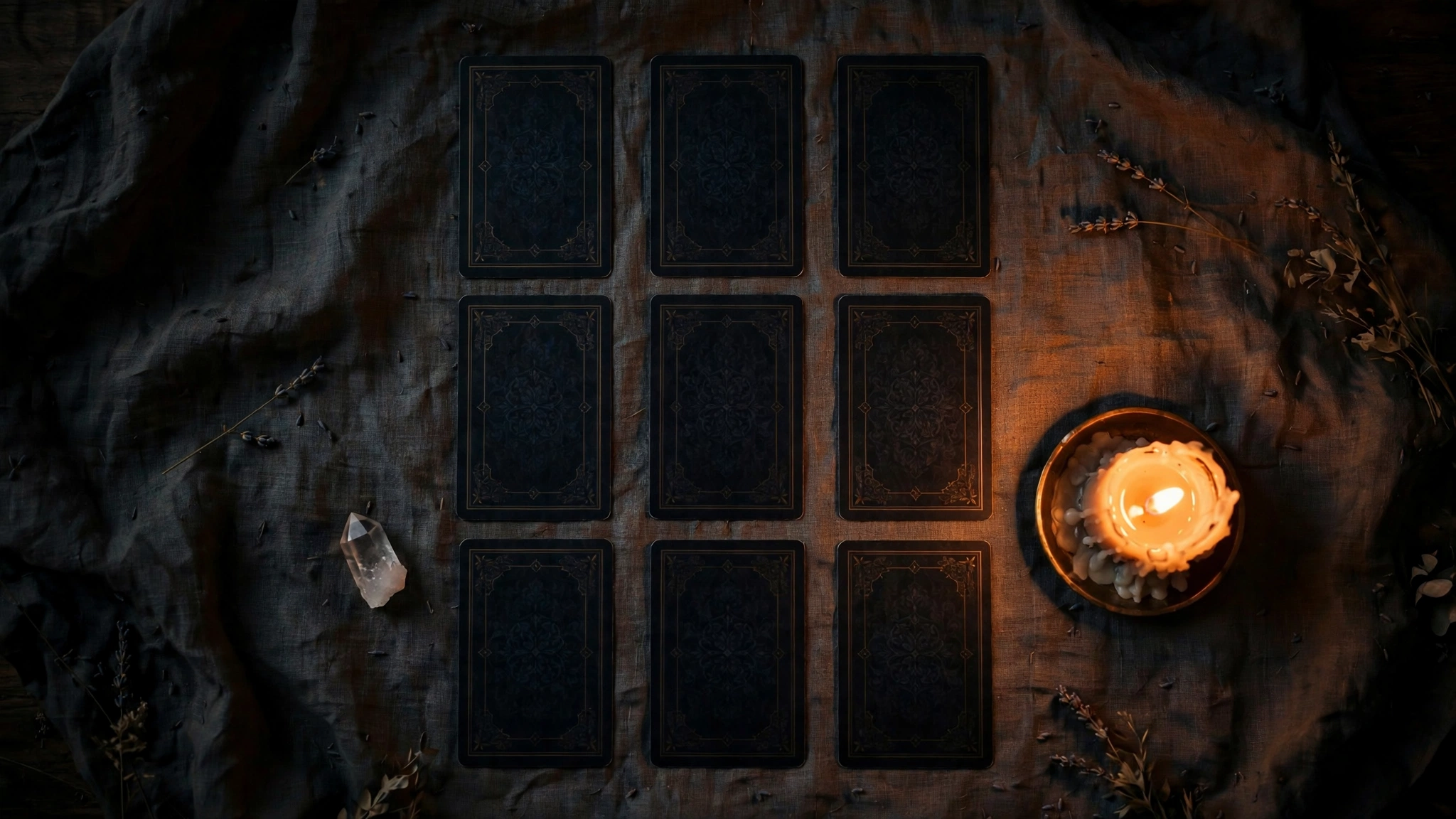
When one question is too large for a short reading, a nine card tarot spread gives it room: nine cards in a square, three rows of three, so every part of the situation gets its own seat. It gives each part of the situation its own seat, so you can see the past, the present pressure, the hidden factor, and the likely direction side by side. This guide walks through the spread one step at a time: the layout, the meaning of each seat, and how to read all nine cards together rather than one by one.
What a Nine Card Tarot Spread Is
Most spreads answer one slice of a question. A three card spread shows a beginning, a middle, and an end. A nine card spread slows the process down and spreads the question across a grid, which suits decisions with history behind them: a career move after years in one role, a relationship at a turning point, or a move to a new city. The extra cards do not add certainty. They add room, so the parts of the situation stop blurring into one feeling.
The grid is the key. Nine cards in three rows let you read across, down, and through the center. A single card can look alarming alone, but in a grid you can see what surrounds it: the support beside it, the challenge above it, the guidance below it. That context is the whole point of using nine cards instead of three.
How to Lay Out the Nine Cards
Begin with one question written in a single sentence. A good nine card question names the decision and the time frame, such as whether to accept a new role this winter, or how to handle a strained friendship over the next few months. Vague questions give vague grids, so take a minute to sharpen the wording before you shuffle.
Shuffle while holding that question, then set nine cards face down in three rows, starting at the top left and working across each row. Turn them over. Some readers like to turn the center card first, since it sits at the heart of the grid, but the order matters less than keeping it steady. If you are new to layouts in general, our overview of tarot spreads explains how positions work and why each seat needs a clear job.
The Nine Positions
Many versions of this spread exist, and readers adapt the seats to the question. The version below is a clear starting point, and you can keep it unchanged while you learn the layout. Card one is the past, the events that brought you here and still shape the question. Card two is a present influence, what is pressing on the question right now. Card three is your hopes, what you wish would happen here.
Card four is what lies beneath, the hidden or unspoken factor you may not have named yet. Card five, dead center, is the heart of the matter, the truest read of the situation as it stands. Card six is the challenge, the obstacle or tension that needs handling. Card seven is the support, the help or strength already available to you. Card eight is guidance, the advice the cards offer for your next move. Card nine is the likely direction, where things seem to be heading if nothing changes.
Notice that the outcome seat is a direction, not a fixed fate. It shows the path the current pattern points along, and a change in your choices can change that path. That distinction keeps the reading useful instead of frightening, and it is worth stating out loud before you begin.
Reading the Rows and Columns
Once the cards are face up, read the grid in layers. Start with the center card, then read the row it sits in. The top row covers the past, the present influence, and your hopes. The middle row covers what lies beneath, the heart of the matter, and the challenge. The bottom row covers support, guidance, and the likely direction. Each row tells a small story on its own, and together they show how the situation moves from where it began to where it may go.
Then read down the columns. The left column follows the thread from the past through the hidden factor to the support. The middle column follows the present influence through the heart of the matter to guidance. The right column follows your hopes through the challenge to the likely direction. If one column is full of cards from a single suit, that area of life is carrying extra weight. For a general grounding in the deck before you try this, what is tarot covers the structure of the cards and how readers use them for reflection.
Reading the Center Card First
The center card earns its place. Everything around it is context for it, so read it before the rest and let it set the tone. If the center card points to a choice, the surrounding cards show what feeds that choice and what it will cost. If it points to a feeling, the surrounding cards show where that feeling came from and what would ease it. Write one sentence about the center card before you read the others, so the later cards inform it rather than replace it.
A useful habit is to name the center card in plain words: this reading is about a decision, or this reading is about trust, or this reading is about timing. That plain sentence becomes the anchor for the whole grid. When a later card confuses you, return to the anchor and ask how the confusing card fits it, instead of starting the reading over.
An Example Without a Name Attached
Imagine a reader asking whether to take a new job in another city. The center card suggests a turning point, the past card shows long loyalty to a current team, the challenge card shows worry about money, and the support card shows a friend who has already made a similar move. Read together, the grid does not say yes or no. It shows that loyalty and worry are the real weights, and that a conversation with the friend is the most useful next step. That is the spread doing its job: it turns a yes or no question into a map of what matters.
Compare that with a narrower layout for a smaller choice. The tarot spread for decision making gives each option its own seat and suits a choice between two clear paths. Use the nine card grid when the question has history, hidden factors, and several moving parts. For questions that touch old patterns and inner work, the tarot spread for shadow work takes a different angle, with seats for what is hidden and what is ready to be faced.
Mistakes to Avoid
The most common mistake is asking a second question halfway through the grid. A nine card spread already holds a lot of information, and changing the question mid reading mixes two readings into one. If a new question appears, write it down and lay a fresh spread for it later. Another mistake is reading only the outcome card. The ninth card means little without the eight cards that lead to it, and skipping them turns a rich layout into a single guess.
A third mistake is treating a difficult card as a verdict. A hard card in the challenge seat is doing its job by naming the obstacle. Its neighbors, especially support and guidance, show what can be done about it. Read the hard card with its neighbors, not alone, and the spread stays practical.
Getting Help With a Big Question
A nine card grid can be a lot to hold alone, especially when the question matters to you. Talking it through with a reader can help you spot the thread across the rows and name the one step that matters most. Bring your written question and your notes on the center card, so the session builds on work you have already done instead of starting from nothing.
PsychicSmile offers chat readings with real readers for exactly this kind of question. First 3 minutes FREE — every time, for every reading, with all advisors. You can also practice with a shorter layout first using the one card tarot tool, then move to the nine card grid when the question grows.
When to Use a Smaller Spread Instead
Nine cards suit a big question, but they are too much for a daily check in. If you only need a nudge for today, one card is enough. If you need past, present, and future on a small matter, three cards will do. Save the grid for the questions that keep returning, the ones with history and stakes. Used that way, the nine card tarot spread becomes a tool you reach for a few times a year, and each time it earns its size.
Frequently Asked Questions
What is a nine card tarot spread?
A nine card tarot spread sets nine cards out in a square, three rows of three. Each seat has a job, such as the past, the heart of the matter, the challenge, or the likely direction. It suits a big question with history and several moving parts.
How do you lay out a nine card tarot spread?
Write one clear question, shuffle while holding it, then set nine cards face down in three rows, starting at the top left and working across each row. Turn them over in the same order, and read the center card first before reading the rows and columns.
What does the center card mean in a nine card spread?
The center card is the heart of the matter, the truest read of the situation. Everything around it is context. Name it in one plain sentence before reading the other cards, so they inform it rather than replace it.
Can a nine card spread predict the future?
No. The outcome seat shows a likely direction if nothing changes, not a fixed fate. The spread is a reflection tool that maps what matters in a situation, and your choices can change the direction it points along.
When should I use a nine card spread instead of a three card spread?
Use nine cards for a big question with history, hidden factors, and real stakes, such as a career move or a relationship turning point. Use three cards for a small daily question or a simple past, present, and future check.
Last updated: November 15, 2026
