
How to Make Moon Water at Home
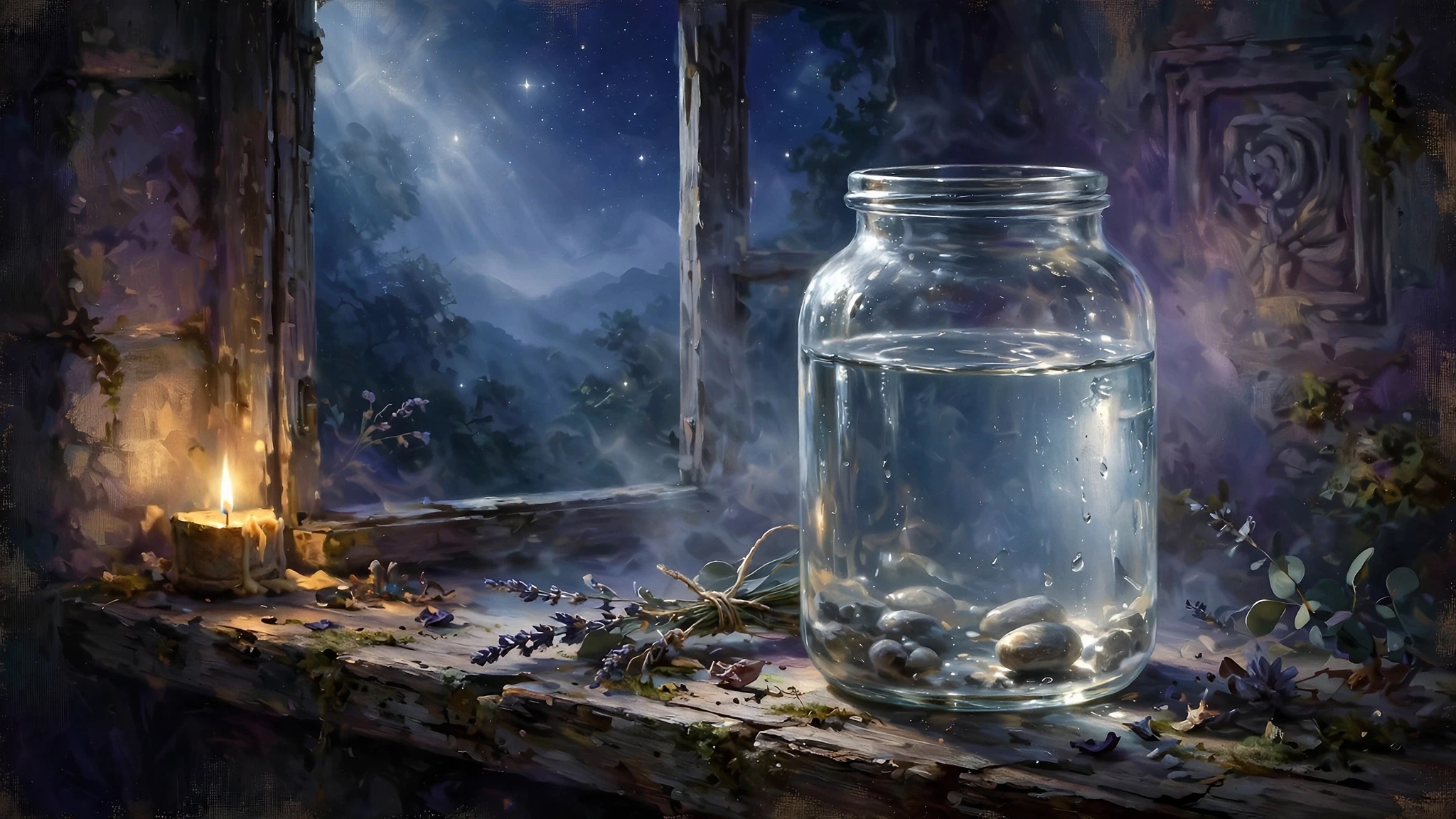
How to Make Moon Water, Step by Step
Learning how to make moon water is simpler than most guides make it sound. Moon water is water left in a covered glass jar under the Moon overnight, usually on a full moon or a new moon, with an intention set before you place it outside. People use it afterward in small ways, to water a plant, to wash their hands, to add to a bath, or to sprinkle around a room as part of a ritual. This page gives you the exact steps, the real timing, the safety rules that matter, and the honest limits, so you can make a jar without confusion and without risk.
Moon water is a folk practice, not a scientific one. There is no evidence that moonlight changes the chemistry of water in a way that affects the body, and no study shows that moon water heals illness or changes luck. What the practice does offer is a simple, hands on ritual that marks a moment in the month and gives an intention a physical form. A jar on a windowsill is a reminder you can see. That is the real value, and this page treats it that way, as a meaningful ritual, not as medicine.
The Timing: Full Moon, New Moon, and the Cycle Between Them
Timing is the first choice, and it changes what the water is for. Full moon water is the most common kind, made on the night of the full moon, when the Moon is bright and fully lit. In late 2026, the full moons fall on November 24 and December 23, with the full moon moment in the early morning in Eastern Time on those dates, so the night before, November 23 and December 22, is the usual night to set the jar out. New moon water is made on the night of the new moon, when the Moon is dark. In late 2026, the new moons fall on November 9 and December 8. The cycle from one new moon to the next, the synodic month, averages 29.53059 days, according to NASA, so a new jar roughly once a month fits the natural rhythm.
Use full moon water for completion and release, and new moon water for beginnings. That matches the wider moon practice. The new moon ritual page sets an intention at the dark moon, and the full moon ritual for letting go releases at the bright moon. Moon water follows the same split. A jar made at the full moon is for finishing, clearing, and letting go. A jar made at the new moon is for starting, choosing, and planting. If you are not sure which to make, start with the full moon, because its light makes the timing easy to see, and the bright night is the one most people remember.
Place the jar out after sunset and bring it in before sunrise, or at least before the morning sun heats it. The Moon is up for most of the night around the full moon, so an overnight soak gives the water hours under the sky. Around the new moon, the Moon is not visible, and the jar still sits out overnight by tradition, under the dark sky. Either way, the jar should be outside or on a windowsill where the sky is visible, not in a closed cupboard. If the weather is bad, a windowsill inside is fine. The practice is about the moment in the cycle, not about perfect weather.
What You Need, and What to Leave Out
You need a clean glass jar with a lid, clean drinking water, a pen and a small piece of paper, and a safe spot outside or on a windowsill. A mason jar, a jam jar, or any glass jar with a tight lid will do. Glass matters because it is easy to clean, it does not react with water, and it lets light through. Do not use a plastic bottle that has held chemicals, and do not use a metal container that can rust. The lid matters too. It keeps out insects, dust, leaves, and animals, and it keeps the water clean while it sits outside. An open jar left out overnight is not moon water. It is dirty water, and it should not be used.
Use clean drinking water from the tap or a filter, the same water you would drink. Do not use water from a pond, a river, or a puddle. Do not add crystals, herbs, oils, or salt to the water if you plan to put it on your skin or near plants, because many crystals can leach minerals, some herbs can irritate skin, and salt can harm plants. If you like the look of a crystal beside the jar, place it next to the jar, not inside it. The same goes for flowers. A flower on the lid is decoration. A flower in the water is a source of bacteria, and it will cloud the jar within a day.
Making Full Moon Water, Step by Step
Step one, in the late afternoon, wash the jar with hot soapy water, rinse it well, and let it air dry. While it dries, fill it with clean drinking water, leaving about an inch of space at the top. Step two, before sunset, write your intention on a small piece of paper in one sentence. For a full moon jar, the intention is usually about release, such as I let go of the worry about this project, or I finish the argument I have been carrying. Place the paper under the jar, or fold it and set it beside the jar. Step three, after sunset, carry the jar outside or to a windowsill, put the lid on tightly, and set it down where the sky is visible. Say the intention once, out loud or silently, and leave it there overnight.
Step four, in the morning, bring the jar inside before the sun heats it. Open it, look at the water, and smell it. It should look and smell like clean water. If it looks cloudy, smells odd, or has anything floating in it, throw it out and wash the jar. Do not use it. If it is clean, label the jar with the date and the moon, for example Full Moon, November 24, 2026, and store it in a cool dark place. Use it within two weeks, and sooner is better. The label matters, because a jar without a date becomes a mystery within a month, and you will not know whether it is fresh.
Making New Moon Water, and How It Differs
New moon water follows the same steps, with two differences. First, the timing is the night of the new moon, November 9 or December 8 in late 2026, and the jar sits under a dark sky, which some people find harder to connect with because there is nothing to see. That is fine. The darkness is the point. The new moon is about beginnings that are not yet visible, and the jar holds that idea in a physical form. Second, the intention is different. Instead of release, write a beginning, such as I start the morning walk routine, or I open the savings account this month. Place the paper under the jar the same way, set it out after sunset, and bring it in before sunrise.
New moon water is used the same way as full moon water, in small amounts, for ritual purposes. Add a spoonful to a bath, use it to water a plant you are starting, or sprinkle a few drops around a room before you sit down to work on the intention. Do not drink it after it has sat out, even if it looks clean, unless you are sure of the jar, the lid, and the storage. The safest rule is simple. Moon water is for external ritual use, not for drinking. Tap water is for drinking, and it is cleaner, fresher, and safer.
How to Use Moon Water, and How to Store It
Use moon water in small amounts, within two weeks of making it. A few drops on your hands before a ritual, a spoonful in a bath, a splash on a plant, or a light sprinkle around a room are all normal uses. Do not pour a whole jar into a bath and sit in it for an hour, and do not use it on broken skin, in your eyes, or on a baby or a pet. Do not use it as a substitute for cleaning, medicine, or any health treatment. It is a ritual object, and it should be treated like one, with respect and with limits.
Store the jar with its lid on, in a cool dark place, labeled with the date and the moon phase. If the water turns cloudy, smells stale, or grows anything visible, throw it out, wash the jar with hot soapy water, and make a fresh jar next month. Do not try to save it by boiling it or adding anything to it. Moon water is meant to be made fresh each month, and the monthly rhythm is part of the practice. Making a new jar is the ritual. Keeping an old jar past its time is just clutter.
Safety Rules That Matter More Than the Ritual
Safety comes first, and the rules are short. Never leave a jar open outside overnight. Animals, insects, and dust can get in, and the water becomes unsafe. Never use a jar that held chemicals, paint, or cleaning products, even if you washed it. Never add crystals, herbs, oils, or salt to water you plan to put on skin or plants. Never drink moon water that sat outside, and never give it to a child or a pet to drink. Never leave a jar on a roof, a ledge, or anywhere it can fall and break. Glass on a high ledge is a hazard, and a broken jar at night is a cut waiting to happen.
If you live in a flat or a city, a windowsill inside is safer than a balcony ledge, and it works just as well. If you have no outdoor space at all, a windowsill with a view of the sky is enough. The practice adapts to where you live, and it does not require a garden, a roof, or a rural sky. What it requires is a clean jar, a lid, clean water, and a moment of attention at the right point in the month. Moon phases explained gives you the full cycle so you can plan ahead, and new moon meaning and full moon meaning explain the symbolism behind the two jars. Grounding techniques can help you settle into the quiet moment when you set the jar out.
If you would like to talk through an intention for your next jar, a reader can help you shape it. First 3 minutes FREE — every time, for every reading, with all advisors.
For a simple next step, try a One-Card Tarot reading and sit with what the card suggests for the month ahead.
Frequently Asked Questions
How to make moon water at home?
Wash a glass jar, fill it with clean drinking water, put the lid on, and set it outside or on a windowsill overnight on a full moon or new moon, with a written intention under or beside the jar. Bring it in before sunrise, label it with the date, and use it within two weeks for external ritual use.
Should moon water be made on a full moon or a new moon?
Both are used, for different purposes. Full moon water, made on November 24 or December 23 in late 2026, is for completion and release. New moon water, made on November 9 or December 8, is for beginnings. Pick the moon that matches your intention, and keep the two uses separate.
Is it safe to drink moon water?
The safest rule is not to drink it. Even with a lid, a jar left outside overnight can pick up dust or bacteria, and you cannot see whether it is clean. Use moon water for external ritual purposes, like a bath, a plant, or a sprinkle around a room, and drink fresh tap water instead.
How long does moon water last?
Use it within two weeks, stored with its lid on in a cool dark place, labeled with the date and moon phase. If it turns cloudy, smells stale, or shows anything floating in it, throw it out and wash the jar. Make a fresh jar at the next moon instead of trying to save the old one.
Can I put crystals in moon water?
No, not inside the water. Many crystals can leach minerals or break down in water, and some are unsafe on skin. Place a crystal beside the jar instead, not inside it. The same rule applies to herbs, oils, and salt, which can irritate skin or harm plants.
Last updated: November 11, 2026
