
How to Create a Sacred Space at Home
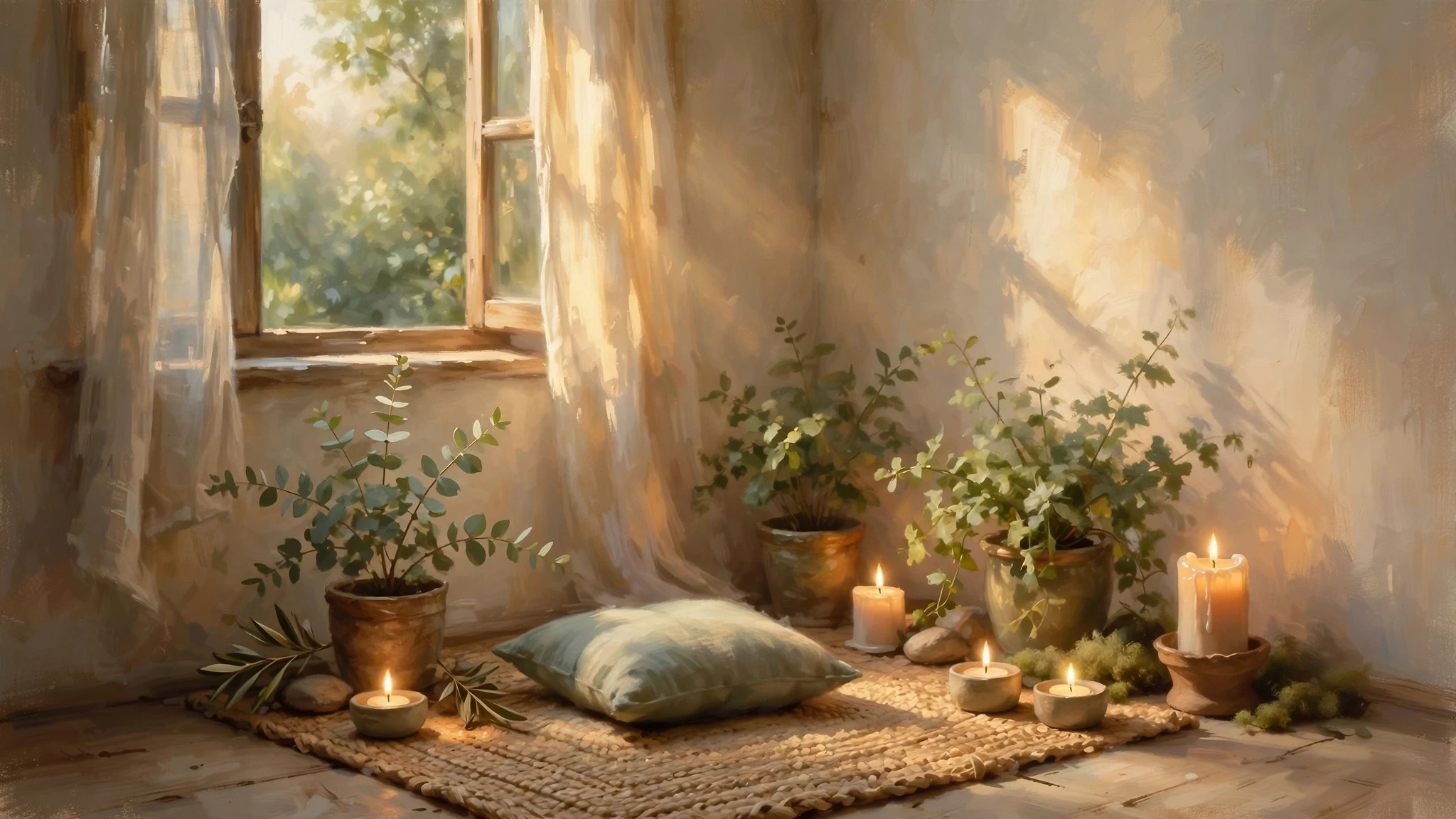
How to Create a Sacred Space at Home: A Corner That Is Yours
Learning how to create a sacred space starts with a small truth: you do not need a spare room, a big budget, or a collection of special objects. You need a corner, a clear purpose, and the care to keep it set apart from the rest of your day. A sacred space is a place you return to for quiet, prayer, meditation, journaling, or ritual, and its power comes from what you do there repeatedly, not from what you buy for it. This guide walks through choosing a spot, clearing it, choosing what belongs there, and keeping it alive over months, so the corner becomes a habit and the habit becomes a refuge. Everything here is practical. The space is yours, and it should fit your life, not someone else's idea of what a spiritual corner ought to look like.
Choosing the Spot: Quiet, Light, and Reachable
The best spot is the one you will actually use, and three qualities matter more than size. First, quiet. Pick the least interrupted place in your home: a corner of a bedroom, a wide windowsill, the end of a hallway, or a small table by a window. If you share your home, choose a spot that others will respect, and tell them what it is for. A space that is constantly disturbed will not hold the quiet you need. Second, light. Natural light helps in the morning, and a candle helps in the evening, so a spot near a window with room for a candle holder covers both. Third, reachability. A sacred space hidden in a cupboard you never open will not get used. It should be visible enough that you pass it daily and easy enough to sit at without rearranging furniture. Size is flexible. Some people use a whole desk. Some use a single shelf. Some use a small tray they can carry to the kitchen table and put away afterward, which works well in a shared home or a small apartment. If you have children or pets, consider a higher shelf for anything breakable or burnable, and keep candles out of reach. The spot does not need to be perfect. It needs to be yours, and it needs to be used.
Clearing and Cleansing the Space
Before you put anything in the space, clear it completely. Take everything off the surface, wipe it down, and let it dry. This physical cleaning is the first act of the space, and it matters more than any ceremony. Then, if you like, cleanse it in a way that fits your own tradition. Some people use smoke from sage or another herb, and the how to smudge with sage page and the how to smudge your home page both cover that practice, including the cautions about ventilation and about respecting the Native traditions smudging comes from. Others use sound: a bell, a chime, or three slow claps in the corners. Others use scent: a drop of essential oil on a cloth, or a stick of incense burned briefly with the window open, as described on the how to use incense page. Others simply sit in the cleared space for a minute of silence. None of these is required. What matters is the act of marking the space as set apart. When you finish, the surface should be empty and clean, ready for what you choose to place there. That emptiness is the beginning of the space, and it is worth pausing to notice it before you fill it.
What Belongs There: Fewer Objects, More Meaning
Choose three to five objects, and choose them for meaning rather than appearance. A candle is the most common choice, because it gives the space a clear beginning and end: you light it when you arrive and blow it out when you leave. A journal and pen belong there if you write, because the space is where your writing happens. A stone, a shell, or a feather you found on a meaningful walk can anchor the space to a memory. A photograph of someone you love, or of a place that matters to you, can give the space a personal center. A small bowl of water, a plant, or a cup for tea can mark the elements you want to remember: water for feeling, earth for steadiness, air for breath, fire for the candle. Avoid the temptation to fill the space with everything you own. A crowded altar is hard to use, and each new object dilutes the meaning of the ones already there. If an object stops meaning anything to you, remove it. The space should change as you change. A sacred space that looks the same for five years is probably a display, not a practice. Rearrange it when your life changes: add something when a new chapter begins, remove something when an old one ends. The objects are tools for attention, and attention is the real practice. The spiritual awakening hub has more pages on the awakening practices that belong in a quiet corner like this one.
Setting a Purpose and a Simple Routine
A sacred space works best when it has a purpose you can name in one sentence. "This is where I sit quietly for ten minutes each morning." "This is where I write in my journal before bed." "This is where I pray." "This is where I do my full moon ritual." The how to do a full moon ritual page is a good example of a practice that fits naturally into a sacred space. Once the purpose is clear, build the smallest routine that serves it. Sit down, light the candle, take five slow breaths, and do the thing the space is for. Ten minutes is enough. When you finish, blow out the candle, put the journal back, and leave the space tidy. That closing matters, because it tells your mind the practice is complete and the rest of the day can begin. Try to use the space at the same time each day, because routine builds the association that makes the space feel sacred: your mind learns that sitting here means quiet, and the quiet comes faster each time. If you miss a day, do not punish yourself. Return the next day without a story about failure. A sacred space is not a test. It is a place that waits for you, and waiting is part of what it is for.
An Illustrative Example: James and the Windowsill
This example is illustrative, not a real person's story.
James, a 36 year old single father living in a two-bedroom apartment, wanted a sacred space but had no spare room and very little money. He chose the wide windowsill in his bedroom, which caught the morning light and was just big enough for a tray. On the tray he put four things: a small candle in a jam jar, a notebook, a smooth stone his daughter had given him, and a photograph of his late mother. Each morning, after dropping his daughter at school, he came back, lit the candle, and sat on the floor by the window for ten minutes. Some mornings he wrote in the notebook. Some mornings he just sat and watched the light change on the buildings across the street. Some mornings he thought about his mother and let himself miss her. After three months, he noticed something he had not expected: the ten minutes had changed the rest of his mornings. He was calmer with his daughter at breakfast, because he had already had his quiet time, and he stopped checking his phone before 9 a.m. The windowsill did not look like the sacred spaces in magazines. It was a tray on a sill in a small flat. But it was his, and it was used every day, and that is what made it sacred. James still keeps the stone and the photograph there, and he has added a small plant, which his daughter waters for him on Sundays.
Keeping the Space Alive Over Months
A sacred space dies quietly, through neglect rather than disaster, and a few habits keep it alive. Dust it once a week and remove anything that does not belong: mail, keys, a coffee cup left there by accident. Refresh it once a month: change the candle, wash the cloth under the objects, add something new or remove something that has gone stale. Use it even on the days you do not feel like it, because those are often the days it helps most, and a five-minute sit counts. Bring it a question when you are stuck, and bring it your thanks when something goes well: the how to practice gratitude page has simple practices that fit naturally into a sacred space. Mark the seasons in it: a leaf in autumn, a sprig of green in spring, a stone from a summer walk. If you move house, take the objects with you and set up the space first, before the boxes are unpacked, so the new home has a quiet corner from the first day. If your practice changes, let the space change with it. A space for prayer can become a space for journaling, and a space for ritual can become a space for morning coffee and quiet. The space serves your life. When it stops serving it, change the space, not your life to fit the space.
When a Sacred Space Is Not Enough
A sacred space is a support, not a solution, and it is honest to name its limits. It will not fix a relationship, pay a bill, or heal a grief on its own. It gives you a quiet place to think clearly about those things, and clear thinking is valuable, but it is not a substitute for action. If you are struggling with anxiety, depression, or grief that will not lift, a quiet corner helps, and professional support helps more, and the two can work together. If your home is unsafe, a sacred space cannot make it safe, and your first priority is your safety and the safety of the people you live with. If you find yourself spending hours in the space to avoid the rest of your life, that is a sign to step back and ask what you are avoiding. A healthy practice makes the rest of your life easier to face, not easier to escape. Keep the space in its proper place: a corner of your home and a few minutes of your day, set apart so that the rest of your day can be lived more fully. That is the whole of it, and it is enough.
If you would like guidance on building a practice that fits your life, a reader can help you think through what your space is for. First 3 minutes FREE — every time, for every reading, with all advisors.
For a simple next step, try a One-Card Tarot reading and reflect on what one object in your home already feels sacred to you.
Frequently Asked Questions
How much space do I need for a sacred space?
Very little. A corner of a desk, a single shelf, a wide windowsill, or a small tray you can carry to a table all work. What matters is that the spot is quiet, reachable, and used regularly. A small space used every day is far more sacred than a large room you never enter.
What should I put in my sacred space?
Choose three to five objects that mean something to you: a candle, a journal, a stone or shell, a photograph, or a small plant. Avoid filling the space with everything you own. Each object should earn its place by helping you focus, and you should remove anything that has stopped meaning something to you.
Do I need to smudge or cleanse my sacred space?
No, it is optional. Start by cleaning the surface physically, then cleanse it in whatever way fits your tradition, if you want to: smoke, sound, scent, or a minute of silence. The point is to mark the space as set apart, not to follow a particular method. A clean, quiet surface is enough to begin.
Can I share a sacred space with someone else?
Yes, if you both agree on its purpose and respect it. Some couples and families share a space, and some keep separate ones. What matters is that everyone who uses it treats it the same way: as a quiet place for reflection, not as a shelf for everyday things.
How often should I use my sacred space?
Daily is ideal, even for five or ten minutes, because routine builds the association that makes the space feel sacred. If daily is not possible, a few times a week still works. What matters is regularity, not length. A short sit every day will teach you more than an hour once a month.
Last updated: November 12, 2026
