
How to Cleanse Crystals
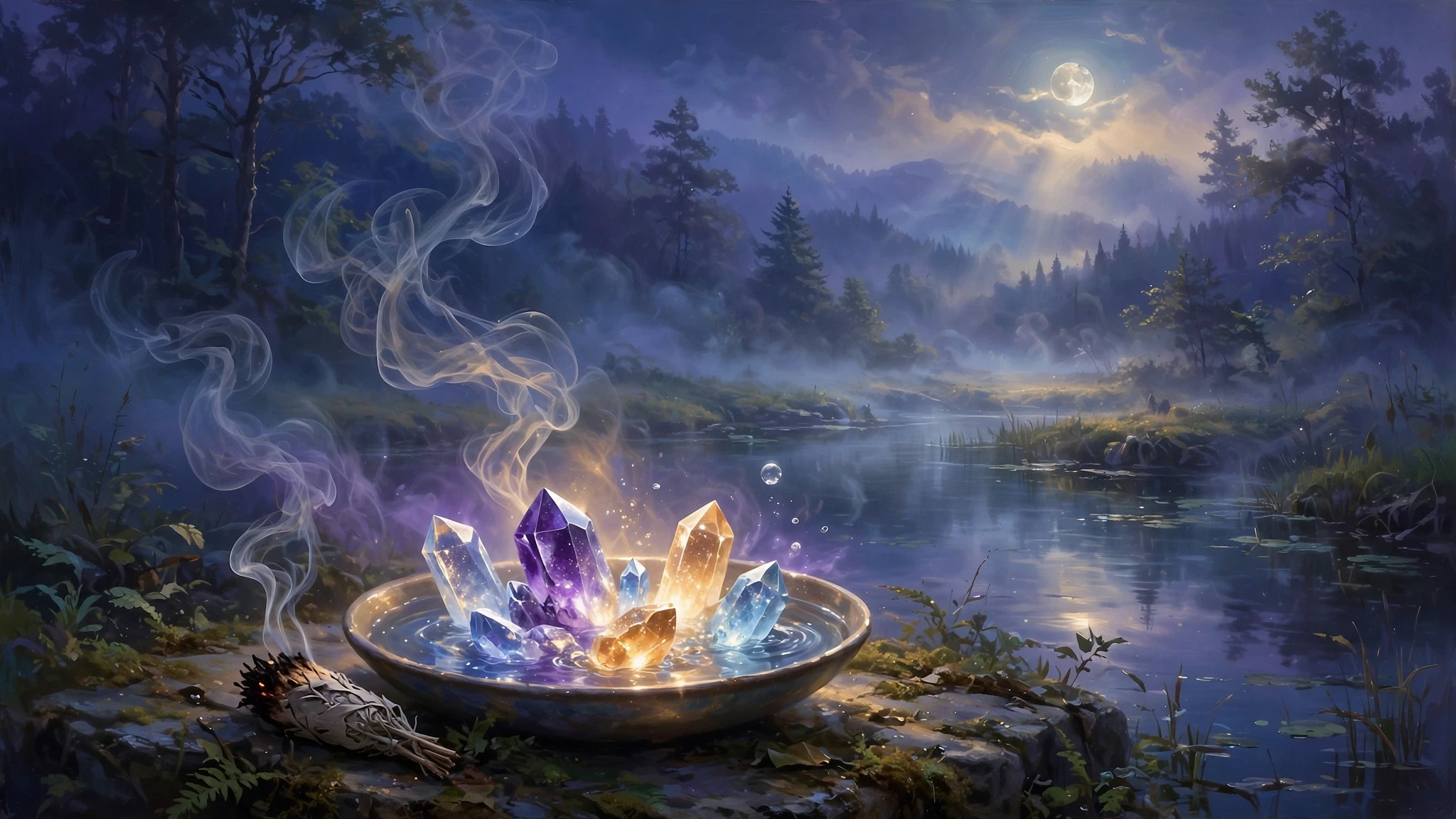
How to Cleanse Crystals, and Why It Comes First
How to cleanse crystals is the first skill in crystal work, and it comes before choosing, charging, or placing a stone. Cleansing means removing the dust, the handling, and the traces of every hand the stone passed through before it reached you, so it starts fresh in your hands. A new stone has traveled far, from a mine to a cutter to a shop to a post bag, and each stop leaves a trace. A used stone has sat through your week, your moods, your meetings, and your sleep. Cleansing is the reset that separates the old from the new. It is a ritual of attention, done slowly, with the intention stated plainly, and it works best when it becomes a habit rather than a one time event. This page covers the methods in full, water, smoke, sound, salt, earth, and moonlight, and it names the stones that must stay dry and the stones that fade in the sun, so a well meant cleansing never damages the stone it was meant to care for. Many people start this work during the changes described in spiritual awakening signs, when a small ritual helps steady a larger shift. The wider practice sits in how to use crystals, and the tradition behind it sits in what crystal healing is.
When to Cleanse, and How Often
Timing matters more than method. Cleanse a stone when it first arrives, before you set an intention with it, so the stone starts its work with you and not with a stranger. Cleanse it after a hard week, after an argument, after a long illness in the house, or after another person has handled it for more than a few seconds. Cleanse it when it starts to feel dull in the hand, when the surface looks cloudy, or when you have carried it daily for a month without a break. A pocket stone used every day needs cleansing once a week. A desk stone that sits in one place needs cleansing once a month. A display stone that is rarely touched needs cleansing once a season. A stone used in a reading or a ritual needs cleansing after each use. Keep a simple rhythm. Many people cleanse on Sundays, a quiet weekly reset that pairs well with setting the intention for the week ahead. The schedule matters less than the regularity. A stone cleansed on a fixed day, every week, stays fresh in a way that a stone cleansed only when it feels stale never does. Mark the cleansing day in your calendar, so the habit survives a busy month.
The Hardness Test: Know the Stone Before the Water
Before any method that touches water, salt, or sun, check the hardness of the stone. The standard scale is the Mohs scale, devised by the German mineralogist Friedrich Mohs in 1812, which ranks minerals from 1, the softest, to 10, the hardest, by how easily they scratch. Quartz, including clear quartz, amethyst, rose quartz, and citrine, sits at 7, hard enough to scratch glass, and it tolerates water well. Selenite sits at 2, so soft that a fingernail can scratch it, and it must never go in water. Malachite sits at 3.5 to 4, soft enough to scratch easily, and it should stay dry. Pyrite sits at 6 to 6.5, and it can rust and dull when left wet. Hematite sits at 5.5 to 6.5, and it can rust too. Fluorite sits at 4, and it scratches easily. Calcite sits at 3, and it can dissolve slowly in water over time. The rule is simple. Stones at 7 and above, such as quartz, can take a quick rinse. Stones below 5, such as selenite, malachite, fluorite, and calcite, need a dry method, smoke, sound, or rest. Stones in the middle need care and a short rinse only. If you are unsure about a stone, choose sound or rest, since both methods are safe for every stone and harm none. A quick search of the stone name and the word hardness, before the first cleansing, takes one minute and saves a stone that took years to form.
Water: The Simplest Method, With Limits
A tap rinse is the easiest way to begin, and most beginners start there. Run cool water over the stone for half a minute, turning it in the hand so the flow touches each face, then pat it dry right away with a soft cloth. Keep the water cool, since hot water can shock a stone and split it. Skip soap, which leaves a film. Skip long soaks, which add nothing and can harm soft stones. A brief rinse is all the method needs. A stream or a shower of rain does the same work for stones that tolerate water, and the moving flow fits the old picture of a stone washed clean by nature. Dry the stone fully before it goes back in a bag or on a shelf, since water left in a crack or a setting can dull the surface over time. Rinsing suits hard stones, such as clear quartz, amethyst, rose quartz, citrine, and black tourmaline. It does not suit soft or porous stones, such as selenite, malachite, pyrite, hematite, fluorite, calcite, turquoise, or lapis lazuli. Keep a short list of the stones you own, with a note beside each one, water safe or dry only, and check the list before the first cleansing of any new stone.
Smoke, Sound, and Breath: The Dry Methods
Dry methods suit every stone, and they are the safest choice for a mixed collection. For smoke, move the stone slowly through a ribbon of incense smoke, or smoke from a herb bundle or a wood chip, for a few seconds, with a window open for air. Hold it in tongs or in the hand, well above the flame, and let the smoke drift across it. Keep the stone out of the flame itself, which can scorch or split it. For sound, ring a bell, a chime, or a singing bowl close to the stone, and let the tone pass through it. Three clear rings are enough, and the stone can rest on a table while the sound moves around it. Clapping works as well, three sharp claps above the stone, though a bell gives a cleaner tone. For breath, hold the stone in both hands and breathe slowly across it, with a clear intention, for one minute. The breath method is the quietest of all, and it suits a stone that is carried daily, because it can be done anywhere, at a desk, on a train, or before sleep. Dry methods leave no residue, need no water, and carry no risk to the stone. They are the methods to reach for when the stone is new, when the name is unknown, or when the collection holds stones of many kinds.
Salt, Earth, and Moonlight: The Slow Methods
Slow methods work overnight, and they suit a weekly or monthly rhythm. Salt cleansing means burying the stone in a bowl of dry sea salt for a few hours, then brushing the salt away with a soft cloth. Salt draws moisture, so it suits hard stones and does not suit soft, porous, or metal bearing stones, such as pyrite, hematite, malachite, or turquoise, which salt can corrode. Never put a stone in salt water, which is harsher than dry salt and can pit the surface. Earth cleansing means burying the stone in a pot of clean dry soil for a day, then brushing it clean. The earth method suits a stone that feels heavy after a hard week, and it asks for a pot, not a garden bed, so the stone is easy to find again. Moonlight work means setting the stone on a windowsill for the night, best of all on a full moon night, and fetching it inside before the morning sun turns strong. Moonlight is the mildest light of all, and the one most often used for charging as well as cleansing, as described in charging crystals under the full moon. Sunlight acts faster, an hour or two of morning light, but a full day of it can wash the color from amethyst, rose quartz, citrine, and fluorite. A stone left on a bright sill through a summer afternoon can lose color that took years to form. Moonlight never washes color away. Given the choice between sun and moon, moon is the safer light.
Selenite, Clusters, and the Stones That Cleanse Other Stones
Some stones are used to cleanse other stones, and selenite is the best known of them. A selenite plate, bowl, or wand is a soft white stone, at hardness 2, that many practitioners use as a resting place for smaller stones overnight. The idea is that the selenite clears the smaller stone while both rest, with no water, smoke, or sound needed. A clear quartz cluster works in a similar way, as a resting place for a pocket stone between uses. Neither method has been proven in any measurable sense, and both are best understood as a tidy habit, a dedicated place where stones rest, rather than a proven transfer of energy. The habit itself has value. A stone that rests on a selenite plate each night is a stone that gets handled, looked at, and cared for daily, and that care keeps the practice alive. Keep the selenite dry, because water will dissolve its surface and dull its shine. Keep the cluster clean, because dust in a cluster is hard to remove once it settles. A small brush, kept beside the stones, takes ten seconds to use and keeps both the selenite and the cluster in good shape.
An Illustrative Example: Victor and the Selenite Mistake
This example is illustrative, not a real person's story. Victor, a 33 year old chef, bought three stones in one week, a clear quartz, an amethyst, and a selenite wand, and decided to cleanse them all the same way, in a bowl of water overnight. The quartz and the amethyst came out fine, bright and cool in the morning. The selenite came out dull, pitted, and rough along one edge, because the water had dissolved its soft surface. Victor learned the hardness rule the expensive way, and he rebuilt his routine around it. He kept a short list on the kitchen wall, with each stone, its hardness, and its method. Quartz and amethyst went under running water for thirty seconds on Sundays. The selenite went on a dry cloth, wiped with a soft brush, and never near water again. He added a small bell for sound cleansing, which suited every stone in the collection, and he placed the stones on the selenite plate at night, as a resting place. After two months, the collection looked better, the stones felt better in the hand, and Victor had a routine he could teach to a friend in five minutes. The lesson was simple. Cleansing is care, and care starts with knowing the stone.
Cleansing, Charging, and the Honest Limits
Cleansing and charging are two separate steps, and mixing them up leaves the work half done. Cleansing clears the stone. Charging gives it a fresh focus, usually through moonlight, sunlight, or two minutes of quiet attention. Clear first, charge second, set the intention third. A stone charged before it is cleared carries the old week into the new one. A stone cleared but never charged is clean yet directionless, and the intention supplies the direction. Neither step turns a stone into medicine. A crystal is not a treatment. It cannot cure an illness, stand in for a doctor, or alter the course of a disease. Anyone with a health worry should book an appointment with a qualified professional, and a crystal may rest beside that care as a focus for calm, never in place of it. Stones do not deliver money, love, or success by themselves. They aid focus, intention, and reflection, while the person still performs the real work. A seller who claims a washed crystal will cure or assure an outcome is offering a promise, not a stone, and the promise belongs on the shelf. The worth of cleansing lies in the ritual itself, a slow minute of attention, a clean stone, and a clear intention for the week ahead.
If you want help choosing a focus for the month ahead, a live reading can talk it through with you. First 3 minutes FREE — every time, for every reading, with all advisors.
For a simple next step, try a One-Card Tarot reading and reflect on what its image says about the intention you will set once your stones are clean.
Frequently Asked Questions
How do I cleanse crystals for the first time?
Rinse hard stones such as quartz under cool running water for thirty seconds, then dry them at once with a soft cloth. Use smoke, sound, or rest for soft stones such as selenite and malachite, which must stay dry.
Which crystals should never go in water?
Selenite, malachite, pyrite, hematite, fluorite, calcite, turquoise, and lapis lazuli should stay dry, because water can dissolve, rust, or dull them. If you are unsure about a stone, choose sound or rest, since both methods suit every stone.
How often should I cleanse my crystals?
Cleanse a pocket stone once a week, a desk stone once a month, and a display stone once a season. Cleanse any stone when it first arrives, after a hard week, after another person has handled it, or after use in a reading or ritual.
Can I cleanse crystals with salt?
Dry sea salt works for hard stones, left in a bowl for a few hours and then brushed away, but it can corrode soft, porous, or metal bearing stones. Never use salt water, which is harsher than dry salt and can pit the surface.
Does moonlight cleanse crystals?
Moonlight is the gentlest cleansing method, and it suits every stone. Place the stone on a windowsill overnight, ideally during a full moon, and bring it in before strong sun. Unlike sunlight, moonlight never fades a stone.
Last updated: November 12, 2026
