Daily Tarot Card Pulls: A Simple 5-Minute Morning Ritual

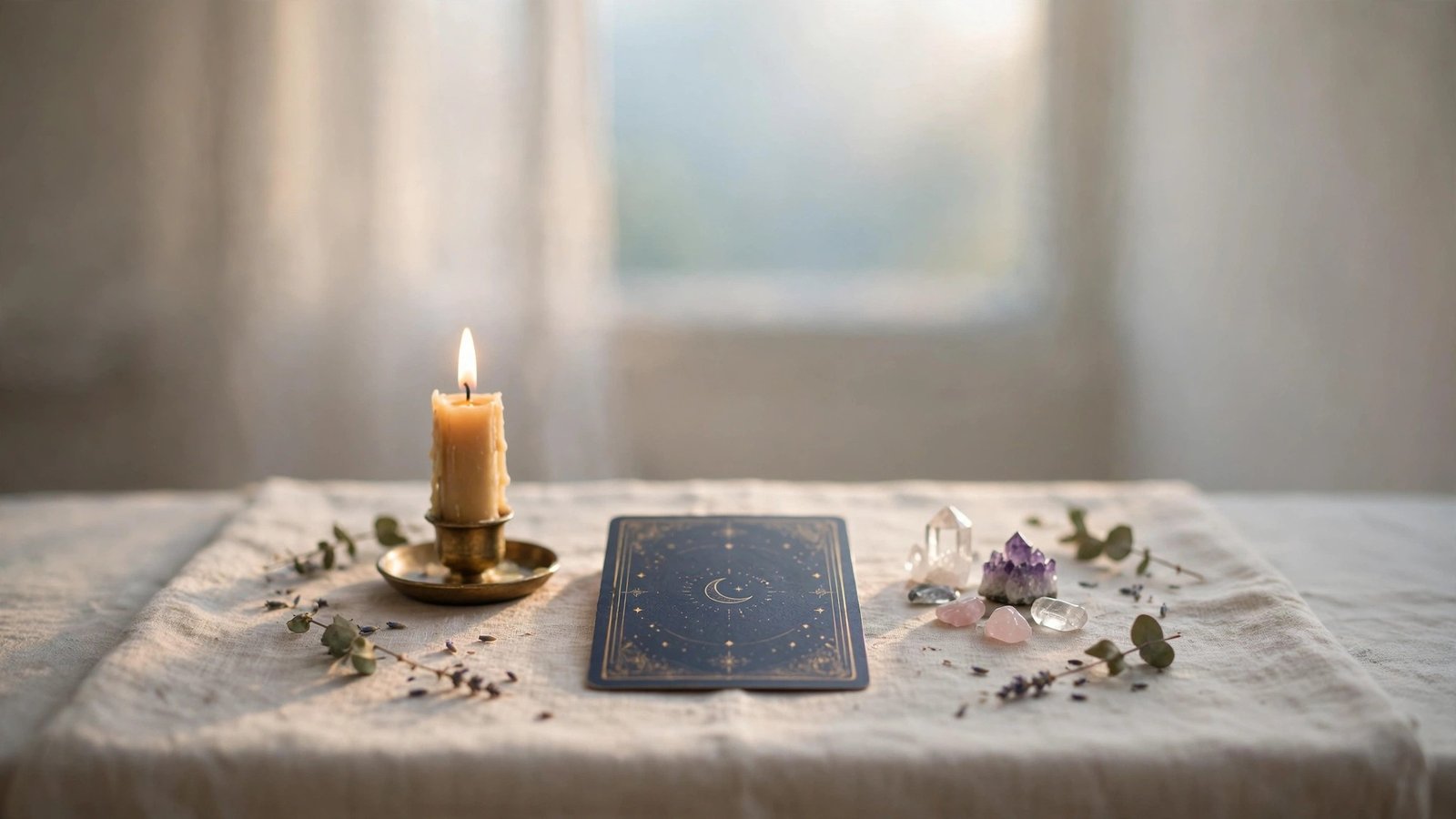
You don't need a full Celtic Cross spread every morning. One card, five minutes, and an honest moment with yourself that's a daily tarot practice that actually sticks. Here's how to build one. Start with a free daily card draw each morning. Learn the classic daily tarot card draw.
I know how this usually goes. You buy a beautiful deck (or someone gifts you one), you do three spreads the first week, and then the cards end up in a drawer next to the unread self-help books. It's not a motivation problem. It's a size problem. A ten-card spread every morning is too much machinery for a Tuesday. One card is just right small enough to do half-asleep, rich enough to actually mean something.
On days you need a fast answer instead of a full ritual, a tarot yes no pull works beautifully. Bring your practice into relationships with love tarot spreads designed for matters of the heart.
A daily pull isn't fortune-telling. Nobody is predicting your Tuesday. What you're building is a relationship with the cards, and more importantly, with your own inner weather. After a month of this, you'll notice something: the cards start feeling less like strangers and more like a friend who always says the thing you needed to hear. That's not magic. That's familiarity doing its quiet work.
The Actual Ritual: Five Minutes, Step by Step
Here's the whole thing. No special tools, no moon water, no altar required (though if you like that, carry on).
1. Pick your moment
Before the phone. That's the only rule that matters. Once you open your messages, the day has already grabbed you by the collar. Five minutes before that with coffee, in bed, wherever you won't be interrupted is perfect. Consistency of timing matters more than perfect timing. Same rough slot every day trains your brain to expect it.
2. Clear your head (badly is fine)
You don't need to meditate. Just take three slow breaths and let yesterday's leftovers drain out a little. Your mind won't go quiet. It doesn't need to. You're just shifting from "reacting to the world" mode into "listening to myself" mode. Even a sloppy attempt changes the quality of the pull.
3. Shuffle with a question in mind
Hold the deck, shuffle however feels natural overhand, riffle, messy pile on the table, all fine. While you shuffle, hold your question lightly. Not a death grip. Think of it the way you'd think about a friend you're about to ask for advice: the topic is in the room, but you're not interrogating anyone.
4. Pull one card
Cut the deck or fan it out and pick the one that feels right. There's no wrong method. Some people pull from the top. Some close their eyes and let their hand stop somewhere. The mechanism doesn't matter. What matters is the half-second commitment: this one.
5. Sit with it for a minute
Don't flip to the guidebook. Look at the card. What's the first thing you feel before you think? That flash of reaction is the most honest part of the reading. Oh, not this one. That's information. This feels right. That's information too. Your gut reads cards faster than your brain does, and it's usually the better reader.
6. Write one line
Date, card name, one sentence about your first impression. That's the journal entry. "Oct 8 Five of Cups worried about the thing with Mom." Done. You'll thank yourself in a month.
Keep It Simple (Seriously, That's the Whole Secret)
Shuffle, focus on your day ahead, pull one card. That's the whole ritual. Complexity is the enemy of consistency.
This deserves its own section because it's where almost everyone goes wrong. They start with one card, feel good, then think maybe I should pull three, one for morning/afternoon/evening, then maybe a clarifier, then suddenly they're doing a fifteen-minute spread and skipping it on busy days because it's too much. The ritual that survives is the smallest one. Guard your five minutes. If the urge to expand comes, expand on Sundays, not on Wednesdays.
One card a day for a year teaches you more than elaborate spreads done sporadically. The tarot rewards showing up, not showing off.
Ask Better Questions
Not "what will happen today?" but "what energy should I bring to today?" or "what should I pay attention to?" The cards respond better to open questions than yes/no demands.
Here's why this matters so much. "What will happen today?" treats the cards like a weather report passive, out of your hands. Open questions treat them like a conversation with someone wise. They put you back in the picture. The cards aren't telling you your fate; they're telling you where to look.
Questions that work beautifully
Rotate through these so the practice stays fresh:
"What do I need to know about today?" The classic. Open, gentle, always relevant.
"What energy should I bring to [specific thing]?" Got a hard conversation at 2pm? A job interview? Ask about that specifically.
"What am I not seeing right now?" My personal favorite. It assumes you have a blind spot, which you always do.
"What should I release today?" Pairs beautifully with the evening reflection (more on that below).
"How can I be kinder to myself today?" Underrated. The cards are surprisingly good at self-compassion when you ask directly.
Questions to retire
Yes/no questions ("Will I get the job?") turn tarot into a coin flip and you'll be disappointed. Timing questions ("When will he text back?") frustrate because the cards speak in themes, not calendars. And third-party questions ("What is she thinking?") the cards will answer, but it's gossip, not guidance. Keep the questions pointed at the one person you can actually do something about: you.
Write It Down (Your Future Self Will Thank You)
One line in a journal card name, your first impression. Over weeks, you'll start seeing patterns that teach you more than any guidebook.
This is the part that transforms a cute habit into a genuine practice. Memory lies. Your journal doesn't. After a month, you'll flip back and find things like: I pulled the Hermit three times the week I was avoiding that phone call. Or: Every time I pulled the Three of Cups, something good happened with friends that day. Those discoveries are yours. No book can give them to you.
The one-line format that actually works
Keep it dead simple so you'll actually do it:
Oct 8 The Star felt hopeful before the meeting.
Oct 9 Five of Pentacles anxious about money, but nothing bad happened.
Oct 10 Knight of Wands restless, wanted to start everything at once.
Date, card, first impression. Optionally, one line at night: how did this show up? That evening check-in is where the real learning lives. The morning pull plants the seed; the evening reflection shows you what grew.
What to look for in your patterns
After three or four weeks, scan back through. Look for repeater cards the ones that keep showing up. A card that appears three times in two weeks is not a coincidence; it's a theme. The deck is underlining something. Ask yourself: what was happening in my life on those days? What's the common thread?
Also notice your accuracy. You'll find that your first impressions were right more often than you expected. That's your intuition getting stronger, the quiet muscle this whole practice is building.
Don't Panic at "Scary" Cards
Death, The Tower, Ten of Swords these rarely mean what you fear. They usually point to endings, changes, or mental patterns, not literal disaster. A daily practice teaches you this faster than anything.
Let's demystify the usual suspects, because pulling The Tower before coffee is alarming only if you don't know what it actually means:
Death
Almost never about dying. It's about something ending so something else can begin a job chapter, a relationship phase, an old version of you. When it shows up in a daily pull, ask: what's finishing? What am I being asked to let go of? It's a transformation card wearing a dramatic costume.
The Tower
Sudden change, structures falling. In a daily pull, this usually means something smaller than the dramatic imagery suggests: a plan getting disrupted, an assumption being wrong, a conversation that doesn't go as rehearsed. The Tower's real message is about what was built on shaky ground. Notice what wobbles today that wobble was already there.
Ten of Swords
The rock-bottom card. But here's what people miss: it's the end of the hard thing, not the beginning. The worst has already happened. In a daily pull, it usually points to a mental pattern the catastrophic thinking, the replaying of something painful. The card is showing you the story you're telling yourself, and gently noting that it's over. You can put the swords down now.
Three of Swords, Five of Cups, The Devil
Heartbreak, disappointment, unhealthy patterns these cards name real feelings, and naming them is the first step to moving through them. A daily pull that shows you the Three of Swords isn't ruining your day. It's giving you a heads-up: something tender is up today, be gentle with yourself. That's a gift, not a curse.
The more you sit with these cards, the less scary they become. After a few months, pulling Death feels about as dramatic as a weather forecast saying "change of seasons." Which is exactly what it is.
Reversals: The Optional Extra
You'll notice some readers flip cards upside-down and read "reversed" meanings. Here's my honest take: for a daily one-card pull, you don't need reversals yet. They're an extra layer of nuance that's genuinely useful later, but right now they mostly add confusion and guidebook-flipping.
If a card comes out reversed in your shuffle, just turn it upright and read it normally. No harm done. When you've been pulling daily for a few months and feel curious, then experiment with reversals they typically soften, internalize, or delay the card's upright meaning. But they're seasoning, not the meal. Don't let them slow down your five minutes.
What to Do When the Card Makes No Sense
Some mornings you'll pull a card and feel absolutely nothing. The Page of Pentacles on a day with no plans. The Lovers when you're single and not thinking about romance. This is normal, and it's not a failed reading.
First, don't force it. Write down your honest reaction: "No idea what this means." That's a valid journal entry. Sometimes the meaning arrives at 4pm when something clicks. Sometimes it arrives three days later. The cards work on their own schedule.
Second, try the literal level. Beginners often jump to deep symbolism and miss the obvious. The Page of Pentacles might just mean: pay attention to the small practical thing today. The Lovers might mean: a choice is coming, not necessarily a romantic one. Start concrete, go abstract only if the concrete doesn't fit.
Third, ask the card a follow-up. Not a second pull, just a question directed at the card in front of you: what are you trying to tell me? Then look at the image again. Notice something you missed the first time a detail in the background, an expression, a color. The cards reward a second look.
The Evening Check-In: Where the Magic Actually Happens
If the morning pull is planting a seed, the evening reflection is checking what grew. This takes two minutes, and it's the difference between a habit and a practice.
Before bed or whenever the day winds down, glance at your morning entry. Then ask: how did this show up? Some days the connection will be obvious. Pulled the Four of Swords and ended up taking an unexpected nap? There it is. Pulled the Two of Cups and had a great conversation with a friend? Obvious.
Other days it won't be obvious, and that's fine. Write "not sure yet" and move on. But more often than you'd expect, the link appears with a little thought. Oh the Seven of Wands. That was the meeting where I had to defend my idea. These small recognitions build something precious: trust in your own interpretive instincts.
Over time, the evening check-in does something else too. It makes you the kind of person who reflects on their day. That's a bigger life upgrade than anything the cards themselves provide.
Choosing Your Deck (and Why It Barely Matters)
People agonize over which deck to buy. Here's the truth: the best deck for a daily practice is the one you'll actually pick up. If the artwork speaks to you, you'll use it. If it doesn't, it'll gather dust no matter how "classic" it is.
The Rider-Waite-Smith deck (or one of its many beautiful modern reinterpretations) is the standard starting point for good reason: every card has a full illustrated scene, which gives your intuition something to work with. Decks with illustrated minor arcana pictures on every card, not just pips are much easier for daily pulls because you can read the image, not just memorize meanings.
That said: pick the deck that makes you want to touch it. Gorgeous art you love beats "correct" art you feel nothing for. Your relationship with the deck is the whole practice. Choose like you'd choose a journal, the one you'll actually open.
One practical note: smaller decks travel better. If you want this ritual to survive trips and busy mornings, a pocket-sized deck you'll actually carry beats a large beautiful one that stays home.
Common Beginner Mistakes (and Easy Fixes)
Pulling three more cards "for clarity"
One unclear card plus three more unclear cards equals four unclear cards and a late start to your day. If the card confuses you, sit with the confusion. Clarity comes from reflection, not from more cards.
Reading the guidebook before your gut
The book gives you the card's general meaning. Your gut gives you your meaning, today. Always go gut-first, book-second. If you read the book first, you'll never hear what you actually thought.
Skipping the journal "just this once"
"Just this once" becomes the week. The journal entry takes twenty seconds. It's the load-bearing wall of the whole practice without it, you lose the pattern recognition that makes daily pulls so powerful.
Treating the card as a command
Pulled the Four of Cups and now you're determined to be dissatisfied all day? No. The card is a lens, not an order. It highlights a theme to notice, not a mood to perform. Hold it lightly.
Quitting after two weeks because "nothing's happening"
Something is happening it's just quiet. The first two weeks are calibration. Around week three or four, the patterns start emerging and the practice gets interesting. Give it a full month before you judge it.
Making It Yours: Small Variations That Keep It Alive
The five-minute ritual is the foundation, but rituals stay alive through small personal touches. Once the habit is established say, after a month try one of these:
Weekly theme pull. On Sunday or Monday, pull one card for the week ahead alongside your daily. It gives the days a larger frame.
Pull for someone else (with their permission). Ask "what energy should I bring to my relationship with [person] today?" It builds empathy remarkably fast.
End-of-day pull instead. Some people are sharper at night. If mornings are chaos, do the whole thing before bed pull for tomorrow, journal, sleep on it. The ritual adapts to your life, not the other way around.
Monthly review. At the end of each month, flip through your entries. Count the repeaters. Notice the arc. This ten-minute review is where months of daily pulls crystallize into genuine self-knowledge. You'll be amazed at what the cards were tracking that you weren't.
When You Want a Deeper Reading
A daily pull is maintenance like stretching. Sometimes you need a full workout: a bigger spread, a deeper question, a second perspective. That's when a longer personal reading helps, whether you do a multi-card spread for yourself on a quiet Sunday or talk it through with an experienced reader. If you ever want someone intuitive to help you unpack what your cards keep showing you, bring it to a reading. If you keep a short note after each pull, our guide to journaling your daily tarot card shows a one-minute format for it.
But don't outsource the daily practice. The five minutes with one card, every morning, is yours. No reader can build your intuition for you they can only reflect it back. The daily pull is how you learn to hear it yourself, one card at a time.
So tomorrow morning, before the phone: shuffle, ask, pull, look, write one line. That's it. A month from now, you'll wonder how you ever started your days without it.
3-Card Tarot Spread: Past, Present, Future Explained Simply
Past, present, and future: three cards turn a big messy question into a small clear story, which is why this spread stays the most-used layout in tarot. You need no fancy deck or years of study just a question, a shuffle, and three cards laid left to right.
Read them as a chain, not in isolation. The past card shows what set things in motion, the present card shows where you stand now, and the future card shows where the current road is leading and roads can change. A Tower in the future position means change is brewing, not that doom is certain.
Keep your question focused: "What should I know about my job search?" beats "Tell me everything." Pull one card at a time, note your gut reaction before checking the book meanings, and watch how the story connects across all three positions.
Want to see a spread interpreted live? A tarot reader on PsychicSmile can walk you through your own cards in real time.
A full moon spread can sit beside a daily pull without replacing it, and the guide to full moon tarot spread shows how a larger monthly layout frames the same habit in a wider view. First 3 minutes FREE — every time, for every reading, with all advisors.
Frequently Asked Questions
How long should a daily pull take?
Five minutes is plenty, and shorter is fine on busy mornings. Shuffle, draw one card, notice your first reaction, and jot down a single line. The point is the pause, not the paperwork. Long, elaborate spreads tend to collapse under real life. A quick practice you actually keep will teach you far more than a grand one you abandon by Thursday. Keep the commitment deliberately small, and let the habit grow only if it still feels light.
What if I pull a card that looks frightening, like Death or the Tower?
Take a breath before you reach for the guidebook. In a daily pull these cards usually point to a shift, an ending, or a wobble in a plan not a literal disaster. Ask yourself what is finishing, changing, or asking for attention today, and write down the first honest answer that comes. The more mornings you sit with bold imagery, the less startling it becomes. A card that shocks you is often just naming something you already sensed.
Should I ask yes-or-no questions in my morning pull?
Open questions serve a daily pull better. Try asking what deserves your attention, what quality you want to carry, or what you might be overlooking. Yes-or-no questions turn one card into a coin toss and usually leave you wanting a second and third card for reassurance. Questions about other people's private thoughts work no better, since the only life you can steer is your own. Keep the question pointed at yourself, and the card has something useful to reflect.
What should I do in the evening check-in?
Glance back at your morning line and ask, quietly, where that theme showed up. Some days the link will be obvious. A card about rest on a day you finally napped. Other days you will honestly write 'not sure yet,' and that counts too. The check-in is not a test you pass or fail; it is how you learn your own patterns over weeks. Even two minutes of honest looking back will deepen the practice more than any new spread.
Can a personal reading help if my daily pulls feel stuck?
Yes a personal reading can offer a second perspective when the same card keeps appearing or every pull feels blank. An advisor may notice a theme you have been circling and help you frame a better question for tomorrow's pull. Treat it as reflective entertainment, not a forecast, and keep your own judgment in charge. Your daily habit stays yours; a reading simply gives it fresh company now and then.
Last updated: November 12, 2026