
Animal Totem Tarot Deck Guide: Spirit and Cards
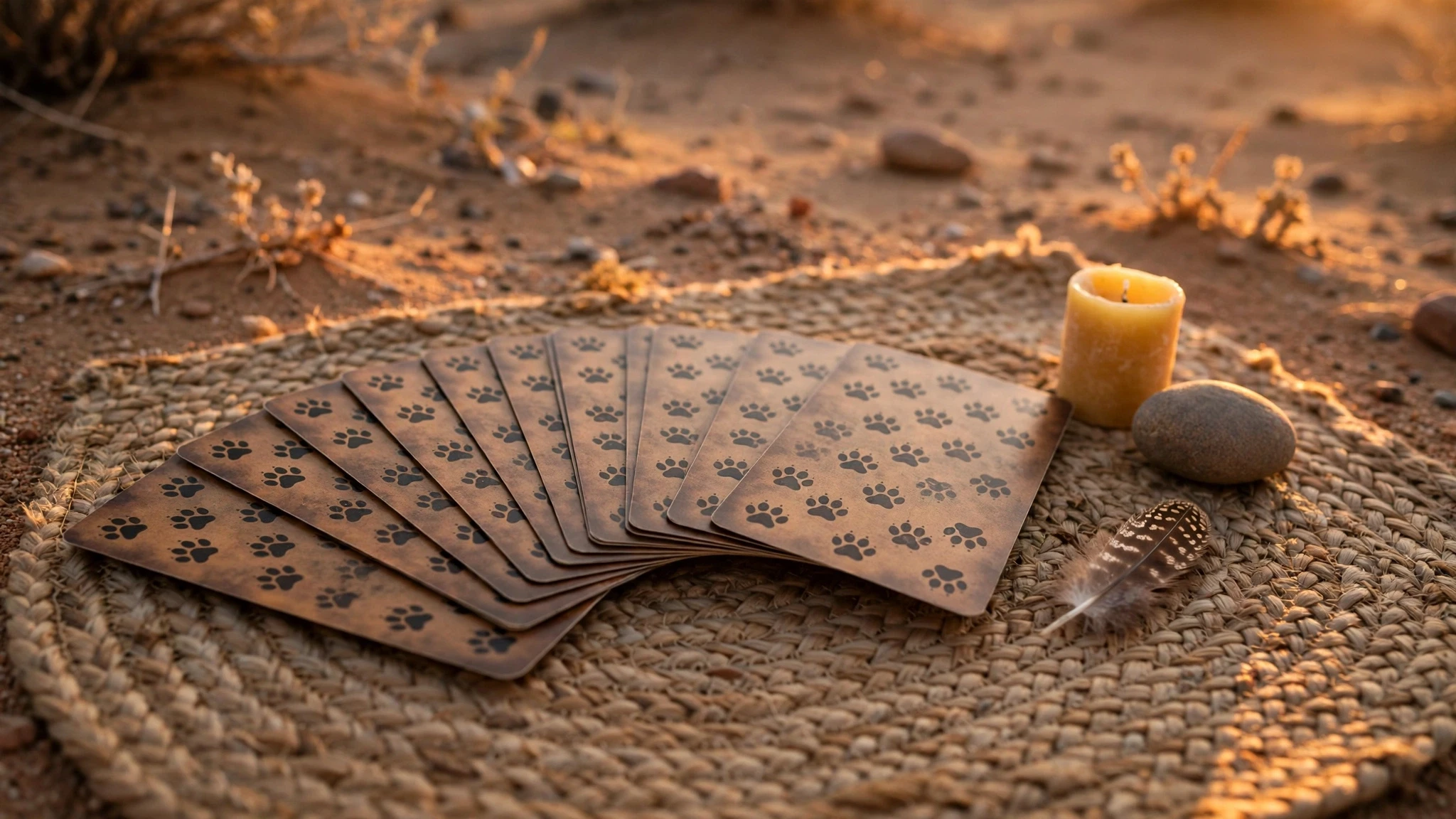
What the Animal Totem Tarot Deck Is
The animal totem tarot deck is a 78 card tarot deck that teaches through animals: every card shows an animal from somewhere in the world, in its natural home, and the animal's way of living becomes the meaning of the card. It was published in 2016 by Llewellyn, created by Leeza Robertson with artwork by Eugene Smith, and it comes with a 347 page companion book. The deck follows the standard tarot structure, 22 Major Arcana and 56 Minor Arcana in the four suits of Wands, Cups, Swords, and Pentacles, so a reader who knows the Rider-Waite-Smith system will recognize the structure at once. What changes is the imagery. Instead of human figures in medieval dress, you get wolves, owls, elephants, otters, and dozens of other animals, each one chosen because its behavior fits the card it carries.
The deck is built on the idea of animal totems, the teaching that animals can be guides, messengers, and mirrors for human life. That idea appears in many cultures, and the deck draws animals from every continent rather than from one tradition alone. A wolf stands for loyalty and the pack. An owl stands for seeing in the dark. A bear stands for strength and rest. The companion book gives each animal a full page: a message from the animal, a description of how it lives, and what its behavior means for work, family, relationships, and health. The deck works as a tarot deck first, and as an animal guide second, and the two work together because the animal is the meaning, not a decoration on top of it.
The History: A Deck Built From Animal Teaching
Leeza Robertson, the deck's creator, is a tarot writer and teacher, and the author of books on tarot court cards and tarot reversals, and she built this deck from her work with animal symbolism. Eugene Smith, the artist, painted each animal in its natural habitat, often in a scene that shows how the animal actually lives: hunting, resting, caring for young, or watching from a high place. The deck was published on March 8, 2016, by Llewellyn, a publisher of tarot and spiritual books, and it arrived as a deck and book set, with the 347 page guidebook as part of the package rather than as a small leaflet.
The deck belongs to a family of animal tarot decks, but it stands apart in two ways. First, it keeps the standard Rider-Waite-Smith structure, so anyone who already reads tarot can learn it quickly. Second, it gives each card a full animal teaching, with the animal's behavior explained in plain words, so a reader who knows nothing about animal symbolism can still read it well. The deck it is built on is covered in the Rider-Waite guide, and the two guides together show how one shared structure can carry a very different set of images.
The Major Arcana: Animals as Archetypes
The Major Arcana in this deck keeps the familiar 22 cards, from the Fool at 0 to the World at XXI, but each card is carried by an animal chosen for its behavior. The Fool is a young animal stepping out with trust. The Magician is an animal that works with skill and focus. The High Priestess is an animal that sees in the dark, such as an owl. Strength is an animal that holds power gently, such as a lion with its cubs. The Tower is an animal caught in a sudden storm, or a habitat broken open. The guidebook explains each choice, so a reader can learn the deck by learning the animals, one at a time, rather than by memorizing a list of keywords.
That method suits the deck well, because animal behavior is easier to remember than abstract meanings. A person who has watched a dog wait patiently by a door will remember what patience looks like. A person who has seen a goose lead its flock will remember what leadership looks like. The deck uses that memory. Each card asks you to think about how the animal lives, and then to ask how that way of living applies to your question. A card is not a label. It is a way of living, shown by an animal that lives it well.
The Minor Arcana: Four Suits, Four Animal Worlds
The Minor Arcana keeps the standard 56 cards in four suits of 14, Wands, Cups, Swords, and Pentacles, with numbered cards from Ace to Ten and court cards of Page, Knight, Queen, and King in each suit. The suits keep their familiar meanings: Wands for energy, will, and action, Cups for feeling and relationship, Swords for thought and truth, and Pentacles for the body, the home, money, and work. What changes is the cast. Each minor card shows an animal whose behavior fits the card, and the guidebook explains the fit in plain words, with a message from the animal, a description of its life, and what it means for different parts of your life.
The court cards are especially useful in this deck, because animals show character so clearly. A Page of Wands might be a young, quick animal, curious and ready to explore. A Queen of Cups might be a calm, caring animal, such as an otter with its young, holding feeling with both hands. A King of Pentacles might be a steady, grounded animal, such as an elephant, strong and patient and sure of its ground. A reader who learns the court cards through animals will often find them easier to remember than court cards shown as human figures in robes, because the animal's behavior is the character, and the character is the meaning.
Reading With the Animal Totem Tarot
Start with the animal, not with the book. When you turn a card over, look at the creature first: what is it doing, where is it, and how does it live? Then ask how that way of living applies to your question. A wolf that stays with its pack speaks about loyalty and belonging. An owl that sees in the dark speaks about seeing what others miss. A bear that rests through winter speaks about the strength of rest. Let the picture speak first, and open the 347 page book afterwards to check and deepen what you saw, not to replace it. Looking first and reading second is the quickest way to learn any deck, and it suits this one well because the art invites exactly that.
Begin small. Spend a week with the guidebook, working through one suit at a time, and practice with one card each morning and a three card layout for a question. The reading cards guide covers shuffling, laying out, and reading positions, and the spreads collection gathers layouts that work well here. A useful practice is to keep an animal journal: each time you draw a card, write the animal, one fact about how it lives, and one sentence about how that fact applies to your day. Over a month, the journal becomes a personal animal guide, built from your own readings rather than from a list.
Care for the deck as you would any other. Keep the cards in their box or a cloth bag, away from damp and direct sun, and refresh them when they feel stale, by knocking on the deck, fanning them in fresh air, or any method you already use. Common cleansing methods are covered in the cleansing cards guide. The cards are a standard size and shuffle well in most hands, and the book fits in the box with them, so the set travels easily and stays together.
Who This Deck Suits, and Who Should Look Elsewhere
This deck suits a reader who loves animals, nature, and learning through images, and who wants a deck that feels warm and direct rather than formal. It suits a beginner well, because the standard structure means it can be learned with any beginner guide, and the animal pictures make the meanings easy to remember. New readers should start with the beginners guide before their first reading with this deck. It suits a reader who meditates or journals as well as reading, because each card's animal teaching lends itself to a daily practice: one animal, one fact, one reflection. It suits a reader who reads for children or for people new to tarot, because animals are an easy door into the cards.
It will not suit everyone. A reader who loves the familiar human figures of the Rider-Waite-Smith deck, or who reads for clients who expect them, may find the animal cast unfamiliar at first. A reader who wants a deck with a strong seasonal or mythic system, such as the Wildwood, may find this deck's animal teaching simpler than they want. And a reader who dislikes animal symbolism, or who wants a deck for formal, traditional readings, will not enjoy this one, because its world is animal through and through. Matching a deck to your style is covered in the choosing a deck hub, and it is worth reading before you buy, because the deck you will actually use is the right one.
An Illustrative Example: Grace and the Owl Card
This example is illustrative, not a real person's story.
Grace, a 39 year old night shift nurse, bought the Animal Totem Tarot because she worked nights and she liked the idea of a deck that spoke through animals. She drew the owl card, the High Priestess in this deck, on her first morning with it, and she took it as a sign that her night work was not a burden but a gift: she could see what others missed, in the dark, when the ward was quiet. She kept an animal journal for three months, one card each morning, and she found that the animals gave her a language for her work. A wolf card reminded her to lean on her team. A bear card reminded her to rest properly between shifts. An otter card reminded her to play with her children on her days off, even when she was tired. The deck had not changed her job. It had given her a way to think about it, one animal at a time.
Grace later said the animals were honest with her. They never flattered her, and they never lectured her. They showed her a way of living, and asked whether she was living it. That is this deck at its best: a mirror held by animals, clear enough to see yourself in.
If the deck calls to you, give its guidebook a week, try one card each morning, and talk it over with a reader who has worked with it. First 3 minutes FREE — every time, for every reading, with all advisors.
Pull a One-Card Tarot reading and reflect on which animal you would choose as a guide for this week, and why.
Frequently Asked Questions
What is the Animal Totem Tarot deck?
It is a 78 card tarot deck published in 2016 by Llewellyn, created by Leeza Robertson with artwork by Eugene Smith. It follows the standard tarot structure, 22 Major Arcana and 56 Minor Arcana in Wands, Cups, Swords, and Pentacles, but every card shows an animal whose way of living becomes the meaning of the card, and it comes with a 347 page companion book.
Who created the Animal Totem Tarot and when was it published?
The deck was created by Leeza Robertson with artwork by Eugene Smith, and published on March 8, 2016, by Llewellyn. Robertson is a tarot writer and teacher, and the author of books on tarot court cards and tarot reversals, and she built the deck from her work with animal symbolism.
How many cards are in the Animal Totem Tarot deck?
78 cards, the standard tarot count: 22 Major Arcana, from the Fool at 0 to the World at XXI, and 56 Minor Arcana in four suits of 14, Wands, Cups, Swords, and Pentacles, with numbered cards from Ace to Ten and court cards of Page, Knight, Queen, and King in each suit.
Is the Animal Totem Tarot good for beginners?
Yes, it is a good deck for beginners. The structure is the standard Rider-Waite-Smith structure, so it can be learned with any beginner guide, and the animal images make the meanings easy to remember. A beginner should spend a week with the guidebook, learn one suit at a time, and practice with one card a day and small three card spreads.
How is the Animal Totem Tarot different from the Rider-Waite deck?
The structure is the same, 78 cards in 22 Major Arcana and 56 Minor Arcana, but the imagery is different. The Rider-Waite-Smith deck, first published in December 1909, shows human figures in medieval dress, while the Animal Totem Tarot shows animals from every continent in their natural homes, with each animal's behavior carrying the meaning of its card.
Last updated: November 12, 2026
