Butterfly After a Bereavement: Spiritual Meaning
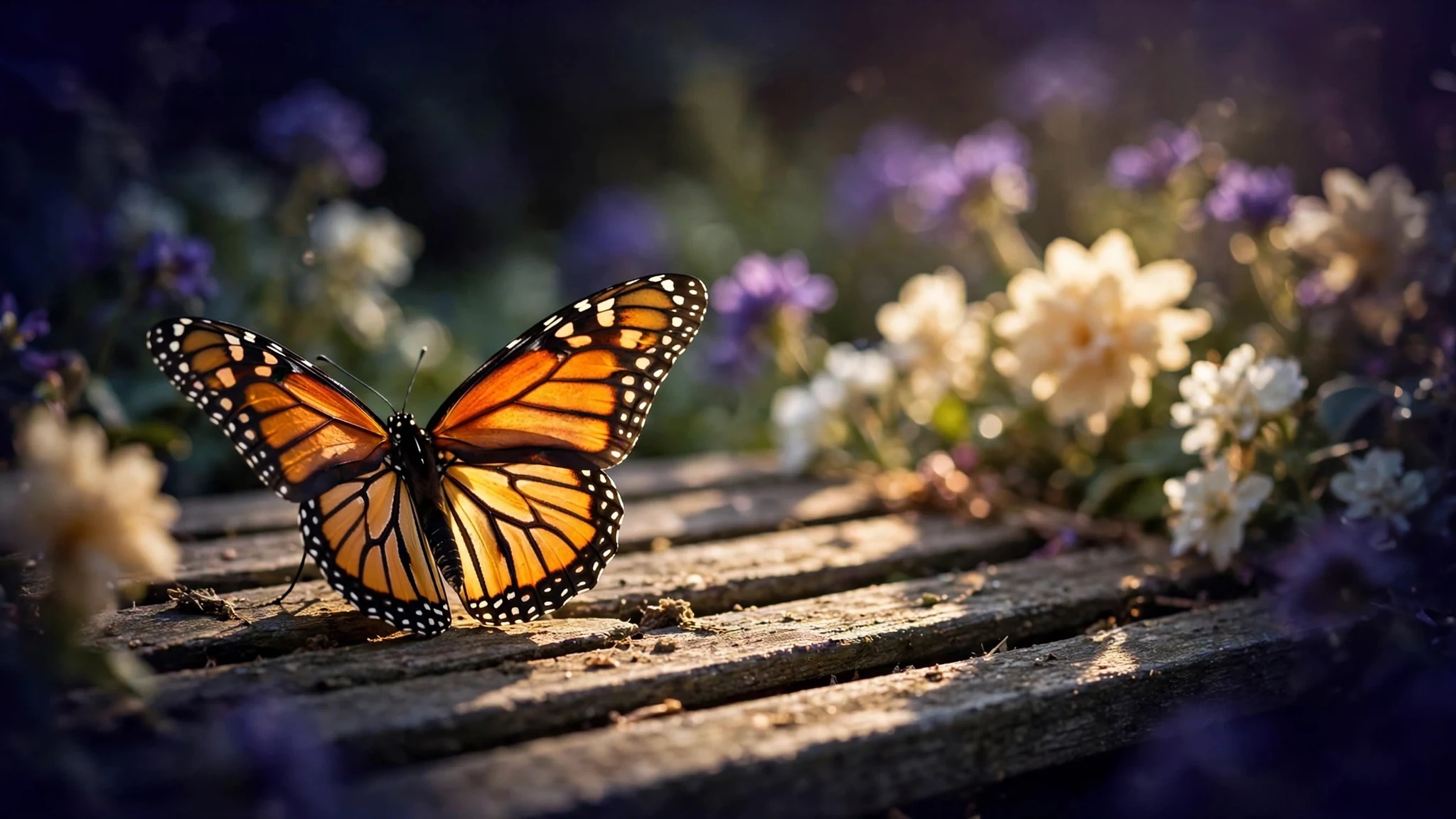
A butterfly after a bereavement does something no other sign in this dictionary does: it lands on you. On your hand at the graveside. On your shoulder during the first walk you have taken alone. On the flowers you are arranging, where it sits opening and closing its wings with an unhurriedness that feels, in the moment, almost deliberate. Of all the animal signs the bereaved report, the butterfly is the one most often described as a visit rather than an omen, and it carries the oldest symbolism of any entry here: transformation, the creature that was earthbound and is not anymore. This page in our signs from loved ones dictionary explores why the butterfly holds mourners the way it does, gives the insect's real behavior its full honest due, and keeps the dictionary's compact, as always: the butterfly is a comfort, freely given and gladly received, and no one honest will upgrade it into proof for you.
If a butterfly has kept an appointment with you lately, this page is its record.
The Oldest Symbol in the Dictionary
The connection between butterflies and souls is not a modern invention of greeting cards. The ancient Greek word psyche meant both soul and butterfly, and Greek art sometimes gave the soul wings of exactly that shape. The caterpillar's story made the metaphor irresistible to every culture that watched it: a creature that crawls, withdraws into a stillness that looks like an ending, and emerges as something the crawling creature gave no hint of, in colors nobody predicted. For people standing at a grave being told, by every material fact, that the story is over, an insect whose whole biology argues otherwise lands with a weight no sermon can match. The tradition that reads a visiting butterfly as a loved one's sign is simply that ancient metaphor arriving, on schedule, at the moment a mourner most needs a living illustration.
Mediums add the behavioral detail sitters actually report: the butterfly that does not behave like set decoration. It follows a person along a path. It returns to the same hand across an afternoon. It appears at the funeral itself, in the cemetery, in the garden of the house being cleared, sometimes in a season or a place where butterflies are scarce, and those stagings are what sitters carry for years. The tradition's reading is simple to state: the soul, transformed, checking in, in the only local form that transformation wears.
What the Butterfly Is Actually Doing
Entomology, given its turn, explains the behavior with minerals and warmth. Butterflies land on skin to drink: human sweat and tears carry salts and minerals that butterflies actively seek, a behavior called puddling when they gather at mud and moisture for the same reason. A grieving person sitting still outdoors, warm, weeping, wearing the colors of the flowers it also visits, is close to a perfect landing platform, and a butterfly that returns to the same hand is returning to a resource it found rewarding. Butterflies also bask to regulate their body temperature, holding their wings open to the sun on any warm surface, shoulders included, and they patrol territories and investigate movement with an optimism that looks like recognition. Their season is the mourning season's twin: deaths happen in every month, but the first raw summer of grief unfolds exactly when the garden is full of wings.
This page finds nothing embarrassing in any of that, and it hopes you do not either. A creature drinking the salt from your tears, at the grave, in the sun, is not a lesser event for being explicable. It is arguably a better poem than the one it interrupts.
The Ordinary Explanations, Honestly
Gather them squarely. Butterflies are common, mobile, and drawn to precisely the places mourners gather: gardens, cemeteries planted with flowers, sunny paths, still seated figures. Grief heightens the same attention every sign in this dictionary depends on; a butterfly crossed your summers unnoticed for decades, because you were busy, upright, and dry-eyed, and it crosses this summer while you are seated, receptive, and looking at the world the way people look when they have lost someone from it. Coincidence supplies the individual stagings, since a million ordinary landings happen daily and the ones that find a mourner at a graveside are the ones that get remembered and told. None of these sentences is written to take the moment from you. They are written because a comfort you chose with open eyes will hold up better, across the whole length of your grief, than a comfort that requires you to stop thinking.
And the sentence that never changes in this dictionary: even if every landing is minerals and chance, the transformation the butterfly illustrates is a true fact of the natural world, and letting a true fact carry your hope is not superstition. It is the oldest use human beings have ever made of the living world.
Receiving the Butterfly
Let it land, and let it leave, on its own schedule; the whole teaching of the creature is that holding on is not the same as having. Note it in the dictionary's usual way, date, place, species if you know it, what you were doing and feeling, because butterfly encounters are brief and the record is where they live afterward. Do not read a butterfly-less month as a closed door. Insects are seasonal in a way love is not, and the winter absence of wings says nothing about anything but winter. If you plant for them, as many mourners do, a corner of the garden given to the flowers they favor, you are doing something this page endorses completely: building a place where the sign, whatever it is, can find you, and where your grief gets tended alongside something alive.
The near neighbors of this sign are the robin visiting entry, for the companion that follows you on the ground, and the dragonfly sign, for the one that hovers at eye level over water. If the butterfly's visits have opened more than they have settled, our grief and medium readings page is the honest next step, because insects, like all signs, are visitors and not a support system.
When the Butterfly Stays
Some visits are flypasts and some are audiences. The accounts that stay with people longest describe a butterfly that remains: minutes on a sleeve, unhurried, opening and closing, while the mourner stands very still and does the thing humans do in every tradition when the world feels briefly porous, which is to speak. A name. A thank-you. News. Practitioners who hear these accounts offer one piece of counsel, and it is permission rather than doctrine: speak if speaking comes, aloud or otherwise, because the words are for the speaker, and the speaker's heart is the one instrument in the encounter whose workings nobody needs to prove.
A Breath Between Wings
If a small question has settled on you as lightly as the butterfly did, our free Yes/No Oracle tool can hold it still for a moment. It asks nothing and keeps nothing, which is the correct etiquette for visitors.
Tell a Medium About the Butterfly
PsychicSmile mediums know this encounter intimately, and a careful one will ask about the day, the place, and your person before offering any reading of it at all. Bring the details as you recorded them. A butterfly's visit is brief in the garden and long in the memory, and a good listener helps you keep the second part. First 3 minutes FREE, every time, for every reading, with all advisors.
Frequently Asked Questions
What does a butterfly mean spiritually after someone dies?
The butterfly is the sign of transformation: in the tradition, the soul freed and changed as the caterpillar is changed, visiting in a form that argues the story was not finished at the grave. The association is ancient; the Greek word psyche meant both soul and butterfly. Sitters read a lingering, landing, or returning butterfly as their person's nearness, expressed in nature's most famous before and after.
Why did a butterfly land on me at the funeral?
Butterflies land on people to gather salts and minerals from skin and tears, and to bask on warm, still surfaces, and a seated mourner in the sun is, to a butterfly, an excellent place to do both. That you were at the funeral, weeping, in a garden of funeral flowers, made you likelier to be landed on, and does not stop the moment from being the one you needed. Both facts fit in the same hand.
Is a butterfly a sign from my loved one or just an insect?
It is certainly an insect, and this dictionary will not certify it as more. What can be said: the experience of a butterfly's visit, its timing, its lingering, its landing, is among the most comforting animal encounters the bereaved report, and the symbolism it carries is thousands of years old and entirely true to the creature's real life cycle. Keep the comfort. It was never required to pass an examination.
What does it mean if I see butterflies everywhere since the loss?
Partly season and attention: butterflies are abundant in the warm months when fresh grief sends people outdoors to sit and think, and a primed mind now registers every wing it once filtered out. Partly, it may simply be that you are living at butterfly speed for a while, seated, quiet, in gardens, which is their whole world. Note the pattern if it pleases you, and let the insects be part of the summer's texture rather than its code.
Should I be worried if the butterflies disappear in winter?
No, and the question shows why this dictionary writes the ordinary sections as carefully as the spiritual ones. Butterflies are seasonal; their absence in winter is biology, not withdrawal. The tradition has never taught that love keeps an insect's calendar. Let the sign belong to its season, and let winter have its own entries, several of which live elsewhere in this dictionary.
Last updated: November 9, 2026