
Dreaming About a Wolf: Meaning and Symbolism
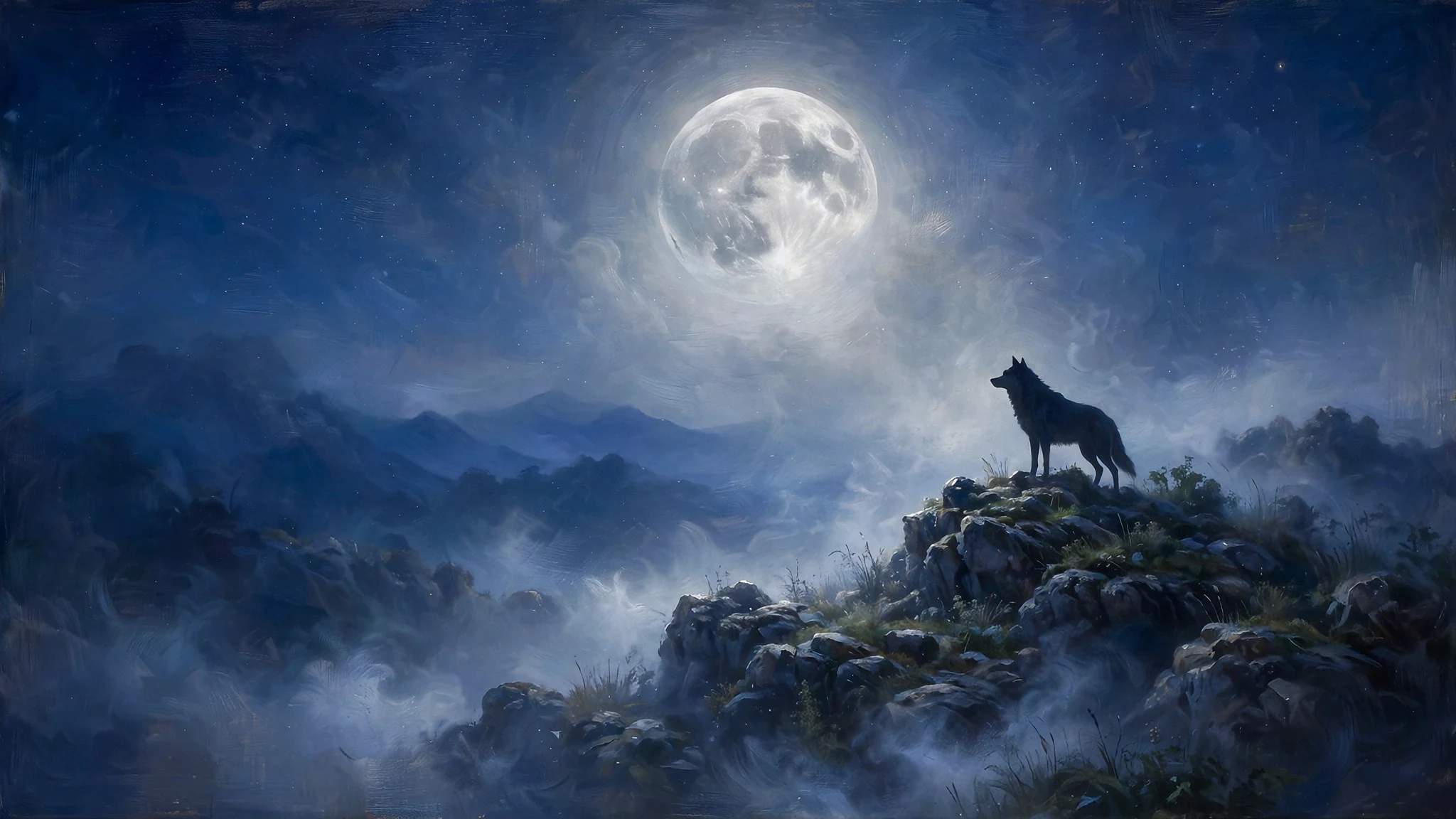
Dreaming About a Wolf: What the Dream May Be Showing You
Dreaming about a wolf can feel like a visit from something wild that knows you better than you expect. The wolf is rarely a neutral animal in a dream. It may stand beside you as a loyal companion, watch you from the edge of a forest, or run you down a dark road, and each of those scenes points to a different part of your life. The wolf carries two ideas at once, loyalty to the group and freedom to roam alone, and most wolf dreams turn on which of those two you are missing right now. If you have felt crowded by other people, the wolf may speak for your need to step away. If you have felt isolated, it may speak for your need to belong. Start by asking how the wolf treated you in the dream, because that single detail often tells you more than any symbol book could.
The Wolf in Real Life: Packs, Howls, and Long Distances
Real wolves give the dream its texture. The gray wolf, Canis lupus, is the largest wild member of the dog family, and adults commonly weigh 70 to 115 pounds for males and 60 to 100 pounds for females, standing 26 to 32 inches at the shoulder. A pack is usually a family group, a breeding pair and their offspring of different ages, and packs most commonly number 6 to 10 animals, though the average in Yellowstone National Park is about 9.8 and the largest recorded pack there, the Druid Peak pack, reached 37 wolves in 2001. A wolf pack defends a territory that can run from about 80 to 3,000 square kilometers depending on prey, and in Yellowstone a pack range is often 185 to 310 square miles. Wolves can travel up to 50 kilometers, about 30 miles, in a day, and a lone wolf that leaves its pack has been known to travel as far as 886 kilometers, about 550 miles. A howl can be heard about 11 kilometers away in forest and about 16 kilometers in open country, and a single howl lasts 5 to 11 seconds. Wolves do not howl at the moon, and the phase of the moon makes no difference to how often they call. The global wild population is estimated at 200,000 to 250,000 animals. Those facts shape the reading, because a wolf lives by the pack and the call of the group, even when one animal ranges far on its own.
The Most Common Wolf Dream Variations
A wolf attacking you often points to a threat that feels close, such as a person who is pushing hard, a rumor at work, or a fear that has started to bite. A wolf chasing you often points to an instinct or a truth you have been outrunning, and the chase usually ends when you turn and face it, even in the dream. A friendly wolf, or a wolf that walks beside you, often points to loyalty and trust, and it can appear when a friendship or a partnership feels solid. A wolf howling in the distance often points to a call you have been ignoring, such as a creative urge, a need to speak up, or a pull toward a different life. A pack of wolves often points to group pressure, family loyalty, or the feeling of being watched by a group. A lone wolf often speaks of independence, and it tends to arrive when the group has grown quiet and you must choose a road on your own. A white wolf often feels pure or spiritual to the dreamer, while a black wolf often feels shadowy or hidden, and both readings depend on your own feeling in the moment. A wolf that turns into a dog, or a dog that turns into a wolf, often points to the line between tame and wild in your own life, such as a relationship that has grown more honest or more dangerous.
A Psychological Reading of the Wolf Dream
In a psychological reading, the wolf often stands for instinct, the part of you that senses danger or opportunity before your thinking mind catches up. Carl Jung treated the wolf as an image of the shadow and of untamed instinct, the part of the self that society asks us to tame. A wolf dream can therefore speak of feelings kept leashed, like anger, desire, or ambition, and the dream may be asking for a safer channel for that energy, like plain words to the group, steady movement, or one clear choice spoken aloud. Sigmund Freud, whose book The Interpretation of Dreams appeared in 1900, would have looked for the person or wish hiding behind the animal, and a wolf might stand for a person who feels powerful, watchful, or hard to trust. Modern dream research adds a calmer note. Dreams are most vivid in REM sleep, which arrives about 90 minutes after falling asleep and repeats every 90 minutes or so, with the longest REM periods falling in the early morning. That timing explains why a wolf dream can feel so real when it wakes you at dawn. The psychological question is practical. Ask what your gut has been telling you lately that your schedule has not allowed you to hear, and see whether the wolf matches that message.
A Spiritual Reading of the Wolf Dream
In a spiritual reading, the wolf is often treated as a teacher of loyalty, intuition, and honest freedom. Many Native American traditions honor the wolf as a guide and a protector of the family, an animal that hunts together, raises its young together, and still roams far when it must. In that frame, a wolf dream can be read as a reminder to trust your instincts, to stay loyal to the people who have earned it, and to leave a situation that no longer fits. A wolf that appears at the edge of a forest may point to a threshold, a choice between staying with the group and stepping into unknown ground. A wolf that leads you somewhere may point to guidance, while a wolf that blocks you may point to a boundary set by your own deeper self. Some readers link the wolf to the moon and to night, because the animal is active in darkness and its howl carries across it, and that link can make the dream feel like a message from the quieter part of your mind. Keep the reading grounded. A spiritual lens is useful when it helps you name a loyalty or a freedom you already feel, not when it turns a dream into a prediction about someone else.
What Changes the Meaning of a Wolf Dream
Several details can flip a wolf dream from warning to comfort. The number matters, because one wolf feels personal while a pack feels social, and a pack that circles you feels very different from a pack that runs past you. The coat changes the tone, because a white wolf in the dream often feels clean and steady, while a gray wolf often feels plain and everyday, and a black wolf often feels shadowed and hard to read, so trust what the animal already means to you. The sound matters, because a howl points to communication or a call, a growl points to a warning, and silence points to watching and waiting. What you did in the dream matters, because fleeing signals a wish to dodge the group, holding your ground signals nerve under the eyes of the pack, and walking with the wolf signals trust in the bond between you. Place matters too, because a wolf among trees feels at home with its own kind, a wolf inside your house feels intrusive, and a city wolf feels strange and pressing. How the dream ends matters too, because a wolf that slips away alone often feels like the pack loosening its hold, while one that stays often feels like a question the group has not answered yet. Write down the number, the color, the sound, your action, and the ending, and compare those notes across nights if the dream repeats.
What to Do After Dreaming About a Wolf
Write the dream down as soon as you wake, while the feeling is still fresh, and give it one honest sentence about what scared you or steadied you. Then look at your last few days and name one loyalty and one freedom that are pulling in opposite directions, such as a family obligation against a personal goal, or a team decision against your own judgment. When the wolf in the dream felt threatening, ask who or what has pressed on you lately, and weigh a single clear boundary to set this week, like a plain no, a cap on your time, or at last having the talk you have kept putting off. If the wolf felt loyal, ask who has earned your trust lately, and consider one way to show that loyalty in return. If the wolf felt wild and free, ask what part of your life has become too tame, and consider one small step toward the thing you keep postponing, such as a walk alone, a new class, or an honest talk with yourself. A short dream journal, one line a night for two weeks, will show whether the wolf is fading or returning, and whether its mood is changing as your situation changes. The dream does not need a grand answer. It needs one clear, honest next step.
The wolf is only one animal among many in the dream world, and setting it beside others helps. A bear in a dream can carry strength and rest, a dog can carry loyalty close to home, and a lion can carry pride and courage. If a wolf chased you, the page on being chased faces that fear head on. The dream meanings index gathers the wolf among the other animal dreams, so you can set pack readings beside lone wolf readings.
If this dream left you with a question you want to explore further, a reading can give you quiet space to think it through. First 3 minutes FREE — every time, for every reading, with all advisors.
For a simple next step, try a One-Card Tarot reading and reflect on what instinct or loyalty the card brings to mind for you.
Frequently Asked Questions
What does dreaming about a wolf mean?
It usually speaks of instinct, freedom, loyalty, or a threat. A friendly wolf in the dream usually mirrors trust or guidance, while a wolf that attacks usually mirrors pressure or a fear you have kept running from. What the wolf did, and the feeling it left in you, points the reading in its direction.
What does it mean to dream about a wolf attacking you?
An attacking wolf often speaks of a conflict or pressure that feels close, like a demanding person, a clash at work, or a fear that has begun to shape your days. It never foretells a real attack. Most often it means the pressure calls for a boundary or a decision.
What does a white wolf mean in a dream?
A white wolf often feels pure and guiding, even spiritual to the dreamer, and it can speak of intuition or protection. Its meaning turns on the feeling you carried through the dream. A calm white wolf in the dream often feels reassuring, and a white wolf that blocks your path can speak of a truth still waiting to be faced.
What does dreaming about a pack of wolves mean?
A pack often points to group pressure, family loyalty, or the feeling of being watched by a group. A pack that runs with you can reflect belonging, while a pack that circles you can reflect pressure from family, friends, or coworkers to follow their lead.
Is dreaming about a wolf a good sign?
It depends on the dream, and either reading is possible. A loyal or guiding wolf often feels heartening, while a wolf that turns threatening often feels like a signal of pressure or instinct left unheard. Take the dream as information about loyalty, freedom, and trust, rather than a fixed sign.
Last updated: November 11, 2026
