
Dreaming About War: Meaning and What It Shows
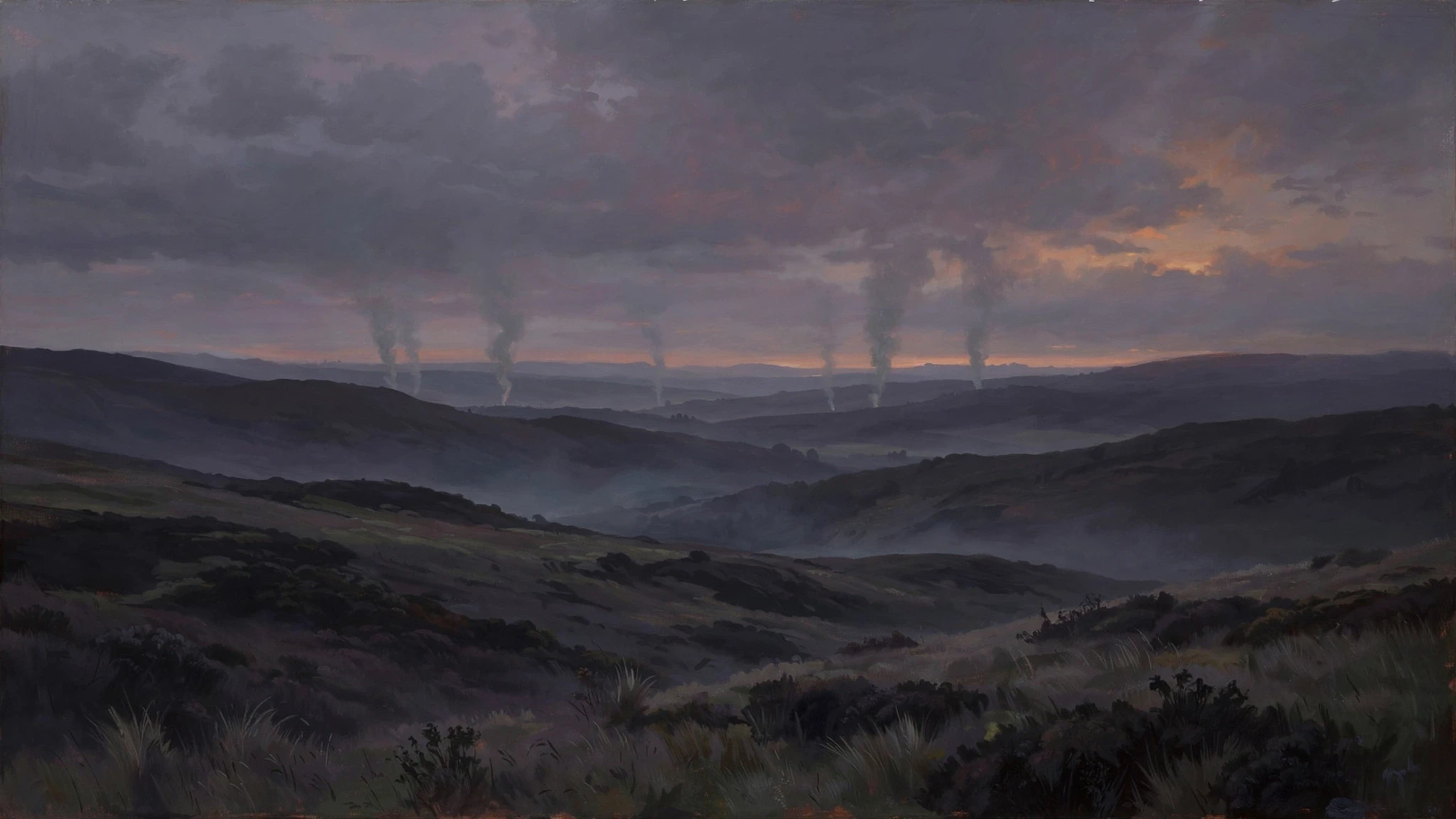
Dreaming About War: What It Usually Means
Dreaming about war usually points to conflict, and to a conflict that feels large, serious, and hard to control. A war dream can stand for a fight in your waking life, a disagreement with someone close to you, a struggle inside yourself between two choices, or a period of stress that feels like a battle. It can also stand for a feeling of being under attack, or of being caught between two sides. War is the largest image we have for conflict, and a dream about it often shows up when a conflict has grown too big to be named as a simple argument.
Your role in the war matters more than the war itself. Are you a soldier fighting, a civilian hiding, a leader giving orders, or a witness watching from a distance? Fighting in the dream points one way, hiding points another, and watching points a third. Begin with your part in it, then look at the war, and the picture usually sharpens.
The Real War Behind the Symbol
War has been part of human life for thousands of years, and it has shaped the world in ways that are easy to see: borders, languages, laws, and the stories nations tell about themselves. The two world wars of the twentieth century were the largest conflicts in history, involving dozens of countries and tens of millions of people. The First World War, from 1914 to 1918, and the Second World War, from 1939 to 1945, changed the map of the world, the technology of warfare, and the way people thought about peace. The word war itself comes from the Old English werre, meaning a state of armed conflict, and it has been used in everyday language for struggles that have nothing to do with armies: a war of words, a war against disease, a war within yourself.
War also has a language of its own: front lines, battles, sieges, truces, and treaties. A front line is where two sides meet. A siege is a long, slow pressure on a place. A truce is a pause in fighting. A treaty is an agreement that ends a war. Those words are useful for dream reading, because they give you a vocabulary for the conflict in your life. Is your conflict a front line, where you meet the other side every day? Is it a siege, a long slow pressure? Is it waiting for a truce, a pause that would let everyone rest?
The news also brings war into daily life, even for people who have never seen one. Images of conflict on television and on phones can enter dreams, especially for people who watch the news before bed or who feel anxious about the world. A war dream after a week of heavy news may be less about your personal life and more about the world's pain entering your sleep. That still leaves the dream worth reading. It makes it a record of what you absorbed.
The Most Common War Dream Variations
Being a soldier in a war is the version people report most often. It usually points to a fight you are actively engaged in, a conflict at work, in a family, or inside yourself. The weapons and the uniform matter: fighting with a rifle points to a direct, open conflict, while fighting without a weapon points to a conflict where you feel unprepared. If you fought well and felt strong, the dream may be about courage and resilience you had not seen in yourself. If fear had you wanting to run, the dream may be about a fight that is wearing you down.
Hiding from a war, as a civilian, points to a conflict you are trying to avoid or to survive rather than to win. You are not fighting. You are keeping yourself and the people you love safe while the fighting goes on around you. Where you hid matters: home means a private conflict, a shelter means a need for safety, and hiding with others means a shared danger. If you were found while hiding, the dream may be about a conflict that has reached you despite your efforts to avoid it.
Watching a war from a distance points to a conflict you are observing rather than living. It can be a fight between two people you know, a disagreement in your family or workplace that you are not part of, or a world event that you are following with anxiety. Watching can also point to a feeling of helplessness, of seeing a conflict you cannot stop. If you wanted to help but could not, the dream may be about a situation where you feel powerless.
A war ending, with a truce or a treaty, points to a resolution, a conflict that is coming to an end or that you wish would end. A war that never ends points to a conflict that feels endless, a struggle that has gone on for so long you cannot remember a time before it. A war in your own home, with fighting in your house or your street, points to a conflict that has come close, a fight that is no longer distant but is now in your private life.
Being captured in a war points to a feeling of being trapped by a conflict, of having no way out. Being wounded points to a hurt that a conflict has caused, a wound that may be emotional rather than physical. Being a leader in a war, giving orders, points to responsibility, to a conflict where you are the one making decisions, and to the weight that carries.
The Psychological Reading
In psychological terms, a war dream often reflects inner conflict. Dream researchers often say a single image can carry a feeling too big for words, and war carries a conflict that feels large and serious. The two sides in the dream war can stand for two parts of yourself: a part that wants one thing and a part that wants the opposite. A dream about war can surface the question of what you are fighting inside yourself, and whether the fight is helping you or only wearing you down.
There is also a stress layer. A war dream can be your mind's way of showing you how stressed you feel. If your waking life has been full of demands, deadlines, and disagreements, the dream may be a picture of that pressure, not a prediction of a real war. The scale of the war in the dream often matches the scale of the stress: a small skirmish points to a small conflict, while a full war points to a period when everything feels like a battle.
A third layer is anger. War is a violent image, and a war dream can point to anger that has not been expressed, either yours or someone else's. If you were fighting in the dream, the anger may be yours, and the dream may be a safe place to express it. If you were hiding, the anger may be someone else's, and the dream may be about a person whose anger frightens you. Either way, the dream is asking you to look at the anger rather than to ignore it.
The Spiritual Reading
In spiritual terms, war is read as a symbol of the struggle between light and darkness, between good and evil, or between the higher self and the lower self. In many traditions, the spiritual life is described as a battle, not against other people but against fear, greed, and ignorance. Some spiritual readers link a war dream to a call to fight for what matters, to stand up for a value, a person, or a truth that is under attack. In this reading, the dream is not about violence. It is about courage.
Some readers see war as a necessary ending, of an old order being destroyed so that a new one can be built. In this reading, a war dream after a period of personal change can be a sign that an old way of life is ending, and that the ending is painful but necessary. The dream may be asking you to let the old order fall, rather than to keep defending it.
These spiritual readings are lenses, not facts, so look through each one and keep the view that matches the conflict you actually face. If the reading of inner struggle fits your life, ask what two parts of you are fighting. If the reading of courage fits, ask what you need to stand up for. If neither one fits, the conflict and stress reading may still be the one that fits. A war dream can hold two true readings at once, and a conflict often has two honest sides.
What Changes the Meaning
Your part in the fighting comes first. Fighting as a soldier points to a conflict you are engaged in. Hiding as a civilian points to a conflict you are surviving rather than winning. Leading points to responsibility. Watching points to observation or helplessness. Being captured points to feeling trapped. Before you settle on a meaning, spell out your role in a single sentence.
The scale of the war is a second modifier. A small skirmish points to a small conflict, a disagreement that is limited and manageable. A full war points to a conflict that feels large and all encompassing. A war in your home points to a conflict that has come close. A war far away points to a conflict you are observing from a distance, or to anxiety about the world. A war that never ends points to a conflict that feels endless.
The enemy is a third modifier. If you knew who the enemy was, the dream may be about a specific person or a specific conflict. If the enemy was faceless or unknown, the dream may be about a general feeling of threat, or about a part of yourself that you are fighting. If the enemy was someone you love, the dream may be about a conflict with that person, or about a part of yourself that you see in them. If there was no enemy, only the feeling of war, the dream may be about stress itself, a life that feels like a battle without a clear opponent.
The outcome is a fourth modifier. A war that ends in victory points to a conflict you feel you can win, or to a struggle that is coming to a successful end. A war that ends in defeat points to a conflict you feel you are losing, or to a fear of failing. A war that ends in a truce points to a resolution, a compromise, or a pause that would let everyone rest. A war with no ending points to a conflict that feels unresolved, and the dream may be asking you to find a way to end it.
A Worked Example: Reading Your Own War Dream
Take a dream people often wake from: you are in a city you know, and you hear distant explosions. You are not a soldier. You are a civilian, and you are trying to get home to your family while the streets are full of people running. You reach your front door just as the sound gets louder, and you wake up. Break it down in four clear steps.
First, note the facts. One civilian, a familiar city, distant explosions, people running, you are trying to get home, you reach the door, and your feeling was fear mixed with determination. Second, match the setting to your life. A familiar city suggests your daily life, and home suggests safety and family, so the dream is probably about a conflict that threatens your daily life and your home. Third, read your role. You are not fighting. You are protecting, trying to get home, which suggests the conflict is one you are surviving rather than winning. Fourth, read the explosions. Distant explosions suggest a threat that is real but not yet close, a conflict that is approaching. Fifth, read the ending. Reaching the door suggests you are close to safety, but the sound getting louder suggests the threat has not passed. A fair reading would be: a conflict or a pressure in your life is approaching your home and family, you are focused on protecting what matters, and you are close to safety but not yet safe, which is a prompt to take the protection seriously.
Change one detail of the battle and the reading changes. If you had been a soldier fighting, the reading would shift toward a conflict you are actively engaged in. If the war had been far away, the reading would shift toward anxiety about the world rather than your own life. If you had reached home and felt safe, the reading would shift toward a conflict that is ending. The modifiers are what turn a generic war into your war.
What to Do After a War Dream
Write the dream out as soon as you wake, with your role, the scale of the war, the enemy, and how it ended. Then ask yourself three plain questions. What conflict in my life feels like a war right now, and who is on each side? What am I fighting inside myself, and is that fight helping me or wearing me down? What would a truce look like, a pause that would let everyone rest?
If a conflict with someone was the point, name it clearly, to yourself or to the person involved, and ask what a resolution would look like. If the dream pointed to inner conflict, the practical step is to write down the two sides, what each side wants, and whether there is a third way that honors both. If the dream pointed to stress, the practical step is to find a truce in your own life: a day with fewer demands, a conversation that lowers the temperature, or a boundary that protects your peace.
If war dreams keep repeating, look at your conflicts rather than the symbol. Repeated war dreams often arrive during long periods of stress or disagreement, when a person is living with a conflict for months. Taken as a report rather than a forecast, the dream says something plain: you are in a battle, and the battle is costing you. That is a real conflict with a real ending to find, so let the dream push you toward the ending. If the dream follows heavy news about a real war, consider limiting news before bed, because what you absorb during the day often returns at night.
If another dream is fighting for your attention, these three are the closest matches: dreaming about a zombie, dreaming about being chased, and dreaming about a jail, or march through the full dream meanings hub for the symbol that fits.
If the conflict in this dream feels worth talking through, remember: First 3 minutes FREE — every time, for every reading, with all advisors.
A clear next step is to request a One-Card Tarot reading and name what a truce would look like in the conflict you are carrying.
Frequently Asked Questions
Does dreaming about war mean a war will happen?
No, a war dream is rarely a prediction about a real war. In most cases it points to a conflict in your life, such as a disagreement, a struggle inside yourself, or a period of stress that feels like a battle. If you have been watching heavy news about a real war, the dream may also be a record of what you absorbed during the day.
What does it mean to dream about being a soldier in a war?
Being a soldier usually points to a fight you are actively engaged in, such as a conflict at work, in a family, or inside yourself. If you fought well and felt strong, the dream may be about resilience and courage. If you felt afraid and wanted to run, it may be about a fight that is wearing you down.
What does it mean to dream about hiding from a war?
Hiding from a war usually points to a conflict you are trying to avoid or survive rather than win. You are keeping yourself and the people you love safe while the fighting goes on around you. If you were found while hiding, the dream may be about a conflict that has reached you despite your efforts to avoid it.
Is dreaming about war a bad sign?
A war dream is usually a report about conflict and stress rather than a bad omen. It often points to a fight that needs attention, a stress level that is too high, or an inner conflict that needs resolution. A war that ends in a truce or a treaty can even point to a resolution that is coming or that you wish would come.
Why do I keep dreaming about war?
Repeated war dreams often arrive during long periods of stress or disagreement, when you have been living with a conflict for months. They can also repeat when you are absorbing heavy news about a real war. Look at the conflicts in your life first, and consider limiting news before bed if the dreams follow days of heavy news watching.
Last updated: November 11, 2026
