
Dreaming About a Piano: Meaning and Music
Dreaming About a Piano: Music, Emotion and the Keys
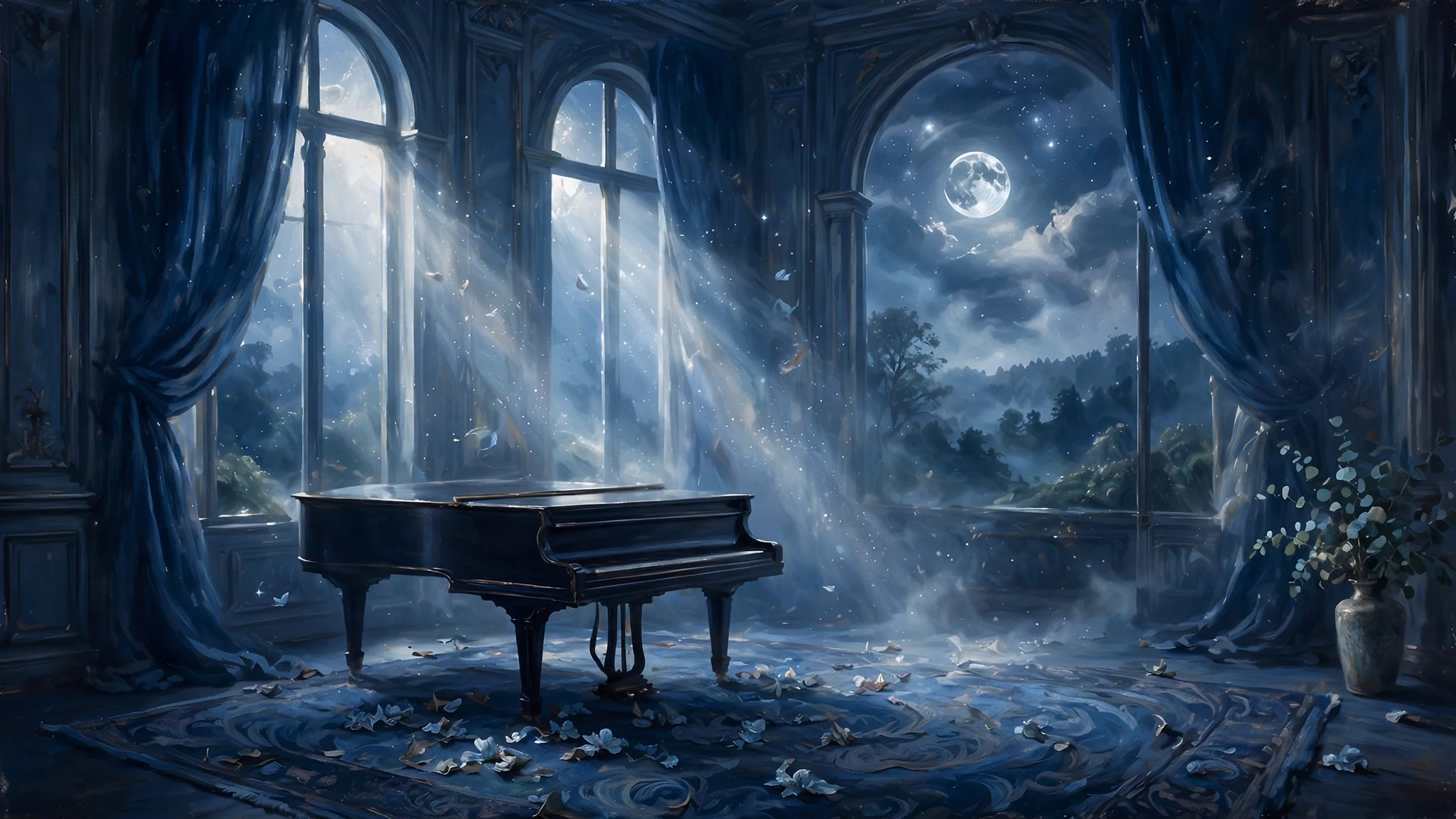
Dreaming about a piano is a dream about music made by hand. A piano is an instrument that turns touch into sound: you press a key, a hammer strikes a string, and a note comes out. That direct link between your hands and the music is why the piano appears in dreams at moments when self expression matters, when a feeling needs to be played rather than spoken, or when a skill you carry in your hands is asking for attention.
The first question after a piano dream is whether you were playing, listening, or looking at the instrument. Playing is a different dream from listening, and a piano no one touches is different from one that is being played. The second question is about the music: was it beautiful, out of tune, too loud, or silent? The third question is about the piano itself: was it a grand piano, an upright, a piano with missing keys, or a piano in a room you recognize? Those three answers usually name the feeling or the skill the dream is about.
The piano's real history opens the page, from Bartolomeo Cristofori's invention around 1700 to the 88 key standard, because the facts explain why the symbol feels the way it does. An illustrative example follows, a piano in an empty room, then the psychological and symbolic readings, and the variations: playing beautifully, finding the piano out of tune, being unable to play at all.
An Illustrative Example: The Piano in the Empty Room
This example is illustrative, not a real person's story.
A woman named June, 58, dreamed she was in an empty room with a grand piano. She sat down, lifted the lid, and began to play a piece she had learned as a child, a simple melody she had not played in forty years. Her fingers remembered the notes, even though her mind did not, and the music filled the room. She woke up feeling peaceful, and a little sad.
The empty room matters, because it is a space with nothing in it except the piano, which means the dream is about the piano alone, not about an audience or a performance. The grand piano matters too, because it is a large and serious instrument, not a small or casual one, which suggests the skill it stands for is significant. The fact that June's fingers remembered the notes, even though her mind did not, is the heart of the dream: it is about a skill stored in the body, not in the conscious mind, and the music coming back is the skill returning.
In June's waking life, she had taken piano lessons as a child and stopped at fourteen, when her family could no longer afford them. She had not played since, but she had recently retired, and she had been thinking about what to do with her time. The week before the dream, she had seen a second-hand upright piano for sale in a shop window. The piano in the dream was that skill, kept in an empty room for forty years, waiting to be played again. The sadness in the dream was for the years it had sat silent, and the peace was for the music that was still there, in her fingers, ready to come back. She bought the piano the following month.
The Real Piano: Cristofori, 88 Keys and the Instrument That Sings
The piano was invented in Italy by Bartolomeo Cristofori, a maker of harpsichords who worked for Prince Ferdinando de Medici in Florence. A Medici inventory from 1700 is the first record of his new instrument, which he called a gravecembalo col piano e forte, a harpsichord with soft and loud. The name was later shortened to pianoforte, and then to piano. Cristofori's invention was a new mechanism: instead of plucking the strings, as a harpsichord does, his piano struck them with hammers, which meant the player could control the volume by pressing the keys harder or softer. That control is what made the piano a new kind of instrument.
The modern piano has 88 keys, 52 white keys and 36 black keys, covering seven full octaves plus a few notes, from A0 to C8. That standard was reached in the late 1880s, after the keyboard had grown gradually from Cristofori's first instrument, which had about 49 keys, through the pianos of Mozart's time, which had about five octaves, to the larger instruments of the 1800s. The three Cristofori pianos that survive today date from the 1720s, and the oldest is in the Metropolitan Museum of Art in New York.
The piano became the most popular instrument in Western homes in the 1800s, and it remains a symbol of music, education, and self expression. Learning the piano is a common childhood experience, and the piano in a dream often carries that history: lessons, practice, recitals, and the feeling of sitting at the keys. That history is why a piano dream can feel nostalgic even for people who have not played in decades: the instrument is tied to a time of learning, and the dream can bring that time back.
The Psychological Reading: Expression, Memory and the Hands That Remember
The psychological reading of a piano dream starts with expression. A piano turns feeling into sound, and the dream often appears when a feeling needs to be expressed but words are not enough. Playing the piano in a dream can reflect a need to express an emotion, whether that is joy, grief, love, or anger, through a medium that is not language. Listening to a piano can reflect a need to hear a feeling, to let someone else's music, or your own, reach you.
Memory is the second psychological layer, and it is the one June's dream used. Piano playing is stored in procedural memory, the kind of memory that lives in the body and the hands, rather than in conscious thought. That is why June's fingers remembered the notes even though her mind did not. A piano dream can point to a skill or a memory stored in the body, whether that is music, a sport, a craft, or a way of moving, and the dream may be asking whether that skill is still there, waiting to be used again.
That memory is laid down through practice and it survives long silences, which is why June's fingers remembered a piece her mind did not. Dreams draw on procedural memory during REM sleep, the vivid dreaming stage that Aserinsky and Kleitman described in 1953, when the brain replays skills and feelings from the day. Hobson and McCarley argued in 1977 that dreams are the brain making sense of signals firing during sleep, with meaning supplied by the dreamer's own concerns, so a piano dream is your mind choosing the clearest image for a feeling that needs expression, or a skill that lives in your hands. Freud, in 1900, would have looked for a wish behind the music, and Jung would have seen the piano as harmony, many notes joined into one piece.
The Symbolic Reading: Harmony, the Keys and the Music Within
In symbolic terms, the piano is harmony. A piano can play many notes at once, and a skilled player can make them sound together as a single piece of music. A dream about a piano can therefore point to a need for harmony in your life, whether that is harmony between work and rest, between different parts of yourself, or between you and another person. A piano played well suggests harmony that is working. A piano out of tune suggests harmony that needs attention.
The keys are the second symbolic layer. A piano has 88 keys, and each one is a choice, a note, a possibility. A dream about the keys can point to the choices in your life, and to the feeling that some keys are available while others are not. A piano with missing keys can suggest a choice that is not available, a note you cannot play, or a part of your life that is out of reach. A piano with all its keys intact suggests a full range of choices, and the dream may be asking which notes you want to play.
The music within is the third symbolic layer. A piano that plays itself, a common dream variation, can point to a feeling or a talent that is emerging on its own, without your conscious effort. A piano that is silent, even when you press the keys, can point to a feeling that cannot be expressed, or a skill that has gone quiet. The dream asks whether the silence is a rest, a block, or a loss, and the feeling in the dream usually knows the answer.
Variations That Change the Meaning
Playing the piano beautifully is the most hopeful variation, and it usually points to self expression that is working, a skill that is flowing, or a feeling that has found its voice. The beauty of the music in the dream often matches the beauty of the feeling it stands for, whether that is joy, love, or peace. Playing badly, or making mistakes, is a different variation, and it often reflects a feeling of being out of practice, or a fear of performing, whether that is a real performance or a social situation where you feel judged.
A piano that is out of tune is a specific variation that points to something in your life that needs tuning, whether that is a relationship, a routine, or a part of yourself. The discord in the dream is the information: something sounds wrong, and the dream is asking you to listen to it. A piano with missing keys is a similar variation, and it often points to a choice or a note that is not available, a part of your range that you cannot reach right now.
Being unable to play, sitting at the piano and finding your fingers will not move, is a variation about a block, a skill or a feeling that is stuck. It can point to stage fright, to a creative block, or to a feeling that you have lost the ability to express yourself. A piano in a room you recognize, such as a childhood home, often points to a memory, a skill from an earlier time, or a part of yourself that belongs to that place. And a piano that plays itself can point to a talent or a feeling that is emerging without your effort, a music that is already inside you, waiting to be heard.
What to Do After a Piano Dream
Write down whether you were playing, listening, or looking, and what the music sounded like, because those details carry most of the meaning. Then name the feeling or the skill in your waking life that feels most like that piano: a talent, an emotion, or a part of yourself that needs expression. Ask whether the piano in your dream was in tune, whether all its keys were there, and whether the music was beautiful or broken.
If the dream was about a skill you set aside, like June's piano, consider one small step toward it: a lesson, a practice session, or an hour with the instrument. Skills stored in the hands do not disappear, and the dream is often a reminder that they are still there. If the dream was about a piano out of tune, listen for the discord in waking life: a relationship, a routine, or a part of yourself that sounds wrong, and consider what tuning it would need. If the dream was about playing beautifully, take note of the feeling, and look for more of it in your waking life, because the dream may be marking a harmony that is working and deserves to be kept.
If a piano appeared in your dream, notice whether you played it, heard it, or only looked at it, because that position usually names your relationship with expression right now. First 3 minutes FREE — every time, for every reading, with all advisors.
While the last note lingers, open a One-Card Tarot reading and hear the tune the card hums underneath. Notice whether you played it, heard it, or only looked at it.
Music dreams are performance dreams too, and the Dream dictionary seats this one beside dreaming about a church and dreaming about school, the two settings a piano often shares. The room around the music is dreaming about a house, dreaming about a wedding, and dreaming about a child, the audiences who listen hardest.
Frequently Asked Questions
What does dreaming about a piano mean?
Dreaming about a piano usually points to self expression, emotion, or a skill you carry in your hands. The piano turns touch into sound, so the dream often appears when a feeling needs to be expressed through music or creativity rather than through words, or when a skill you learned long ago is asking for attention.
What does it mean to dream about playing the piano?
Playing the piano in a dream often reflects self expression that is working, a skill flowing, or a feeling finding its voice. Playing beautifully usually points to harmony and confidence, while playing badly or making mistakes often reflects being out of practice or a fear of performing.
What does an out of tune piano mean in a dream?
A piano that is out of tune usually points to something in your life that needs tuning, such as a relationship, a routine, or a part of yourself. The discord in the dream is the information: something sounds wrong, and the dream is asking you to listen to it and to consider what adjustment it needs.
What does it mean to dream about a piano with missing keys?
A piano with missing keys often points to a choice or a note that is not available, such as a part of your range you cannot reach right now, a skill you have not learned, or an option that is closed. The dream usually suggests the missing key is worth noticing, whether it can be restored or needs a different approach.
Why did I dream about a piano I have not played in years?
Because piano playing is stored in the hands and the body, not only in conscious memory, and the skill can remain even after decades without playing. A piano dream often appears when a skill or a part of yourself from an earlier time is ready to return, and the dream shows you that the music is still there, waiting to be played again.
Last updated: November 11, 2026
