
Dreaming About a Museum: What It Means
Dreaming About a Museum: Rooms Full of Things That Matter
Dreaming about a museum puts you in a building made for keeping things. Every object inside has been chosen, labeled, and placed behind glass or on a wall, and the rooms are quiet enough to hear your own steps. Real museums work the same way. The British Museum in London was established in 1753 and first opened to the public on January 15, 1759, in Montagu House, and it was the first public national museum to cover all fields of knowledge. Its collection now holds about 8 million objects, from ancient sculpture to coins, prints, and manuscripts. A dream museum borrows that sense of a place where the past is kept safe. It usually points to memory, to history, or to a part of yourself that has been put on display, or put away, for a long time.
Walking Through the Galleries in a Dream
Walking through museum galleries in a dream often matches a period of looking back in waking life. You may move slowly from room to room, stopping at objects that catch your eye, and the dream feels calm, almost like a visit to a real museum on a quiet weekday. In waking life, that slow looking often matches a time of reflection, like an anniversary, a retirement, a reunion, or the end of a long project, when a person naturally looks back at what has happened. The kind of gallery matters. A gallery of paintings often points to feelings and imagination, to the way you see the world. A gallery of ancient objects, like pottery, tools, or statues, often points to roots, to family history or to the early years of your own life. A gallery of science, with skeletons, stones, or machines, often points to curiosity, or to a wish to understand how something works, like a relationship or a health problem. The feeling in the gallery is the best guide. Wonder often means the past still has something to teach you. Boredom can mean you have outgrown an old story and are ready to move on. A gallery that feels endless, with room after room and no exit in sight, can match a life that feels stuck in the past, going over the same memories without finding a way forward.
An Exhibit That Belongs to You
Some museum dreams are personal in a sharper way. You may find an object that belongs to you on display, like a childhood toy, a wedding dress, a letter you wrote, or a photo of your family. That image can feel strange, even unsettling, because a private thing has been put in public. In waking life, it often points to a part of yourself that feels exposed, like a secret that has come out or a feeling you have kept private and now must share. It can also point to pride. A person who has worked hard on a project, raised a family, or survived a hard time may dream of their life on display, and the dream may be showing that the work deserves to be seen. A museum label with your name on it is worth reading in the dream if you can. The words on the label often name the feeling underneath, like a date, a place, or a short description that matches a real event. If the label is wrong, or if the object on display is not really yours, the dream may be pointing to a story that others tell about you, a story that does not match how you see yourself. A museum guard who stops you from touching an exhibit often matches a boundary in waking life, like a memory that is too tender to handle yet, or a part of the past that needs more time before it can be faced directly.
A Museum That Is Empty, Closed, or Lost
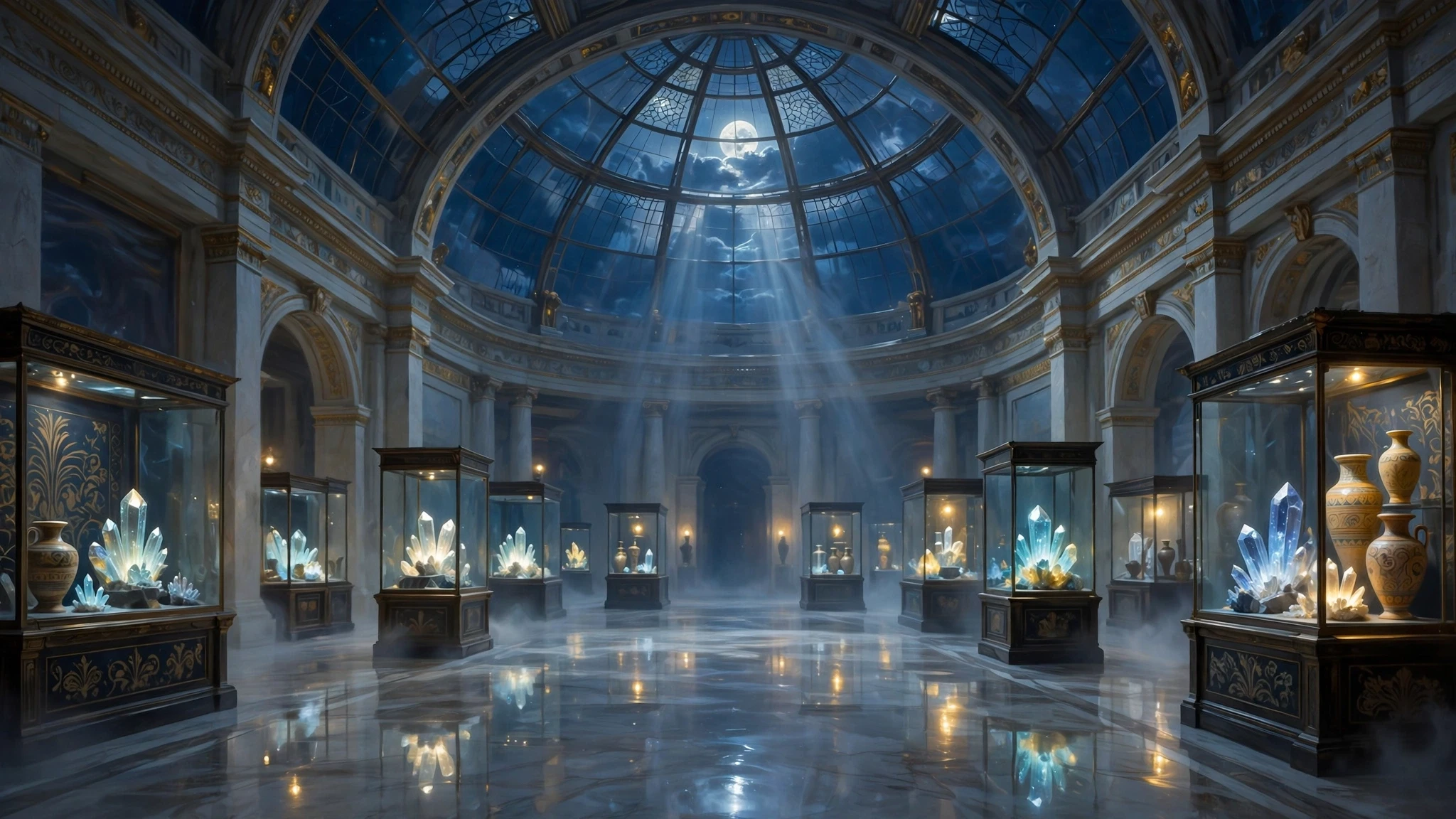
A museum that is empty, closed, or hard to find changes the meaning toward loss and access. An empty museum, with bare walls and no visitors, often matches a feeling that the past has gone quiet, like a family home that has been sold or a friendship that has ended. A closed museum, with locked doors and a sign on the gate, can point to a memory or a part of life that feels shut off, like a childhood you cannot remember clearly or a grief you have not yet opened. Getting lost in a museum, wandering through rooms that all look the same, often matches confusion about your own history, like not knowing where you come from or which version of a family story is true. A museum at night, dark and silent with only the emergency lights on, is a rarer image, and it often points to a private look at the past, one that happens when no one else is watching. If you found a hidden room in the museum, a small gallery behind a door or a basement full of objects not on display, the dream may be pointing to a memory or a feeling that has been kept out of sight, like a talent you set aside or a truth you have not yet faced. Hidden rooms in dreams often hold the most useful material, because they show what has been stored away rather than what is already on display.
Museums, Memory, and What We Choose to Keep
A museum is a choice made visible. Someone decided what to keep, what to label, and what to leave in storage, and a dream museum often asks the same question of the dreamer. What are you keeping, and why? In waking life, that question shows up when a person clears out a home after a death, sorts through boxes after a move, or decides which photos to keep after a breakup. The dream gives that sorting a building to happen in. A museum full of beautiful things can point to a life rich in memory, while a museum full of broken or dusty things can point to memories that need care, like a relationship that deserves an honest conversation or a regret that deserves forgiveness. Museums also preserve things that are no longer used, like old tools, old clothes, and old ways of living, and a dream museum can point to a part of yourself that is no longer used but still valued, like a skill from an old job or a dream from childhood. The question the dream asks is not whether to keep the past. It is how to keep it, on display where it can be seen and learned from, or in storage where it can rest until it is needed again.
An Illustrative Example: Chris and the Museum of His Childhood Street
This example is illustrative, not a real person's story. Chris, a 44 year old firefighter from Illinois, dreamed that he walked into a museum and found a whole gallery built to look like the street where he grew up. The houses were small models behind glass, the corner store had a tiny sign, and the park at the end of the street had a miniature swing set. Chris stood in front of the model of his own house and felt a wave of sadness he had not expected. In waking life, Chris had learned the week before the dream that the house where he grew up was going to be torn down to make room for new apartments. He had not lived there in 20 years, and he had told himself it did not matter, yet the news had stayed with him. The museum in the dream matched the way the street already felt to him, like something from the past that belonged behind glass. The small models matched the way childhood memories shrink with time, becoming neat and small and easy to look at from a distance. The sadness in front of his own house matched the grief he had not named, grief for a place that had shaped him and would soon be gone. When Chris wrote the dream down, he noticed one more detail. The museum had a bench in the middle of the gallery, and in the dream he had sat on it for a long time, just looking. That bench matched what he needed in waking life, time to sit with the loss instead of rushing past it. He drove to his old street the next weekend, took a photo of the house, and sat in his car for a while before driving home. The museum dreams stopped after that visit, and Chris kept the photo on his desk, not as a shrine, but as a reminder that a place can be gone and still matter.
What to Do After a Museum Dream
A museum dream is best read by starting with the exhibit that stayed with you. Write down what you saw, whether it was a painting, an ancient object, a childhood toy, or a whole street behind glass, and how it made you feel. Then write down one memory or part of the past that feels alive right now, and ask whether the museum matches it. Wonder often means the past still has something to teach. Boredom can mean you have outgrown an old story. A closed or empty museum often points to a memory that feels shut off or quiet. It helps to note whether you were alone or with someone, since a museum visited with family often points to shared history, while a museum visited alone often points to a private look back. Keep the note in a dream journal if you keep one, since museum dreams often repeat around anniversaries, reunions, and family events. For more detail, the house in dreams page covers the home that often sits at the center of a museum dream, the library in dreams page covers the other quiet building full of stored knowledge, and the photograph in dreams page covers the small, frozen moments that museums often display. You can find the whole set in one place at the dream dictionary hub.
A reading can help when a museum dream keeps returning or when the memory behind it feels too large to carry alone. First 3 minutes FREE — every time, for every reading, with all advisors.
For a simple next step, try a One-Card Tarot reading and reflect on what the card says about the past your museum dream may be keeping.
Frequently Asked Questions
What does dreaming about a museum mean?
A museum in a dream often points to memory, history, or a part of yourself that has been kept on display or put away. Walking through galleries usually matches a period of looking back, while an exhibit that belongs to you can point to a part of yourself that feels exposed or deserves to be seen.
What does it mean to find my own belongings in a museum dream?
Finding your own belongings on display often points to a part of yourself that feels exposed, like a secret that has come out, or to pride in work that deserves to be seen. If the label is wrong, it may point to a story others tell about you that does not match how you see yourself.
What does an empty or closed museum mean in a dream?
An empty museum often matches a feeling that the past has gone quiet, like a family home that has been sold. A closed museum can point to a memory that feels shut off, like a childhood you cannot remember clearly or a grief you have not yet opened.
What does getting lost in a museum mean in a dream?
Getting lost in a museum often matches confusion about your own history, like not knowing where you come from or which version of a family story is true. It can also mean you are going over the same memories without finding a way forward yet.
Why did I dream about a museum after hearing old family news?
Family news often stirs the past, and a museum is the mind picture for a past that has been kept and labeled. The dream may be giving you a quiet place to look at the news, sit with the feeling, and decide what to keep and what to let rest.
Last updated: November 12, 2026
