
Meadow Dream Meaning: Calm and Open Space
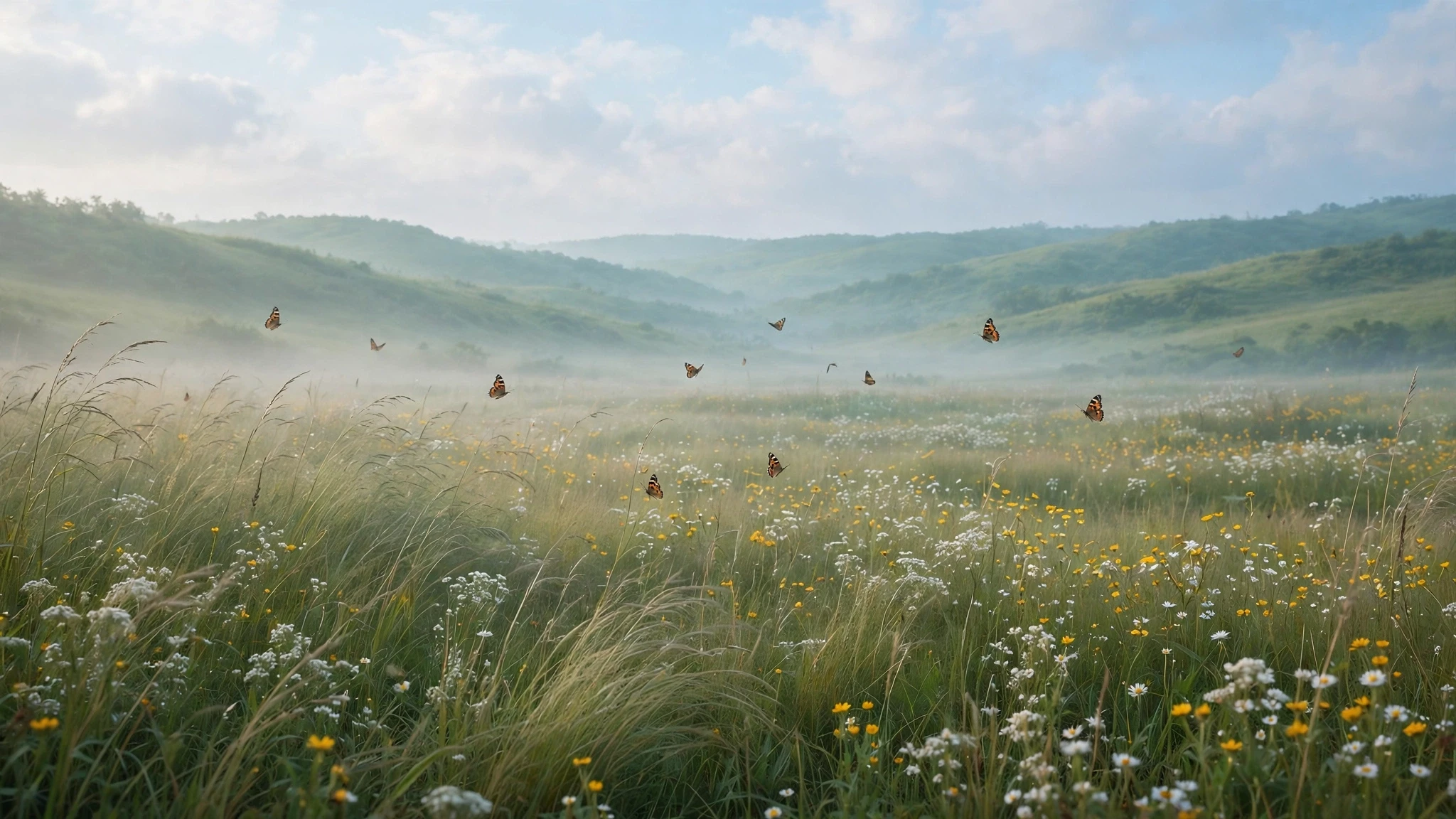
The Open Field Where You Can Finally Breathe
A meadow dream meaning begins with space. A meadow is an open habitat where grasses grow alongside many flowering plants, a grassland with wildflowers, kept open by mowing or grazing so that trees and shrubs do not take over. Left alone, most meadows slowly turn into scrub and woodland, so they are usually cut once or twice a year, often in late summer after the flowers have set seed. A meadow is not a wilderness and it is not a garden. It is a place in between, open, sunny, full of life, and tended just enough to stay open. That in between quality is the heart of the dream. A meadow in a dream rarely stands for a dramatic event. It stands for calm, for openness, for room to breathe, and for a gentle growth that does not need to be forced.
A healthy meadow can be home to over 100 species of wildflowers, and those flowers support a wide range of wildlife. On a single day in summer, one acre of wildflower meadow can contain 3 million flowers, producing 1 kilogram of nectar sugar, enough to support nearly 96,000 honey bees per day, according to the World Wildlife Fund. The common bird's foot trefoil alone is a food plant for 160 species of insects, which in turn support mammals and birds such as shrews and lapwings. Since the 1930s, the United Kingdom has lost 97 percent of its wildflower meadows, a loss that makes the remaining meadows precious. That history adds a second layer to the dream. A meadow is not only a symbol of peace. It is a symbol of a peace that needs care, a space that stays open only because someone tends it, and a richness that disappears when it is neglected. A dream meadow can reflect a calm that is real, and a calm that needs a little tending to last.
Calm, Openness, and the Room to Breathe
The most common reading of a meadow dream is the simplest one, and it is often the right one. A meadow that is green, sunny, and full of flowers often reflects a feeling of calm, a time when life feels spacious, when there is room to breathe, when the pressure has eased. It can also reflect a wish for that calm, a longing for a slower pace, a quieter week, a day without demands. The dream does not need to show you a dramatic event. A field of grass, a few wildflowers, a butterfly, a bee, a breeze, is enough. The openness itself is the message, and the feeling it brings, relief, ease, or simply the sense that you can stretch out, is the reading.
It helps to notice how you moved in the meadow. Were you walking slowly, lying in the grass, sitting under a tree at the edge, or running freely across the open ground? Each movement changes the feeling. Walking slowly often reflects a calm that is steady and unhurried. Lying in the grass often reflects rest, a need to stop and be still, or a feeling of being held by the ground. Sitting at the edge, looking out across the meadow, often reflects a calm that is still a little distant, a peace you can see but have not yet stepped into. Running freely often reflects freedom, a joy in movement, a feeling of being unburdened. The dream does not tell you which one is right. It shows you the meadow, and invites you to notice how your body wanted to move in it.
Wildflowers, Bees, and the Gentle Growth in the Grass
A meadow is full of small lives, and those small lives can shape a dream reading. Wildflowers bloom one after another, from spring to autumn, and each flower feeds a different insect. Bees collect nectar for energy and pollen as food for their young, and there are over 20,000 known bee species worldwide, most of them solitary. Butterflies sip nectar as adults, while their caterpillars feed on specific plants, including meadow grasses and flowers. Hoverflies pollinate flowers, and many of their larvae eat garden pests such as aphids. A dream meadow full of bees and butterflies often reflects a life that is rich in small, good things, a friendship, a routine, a creative practice, a daily pleasure that feeds you in a quiet way. A dream meadow that is empty, with no flowers, no bees, no butterflies, can reflect a feeling that the small good things have gone missing, or that a part of your life has become bare.
The flowers themselves can add a layer, too. A meadow of daisies, clover, and buttercups often feels simple and familiar, a childhood memory, a place you knew long ago. A meadow of tall, wild grasses, swaying in the wind, often feels wilder, less tended, more free. A meadow where the flowers are just beginning to bloom can reflect a growth that is starting, a new hope, a new habit, a new relationship in its early stages. A meadow where the flowers are in full bloom can reflect a growth that has arrived, a time of plenty, a season when the work you did earlier is now showing its color. A meadow where the flowers have gone to seed can reflect a season that is ending, a completion, a letting go, and the promise of next year's growth, already present in the seeds.
A Meadow That Is Overgrown, Dry, or Fenced In
Not every meadow dream feels open. A meadow that is overgrown, with tall weeds, brambles, and young trees pushing in, can reflect a calm that is being crowded out, a space in your life that needs tending, a routine, a relationship, or a part of yourself that has been neglected and is now hard to find. A meadow that is dry, with brown grass and few flowers, can reflect a feeling of depletion, a time when the nourishment has run thin, when rest has not been enough, or when a part of your life needs water, in a real sense, care, attention, or simply time. A meadow that is fenced in, with a wall, a hedge, or a gate that will not open, can reflect a freedom that feels limited, a calm that is present but not fully accessible, a space that you can see but cannot yet enter.
These dreams are not warnings. They are descriptions of how openness feels right now, and that description is useful, because it tells you what the meadow needs. An overgrown meadow may need a cut, a clearing, a small act of tending, a conversation, a decision, a boundary. A dry meadow may need water, rest, food, or a change of pace. A fenced meadow may need a gate opened, a permission given, or a small step through. The dream does not ask you to restore the whole meadow at once. It asks you to notice what one small act of care could do, this week, in a real way, to make the space a little more open.
An Illustrative Example: Grace and the Meadow Behind the House
This example is illustrative, not a real person's story.
Grace, a 55 year old nurse, dreamed that she was walking through a meadow behind the house where she grew up, a meadow she had not visited in years. The grass was tall, the wildflowers were in bloom, and the air was full of bees. Grace walked slowly, touching the tops of the grasses with her hands, and she felt a calm she had not felt in a long time. At the far edge of the meadow, there was a small wooden bench, and Grace sat down on it, and she stayed there for a long time, watching the bees, listening to the wind, doing nothing at all. She woke up feeling rested, as if she had actually been there, and she could not explain why the dream had felt so real.
In her waking life, Grace had been working long shifts at a hospital, and she had been caring for her mother, who was ill, and she had not taken a day off in months. She had told herself she was fine, while feeling tired in a way that sleep did not fix. The meadow behind the house gave that tiredness a shape, a place from her childhood that was open, sunny, and full of life, a place where doing nothing was allowed. The bench mattered, because Grace had not sat down, really sat down, without a task, in a long time, and the dream showed her that sitting still could be a kind of work, too, the work of resting. The next week, Grace asked her sister to cover one shift, and she spent a Saturday afternoon in a park near her home, sitting on a bench, watching the bees, doing nothing. It was not a holiday. It was a meadow, in a small way, and it was enough to start breathing again.
Freedom, and the Difference Between Open Space and Empty Space
Freedom is the quiet gift in a meadow dream, and it is easy to confuse it with emptiness. An open meadow can feel free, spacious, full of possibility, a place where you can walk in any direction, lie down, run, or sit still. An empty meadow can feel lonely, bare, or abandoned, a place where nothing grows, where no one is present, where the openness feels like a lack rather than a gift. The difference is often the feeling in the dream. Freedom feels light, warm, and chosen. Emptiness feels cold, quiet, and imposed. Notice which one your dream carried, because the same image of an open field can point in either direction, and the feeling is the truer guide.
It also helps to notice whether you were alone in the meadow or with others. Alone, a meadow can reflect a solitude that is peaceful, a time to be with yourself, to think, to rest, to listen. With another person, a meadow can reflect a shared calm, a relationship that feels spacious, a friendship or a partnership where there is room for both people to breathe. With a group, a meadow can reflect a community that feels open, a gathering, a picnic, a celebration that is relaxed rather than formal. The number of people in the dream is not a code. It is a hint about whose calm the dream is carrying, yours, yours and one other person's, or yours and many others.
How to Keep a Meadow Dream Alive in Waking Life
A meadow dream is most useful when you treat it as an invitation to make a little more open space in your waking life, in a practical way. Start by writing down the dream, including where the meadow was, what was growing there, who was with you, and how you felt when you woke. Then write down the one place in your waking life that feels most crowded right now, a schedule, a room, a relationship, a mind full of worries. Where the two meet is usually easy to see. If the dream showed a meadow in bloom, ask what would help your own life bloom a little more, a walk, a rest, a conversation, a creative hour. If the dream showed a meadow that was dry or overgrown, ask what small act of tending could help, a cut, a clearing, a boundary, a day off.
You can also borrow the real rhythm of a meadow. A meadow is kept open by being cut once or twice a year, not every day, and it blooms in its own season, not on demand. Calm in waking life often works the same way, not by forcing it, but by tending it gently, regularly, and in season. You do not need to move to the countryside to honor the dream. You only need to make a small, open space, a morning walk, a bench in a park, a window with a view, a ten minute sit in the grass, a moment when you are not doing, but simply being. If a meadow dream returns again and again, and it leaves you feeling sad or restless rather than calm, consider talking it through with a trusted friend or a licensed counselor. A dream can open the question of calm, and a real conversation can help you find a meadow of your own.
Open space dreams sit beside garden and forest readings. The dream meanings hub is the index, the garden dream meaning page covers a tended space, and the forest dream meaning page covers a wilder one. The butterfly dream meaning page covers a meadow visitor, and what your dreams mean explains how to read calm as well as drama.
If you would like a quiet space to sit with the calm the dream stirred up, a reading can help you name it clearly. First 3 minutes FREE — every time, for every reading, with all advisors.
For a simple next step, try a One-Card Tarot reading and reflect on the one small open space you could make for yourself this week, a bench, a walk, or ten quiet minutes.
Frequently Asked Questions
What does it mean to dream about a meadow?
A meadow dream often points to calm, openness, and room to breathe, or to a wish for a slower, more spacious time. Notice how you moved in the meadow, and whether it felt free or empty, because that feeling shapes the reading.
Is a meadow dream a good sign?
It is often read as a peaceful sign, reflecting a calm that is present or a calm that is needed. A meadow in full bloom can reflect plenty and gentle growth, while a dry or overgrown meadow can reflect a space that needs a little tending.
What does it mean to dream about lying in a meadow?
Lying in a meadow often connects to rest, ease, and being held by the ground, or to a need to stop and be still. Notice whether the rest felt peaceful or lonely, because that feeling usually points to the part of your life the image belongs to.
What does a meadow full of wildflowers mean in a dream?
A meadow full of wildflowers often reflects richness in small, good things, such as friendships, routines, or daily pleasures that feed you quietly. A meadow with few flowers can reflect a feeling that those small good things have gone missing for a while.
Why do I keep dreaming about meadows?
Meadow dreams return when calm is wanted but crowded out. Note what was growing, who was with you, and what filled your day before the dream. If the meadow keeps appearing empty or fenced, one protected hour of open time each week can change the pattern. If restlessness or sadness lingers, a licensed counselor can help.
Last updated: November 12, 2026
