
Hippopotamus Dream Meaning: Calm Power Below the Surface
Calm on Top, Power Underneath
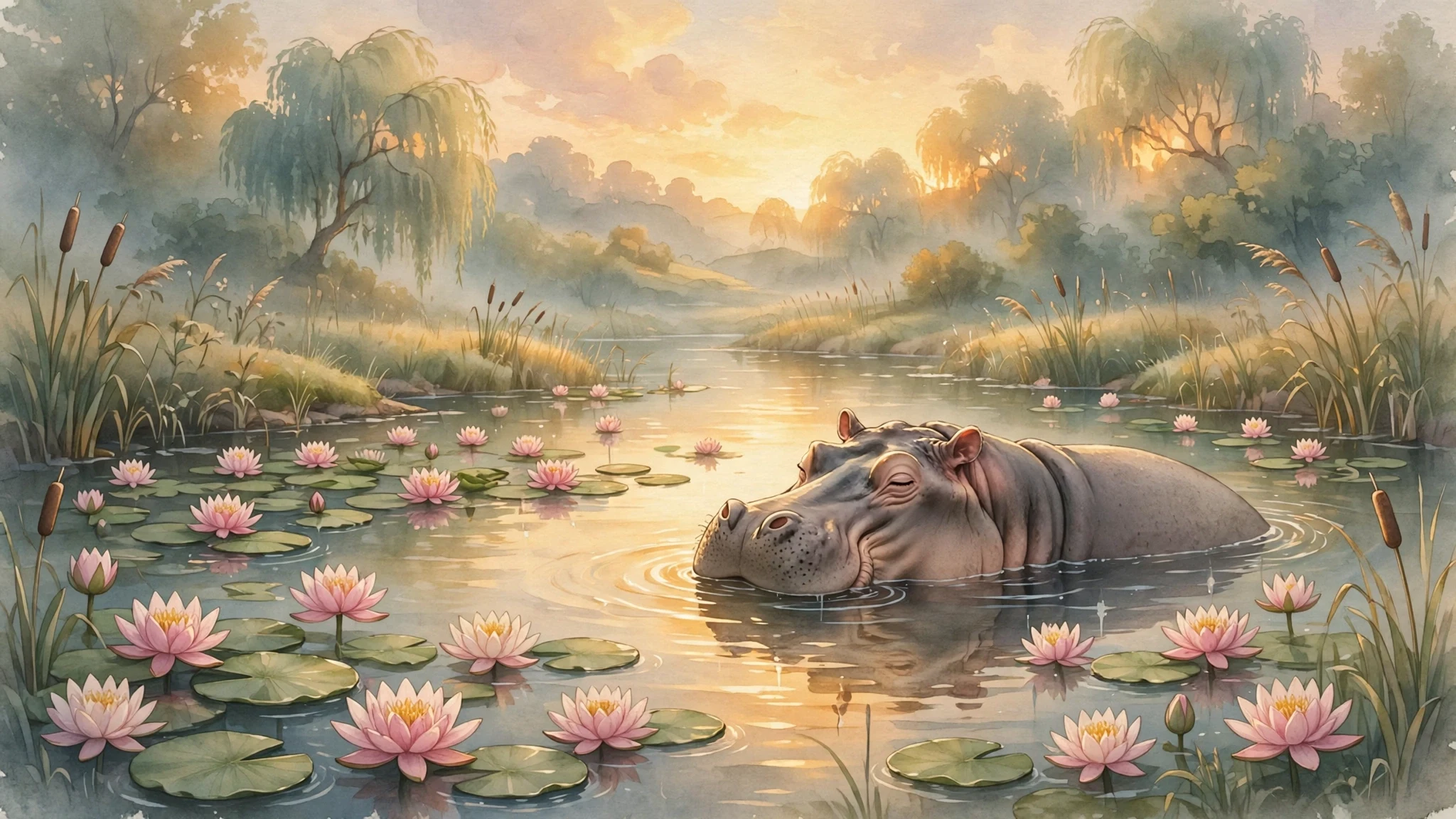
Hippopotamus dream meaning points to calm power below the surface, and the picture arrives when a strength, a temper, or a feeling is hidden underwater, calm on the surface and powerful underneath. A hippopotamus spends most of its day submerged in a river, with only its eyes, ears, and nostrils above the water, looking peaceful while holding enormous power just out of sight. The dream meanings hub holds every reading in the wider family; this page stays with the hippopotamus and with the power you have been keeping below the waterline.
A hippopotamus dream offers no forecast of what will happen. It asks you to respect both the calm and the power. Hold on to the feeling the dream gave you, because that feeling is usually the most reliable part of it. Peace in the dream often means the hidden strength is a resource you carry quietly and can trust. Unease in the dream often means a temper or a feeling has been submerged too long and is ready to surface. Either way, the dream is not warning you about the animal. It is showing you the size of what sits underneath your own calm surface.
What Lives Below the Waterline
In nature, hippos are large African mammals that spend their days in rivers and lakes, emerging at night to graze on land. They look slow and peaceful in the water, but they are among the most dangerous animals in Africa, capable of moving surprisingly fast on land and of defending their territory fiercely. That contrast is the lesson the dream is borrowing. A quiet colleague with a firm boundary, a gentle parent with a fierce protective instinct, or your own temper, kept underwater for years and ready to surface when provoked: all of them look calm from above the waterline, and all of them carry real force underneath. The dream tends to arrive when hidden power is present, and it is showing you to respect it rather than ignore it.
The hippopotamus also carries what is submerged, the feelings and truths that live below the surface of daily life. A hippo spends most of its time underwater, with only a small part visible, which makes it a natural picture for emotions that are mostly hidden: grief, anger, love, or ambition that you have kept below the surface for a long time. Consider what is submerged in your own life, and whether it needs to surface gently, in its own time, rather than bursting out when the pressure becomes too great. A feeling that surfaces slowly can be handled. One that erupts after years underwater is harder to manage, and the dream favors the slow surfacing.
Four Hippopotamus Scenes and What Each One Suggests
A hippopotamus resting in calm water points to hidden strength that is at peace. It often shows up when you are carrying a quiet power, a skill, a resolve, or a protective instinct, that does not need to show itself to be real. Trust the calm: the strength is there, underwater, and it will surface when it is needed. A strength that is quiet is not a strength that is absent, and the dream invites you to stop doubting what you cannot see. The calm water is not emptiness. It is a strength at rest, and rest is part of power.
A hippopotamus charging or opening its huge mouth points to a temper or a feeling surfacing suddenly. This scene usually appears when anger, yours or someone else's, has been held underwater too long and is breaking the surface. Do not panic. Give the feeling space and respect, and handle it calmly rather than reacting in kind. Pause, step back, breathe, and let the surge pass before responding. A hippo that charges is defending its space, and the dream is asking you to notice whose space is being defended, and whether a boundary needs to be set clearly before the next surge.
A hippopotamus with a baby points to fierce, quiet protection. You may see this one when you are defending something precious, a child, a family, a value, or a home, and the protectiveness feels both calm and absolute. The instinct is right, and it needs calm direction rather than panic. A hippo mother protects her calf by staying close and standing her ground, not by hunting for a fight. Stay close to what you love, stand your ground calmly, and let the protectiveness serve the thing you guard rather than consuming it.
A hippopotamus surfacing slowly at dusk points to a feeling rising on its own schedule. It tends to visit when something you have carried for years, a grief, a love, an ambition, is finally ready to be seen, and the dream encourages you to meet it without rushing it. Let it come up in its own time, eyes first, then the rest. A slow surfacing gives you time to get used to what is there, and the dream favors that gentle arrival over any sudden break.
The Real Hippopotamus, Briefly
Hippopotamuses are large mammals native to Africa, and males can weigh over 3,000 pounds, making them among the heaviest land animals after elephants and some rhinos. They spend their days submerged in rivers and lakes to keep cool and to protect their skin from the sun, emerging at night to graze on grasses. Despite their size, hippos can run surprisingly fast on land, and they are considered among the most dangerous animals in Africa, not because they hunt people, but because they defend their territory fiercely. They are herbivores, eating mainly grass, and they live in groups called pods. Knowing the real animal steadies the reading, because the creature in your dream is a real animal of hidden power, not a monster. A dream hippopotamus borrows a real animal to picture a real feeling, and the feeling, the quiet strength below your own surface, is the part worth listening to.
An Illustrative Example: Helen and the Quiet Temper
This example is illustrative, not a real person's story.
Helen, a 49 year old school administrator, was known as the calmest person in her office, the one who never raised her voice, never complained, and always fixed problems quietly. What nobody knew was that she had been swallowing frustration for years: a workload that kept growing, a manager who took credit for her work, and a family at home that needed her constantly. One night she dreamed of a hippopotamus resting in a river, calm on the surface, with enormous power just below the water, and she woke feeling both peaceful and unsettled. She decided to let one feeling surface gently: she told her manager, calmly and plainly, that she needed a fairer workload and proper credit for her work. The conversation was not easy, but it was respectful, and the manager listened. Within a month her workload was shared more fairly, and Helen felt lighter than she had in years. When she thought about the dream later, she realized the hippopotamus had not been a warning. It had been a picture of herself: calm on the surface, powerful underneath, and ready to let a little of that power show.
Working With a Hippopotamus Dream This Week
Start by naming what is submerged. Write down one feeling, strength, or temper that lives below the surface of your daily life, and ask whether it needs to surface gently or whether it is fine where it is. A feeling that surfaces slowly can be handled, while one that erupts after years underwater is harder to manage, and the dream favors the slow surfacing. Then pick one boundary to draw this week, say it plainly, and keep it. Boundaries drawn early seldom need defending loudly, and a calm line held is its own reward. Finally, trust a quiet strength you carry, even when you cannot see it. A strength at rest is not a strength that is absent, and the dream is nudging you to stop doubting what is underwater. A hippopotamus dream at its most useful is a calm, powerful message, turning hidden strength into respected power and submerged feelings into something that can surface gently.
Hippopotamus, Fish, Drowning and Bear: Hidden Power Pictures Compared
Set beside the fish dream meaning, the hippopotamus reads differently: a fish points to feelings below the surface in general, while a hippopotamus points to calm power that is hidden and strong. The drowning dream meaning turns toward feeling overwhelmed by emotion, a different theme entirely, and the bear dream meaning turns toward strength and boundaries on land. For comparison, the dream meanings hub gathers the whole family, so the hippopotamus sits beside the fish, the drowning picture, and the bear. The hippopotamus works as a mirror. What sits below your own waterline decides whether the picture means quiet strength or a temper about to surface.
When a feeling has been underwater too long, a second view can help. Say the dream aloud to a reader, or to a friend who listens without judgment. A reading can help you sort which submerged feeling deserves to surface and how to set a calm boundary around it. First 3 minutes FREE — every time, for every reading, with all advisors.
For one quiet next step, try a One-Card Tarot reading and listen to what one card says about hidden strength in your life right now.
Frequently Asked Questions
What does dreaming of a hippopotamus mean?
It usually points to calm power below the surface. A strength, temper, or feeling is hidden underwater, calm on top and powerful underneath, and the dream asks you to respect both the calm and the power.
Is dreaming of a hippopotamus a bad sign?
Not necessarily. It can point to a temper ready to surface, but the message is practical: let feelings surface gently, set a clear boundary early, and trust a quiet strength you carry.
What does a hippopotamus resting in water in a dream mean?
It often points to hidden strength at peace. A quiet power, skill, or protective instinct is real even when it is not visible, and the dream asks you to stop doubting what is underwater.
What does a hippopotamus charging in a dream mean?
It often points to a temper or feeling surfacing suddenly after being held down too long. Pausing, breathing, and letting the surge pass before responding usually handles it better than reacting in kind.
Are hippopotamuses dangerous?
Yes, they are considered among the most dangerous animals in Africa, not because they hunt people, but because they defend their territory fiercely and can run surprisingly fast on land despite their size.
Last updated: November 12, 2026
