
Harvest Dream Meaning: Reward, Timing and Plenty
The Harvest Is the End of a Long Story
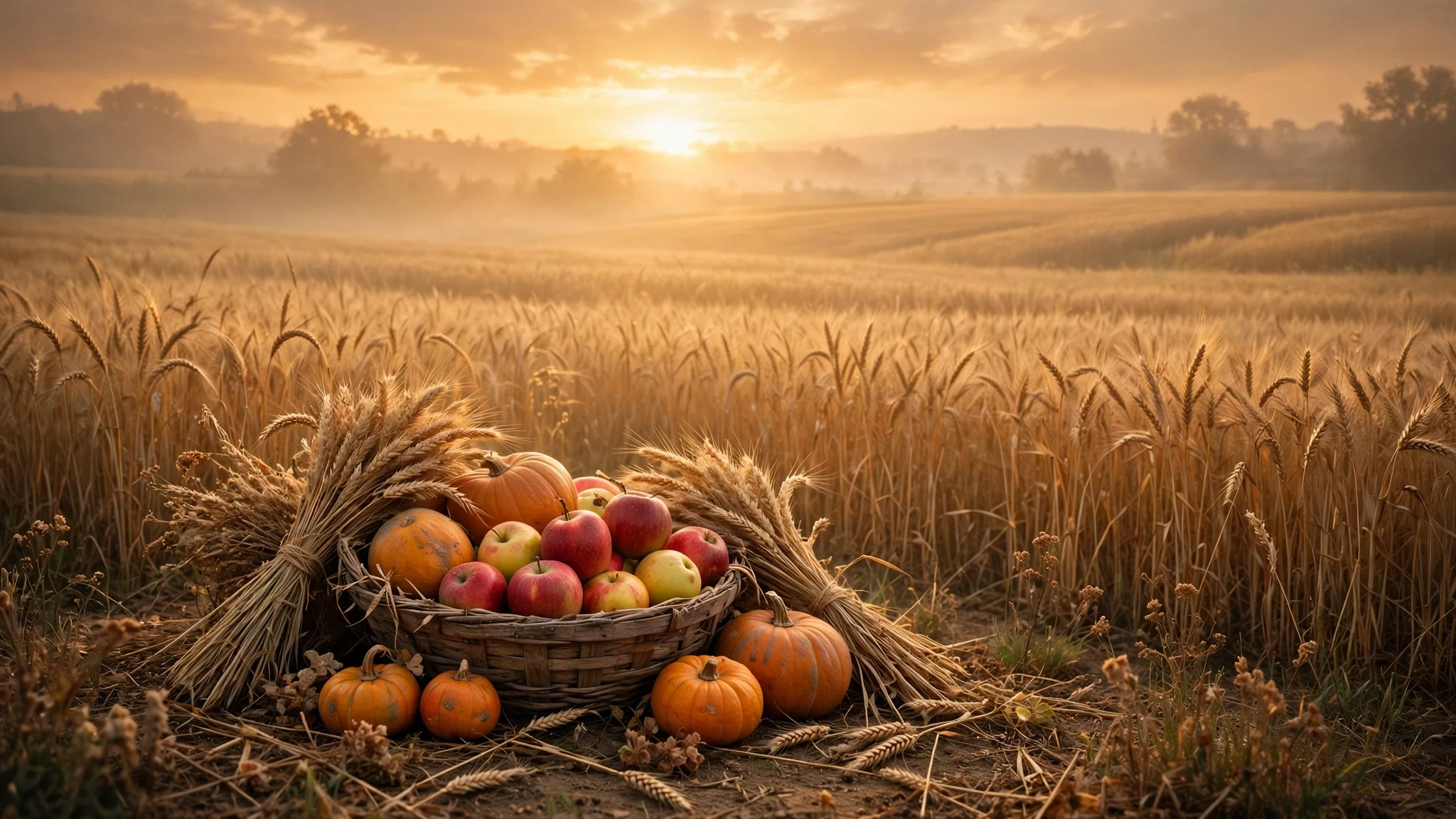
A harvest dream meaning is about the end of a process, not the start of one. A harvest only happens because something was planted in a garden or a field, tended, and waited for, and the dream usually points to that whole story: the work you put in, the time you waited, and the result you are now gathering, or hoping to gather. When you dream of a harvest, the first questions are about the crop itself. Was it ripe and plentiful, or thin and disappointing? Were you gathering it yourself, watching others do it, or arriving too late? Was it your field, or someone else's? A harvest dream tends to show up at moments of reckoning in waking life: the end of a project, the result of an exam, the outcome of a relationship, the payoff, or the lack of one, from years of effort. What follows takes the scenes one by one, starting with the harvest moon, because the sky itself has a harvest story, and it explains the timing at the heart of this dream. The wider dream meanings collection is there if you want to cross-check another symbol.
The Harvest Moon and the Timing of the Harvest
The Harvest Moon is the full moon nearest the autumn equinox, which falls around September 22 or 23 each year, and it usually appears in September, though about once every three years the October full moon is closer and takes the name instead. Its name comes from practical farming: before electric light, farmers depended on moonlight to bring in their crops before the first frost, and near the equinox the moon rises only about 20 to 30 minutes later each night, instead of the usual 50 minutes, giving several evenings of bright light soon after sunset. That detail is the heart of this dream symbol. A harvest is not only about reward. It is about timing. There is a window, and the work has to be done inside it. A harvest dream often points to a window in your own life: a chance to gather results, to ask for what you have earned, to finish something, or to make a decision before the moment passes. If your dream showed a harvest moon, or a harvest at dusk under a big moon, the timing message is even stronger. It may be pointing to a deadline, a season, or a moment that will not stay open forever. The moon in the dream is not decoration. It is a clock, and it is telling you that the time to gather is now, or soon, or that it has just passed.
A Rich Harvest: Gathering More Than You Expected
A dream of a rich harvest, baskets full of wheat, fruit, or vegetables, fields heavy with grain, a tree heavy with fruit, a table piled with food beside a bonfire, is one of the most satisfying dreams in the dictionary, and it usually points to reward. It can reflect a project that has paid off, a relationship that has grown strong, a skill that has matured, or a period of life where effort and results finally match. It can also reflect gratitude, a moment where you recognize how much you actually have, after a long time of focusing on what is missing. The way you gathered the harvest adds detail. Gathering it yourself, with your own hands, can reflect work you did and results you earned. Gathering it with others can reflect shared effort, family, teamwork, or a community that helped. Watching others gather while you stand aside can reflect a feeling of being left out of a reward, or a result that belongs to someone else. If the harvest was so plentiful that you did not know what to do with it all, the dream may be pointing to abundance that feels overwhelming, like a success that brings new responsibilities, or a good change that needs room to be stored and shared. A rich harvest dream is rarely a warning. It is usually a confirmation, and it is worth taking a moment to enjoy it, in the dream and after waking.
A Poor Harvest, or Arriving Too Late
A thin harvest, a field with little in it, or a dream where you arrive after the harvest is over and the fields are empty, carries a harder message. It can point to disappointment: effort that did not pay off as hoped, a project that fell short, a relationship that did not grow, or a chance that was missed. It can also point to a feeling of scarcity, a worry that there will not be enough, whether that is money, time, love, or opportunity. The important distinction is between a poor harvest and a late arrival. A poor harvest, where the crop itself is thin, can reflect conditions beyond your control, like a bad season, a difficult market, or a situation that was never going to yield much. That is not a personal failure, and the dream may be helping you accept that. Arriving too late, where the harvest was good but you missed it, is a different picture. It can point to a timing issue, a hesitation, a delay, or a distraction that cost you an opportunity. If the dream showed you arriving late, ask what delayed you, because the delay is the part you can change next time. If the dream showed a field that was never planted, the message is different again: the harvest was thin because nothing was sown, and the question is what you want to plant now, so that a future season has something to gather.
Harvesting Something You Did Not Plant
One specific harvest scene deserves its own attention: you are gathering a crop you did not plant, in a field that is not yours. This can be a dream about inheritance, luck, or unearned reward, and the feeling in the dream decides the reading. If the harvest felt like a gift, it may reflect gratitude for something you received without earning it: help from family, a lucky break, a mentor's guidance, or a result that came from someone else's work. If it felt uncomfortable, or if you worried about being caught, the dream may be pointing to a feeling of not deserving what you have, or to a situation where you have benefited from someone else's effort without acknowledging it. If you were harvesting in someone else's field with their permission, the dream may reflect teamwork, shared resources, or a family enterprise where the work and the reward are shared. If you were harvesting without permission, the dream may be pointing to a boundary you have crossed, or a reward you have taken that was not yours to take. The crop itself can add detail. Grain points to staple needs, money, food, security. Fruit points to pleasure, sweetness, and the results of care. Vegetables point to daily sustenance, health, and practical provision. Whatever the crop, ask whose field it was, because ownership is the heart of this version of the dream.
The Work of the Harvest: Cutting, Gathering, Storing
A harvest dream is often a working dream, full of physical detail: cutting grain, picking fruit, carrying baskets, loading a cart, storing food for winter. Those details matter, because they show which part of the process you are in. Cutting can point to decisions, to separating what is ripe from what is not, to the sharp work of ending one thing so another can begin. Picking fruit can point to choosing, to selecting what is ready and leaving the rest to ripen. Carrying baskets can point to the weight of results, to responsibility, or to the satisfaction of work done well. Storing food for winter can point to preparation, saving, and thinking ahead, and it can reflect a period of life where you are building security for a harder season. If the work in the dream felt joyful and shared, it may reflect a waking life where effort and community go together. If the work felt lonely and endless, it may reflect a burden, a task that has grown too big for one person, or a harvest that needs more hands. Notice whether the work finished. A harvest completed, with full barns and a sense of rest, can reflect a chapter closing well. A harvest left half done, with crops still in the field as the light fails, can reflect a task that needs finishing, and the urgency of doing it before the season turns.
An Illustrative Example: Nadia and the Wheat Field
This example is illustrative, not a real person's story. Nadia is 52, a care home manager who had spent four years studying part time for a management qualification while working full time, and she had just passed her final exam. In the dream, she was standing in a wheat field at dusk, under a huge low moon. The wheat was golden and heavy, bending under its own weight, and she was cutting it with a hand sickle, slowly, one armful at a time. Other people were working in the field too, but she could not see their faces. As she cut, she stacked the sheaves neatly, and when she looked back, the stacked rows stretched far behind her. She woke up tired but deeply satisfied, as if she had done a full day of honest work. When you set the dream beside her waking life, it was a picture of the four years of study. The wheat was the qualification, and the knowledge she had gathered, golden and heavy, ripe at last. The hand sickle was the slow, manual nature of the work: evenings after long shifts, weekends given over to essays, a little at a time, one armful at a time. The huge low moon was the Harvest Moon in spirit, the timing made visible: this was the season to gather, and the light was there to do it by. The other workers whose faces she could not see were the people who had helped her without her fully noticing: colleagues who covered shifts, a tutor who stayed late, her partner who cooked dinners while she studied. The stacked rows behind her were the proof of how much she had actually done, visible only when she looked back. Nadia did something simple after the dream. She printed her exam result, framed it, and put it on the wall of her office, not to show off, but to remind herself, on hard days, that she had once done a long, slow piece of work and finished it. The dream did not give her a new goal. It showed her the harvest she had already gathered, and let her feel the satisfaction of it.
Reading Your Own Harvest Dream
The fastest way to read a harvest dream is to ask four questions in order. First, what was the crop, and was it ripe, thin, or ruined? The crop is the result, and its condition is the state of that result in your waking life. Second, whose field was it, and did you plant it? Ownership tells you whether the reward is yours, shared, or borrowed. Third, what were you doing: cutting, picking, carrying, storing, or watching? The action is the part of the process you are in right now. Fourth, what was the light like, and was there time? A harvest at dusk, under a big moon, or with the light failing, points to timing, to a window that is open now. Write the four answers down and read them together as one sentence, for example: ripe wheat, my field, I was cutting it alone, at dusk. That summary usually captures a waking situation fairly, and it is detailed enough to guide your next step. If the sentence points to a rich harvest, take time to enjoy it and to thank the people who helped. If it points to a poor one, ask whether the season, the timing, or the planting is what needs to change. If it points to a harvest you missed, ask what delayed you, and what you would do differently next time. A harvest dream is a practical dream. It rewards honest answers and a clear look at what you have sown, what you have gathered, and what you still want to plant. Talking it through in a short session with a reader can help you sort the timing from the effort. First 3 minutes FREE — every time, for every reading, with all advisors.
For a simple next step, try a One-Card Tarot reading and reflect on what the card says about the season you are in and what is ready to gather now.
Frequently Asked Questions
What does it mean to dream of a harvest?
A harvest in a dream usually points to reward and results, the outcome of work you put in over time. The meaning depends on the crop: a rich harvest often reflects effort paying off, while a thin one can reflect disappointment, a bad season, or a chance that was missed.
What does the Harvest Moon mean in a dream?
The Harvest Moon is the full moon nearest the autumn equinox, and its name comes from the extra evening light it gave farmers bringing in crops. In a dream, it often points to timing, a window to gather results, finish something, or make a decision before the moment passes.
What does a poor harvest mean in a dream?
A poor harvest can point to disappointment or scarcity, but the cause matters. A thin crop can reflect conditions beyond your control, while arriving after the harvest is over can point to a timing issue or a delay. A field that was never planted points to a new question: what do you want to plant now?
What does it mean to harvest a crop you did not plant?
Harvesting someone else's crop can point to inheritance, luck, or help from others. If it felt like a gift, it may reflect gratitude, while discomfort can point to feeling you do not deserve the reward, or to a boundary crossed by taking what was not yours.
Is a harvest dream a good sign?
Often, yes, especially when the crop is ripe and plentiful. Even a poor harvest dream is useful, because it shows you clearly whether the issue is the season, the timing, or the planting, and each of those has a different and practical answer.
Last updated: November 12, 2026
