
Harp Dream Meaning: Harmony and Gentle Music
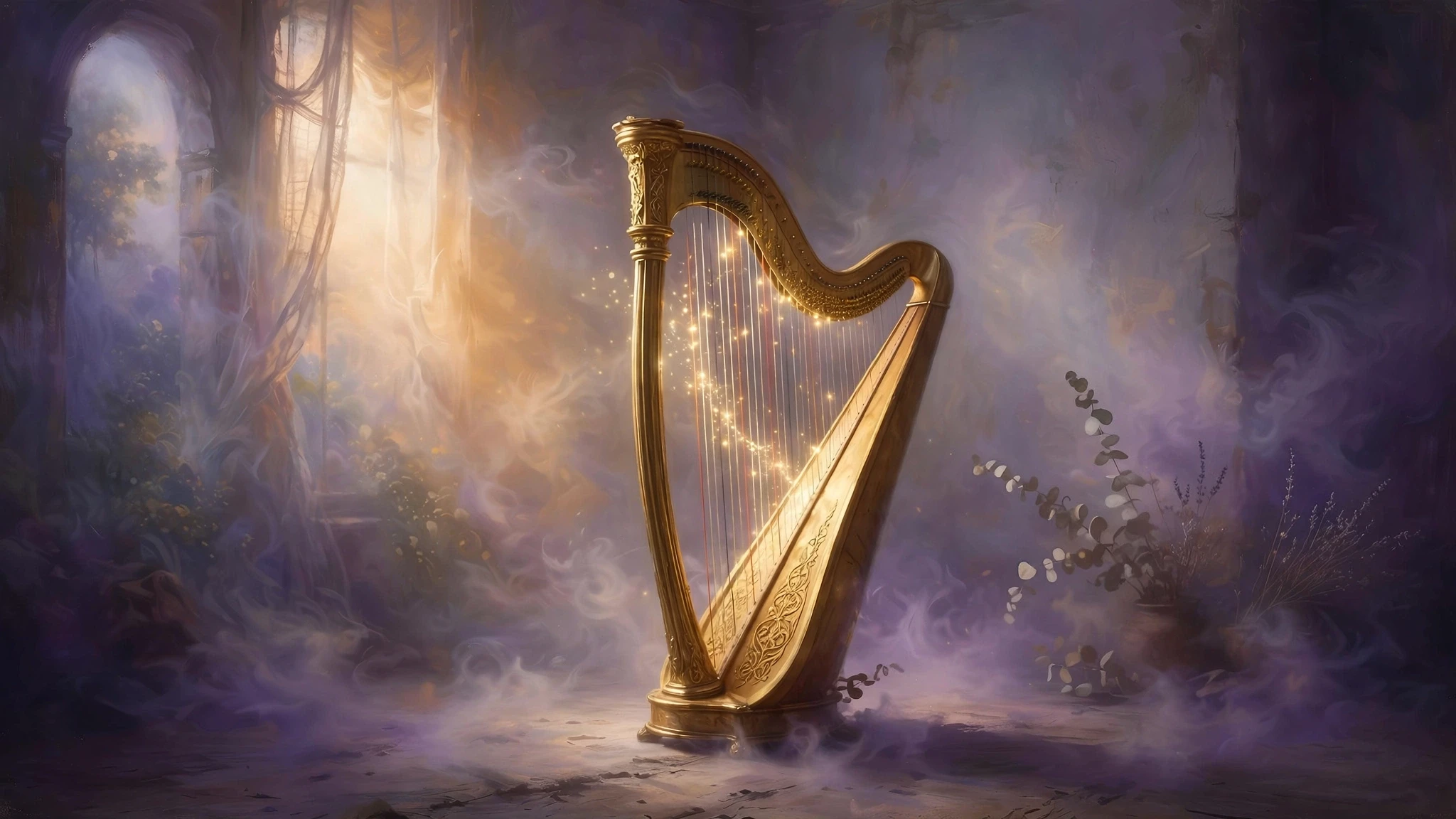
A Harp Dream Meaning Begins in Quiet Music
A harp dream meaning begins in quiet music, the kind you hear before you see the instrument. You may dream of a harp in a garden, in a concert hall, in a small room, or in a place that feels like a memory. The strings may be plucked gently, or they may be still, waiting for a hand. The feeling is often peace, beauty, and a little longing. That quiet is the heart of the symbol. A harp dream meaning often appears when you are looking for harmony, when a part of your life feels out of tune, when you need gentleness after a loud period, or when a small, beautiful thing deserves attention. It can point to peace that is not the same as silence, to beauty that does not need to shout, and to a kind of joy that is quiet enough to hear only when you slow down. When you wake from a harp dream, the first question is whether you heard music. Was it clear and sweet, or was it faint, broken, or silent? The answer tells you whether this dream is about harmony that is present, harmony that is missing, or harmony that is waiting to be played.
The real instrument behind the symbol has a long, gentle history. Harps have been known since antiquity in Asia, Africa, and Europe, dating back at least as early as 3000 BCE, with the earliest harps and lyres found in Sumer, including the Lyres of Ur from around 2500 BCE. Harps without a forepillar also appear in ancient Egyptian tomb wall paintings. A modern concert pedal harp is a complex instrument, with seven pedals that change the pitch of its strings, and as many as 47 strings. Pedals were first introduced in 1697 by Jakob Hochbrucker of Bavaria, and the double action pedal harp was presented in London in 1811 by Sebastien Erard. That long history gives the dream a sense of timelessness. A harp is not a new invention. It is an old way of making music with the fingers, one string at a time, and it has been used for celebration, for mourning, for worship, and for quiet evenings at home. A harp dream uses that history to talk about a human need that is also old: the need for harmony, for sounds that fit together, for a life that feels in tune.
Harmony, Gentleness, and Music That Does Not Shout
Harmony is the first theme of a harp dream. In music, harmony is when different notes sound together and fit. In life, harmony is when different parts fit: work and rest, giving and receiving, being with others and being alone, hope and grief. A harp dream can appear when those parts feel out of tune, when work has crowded out rest, when giving has crowded out receiving, or when a relationship feels discordant. The dream does not tell you to fix everything at once. It shows you an instrument with many strings, each one tuned separately, and it asks whether one string in your life needs tuning. That one string might be sleep, a conversation, a boundary, or a small pleasure. Tuning one string does not fix the whole harp, but it can make the next note sound better.
Gentleness is the second theme. A harp is played with the fingers, plucking strings gently, not striking them. The sound is soft, and it fades quickly. That gentleness can mirror a way of living that is soft but not weak, a way of speaking that is kind but honest, a way of caring that does not overwhelm. If you have been in a loud period, with arguments, deadlines, or noise, a harp dream may be a reminder that gentleness is still available, and that it can be a strength. Music that does not shout is the third theme. A harp does not compete with a drum or a trumpet. It plays in its own range, and people who want to hear it must listen closely. In a dream, that can mirror a part of yourself that speaks quietly, a talent, a feeling, a need, that is easy to miss if life is loud. The dream asks you to listen closely, to make a little quiet, so the soft music can be heard.
Scenario One: Hearing a Harp Played Beautifully, or Playing One Yourself
Hearing a harp played beautifully in a dream, with clear, sweet notes that fill a room or a garden, is one of the most peaceful versions of this symbol. The music may be a melody you recognize, or a tune you have never heard, and it feels like it belongs to the moment. This scenario often appears when you are experiencing harmony in waking life, or when you are longing for it. It might be a time when a relationship feels in tune, when work and rest are balanced, when a family gathering feels warm, or when a creative project is flowing. The dream may be reflecting that harmony, and it may be inviting you to notice it, to stay with it for a moment, rather than rushing to the next thing. If the music was played by someone you know, think about what that person represents in your life. If it was played by a stranger, think about what part of yourself might be playing, a part that is musical, gentle, or at peace.
Playing a harp yourself in a dream, even if you have never played one in waking life, carries a more personal feeling. Your fingers find the strings, the notes come, and you feel a sense of flow. That can mirror a skill or a talent you are developing, or a part of your life where you are learning to create harmony yourself, rather than waiting for someone else to play it for you. It might be a relationship you are tending, a home you are making peaceful, a routine you are building, or a creative practice you are returning to. If the playing felt easy, the dream may be about a confidence that is growing. If it felt hard, with wrong notes and tangled strings, the dream may be about learning, about the awkward stage before fluency. That awkward stage is normal. Every harpist starts with wrong notes. A practical response is to give yourself a short, quiet time to practice harmony in one area, like a calm morning, a kind conversation, or a few minutes of music, and to let the practice be imperfect.
Scenario Two: A Harp With Broken Strings, Out of Tune, or Silent
A harp with broken strings, out of tune, or silent in a dream carries a feeling of loss or discord. You look at the instrument, you pluck a string, and the note is wrong, or there is no note at all. This scenario often appears when a part of your life feels out of tune. It might be a relationship where communication has broken down, a job where the work no longer fits, a health routine that has slipped, or a grief that has made the world sound flat. The dream does not say the harp is ruined. It shows a string that needs tuning, or replacing, and it asks whether you can name which string it is. Is it sleep, trust, time, money, or a feeling you have not expressed? Naming the string is the first step to tuning it. A broken string can be replaced, and a harp can be tuned again, but it takes time and a careful ear.
A silent harp, one that sits in a room with no one playing it, carries a different feeling. It can suggest a talent, a joy, or a part of yourself that has gone quiet. It might be music you used to play, a friendship you used to tend, a faith you used to practice, or a hope you have not spoken about for a long time. The harp is still there, in the room, waiting. The dream may be asking whether you want to pick it up again, even for a few minutes, or whether it is time to let it rest for a while longer. Silence is not always a loss. Sometimes it is a pause, a time when the music needs to wait for the right moment. A practical step is to choose one small way to make a sound again, like humming a tune, calling a friend, or writing one sentence about how you feel. You do not need to play a whole concert. You only need to pluck one string, and to hear whether it still sounds.
Scenario Three: A Harp in a Garden, a Church, or a Place of Memory
A harp in a garden, with flowers, soft light, and the sound of water nearby, carries a feeling of beauty and peace. Gardens are places of growth and care, and a harp in one can suggest a life that is being tended gently, or a wish for a peaceful place to rest. This scenario often appears when you need a quiet place, or when you have found one. It might be a real garden, a park, a room in your home, or a moment in your day that feels like a garden. The dream may be inviting you to spend more time in that place, or to create one, even a small one, like a corner with a plant and a chair. If the harp in the garden was played by someone you love, the dream may be about shared peace, a moment of harmony with another person. If you were alone with it, the dream may be about solitude that feels good, not lonely.
A harp in a church, a temple, or a place of worship carries a feeling of reverence. Harps have been used in worship for thousands of years, and their sound is often associated with prayer, with angels, and with the sacred. In a dream, that setting can suggest a spiritual longing, a need for quiet, for meaning, or for a connection to something larger than yourself. It can also suggest a memory, a funeral, a wedding, or a service where music played an important part. A harp in a place of memory, a childhood home, a grandparent's house, a room where someone you loved used to play, can be even more personal. It may be about grief, about a person who is gone, or about a time that has passed. The dream does not tell you to hold onto the past. It gives you a picture of music that once filled a place, and it asks whether that music still lives in you, in a new form, or whether it is time to let it become a memory you carry gently.
Scenario Four: A Small Harp, a Large Harp, or a Harp You Cannot Play
A small harp, one you can hold in your lap, carries a feeling of intimacy. It is portable, personal, and close. It can suggest a small joy, a private practice, or a part of your life that is yours alone. A large harp, a concert harp with 47 strings and seven pedals, carries a feeling of grandeur and complexity. It can suggest a large project, a big dream, or a part of your life that feels complex and demanding. If the large harp felt overwhelming in the dream, with too many strings to tune, the dream may be about a situation that feels too large to manage at once. The useful response is to tune one string at a time, to break the large harp into smaller parts, and to ask for help if you need it. A harp is not meant to be tuned all at once. It is tuned string by string, and that patience is part of the music.
A harp you cannot play, one that is too large, too heavy, or locked away, carries a feeling of longing and frustration. You can see it, you want to hear it, but you cannot reach it or play it. That can mirror a talent, a joy, or a dream that feels out of reach, because of time, money, health, or fear. If you could not play the harp, ask what is blocking you. Is it a practical block, or a belief that you are not good enough to play? Sometimes the block is real, and the dream is asking you to find a smaller harp, a simpler way to make music, like singing, listening, or learning one note at a time. At times what blocks you is a belief you have carried a long while, and the dream asks you to look at it honestly. A practical step is to choose one small, musical moment this week, listening to a song you love, humming while you work, or sitting quietly for a few minutes, and to let that be enough. You do not need to play a concert harp to hear music. You only need to listen.
What a Harp Dream Does NOT Mean
A harp dream does not mean that you will hear music from heaven, that an angel is visiting you, or that a specific person is sending you a message. Harps are often associated with angels in art and in stories, and that association is meaningful to many people. A dream may mirror that belief, and feeling comforted by it is natural, but a comforting dream is not proof that a particular person visited or sent a message. The dream is better used as a prompt to notice harmony, gentleness, and beauty in your own life, rather than as a prediction about who will appear or what will happen. It also does not mean that your life must be harmonious all the time, or that discord is a failure. A harp goes out of tune, strings break, and music stops, and all of those are part of playing. The dream does not ask you to be perfectly in tune. It asks you to notice which string needs tuning, and to tend it gently. If the dream left you feeling sad because harmony feels far away, treat that feeling as a prompt to care for yourself, and to talk with a trusted person if the sadness stays.
An Illustrative Example: Clara and the Harp in the Garden
This example is illustrative, not a real person's story. Clara, a 58 year old retired teacher in Ireland, dreamed that she was sitting in a small garden, listening to a harp being played by a woman she did not know. The music was soft and clear, and Clara felt a deep peace she had not felt in months. In waking life, Clara had been grieving the death of her husband, and she had stopped listening to music, because it reminded her of him. She had also stopped going to her garden, which they had tended together. After the dream, she decided to sit in the garden for ten minutes each morning, with a cup of tea, and to listen to one piece of harp music on her phone. She did not try to feel happy, and she did not try to forget her husband. She gave herself a quiet place to hear music again, and over the next few weeks she noticed that the garden felt less empty. The harp dream did not take away her grief. It gave her a picture of quiet music in a garden, and she used that picture to make a small, gentle space for herself in a hard time.
How to Work With a Harp Dream After You Wake
After a harp dream, write down the music first. Did you hear it, was it clear or broken, or was the harp silent? Then write down where the harp was: a garden, a hall, a church, or a room of memory. The music and the room it sounded in, taken together, are the two facts the reading turns on. Let the music and the room bring forward one direct question about the string that needs tuning. Which string in my life needs tuning right now? Name it, in one word if you can, sleep, trust, time, rest, and choose one small way to tune it this week, like an earlier bedtime, a kind conversation, or a few minutes of music. If the harp was silent, choose one small sound to make, a song, a call, or a sentence about how you feel. Keep the note for a week and listen, in your memory, for whether the same music returns. A returning harp often means the harmony question is still open, not that you have failed. Playing the dream back for a friend, or for a reader who listens in silence until you have finished, can help the notes settle. A soft conversation can help you keep the string that needs tuning and let the rest, the hush of sleep, settle. Harp dreams work best as gentle prompts: listen closely, tune one string, and let the music be soft enough to hear.
Music and quiet joy sit near other gentle dreams. You can browse them all from the dream meanings hub, and the ones that harmonize best with a harp are a garden dream, where music has a place to be heard outdoors, a rainbow dream, where beauty arrives without a sound, a water dream, which moves with a rhythm of its own, and a wedding dream, where music often marks a beginning.
If you would like a quiet space to talk through what feels out of tune and what might help bring a little harmony back, a reading can help you reflect without pressure. First 3 minutes FREE — every time, for every reading, with all advisors.
For a simple next step, try a One-Card Tarot reading and reflect on what quiet music it brings to mind for today.
Frequently Asked Questions
What does dreaming of a harp mean?
Dreaming of a harp often points to harmony, gentleness, and music. It can reflect peace, beauty, quiet joy, or a part of life that feels out of tune and needs one string tuned gently.
Is a harp dream a sign from an angel?
Harps are often associated with angels in art and stories, and that belief is meaningful to many people. A dream can reflect that belief and feel comforting, but it is not proof of a visit or a message from a specific person. It is better used as a prompt to notice harmony and gentleness in your own life.
What does hearing a harp in a dream mean?
Hearing a harp played beautifully often suggests harmony that is present or longed for, such as a relationship in tune, a balance between work and rest, or a creative flow. If the music was faint or broken, it may point to a string that needs tuning.
What does a harp with broken strings mean in a dream?
A harp with broken strings often suggests a part of life that feels out of tune, such as a relationship, a routine, or a trust that needs repair. Naming which string it is, sleep, trust, time, or a feeling, is the first step to tuning it gently.
Why do I keep dreaming of harps?
A repeating harp dream often means a harmony question is still open, usually about balance, gentleness, or a quiet joy that needs attention. Try naming one string that needs tuning and choosing one small way to tend it this week. If sadness continues, talk with a trusted person about how you are feeling.
Last updated: November 12, 2026
