
Graveyard Dream Meaning: Endings and Letting Go
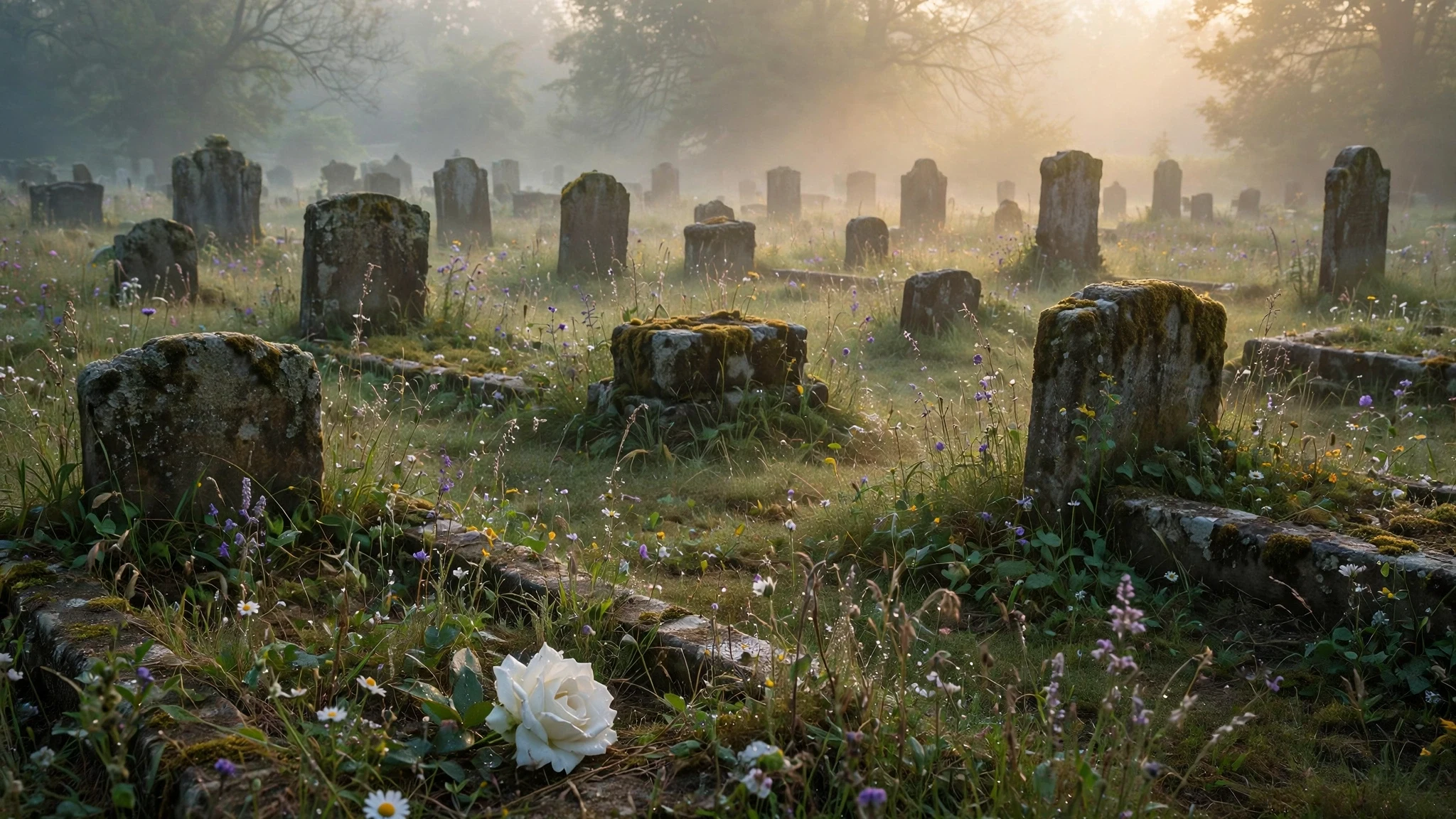
What a Graveyard Dream Meaning Usually Points To
A graveyard dream meaning usually points to something that has ended, or something you are still carrying from the past. The graveyard itself is a place where the living go to remember, so a dream set there often works the same way. It asks you to look at what is finished, what you miss, and what you have not yet put down. The feeling in the dream matters more than the stones. A quiet, sunlit graveyard often reads as peace with a loss, while a dark, confusing one often reads as grief that still needs attention. Neither reading is a prediction. A graveyard dream does not say someone will die, and it does not say the future holds a loss. It is a reflection of what your mind is already working through while you sleep, and the dream gives that work a setting your waking mind can picture.
Five Ways a Graveyard Shows Up in Dreams
The details change the reading, so start by writing down exactly what happened. In the first common version, you walk through a graveyard you do not know, reading names you cannot quite make out. That version often fits a period of general reflection, when several small endings are piling up at once and no single one stands out. In the second version, you stand at one grave you know well, perhaps a parent or grandparent, and the dream feels still and close. That version usually ties to one specific loss or one specific memory that has come back into focus. In the third version, you watch a fresh grave being dug or a burial taking place, and the mood is raw. That version often arrives soon after a real ending, such as a breakup, a job loss, or a move, when the change is still new. In the fourth version, you are lost in a graveyard at night and cannot find the gate. That version often fits feeling stuck between a past you cannot return to and a future you cannot yet see. In the fifth version, you sit peacefully among old stones in daylight, sometimes with flowers in your hand. That version often fits acceptance, a sign that a hard chapter has settled into memory rather than pain. Keep the version in mind as you read the rest of this page, because the same symbol can mean different things depending on how it arrived.
Why Graveyards Carry So Much Weight in Waking Life
Graveyards carry weight in waking life because almost every culture sets aside a place and a time to remember the dead. In Mexico, Dia de los Muertos centers on November 1 and November 2, which line up with All Saints Day and All Souls Day on the Catholic calendar. Families build offerings, visit graves, and welcome the memory of loved ones, and UNESCO added the tradition to its Representative List of the Intangible Cultural Heritage of Humanity in 2008. The point of the festival is not fear. It is company, food, color, and remembrance, and that tells you something useful about graveyard dreams. The graveyard in a dream is not always a warning. It can be a place of reunion with memory, and the dream may be doing the same work the festival does, keeping a connection alive in a new form. Dream study itself has a long history. Sigmund Freud published The Interpretation of Dreams in 1899, with the title page dated 1900, and the first edition ran to only 600 copies that took eight years to sell. His ideas are debated today, but his book made dream reading a serious subject. Much later, in September 1953, Eugene Aserinsky and Nathaniel Kleitman published their discovery of rapid eye movement sleep in the journal Science, showing that vivid dreaming lines up with a distinct stage of sleep. A graveyard dream is therefore both old and ordinary. People have dreamed of burial grounds for as long as they have buried their dead, and modern sleep science simply gave that dreaming a physical setting in the brain.
Grief, Endings and the Past
A graveyard dream most often touches grief, and grief does not only follow a death. It follows any real ending. A relationship can end, a job can end, a home can end, a version of yourself can end, and each of those losses deserves its own small mourning. The dream gives that mourning a place to stand. If the dream follows a recent bereavement, it may be your mind revisiting the loss in a safe setting, testing whether you can stand near it without being overwhelmed. If the dream follows an old loss, it may mean an anniversary, a song, a smell, or a family event has stirred the memory again. Pay attention to what you do in the dream. Do you tend a grave, clearing weeds and setting down flowers? That often fits care for a memory you want to keep well. Do you avoid the graves and hurry toward the gate? That often fits a loss you have not yet faced directly. Do you search for a name and fail to find it? That often fits a memory that has faded, or a question about the past that has no answer left. If the dream was about a specific person, reading about dreaming of a dead relative can help you sort comfort from grief. None of this is a diagnosis, and a dream cannot tell you how grief should work. If grief feels heavy most days, or sleep keeps breaking apart around the same loss, talking with a counselor or a trusted clinician is a practical step, and a dream journal can give that conversation a clear starting point.
A Graveyard Dream Beside Other Dream Symbols
A graveyard rarely appears alone, and the company it keeps changes the reading. A graveyard in rain often fits tears that have finally been allowed, while a graveyard in bright sun often fits a memory that has softened with time. A graveyard where you meet a deceased loved one often fits an unfinished conversation, something you wish you had said or asked, and the dream lets you stand in that conversation for a while. A graveyard beside a church can point to the beliefs and rituals that shaped how your family handled loss, while a graveyard beside a road can point to a loss that sits on your daily route, something you pass every day without naming. If the dream turns toward a funeral, the focus may be on ceremony and goodbye, the formal act of closing a chapter. If the dream turns toward death itself, the focus may be wider, about change and transformation rather than one person. A graveyard dream that ends with you walking out through the gate, into a street or a field, is worth noting. The exit often matters as much as the stones, because it shows the dream ending in movement rather than in staying. Dreams about baptism sit at the far end of the same theme, where water and renewal replace stone and stillness, and a graveyard dream that leads toward water may be pointing the same way, toward a fresh start after the ending.
An Illustrative Example: Daniel and the Old Churchyard
This example is illustrative, not a real person's story. Daniel, a 41 year old warehouse supervisor, dreamed three times in one month that he was standing in the churchyard where his grandfather was buried. Each time the scene was the same at first. Late afternoon light, long grass, a stone with his grandfather's name that he could read clearly. In the first dream he simply stood there, unsure what to do. In the second he found himself clearing dead leaves from the base of the stone with his hands. In the third he sat down beside it and talked out loud about a decision he had been avoiding at work, whether to apply for a manager post that would mean longer hours and less time with his two children. When he woke from the third dream he realized the graveyard was not really about his grandfather, who had died nine years earlier and whose loss he had made peace with. It was about the version of his working life that would end if he took the promotion, the steady predictable shifts he had known for a decade. He did not treat the dream as an instruction. He wrote down what he had said beside the stone, talked it over with his wife, and decided to ask his manager what the hours would really look like before choosing. The dream had given him a quiet place to say the thing out loud.
Questions to Ask After a Graveyard Dream
A dream journal entry works best when it is specific, so answer these questions the morning after, before the details fade. Whose grave was it, or was the place unknown to you? What was the light like, and what was the weather? What did you do there, and did you arrive alone or with someone? What ended in your waking life in the past few weeks, even a small ending? What would you say to the person or the past version of yourself if you could speak at that grave? Write the answers in plain sentences, not in symbols. Then read the entry again a week later. Often the meaning that felt hidden on the first morning becomes clear once a waking event catches up with it. A graveyard dream is not a message from beyond, and it is not a verdict on your life. It is a mirror held up to endings, and mirrors are most useful when you look at them twice. If you want a second view on what the dream stirred up, a conversation with a reader can help you sort the memory from the fear. More symbols that touch endings and memory are gathered in the dream meanings hub. First 3 minutes FREE — every time, for every reading, with all advisors.
For a simple next step, try a One-Card Tarot reading and reflect on which ending the card points to, and what you are ready to carry forward from it.
Frequently Asked Questions
Does dreaming of a graveyard mean someone will die?
No. A graveyard dream is not a prediction of death. It usually reflects endings, memory, or grief you are already processing, such as a breakup, a job loss, a move, or a bereavement. The feeling in the dream and what ended recently in your life matter far more than the graveyard itself.
What does it mean to dream of a grave you know well?
Standing at a familiar grave often points to one specific loss or memory that has come back into focus. It may follow an anniversary, a family event, or something that reminded you of that person. Tending the grave in the dream often fits caring for a memory you want to keep well.
Why do I keep dreaming of a graveyard after a breakup?
A breakup is a real ending, and the mind often pictures endings as burial places. Repeated graveyard dreams after a breakup usually mean the loss is still being processed, not that the relationship will return. Writing down what you do in each dream can show whether the feeling is shifting over time.
Is a peaceful graveyard dream a good sign?
A calm, sunlit graveyard dream often fits acceptance, a sense that a hard chapter has settled into memory rather than pain. It is best read as a reflection of where you stand with a loss, not as a promise about the future. If the peace feels real in waking life too, that is worth noting.
Should I talk to someone about recurring graveyard dreams?
If the dreams repeat for weeks, disturb your sleep, or follow a bereavement that still feels heavy most days, talking with a counselor or a trusted clinician is a sensible step. A dream journal gives that conversation a clear starting point. A psychic reading can offer reflection, but it is not a substitute for professional support.
Last updated: November 12, 2026
