
Dreaming About a Dragon: Meaning and Power
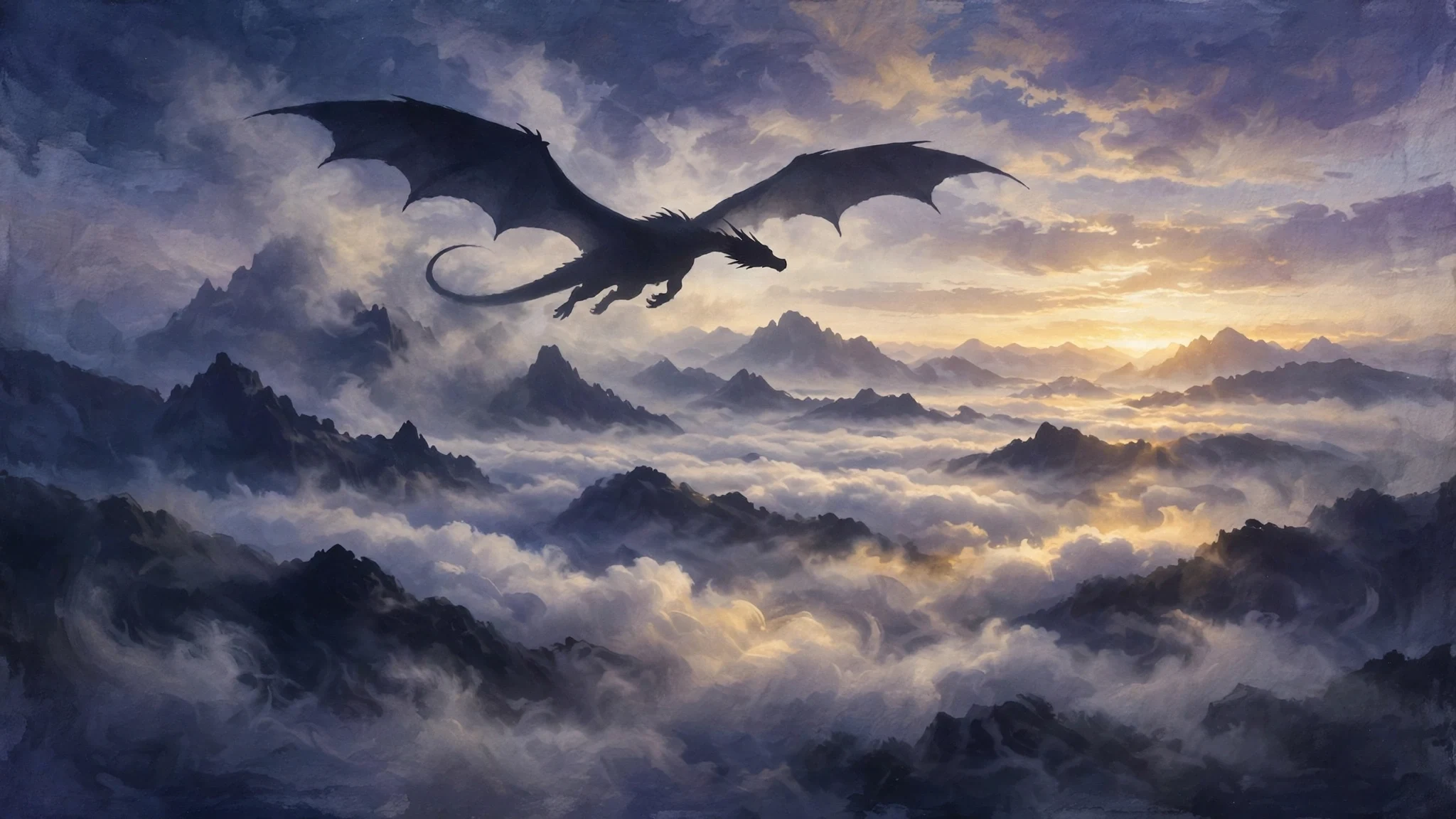
Dreaming About a Dragon: Power, Fire and the Guardian
Dreaming about a dragon is a dream about power in its largest form. The dragon is not a real animal, which is what makes it different from every other animal in this dream dictionary. It is an image made by human imagination, and it has been made in nearly every culture on earth, from the fire breathing dragons of Europe to the long, wise dragons of China. When a dragon appears in your dream, your mind has reached for the biggest available picture of power, and the dream is asking what that power means in your life.
The dragon carries two opposite meanings, and the dream usually contains one of them clearly. In European stories, the dragon is a monster that guards a treasure and must be fought. In Chinese tradition, the dragon is a wise and fortunate creature that brings rain, strength, and good luck. A dragon dream can therefore point to a fear that guards something valuable, or to a strength that is large, old, and not yet fully used. The feeling in the dream, fear or awe, tells you which one applies.
First, the real animals and stories behind the dragon, from the Komodo dragon to the dragon in Beowulf, because the facts explain why the image feels so powerful. An illustrative example follows, a dragon on a mountain, then the psychological and symbolic readings, and the variations to close: a friendly dragon, a dragon breathing fire, a dragon guarding gold.
An Illustrative Example: The Dragon on the Mountain
This example is illustrative, not a real person's story.
A woman named Sofia, 44, dreamed she was climbing a mountain path at dawn. Near the top, a large dragon lay curled around a pile of gold coins, watching her. The dragon did not attack. It spoke, in a low voice, and said the gold was not hers yet. Sofia stood on the path, feeling afraid and also strangely calm, and then she woke up.
The mountain matters, because a mountain is a climb, a goal that takes effort, and the top is a place of achievement. The dragon at the top is therefore a guardian at the summit, not a random monster on the road. The gold matters too, because gold in a dream often stands for value, whether that is money, a skill, or a sense of worth. The dragon's words matter most: the gold was not hers yet. Yet is a word about timing, not about refusal. The dragon did not say never. It said not yet.
In Sofia's waking life, she had been working toward a senior position at her company for three years, and she had been passed over twice. She had also been studying for a qualification that would make her eligible, and she was halfway through the course. The dragon was the qualification itself, or more precisely, the gap between where she was and where she wanted to be. The dream did not tell her she would never get the promotion. It showed her a guardian that said not yet, which matched the truth of her situation: the gold was real, the path was real, and the work was not finished. The calm underneath the fear was the dream's other message, which was that she was not afraid of the dragon itself, but of the waiting.
The Real Dragon: Komodo Dragons, Ancient Stories and Two Traditions
The largest real animal called a dragon is the Komodo dragon, the world's largest living lizard. It lives only on a few Indonesian islands, including Komodo, Rinca, and Flores, and adult males grow up to 3 meters long, about 10 feet, and weigh up to 150 kilograms, about 330 pounds. The largest verified specimen measured 3.13 meters and weighed 166 kilograms. Komodo dragons are apex predators with a venomous bite, and they are listed as Endangered. They are not fire breathing, and they are not magical, but they are the reason the word dragon still attaches to a real animal that is large, ancient, and powerful.
The dragon in stories is older than any single culture. In the Old English poem Beowulf, composed around the 8th century, a dragon guards a hoard of treasure in a burial mound, and the hero Beowulf fights it in the poem's final battle. That dragon, a winged, fire breathing guardian of gold, became the model for the European dragon in stories ever since. In China, the dragon, or long, is a different creature entirely: a long, serpentine being without wings, associated with water, rain, and the emperor, and regarded as a symbol of strength and good fortune. The Chinese dragon does not need to be slain. It needs to be respected.
That split, between the dragon as monster and the dragon as wise power, is the heart of the dream. The European dragon guards treasure and must be fought, which makes it an image of an obstacle. The Chinese dragon brings rain and fortune, which makes it an image of a blessing. A dragon dream can carry either meaning, and the dreamer's own culture, reading, and feeling decide which one is present. The dragon is a mirror for the dreamer's relationship with power itself.
The Psychological Reading: The Power You Fear and the Power You Own
The psychological reading of a dragon dream starts with size. The dragon is large, often the largest thing in the dream, and size in dreams often tracks the size of a feeling. A dragon can therefore stand for a feeling that is too big to ignore: anger, ambition, grief, or a fear that has grown over time. The dream asks whether the feeling is a monster to be fought or a power to be claimed, and the answer depends on what the dragon does. A dragon that attacks may stand for a feeling that feels out of control. A dragon that watches may stand for a feeling that is waiting to be acknowledged.
The psychologist Antti Revonsuo proposed that dreams rehearse threats, letting the mind practice facing dangers in safety, and the dragon is the largest threat the imagination can build, which makes it a natural rehearsal partner. REM sleep, the stage Aserinsky and Kleitman described in 1953, is when most vivid dreaming happens, and the brain's threat and emotion systems are active through it. Jung treated the dragon as an archetype, a guardian at the threshold between the known and the unknown, and a symbol of the shadow, the powerful parts of the self that are usually kept out of sight. Freud, in 1900, would have looked for a repressed wish or fear behind it, perhaps an anger the dreamer had pushed down. The practical question is the same in every version: what large feeling or power are you treating as a monster, and what would change if you treated it as a strength?
The second psychological question is about the treasure. Dragons in European stories guard gold, and the gold in a dream often stands for something valuable that is being protected, whether by you or by someone else. Is the dragon guarding your treasure from others, or guarding it from you? A dragon that guards your own gold can stand for a fear that is protecting you from a risk, such as a fear of failure that keeps you from applying for a job. A dragon that guards someone else's gold can stand for a gatekeeper in your life, a person or a system that stands between you and what you want.
The Symbolic Reading: The Guardian, the Fire and the Transformation
In symbolic traditions, the dragon is a guardian. It sits at the entrance to a cave, a mountain, or a treasure, and it decides who passes. A dream dragon can therefore stand for a threshold in your life: a qualification, a decision, a change that requires you to pass a test. The dragon is not always an enemy. Sometimes it is a gatekeeper, and the way past it is not fighting but proving yourself ready, the way Sofia's dragon said not yet rather than never.
Fire is the dragon's second symbolic layer. A dragon that breathes fire carries the symbolism of fire itself: destruction and warmth, danger and energy, anger and passion. A fire breathing dragon in a dream can point to anger, whether your own or someone else's, or to a creative energy that is powerful but not yet controlled. The fire is not good or bad on its own. It is a force, and the dream asks whether the force is burning something down or lighting something up.
The third symbolic layer is transformation. In many stories, the hero who faces the dragon is changed by the encounter, whether they slay it or befriend it. The dragon can therefore stand for a challenge that will change you, not just a problem to be solved. If a dragon appears in your dream at a moment of change, the dream may be saying that the change will be large, that it will ask something of you, and that you will not be the same person on the other side. That is a frightening message, but it is also a hopeful one, because it treats the challenge as meaningful rather than random.
Variations That Change the Meaning
A friendly dragon is a striking variation, and it usually points to a power that is on your side, whether that is a talent, a protector, or a part of yourself that you have finally befriended. Riding a dragon is the most powerful version of this dream, because it means you are directing the power rather than fearing it, and it often appears after a person has claimed a strength they used to be afraid of. A dragon that flies with you, rather than against you, is a similar image of a large energy that has become an ally.
A dragon breathing fire is a variation about intensity. If the fire is directed at you, it can point to anger, whether yours or someone else's, or to a situation that feels destructive. If the fire is directed at something else, such as a forest or a castle, it can point to a force that is clearing the way, burning away what is old so something new can grow. A dragon that breathes fire but does not harm you often reflects a power you have learned to stand near without being burned.
A dragon guarding treasure is the classic variation, and its meaning turns on the treasure and the guardian's attitude. If the dragon lets you pass, or speaks to you, the dream often reflects a challenge that can be met with patience or respect rather than force. If the dragon attacks, the dream often reflects a fear that feels immovable. A baby dragon is a gentler variation, and it often points to a power or a talent that is young and still growing, a strength you have noticed but not yet developed. A dragon in water, rather than in the sky or on a mountain, connects the dragon to feeling, and can point to a deep emotion that is large, old, and powerful.
What to Do After a Dragon Dream
Write down the dragon's size, its attitude, and what it was guarding, because those three details carry most of the meaning. Was it hostile, watchful, friendly, or speaking? Was it guarding gold, a place, a person, or nothing at all? Then ask the power question: what large feeling or strength in my life feels too big to face directly right now? Give it a name, even if the name feels too big, because naming a dragon is the first step in every story where a hero faces one.
If the dragon was frightening, look for the treasure it guards rather than only the fear it causes. The treasure is usually the point of the dream, and the dragon is the guardian of something you want. Ask what would make you ready to pass, the way Sofia's dragon said not yet: a skill, a conversation, a decision, or simply more time. If the dragon was friendly, or if you rode it, take note of the strength it stands for, and consider where in your life that strength could be used. A dragon dream is rarely a small dream, and it deserves a waking answer that is as large as the image itself.
If a dragon appeared in your dream, ask what treasure it was guarding, because the treasure usually names the thing in your life that is worth facing the dragon for. First 3 minutes FREE — every time, for every reading, with all advisors.
Facing a guarding beast, take a One-Card Tarot reading and weigh whether the treasure is worth the climb. Ask what treasure the dragon was guarding, and whether it is worth the climb.
Dragons borrow from many animals at once, so the Dream dictionary places this one near dreaming about a snake and dreaming about a lion, two older symbols of power. The elements complete the picture through dreaming about fire, dreaming about water, and dreaming about flying, each one a different way the beast moves.
Frequently Asked Questions
What does dreaming about a dragon mean?
Dreaming about a dragon usually points to great power, whether that is a fear, an ambition, a talent, or a challenge that feels large. In European stories the dragon guards treasure and must be faced, while in Chinese tradition the dragon is wise and fortunate. The feeling in your dream, fear or awe, tells you which meaning applies.
Is dreaming about a dragon a good sign?
It can be. A friendly dragon, or a dragon you ride, often points to a strength you have claimed or a power that is on your side. A hostile dragon usually points to a challenge or a fear that feels large, which is useful information rather than a bad omen. The dragon is a symbol of power, and the dream's tone depends on your relationship with that power.
What does it mean to dream about a dragon guarding treasure?
A dragon guarding treasure usually points to something valuable that is protected by a challenge, such as a goal that requires a qualification, a decision that requires courage, or a reward that requires patience. The dragon's attitude matters: a dragon that speaks or lets you pass suggests the challenge can be met, while one that attacks suggests a fear that feels immovable.
What does it mean to dream about riding a dragon?
Riding a dragon usually means you are directing a large power rather than fearing it, such as a talent, an ambition, or a strong feeling that you have learned to control. It often appears after a person has claimed a strength they used to be afraid of, and it is one of the most hopeful variations of this dream.
What does a baby dragon mean in a dream?
A baby dragon usually points to a power or talent that is young and still growing, such as a skill you have just discovered, an ambition that is forming, or a feeling that is getting stronger. Because the dragon is small, the dream often carries a gentler message, which is to tend the young power now while it is still manageable.
Last updated: November 11, 2026
