
Dreaming About a Deer: Gentle Signs
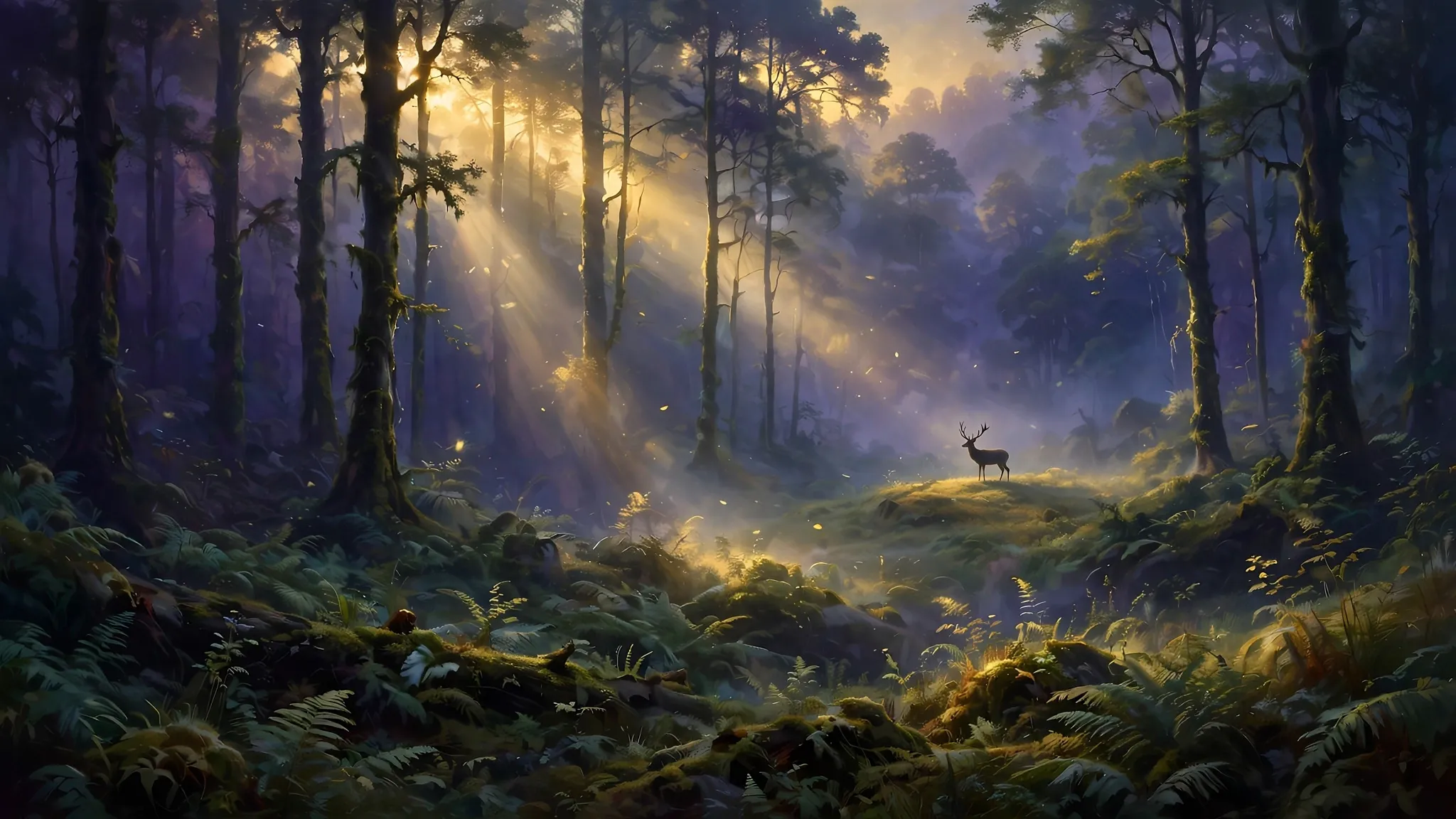
Dreaming About a Deer: Gentleness With Its Ears Up
Dreaming about a deer is a quiet dream, and that quietness is part of its message. Deer do not arrive in dreams with noise or drama. They appear at the edge of a clearing, or at the side of a road at dawn, and they look at you for a long moment before they decide whether to stay or to run. If a deer appeared while you slept last night, your inner life may be pointing toward gentleness: your own gentleness, someone else's, or a situation that needs a gentle touch rather than force. The deer also carries a second meaning that sits close beside the first, which is alertness. A deer is gentle, but it is never careless. Its ears turn, its head lifts, and it is ready to move. A deer dream often arrives when you are being asked to be both soft and watchful at the same time, to protect something tender without losing sight of what is around it. It is one entry in the dream meanings dictionary.
Deer Dream Variations and What Each One Suggests
A deer standing still and watching you is the most common version of this dream, and it is usually read as a moment of awareness. It can point to a part of your life that needs your full attention, or to a person who is watching you more closely than you realize. The stillness matters. A deer that stands still has decided, for the moment, that you are not a threat, and the dream often carries a feeling of calm trust. A fawn, a young deer with white spots, points to innocence, new life, or a tender beginning. Fawns are born in late spring and early summer, and they spend their first weeks lying still in tall grass while their mother feeds nearby, which is why the dream often carries a feeling of fragility mixed with hope. A fawn in a dream can point to a child, a new project, or a part of yourself that is young and needs shelter. The other young animal is dreaming about a rabbit.
A stag, a male deer with antlers, changes the tone. It points to strength that is quiet rather than loud, to dignity, and to a masculine presence in your life, whether that is a father, a partner, a mentor, or your own inner strength. Antlers are grown and shed each year, which gives the stag a natural link to cycles, seasons, and renewal. A stag with large antlers can point to pride or authority, while a stag that has lost its antlers can point to a loss of status or a season of rest. A deer running away from you can point to an opportunity or a feeling that is slipping past, or to a part of yourself that is hard to approach. A deer running toward you is rarer, and it can point to a gentle arrival, a message, or a new beginning coming closer. A deer in a road is a variation many people report, and it often points to a decision about direction, a crossing point, or a danger that needs to be seen in time. A deer drinking at a stream points to refreshment, emotion, and a need for rest. A dead deer is a sad variation, and it can point to a gentleness that has been hurt, a hope that did not survive, or a tender part of life that needs mourning.
A herd of deer points to community, family, or a group you belong to. The herd moves together, watches together, and runs together, and the dream can point to safety in numbers or to a feeling of belonging. A single deer apart from the herd points to independence, loneliness, or a decision to stand alone. A deer that speaks, or a deer that leads you somewhere, belongs to the storybook side of the dream, and it often points to guidance, intuition, or a message delivered gently because a loud message would frighten you away.
A Psychological Reading: Sensitivity, Intuition, and the Nervous System
From a psychological point of view, the deer is an image of sensitivity. The year 1900 brought Freud's The Interpretation of Dreams, which argued that dreams let buried wishes surface in disguised form while we sleep. A deer fits that idea because gentleness and fear are two feelings people often push aside: they tell themselves to be tougher, and then a deer appears at night to remind them that softness is still there. Carl Jung read dream animals as figures from the unconscious, and the deer can stand for the intuitive, feeling part of the self, the part that senses danger or opportunity before the thinking mind catches up. Brain science gives this a physical footing. In 1953, Eugene Aserinsky and Nathaniel Kleitman identified rapid eye movement sleep, the stage where the most vivid dreaming happens, and dreams in that stage often revisit the feelings of the last few days, including moments when you felt exposed, tender, or watchful.
The real deer explains why the symbol feels so true. White-tailed deer, the most common deer in North America, shed their antlers each winter and grow a new set each spring, a cycle that takes only a few months and produces antlers that can weigh several pounds. A deer's hearing is sharp, its sense of smell is strong, and it can run at speeds of around 30 miles per hour in short bursts when it needs to escape. None of this needs to be taught to the dreaming mind. It borrows the deer's body to describe your own state: gentle, alert, ready to move, and capable of growing something new after a season of loss. If you have recently felt both tender and watchful at the same time, the deer is the most honest animal your mind could have chosen.
A Spiritual Reading: Grace, the Forest, and the Messenger
In spiritual traditions, the deer is often treated as a messenger of gentleness and grace. In Celtic tradition, the deer was linked to the forest and to the otherworld, and a white deer in particular was treated as a sign from the spirit world, a guide that appears at the edge of ordinary life and leads the seeker toward something sacred. In some Native American traditions, the deer is honored as a provider and a teacher of gentleness, and deer medicine is understood as the power to be kind without being weak. In Buddhist tradition, the deer is linked to the Buddha's first teaching, which was given in a deer park at Sarnath, and the deer has become a symbol of peace, compassion, and the first turning of the wheel of teaching. In Christian art, the deer has long stood for the soul longing for God, drawing on the psalm that compares the soul's thirst to a deer panting for water.
A spiritual reading of your deer dream starts by asking what kind of gentleness is being asked of you. A deer standing still and watching you can be read as a call to be present, to stop rushing and to notice what is in front of you. A fawn can be read as a new beginning that needs protection, a tender part of your life that deserves shelter rather than speed. A stag can be read as a call to quiet strength, to lead without force, or to honor a masculine presence in your life. A deer that leads you through a forest can be read as guidance, a sign that intuition is showing you the way even when the path is not clear. Nothing here is a forecast. Think of each reading as a frame to try on, and notice which one fits the feeling you woke with. If the gentleness frame feels true, the dream may be asking for soften. If the alertness frame feels true, it may be urging you to stay watchful.
What Changes the Meaning of a Deer Dream
The age of the deer is the first modifier. A fawn points to newness, innocence, and vulnerability. An adult deer points to maturity, grace, and a gentleness that has survived. A stag points to strength, dignity, and cycles of renewal. The color is the second modifier. A brown deer, the most common, points to the ordinary and the grounded. A white deer is rarer and more symbolic, and it often points to a spiritual message, a guide, or a rare opportunity. A black deer can point to a hidden fear, a secret, or a part of life moving in the dark. Your feeling is the third modifier, and it should be trusted above the others. Calm points to a welcome gentleness. Fear points to a threat to something tender. Wonder points to a message or a presence you have not yet understood. Sadness points to a gentleness that has been hurt.
The deer's action is the fourth modifier. Standing still points to awareness and trust. Running points to escape, opportunity, or fear. Grazing points to nourishment and a quiet, steady life. Drinking points to emotion and refreshment. Looking at you points to a message or a presence that wants your attention. The setting is the fifth modifier. In dreaming about a forest, a deer points to the unknown and to instinct. In dreaming about a garden, a deer points to growth and home life. A deer on a road points to a decision about direction. A deer in a house points to private life and family. A deer at dawn or dusk, the edges of the day, points to a time of transition, a moment when one season is ending and another is beginning.
A Worked Example: Reading One Deer Dream Step by Step
Take one dream from the many readers describe. A woman in her early sixties, who has just retired after forty years as a school secretary, dreams that she is walking in a forest at dawn. A fawn steps out from behind a tree, looks at her, and then lies down in the grass nearby. She wakes up feeling peaceful, almost tearful. Take it step by step, in this order. Step one is the plain facts, set out without any meaning: a forest, dawn, a fawn, a tree, a look, a lying down, peace mixed with tears. Next, put the dream next to the facts of your life. She has retired, her days are suddenly empty, and she has been wondering who she is without her job. Third, test the age. A fawn points to newness, which fits a new chapter of life that is young and tender.
Fourth, test the time. Dawn is a beginning, which fits retirement as a new morning rather than an ending. Then read the dream twice, once each way. On the psychological side, the dream reads as her mind offering her a new identity that is gentle rather than busy: the fawn lies down, it does not run, and she feels peace. Spiritually, the fawn at dawn reads as a blessing on the new chapter, a sign that tenderness is a strength in this season, not a weakness. Last, test what would change the meaning. If the fawn had been chased by a hunter, the dream would point to a threat to the new beginning. For the fox, see dreaming about a fox. If the deer had been a stag, the reading would lean toward strength and authority rather than tenderness. The exercise shows how a quiet dream can hold a whole life change, and the person who dreamed it decides the fit.
If the Deer Dream Keeps Coming Back
A deer dream that returns again and again usually concerns gentleness that is still being learned, or a tender thing that still needs protection. When the repeated dream feels calm, let it do its work. A deer coming back repeatedly can be a soft encouragement, a sign that gentleness is the right approach to whatever you are facing. Take one small step toward softness this week, such as speaking more kindly to yourself, making time for rest, or having a gentle conversation you have been putting off. Deer do not rush. They move quietly, they pause, and they notice. That pace suits the work of this dream.
If the returning dream scares you, the work is different. A deer that is always running, always hunted, or always hurt points to a tenderness that feels unsafe. Ask what is threatening the gentle part of your life, and whether the threat is real or assumed. Sometimes the threat is a person, a deadline, or a habit of harsh self-talk. When you name it aloud, write it down, or tell a friend, the dream often shifts within a few nights. If the dream involves a fawn or a nest, the question is about protection. A new, tender part of your life needs shelter, and the dream is asking you to protect it with time. A deer dream seldom means danger. It is a reminder, softly given, that gentleness is a strength, and that the things worth protecting are often the quietest ones in the room.
If this dream has you wondering how to be gentle without being unprotected, a reading can help you find the balance. First 3 minutes FREE — every time, for every reading, with all advisors.
If you want one small next step, pull a One-Card Tarot reading and see what the card says about the gentle path your deer dream keeps showing you.
Frequently Asked Questions
What does dreaming about a deer mean?
It usually points to gentleness, intuition, grace, or alertness, and the feeling in the dream decides which one leads. A deer standing still and watching you suggests awareness and trust, while a fawn points to a tender new beginning. The deer's age, color, and action add the finer detail.
What does a white deer mean in a dream?
A white deer is often read as a spiritual message, a guide, or a rare opportunity. In Celtic tradition, a white deer was treated as a sign from the spirit world, appearing at the edge of ordinary life. It usually points to something sacred, unusual, or worth following with care.
What does dreaming about a fawn mean?
A fawn usually points to innocence, new life, or a tender beginning, such as a child, a new project, or a part of yourself that is young and needs shelter. Fawns are born in late spring and spend their first weeks lying still in tall grass, which is why the dream often carries tenderness mixed with a wish to protect.
What does a stag mean in a dream?
A stag usually points to quiet strength, dignity, and cycles of renewal, since deer shed their antlers each winter and grow a new set each spring. It can stand for a masculine presence in your life, such as a father, partner, or mentor, or for your own inner strength expressed without force.
Why do I keep dreaming about deer?
A repeated deer dream usually means a lesson about gentleness or alertness is still unfolding in waking life. Watching what shifts between versions, the deer's age, its action, and your feeling, often shows how the lesson is moving. A calm repeated deer is usually encouragement, while a frightened one points to a tenderness that feels unsafe.
Last updated: November 11, 2026
