
Dreaming About a Crow: Omen or Message
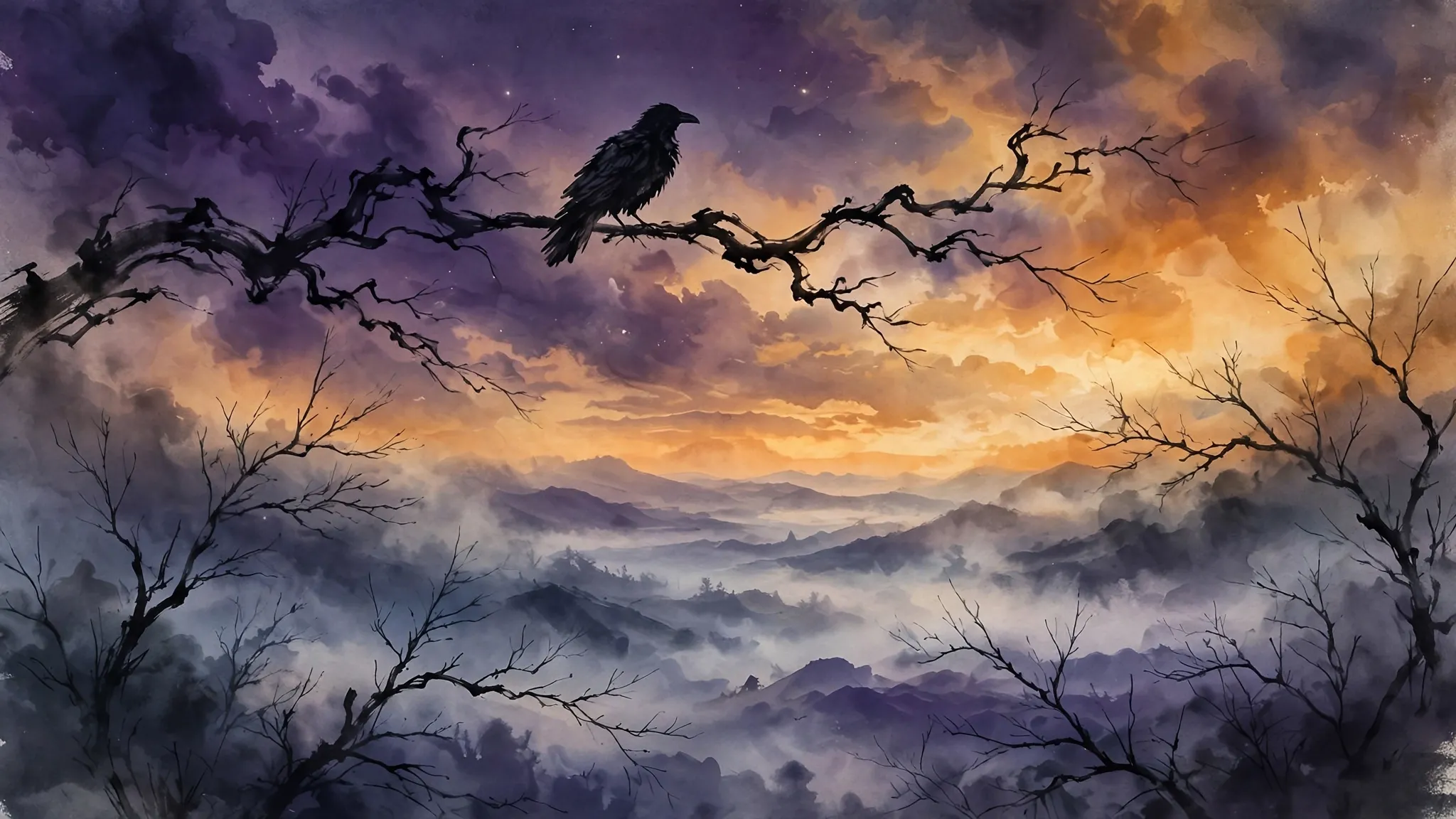
Dreaming About a Crow: The Bird That Remembers You
Dreaming about a crow is a dream that tends to stay with you, and there is a good reason for that. In waking life, crows remember people. In dreams, they seem to remember you too. A crow in a dream rarely feels like background. It watches, it calls, it follows, and it leaves you with the feeling that a message has arrived even if you cannot yet read it. The crow has carried a mixed reputation for centuries: a sign of dreaming about death in some stories, a clever helper in others, a thief in some tales and a prophet in others. That mixed record is honest, because the crow itself is mixed. dreaming about a bird is one of the most intelligent on Earth, and it is also a scavenger, a loudmouth, and a bird that thrives in the places people leave behind. If a crow appeared in your dream last night, the useful question is not whether it was good or bad. It is what the crow was doing, and how you felt while it did it. The wider dream meanings dictionary holds the rest. For the wider question of what dreams mean, see what your dreams mean.
Crow Dream Variations and What Each One Suggests
A single crow watching you is the most common version of this dream, and it is usually read as a message or a warning. The crow is paying attention to you, and the dream is asking you to pay attention to something in return. It may be a detail you have missed, a person whose behavior has changed, or a decision that needs a second look. A crow calling loudly points to a message that is trying to get through, often something you have been ignoring. The call can feel urgent or annoying, and that feeling is part of the reading: an urgent call points to something timely, while an annoying call can point to a truth you do not want to hear.
A group of crows, called a murder, changes the scale. A murder of crows in a dream can point to a community, a family matter, or a group of people watching a situation together. It can also point to gossip, to many voices at once, or to a feeling of being judged. If the crows are flying together in a clear pattern, the dream can point to a group moving with purpose. If they are scattered and noisy, it can point to confusion or conflict in a group. A crow flying toward you can feel like a message arriving, while a crow flying away can feel like a message leaving, or an opportunity passing. A crow landing on your shoulder or your hand is a personal variation, and it suggests that a message, a responsibility, or a clever idea has come close to you.
A crow that talks to you is a variation people report more often than you might expect, and it is usually the dream giving a voice to your own intelligence. Listen to the words. They are often blunt, practical, and hard to argue with. A white crow is rare in waking life and rare in dreams, and it often points to something unusual, a message that breaks the pattern, or a truth that is the opposite of what you expected. A dead crow can point to the end of a worry, the end of a bad habit, or a message that arrived too late. A crow stealing something shiny points to a small loss, a distraction, or a part of yourself that is drawn to bright, new things at the cost of what matters. A crow building a nest points to home, preparation, and the patient work of building a life.
A Psychological Reading: Intelligence, Memory, and the Unspoken
From a psychological point of view, the crow is an image of intelligence and memory. Freud's book The Interpretation of Dreams came out in 1900, and in it he argued that dreams dress up wishes we have pushed out of sight while awake. A crow fits that idea because the feelings it carries, suspicion, cleverness, grief, are often the ones people push aside. Carl Jung read the crow as a shadow figure, a part of the self that is dark, clever, and hard to control, and he treated such figures as teachers rather than enemies. There is a laboratory fact behind this too. Rapid eye movement sleep was named by Eugene Aserinsky and Nathaniel Kleitman in 1953, and it is the stage that carries our most vivid dreams, which often replay the emotions of recent days, including moments when you felt watched, judged, or clever.
The real crow gives the symbol its weight. In 2006, researchers at the University of Washington, led by biologist John Marzluff, began a study in which they wore rubber masks while trapping and banding crows on campus. The crows learned to recognize the dangerous mask, scolded anyone wearing it, and kept doing so for years, even passing the warning to crows that had never been trapped. The study showed that crows can recognize individual human faces, remember them for years, and teach other crows what they know. Crows also use tools, solve puzzles, and remember where they have hidden food. Your dreaming mind knows all of this even if you have never read the study. It borrows the crow's reputation to describe your own mind: watchful, clever, and unwilling to forget.
A Spiritual Reading: Messenger, Omen, and the Space Between Worlds
In spiritual traditions, the crow is often treated as a messenger between worlds. In Celtic tradition, the crow was linked to the Morrigan, a goddess of war and fate, and a crow on a battlefield was read as a sign of what was to come. In Norse myth, the god Odin kept two ravens, close cousins of the crow, named Huginn and Muninn, thought and memory, who flew across the world each day and returned to whisper what they had seen. In some Native American traditions, the crow is a trickster and a creator, a bird that brings light, fire, or knowledge to people through cleverness. In Japanese folklore, the crow is a messenger of the gods, and a three-legged crow was said to live in the sun. In Christian folk tradition, the crow has sometimes been read as a sign of death or ill fortune, while in other stories it is the bird that fed the prophet Elijah in the desert. See also dreaming about an owl.
A spiritual reading of your crow dream starts by asking what message might be arriving. A crow that calls three times can be read as a message that needs attention, since three is a number that appears in many traditions as a sign of completeness. A crow that follows you can be read as a guide, or as a presence that is staying close because you need it. A crow that drops a feather can be read as a gift, a small sign that protection or encouragement is present. A crow near a grave or a place of loss can be read as a connection with someone who has died, a visit rather than a warning. No part of this predicts what will happen. The readings are mirrors to hold up, and the one worth keeping is the one that rings true. If the messenger frame feels true, the dream may be urging you to listen. If the omen frame feels frightening, set it aside, because fear is rarely the message a dream is trying to deliver.
What Changes the Meaning of a Crow Dream
The number of crows is the first modifier, and it matters more for crows than for most dream animals. One crow is a single message or a single watcher. Two crows can point to a pair, a partnership, or a choice between two paths. Three crows can point to a message with weight, since three appears so often in folklore as a number of significance. A large group, a murder, points to a community, a family, or a crowd of opinions. The crow's action is the second modifier. Watching points to attention. Calling points to a message trying to get through. Flying toward you points to an arrival. Flying away points to a departure. Stealing points to a small loss or a distraction. Building a nest points to home and preparation.
Your feeling is the third modifier, and it counts for more than the rest. Curiosity points to a message worth hearing. Fear points to a worry or a warning that feels threatening. Calm points to a message that is welcome. Annoyance points to a truth you do not want to hear. The place where the crow appears is the fourth modifier in this reading. A crow in a graveyard or near a place of loss points to grief, memory, or a connection with the dead. A crow in a city points to cleverness in public life, work, or survival. A crow in a garden points to a message about home or growth. A crow at dawn can point to a beginning, while a crow at dusk can point to an ending. The color is the fifth modifier. A black crow is the classic image, and it points to mystery, the unknown, or the shadow. A white crow is rare and points to something unusual or unexpected.
A Worked Example: Reading One Crow Dream Step by Step
Start with a real dream a reader wrote down. A woman in her late forties, who works as a nurse, dreams that she is walking home from a night shift. A crow follows her from tree to tree, calling three times each time she passes. She is not afraid, only curious, and she wakes up wondering what the crow wanted. Here is a slow way through one such dream. Start with a bare list of what happened in the dream: a walk home, a night shift, a crow following, tree to tree, three calls each time, curiosity without fear. Second, bring the dream into contact with waking life. Her mother died six months earlier, and she has been thinking about her every day on the walk home. Third, test the number. Three calls, repeated, can be read as a message with weight, or as the three parts of grief: the loss, the missing, and the remembering.
Fourth, test the setting. A walk home after a night shift is a time of transition, between work and rest, between the world and the house. Now hold the two readings next to each other. Through a psychological lens, the dream looks like her mind giving a voice to grief: the crow follows her the way the memory follows her, and it calls because the feeling has not yet been fully spoken. Spiritually, the crow following her home reads as a visit, a sign that her mother is near, or a message that she is not walking alone. Sixth, try changing one detail and see what shifts. If the crow had attacked her, the dream would point to a conflict or a fear. If there had been a murder of crows, the reading would lean toward a family matter or a crowd of opinions. The point is how much a few minutes of sleep can hold, and how the dreamer's own story settles which reading fits.
If the Crow Dream Keeps Coming Back
A crow dream that keeps showing up usually has to do with a message that has not yet been heard. The crow returns because the thing it points to is still waiting for your attention. If the repeated dream is calm, the task is simple: listen. Sit quietly for a few minutes and ask yourself what you have been avoiding, what detail you have missed, or what person you have been meaning to call. The answer is often small and practical, and acting on it usually ends the repetition within a few nights. When the repeated dream frightens you, the task changes. A frightening crow dream often points to a fear that has been given too much power by being avoided. Say the fear out loud, write it down, or tell a friend, and it often shrinks back to its real size.
If the dream involves a crow near a place of loss, give it extra gentleness. The crow may be carrying grief, and grief deserves time. If the dream involves a talking crow, write down what it said, even if the words seem strange. The words are often the most direct part of the dream, and they are worth reading twice. If the dream involves a murder of crows, the question may be about a group: a family, a workplace, or a circle of friends. Ask whether the group is supporting you or judging you, and whether you need to speak up or step back. A crow dream is rarely a sign of trouble. It is a reminder that you are being watched, that you are being remembered, and that a message, once heard, is easier to carry than a message left unheard.
If this dream has you wondering what message the crow is carrying, a reading can help you hear it clearly. First 3 minutes FREE — every time, for every reading, with all advisors.
A good next move is a One-Card Tarot reading: let the card speak to the message your crow dream keeps bringing.
Frequently Asked Questions
What does dreaming about a crow mean?
It usually points to a message, a warning, or a clever solution, and the crow's action decides the finer meaning. A crow watching you suggests something needs your attention, while a crow calling loudly suggests a message trying to get through. Your feeling in the dream is the strongest clue to which reading fits.
Is dreaming about a crow a bad omen?
Not necessarily. In some traditions the crow is linked to death or ill fortune, but in others it is a messenger, a helper, or a clever guide. A frightening feeling in the dream points to a worry worth facing, while a calm or curious feeling points to a message worth hearing. The dream is best read as a prompt, not a prediction of harm.
What does a murder of crows mean in a dream?
A group of crows, called a murder, often points to a community, a family matter, or many voices at once. It can suggest gossip, a feeling of being judged, or a group moving with purpose. If the crows fly together in a clear pattern, the dream leans toward purpose; if they are scattered and noisy, it leans toward confusion.
What does it mean if a crow talks to you in a dream?
A talking crow is usually the dream giving a voice to your own intelligence, and the words are often blunt and practical. Write down what it said, since the words are often the most direct part of the dream. It can point to a truth you already know but have not said out loud.
Why do I keep dreaming about crows?
A repeated crow dream usually means a message has not yet been heard in waking life. The crow returns because the thing it points to is still waiting for your attention. Comparing the versions side by side, the number of crows, their action, and your feeling, often shows what the message is and what would answer it.
Last updated: November 11, 2026
