
Dreaming About a Cemetery: Meaning Explained
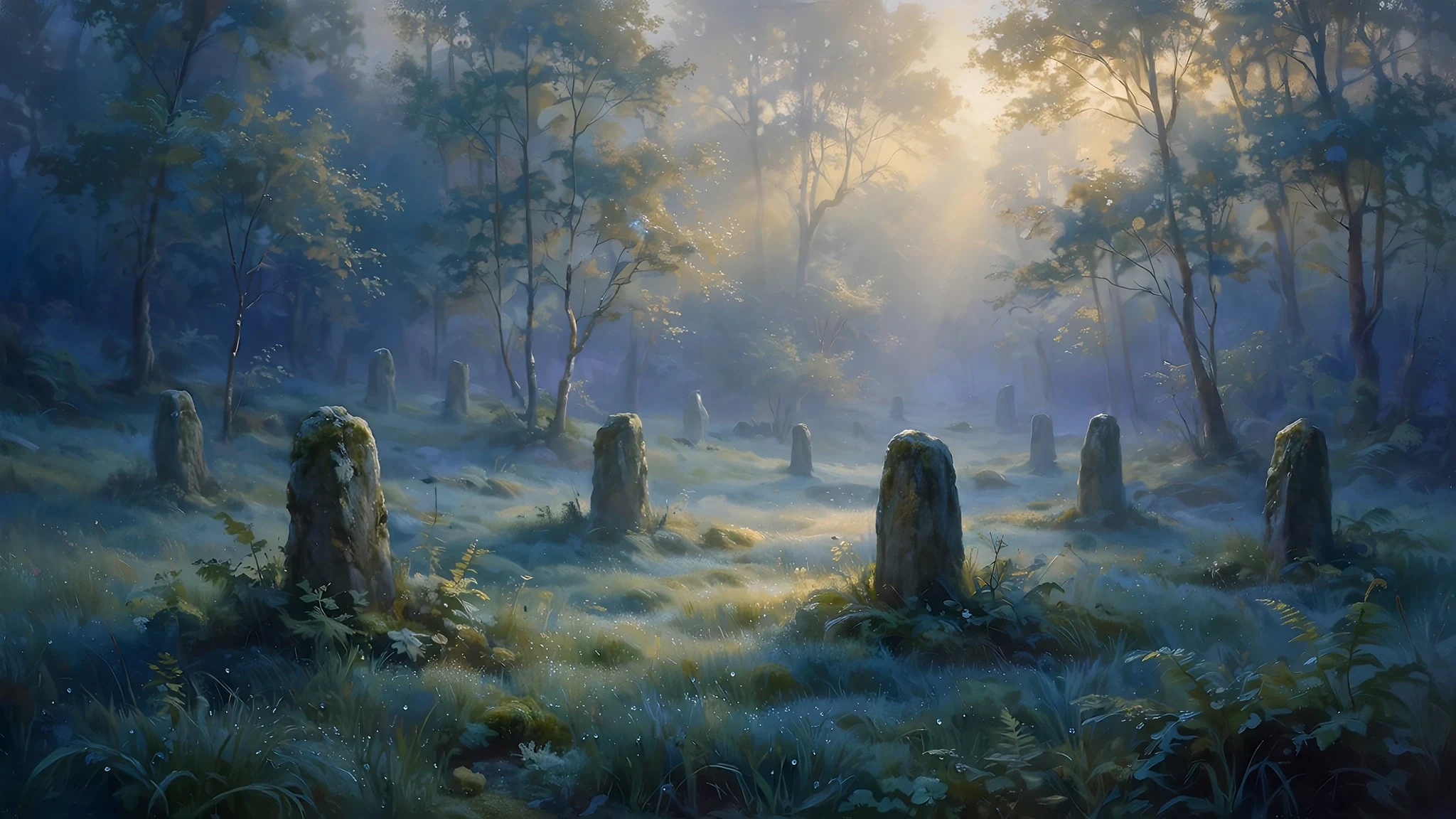
Dreaming About a Cemetery: Endings, Memory and the Past
Dreaming about a cemetery is a dream about what has ended, and about what remains after it ends. A cemetery is a place where endings are marked with stone, where names and dates are carved so they will not be forgotten, and where the living go to visit the dead. People who dream about cemeteries usually remember the feeling of the place more than any single event: quiet, still, sometimes frightening, sometimes peaceful. That feeling is the first clue to the meaning, because a cemetery dream that feels peaceful is a different dream from one that feels frightening.
The second clue is what you were doing there. Were you visiting a specific grave, walking through the grounds, lost among the stones, or attending a burial? Each of those is a different dream, and this page separates them. The third clue is whose grave it was, if there was one: your own, a family member's, a stranger's, or an empty plot. A cemetery dream is rarely about death in the literal sense. It is usually about an ending in your life, a grief that needs attention, or a part of your past that you have not yet laid to rest.
The history of cemeteries comes first, because how we bury our dead shapes how we dream about them. An illustrative example follows, a visit to a grandmother's grave, and then the psychological reading, the symbolic reading, and the variations: a cemetery at night, a grave with your own name on it, a burial in progress.
An Illustrative Example: The Grave with Fresh Flowers
This example is illustrative, not a real person's story.
A man named Samuel, 38, dreamed he was walking through a cemetery he recognized from his childhood, a small churchyard with old stones leaning at angles. He stopped at his grandmother's grave, and someone had left fresh flowers there, white lilies, even though his grandmother had died eleven years earlier. He stood there for a long time, feeling calm, and then he woke up.
The details are quiet, and the quiet is the point. The cemetery is familiar, not strange, which suggests the dream is about a known grief rather than a new fear. The stones are leaning, which is an image of time passing and of things settling. The fresh flowers matter most, because they show that someone has been tending the grave, even after eleven years, which means the memory is still being cared for. And the calm feeling matters more than anything, because it tells Samuel that the grief in the dream is not an emergency. It is a visit.
In Samuel's waking life, he had recently found a box of his grandmother's letters while cleaning out a closet, and he had spent an evening reading them. He had also been thinking about selling the house where he grew up, which would mean leaving the town where the churchyard stood. The dream was not warning him about death. It was showing him that the connection to his grandmother was still tended, like the flowers, and that selling the house would not erase it. The calm in the dream was the answer to a worry he had not named: that letting go of the place would mean letting go of the person.
The Real Cemetery: How We Learned to Bury Our Dead in Gardens
For most of history, people in Europe were buried in churchyards, small crowded plots around a church, where graves were reused and stones were simple. That changed in the early 1800s, when cities grew crowded and churchyards overflowed. In 1804, the Pere Lachaise cemetery opened in Paris, designed as a landscaped garden with paths, trees, and monuments, and it became the model for the modern cemetery. Families could buy a plot, build a monument, and visit in a place designed for quiet reflection rather than for the practical disposal of the dead.
In the United States, the change came with the rural cemetery movement. Mount Auburn Cemetery opened near Boston in 1831 as a landscaped garden, and Arlington National Cemetery was established in 1864, during the Civil War, on land that had belonged to the family of Robert E. Lee. Arlington now holds the graves of hundreds of thousands of service members, and it has become a national place of memory. The shift from churchyard to garden cemetery matters for the dream, because it changed the cemetery from a crowded and practical place into a place designed for visiting, remembering, and walking slowly.
Cemeteries also carry a practical fact that shapes the dream: they are among the quietest places in a city. They are designed for stillness, and that stillness is part of their meaning. A cemetery dream often arrives when life has become noisy, and the dreaming mind reaches for the quietest place it knows. The dream may be less about death than about the need for a quiet place to think, to grieve, or to remember without interruption.
The Psychological Reading: Grief, Endings and Unfinished Business
The psychological reading of a cemetery dream starts with grief, but grief in the broad sense, not only grief for a person who died. Grief also follows the end of a relationship, a job, a home, a version of yourself, or a plan that did not work out. A cemetery dream often appears when an ending has happened but has not been fully acknowledged. The dream gives the ending a place, with stones and names, which is what a funeral does in waking life: it marks the ending so that the living can begin to move past it.
Sleep does real work on grief. During the night the brain revisits emotional memories, and REM sleep, the vivid dreaming stage identified by Aserinsky and Kleitman in 1953, is especially involved in that processing, which is why dreams about the dead can feel so emotionally real. The logical parts of the brain are quieter during REM, so the dream shows the feeling without the usual daytime defenses. Freud, in 1900, read such dreams as wishes, a wish to see someone again or to say what was left unsaid, while Jung read the dead in dreams as parts of the self left behind, or as ancestors whose influence still shapes the dreamer's life. The two readings disagree about the mechanism, but they agree that the dream is doing work, and that the work is about an ending that needs marking.
The most useful psychological question after a cemetery dream is about the ending it points to. What has ended in your life recently, or what is ending now, that you have not yet marked? The dream may be asking for a small ritual of acknowledgment: a letter, a conversation, a visit, or simply an hour of quiet to name what is gone. Grief that is named and marked tends to move. Grief that is avoided tends to return, often in dreams, until it is given a place.
The Symbolic Reading: The Threshold, the Stone and the Visit
In symbolic traditions, the cemetery is a threshold place, a boundary between the living and the dead, between the past and the present. A dream set in a cemetery often means you are standing on a threshold yourself: between one phase of life and the next, between holding on and letting go, between remembering and moving on. The dream does not tell you which side to choose. It shows you the threshold, and it asks you to notice that you are standing on it.
The gravestone is a second symbolic layer. A stone is a marker that lasts, and a name carved in stone is a way of saying this person mattered and will not be forgotten. A dream about a gravestone can point to a memory that has become permanent in your life, a lesson, a loss, or a person whose influence will not fade. A gravestone with your own name on it is a specific and often frightening variation, but it is rarely about literal death. It usually points to a part of yourself that has ended, an old identity, a habit, a role, and the dream is marking that ending so a new part can begin.
The visit is the third symbolic layer, and it is the gentlest one. A cemetery is a place you go to visit, not a place you live. A dream about visiting a grave can mean that a memory needs a visit, not a residence. You can go, stand for a while, leave flowers, and then walk back out through the gates. The dream may be telling you that grief and memory have a proper place, and that the place is a visit, not a home.
Variations That Change the Meaning
Being lost in a cemetery is a common variation, and it usually points to feeling lost among endings or memories, unsure which grief is yours and which belongs to the past. The reading leans toward confusion rather than fear: too many endings at once, or an ending whose meaning is still unclear. Walking calmly through a cemetery, by contrast, is often a peaceful dream, and it can reflect a grief that has settled, or a relationship with the past that has become comfortable rather than painful.
A cemetery at night is a different dream from a cemetery in daylight. Night adds fear and the unknown, and it often points to an ending you have not faced in daylight, a grief you avoid thinking about, or a fear of death itself. A cemetery in daylight, with sun and trees, is often a dream about memory and reflection, and it can be a surprisingly warm dream. A burial in progress points to an ending that is happening now, and the dream often reflects the feeling of watching something being laid to rest, whether that is a relationship, a job, or a hope.
Finding your own grave is the variation that frightens people most, and it deserves a calm reading. In dream tradition, seeing your own grave usually points to a part of yourself that has ended or needs to end, such as an old habit, an old identity, or a role you have outgrown. It is not a prediction about your health or your life. An empty grave can point to a loss that has no clear marker, such as a relationship that faded without a goodbye, or a grief that was never given a funeral. And a cemetery that is overgrown and neglected can point to memories that have not been tended, or to a part of your past that needs attention before it is overgrown entirely.
What to Do After a Cemetery Dream
Start by writing down the feeling, because the feeling is the best guide to the meaning. A peaceful cemetery dream usually points to a grief that has settled or a memory that is being tended. A frightening one usually points to an ending that has not been faced yet. Then write down whose grave it was, if there was one, and what has ended in your life that connects to that person or that place. The connection is often clearer on paper than it is in the dark.
If the dream was peaceful, consider a small act of tending: a visit to a grave, a look through old photographs, a letter to someone you have lost, or a quiet hour to remember. If the dream was frightening, consider what ending you have been avoiding, and whether a small ritual of acknowledgment would help: naming the ending, telling a friend, or writing it down. If cemetery dreams repeat for weeks, or if they come with grief that feels too heavy to carry alone, talking with a counselor or a grief support group can help. Grief is a normal part of life, and it does not always need to be carried alone.
If you dreamed of a cemetery, notice whether the feeling was peace or fear, because that feeling usually names whether the ending in your life has been marked or is still waiting to be faced. First 3 minutes FREE — every time, for every reading, with all advisors.
At the edge of an ending, draw a One-Card Tarot reading and ask the card what peace looks like on the other side. Notice whether the feeling was peace or fear, and what ending it points to.
Grief rarely arrives as one image, so the Dream dictionary gathers this ground with dreaming about a funeral and dreaming about death, the two dreams people report most beside it. The person behind the feeling is often dreaming about a deceased loved one, while dreaming about a ghost and dreaming about a church hold the questions that follow.
Frequently Asked Questions
What does dreaming about a cemetery mean?
Dreaming about a cemetery usually points to an ending, a grief, or a part of your past that needs attention, rather than to literal death. The feeling of the dream is the main clue: a peaceful cemetery often reflects a grief that has settled, while a frightening one often points to an ending that has not been faced yet.
Is dreaming about a cemetery a bad sign?
Not necessarily. Many cemetery dreams are peaceful, and they often reflect memory, reflection, or a grief that is being tended. A frightening cemetery dream is usually a sign that an ending or a loss needs attention in waking life, not a prediction that something bad will happen.
What does it mean to dream about visiting a grave?
Visiting a grave in a dream usually points to a memory that needs a visit, such as a person you have lost, a past phase of your life, or a relationship that ended. The dream often reflects the need to acknowledge the memory and then return to the present, the way a visit to a cemetery ends with walking back out through the gates.
What does it mean to dream about your own grave?
Dreaming about your own grave usually points to a part of yourself that has ended or needs to end, such as an old habit, an old identity, or a role you have outgrown. It is not a prediction about your health or your life. The dream is marking an ending so that a new part of your life can begin.
Why do I keep dreaming about cemeteries?
Recurring cemetery dreams usually mean there is an ending or a grief that has not been fully acknowledged, and the dream keeps returning while it stays unmarked. When the ending is named, through a conversation, a letter, a visit, or a small ritual, the dreams often change or fade.
Last updated: November 11, 2026
