
Apron Dream Meaning: Care, Work and Home
The Garment That Does the Invisible Work
Apron dream meaning points to care, work, and home, and the picture arrives when service, cooking, or looking after others is on your mind, or when the balance between caring for others and caring for yourself needs attention. An apron is a garment worn to protect clothes while working, most often while cooking, cleaning, or serving, and that image is the whole point: a person who serves, who feeds, who keeps a home running, often without much thanks. The dream meanings hub brings the wider family of dream readings together; this page stays with the apron and with the caring work you may have stopped counting.
An apron dream cannot say what will happen next. It asks you to value the work you do when nobody is watching. The feeling is the part of the dream that is actually about you, so let it lead the reading. Warmth in the dream often means the service you give is glad and meaningful. Heaviness in the dream often means the caring has become a burden, and the carer, you, is not being cared for too. Either way, the dream is not telling you to stop caring. It is asking you to look at who is looking after the person in the apron.
Service, Protection, and the Work of Home
For centuries, aprons have been worn by cooks, cleaners, craftspeople, and servers, people whose work is practical, hands on, and often invisible. An apron protects the clothes underneath, which makes it a natural picture for the way caring work protects a household: the cooking that feeds a family, the cleaning that keeps a home safe, and the service that holds daily life together. The dream tends to arrive when you are doing a great deal of that invisible work, and it is showing you that the work matters, even if nobody says so, and that it deserves to be noticed, by others and by yourself. In many cultures, an apron is also a symbol of hospitality and home, the garment a host puts on to welcome guests and feed them well. A chef's apron is traditionally white, a sign of cleanliness and professionalism in the kitchen, while a home apron is often colorful or patterned, a sign of the personal care that goes into family cooking.
The apron also carries a role, and the question of whether the role fits. A person who wears an apron in a dream may be living in a role, the cook, the carer, the helper, that was chosen long ago and has never been questioned. Consider whether the role still fits, whether it was chosen freely, and whether it leaves room for the person underneath the apron. A role that fits is a comfort. One that no longer fits is a weight, and the dream favors an honest look at which one you are wearing, and whether it is time to loosen the strings or to take the apron off for a while and rest.
Four Apron Scenes and What Each One Suggests
Wearing an apron while cooking points to nourishment and care given gladly. It often shows up when you are feeding others, literally or figuratively, through cooking, teaching, or emotional support, and the work feels meaningful. Notice the giving and let yourself feel proud of it, because service given gladly is a gift, not a burden. A meal cooked with care feeds more than the body, and the dream invites you to see the value in what you do, even when the thanks are quiet or absent. A cook who is proud of the meal cooks better, and a carer who values their own work cares better.
An apron that is dirty, torn, or stained points to caring work that has become exhausting or thankless. This scene usually appears when you have been giving for a long time without rest, recognition, or help, and the apron shows the wear. Ask for help, take a real break, or set a boundary around the caring: one evening off, one task shared, or one honest conversation about the load. An apron can be washed, mended, or replaced, and the dream is asking you to do the same for yourself, to clean the weariness away with rest, and to remember that a carer who is cared for gives better care.
Taking off an apron points to a role ending or a rest beginning. You may see this one when a phase of intensive caring is completing, a child growing up, a parent recovering, or a job changing, and the dream shows you putting the apron aside. Allow the rest without guilt, and ask what you would like to do with the time and energy that the role used to take. A role ended cleanly frees you to choose the next one, while a role clung to out of habit becomes a costume. The dream favors the clean ending, and the freedom that follows it.
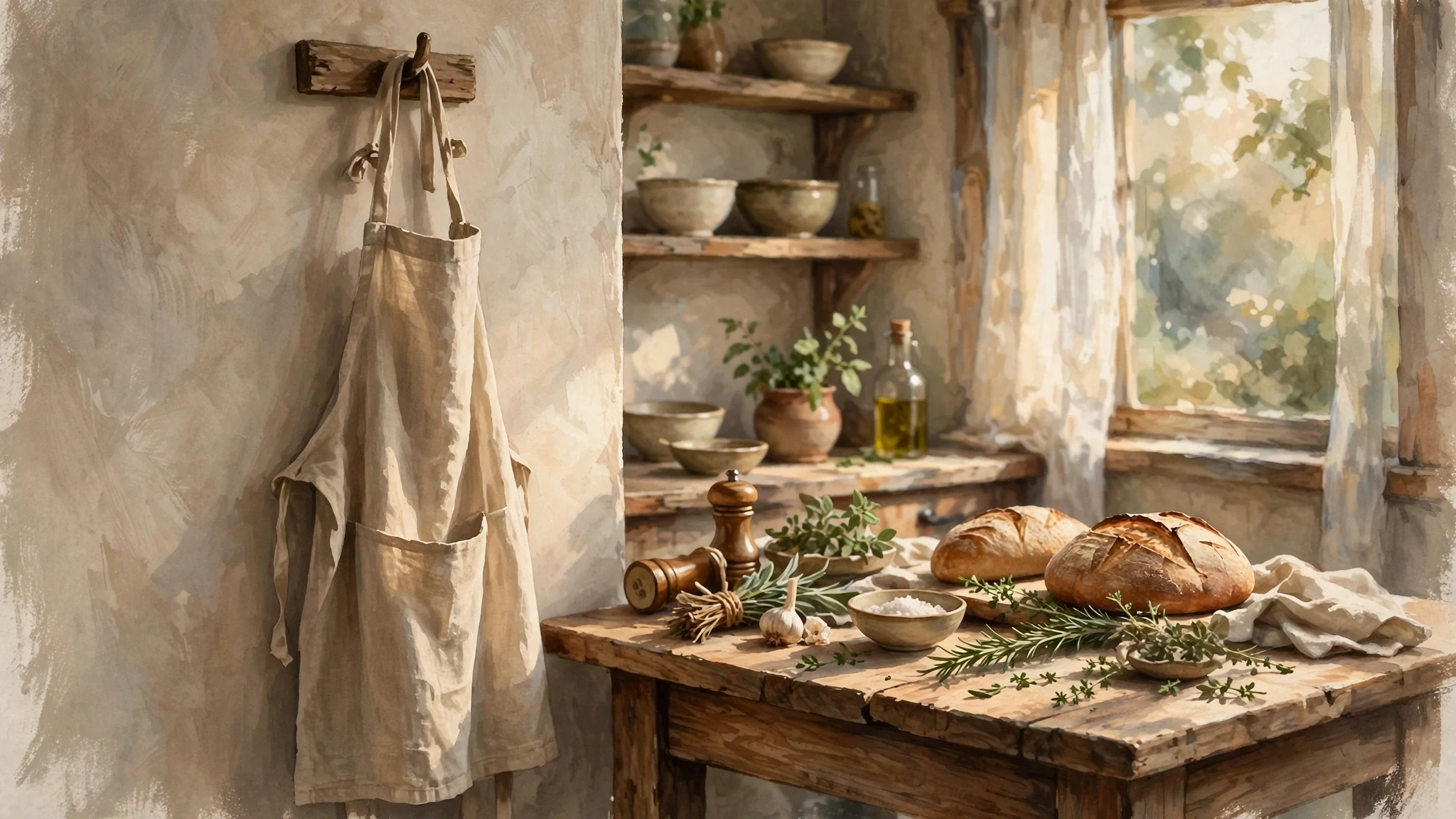
An apron hanging empty on a hook points to care that is waiting for its next purpose. It tends to visit when the caring is done for now and you have not yet decided what comes next. The dream invites you to let the apron hang and to enjoy the pause, rather than filling it with a new role before you have rested. An empty hook is not an empty life. It is a life with room in it.
An Illustrative Example: Sylvia and the Sunday Roast
This example is illustrative, not a real person's story.
Sylvia, a 58 year old retired cook, had cooked Sunday roast for her family for thirty years, and the ritual was the center of her week: the shopping, the chopping, the smell filling the house, and the table full of children and grandchildren. After she retired, her children began offering to cook instead, and Sylvia felt a pang she could not name, as if a part of herself were being taken away. One night she dreamed of her apron hanging on a hook, clean and still, and she woke feeling both sad and strangely free. She decided to teach her eldest granddaughter the roast, step by step, passing the recipe on rather than holding it alone. Within weeks the granddaughter was cooking beside her, and Sylvia found a new joy in teaching rather than doing. When she thought about the dream later, she realized the apron had not been taken from her. It had been shared, and the sharing had made the tradition stronger, not weaker.
Working With an Apron Dream This Week
Start by naming the caring work. Write down one thing you do for others that is invisible, cooking, cleaning, listening, or organizing, and ask whether it feels glad or heavy. A service given gladly is a gift, while one given from exhaustion is a burden, and the dream encourages you to tell the difference honestly. Then ask for one thing this week: help with a task, an evening off, or a simple thank you. A carer who asks for help is not failing. They are keeping the caring sustainable. Finally, notice whether the role still fits. A role chosen freely is a comfort, while one worn out of habit is a weight, and the dream favors loosening the strings when the fit has changed. An apron dream at its most useful is a warm, honest message, turning invisible care into something worth valuing and a tired carer into someone who deserves rest.
When the Apron Is a Uniform, Not a Choice
Some aprons are chosen and some are issued. A work apron, handed out with a uniform, marks a job: the cook, the server, the craftsperson, the cleaner. A home apron is picked from a drawer and tied on by choice. The dream knows the difference, and it asks you to know it too. If the apron in your dream felt like a uniform, the question is about the job itself: is the work valued, is the pay fair, is the load shared, or are you wearing a role the workplace gave you without ever asking whether it fits? If the apron felt like your own, chosen and comfortable, the question is about the home: is the caring shared fairly, or has one person quietly become the household? Either way, the apron is doing two jobs at once. It protects the clothes underneath, and it tells everyone in the room what your job is. The dream is asking you to check both jobs, and to decide whether the person underneath the apron is being protected as well as the clothes are.
Apron, Child, Baby and Birth: Home Pictures Compared
Set beside the child dream meaning, the apron reads differently: a child points to growth and the inner child, while an apron points to care, work, and home. The baby dream meaning turns toward new life and dependence, a different theme entirely, and the birth dream meaning turns toward beginnings and creation. The dream meanings hub keeps the home readings together, so the apron can be compared with the child, the baby, and the birth picture. The apron is a mirror, not a verdict. The same garment can mean glad service or heavy duty, and the feeling you woke with decides which one you are wearing.
When the caring feels heavy, a second view can help. When the caring feels heavy, talk the dream through with a reader, or with a friend who knows what invisible work costs. A reading can help you sort which caring work is worth valuing and how to rest well. First 3 minutes FREE — every time, for every reading, with all advisors.
If a warm next step would help, ask a One-Card Tarot reading what a single card says about care and home in your life right now.
Frequently Asked Questions
What does dreaming of an apron mean?
It usually points to care, work, and home. Service, cooking, or looking after others is on your mind, and the dream asks whether the caring feels glad or heavy, and whether the carer is being cared for too.
Is dreaming of an apron a good sign?
It is generally a warm sign for service and home. It shows work that matters, even when it is invisible, and it favors valuing that work and resting well so the caring stays sustainable.
What does wearing an apron while cooking in a dream mean?
It often points to nourishment and care given gladly. Noticing the value in what you do, even when thanks are quiet, usually makes the service feel lighter and more meaningful.
What does a dirty or torn apron in a dream mean?
It often points to caring work that has become exhausting or thankless. Asking for help, taking a real break, or setting a boundary around the caring usually restores the balance.
What does taking off an apron in a dream mean?
It often points to a role ending or a rest beginning. Allowing the rest without guilt, and asking what you would like to do with the freed time, usually opens the next chapter cleanly.
Last updated: November 12, 2026
