
What Is Receiving Gifts: Love in Small Tokens
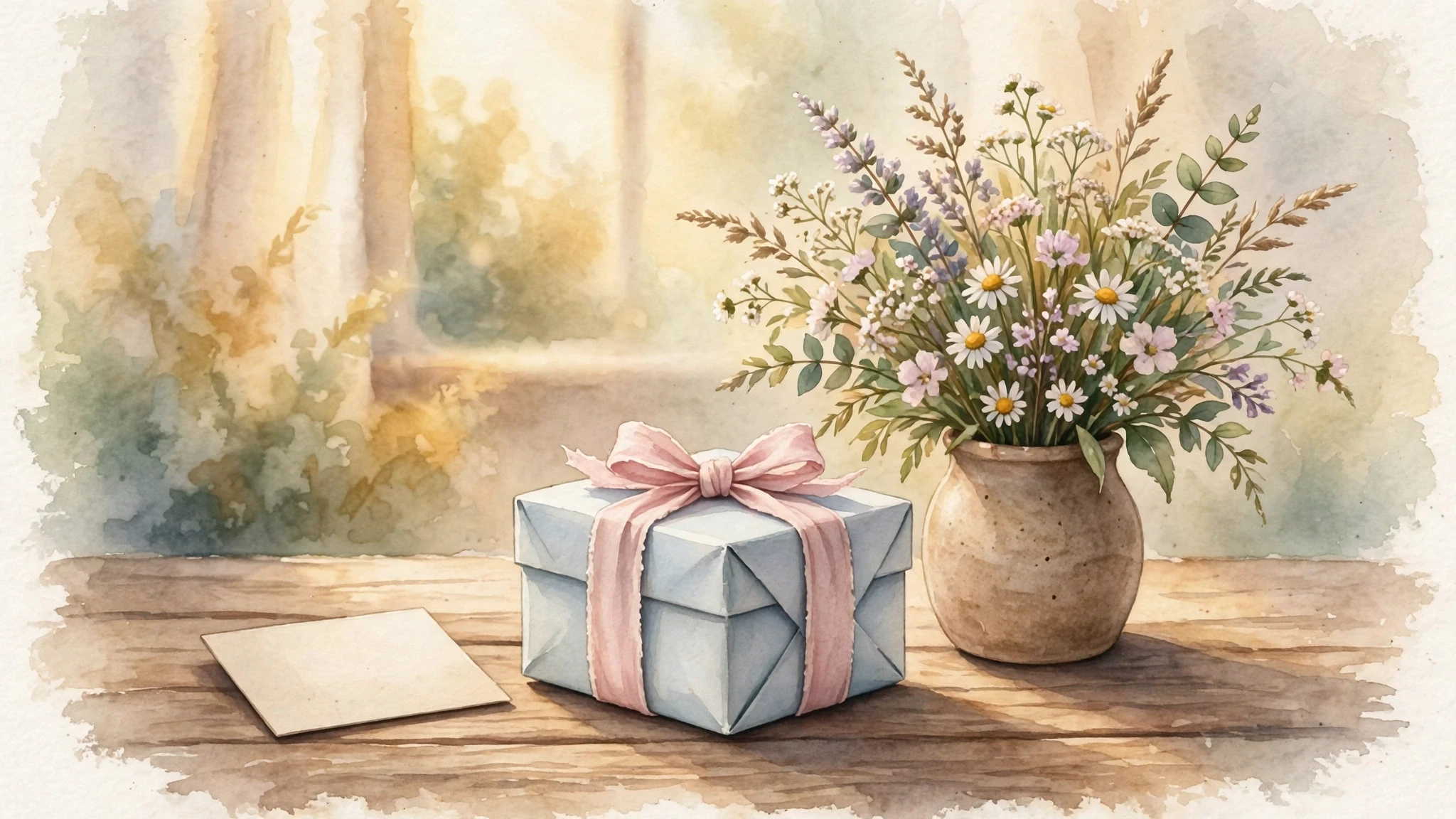
What Is Receiving Gifts?
What is receiving gifts? It is love shown through small thoughtful tokens, things given because the giver was thinking of you, not because the calendar demanded it. Receiving gifts is one of five love languages in Gary Chapman's The Five Love Languages, a book first published in 1992 that grew from his years counseling married couples. Chapman listed five paths along which love tends to travel between partners: receiving gifts, physical touch, acts of service, quality time, and words of affirmation. For someone whose main language is receiving gifts, a small object chosen with care carries a message that words alone cannot hold: I saw this, I thought of you, and I wanted you to have it.
Chapman shaped the idea from years in the counseling room, listening to couples and noticing the patterns in what made each partner feel loved. The framework is now widely used, yet it comes from that practical counseling background rather than from controlled studies, so treat it as a way to spot needs and open conversations, not as a fixed verdict. That care is especially needed with gifts, the most misunderstood of the five. A person who loves through gifts is not asking for expensive things. They are asking to be thought of, and the thought is the gift.
How Receiving Gifts Looks in Daily Life
Receiving gifts in daily life is usually small and quiet. It is a favorite snack brought home from the store, a flower picked on a walk, a book with a note tucked inside, a coffee left on the desk before a long day. These tokens cost little, and that is the point. Their value is not in the price. It is in the proof that the giver was paying attention: they remembered what you like, they noticed what you needed, they thought of you when you were not in the room. A person with this language often keeps such tokens for years, not because the objects are valuable but because the memory attached to them is.
The language also shows up in how a person gives. Someone who speaks receiving gifts will often arrive with something in hand: a pastry for a friend, a small plant for a new neighbor, a card for a coworker. They are not trying to impress anyone. They are expressing care in the way that feels most natural to them, and they hope the people they love will understand the message. When a partner returns the gesture, even with something tiny, the circle closes, and both people feel the love moving between them.
Why This Language Gets Misread
Receiving gifts is misread more than any other love language, because it looks like materialism from the outside. A partner who forgets a birthday may hear "you only care about things," when the real message is "you forgot to think of me." A person who treasures a cheap trinket may be called shallow, when the trinket is actually a symbol of being remembered. The misunderstanding runs both ways: the gift giver feels judged for wanting something tangible, and the partner feels pressured to spend money to prove love. Both end up hurt over something that was never about money at all.
The way through is to talk about what a gift means rather than what it costs. Ask your partner what gift they remember most fondly, and listen to the story behind it. It is rarely the most expensive one. It is usually the one that showed the giver truly knew them: the song on a homemade tape, the scarf in exactly the right color, the ticket to a show they had mentioned once in passing. When you understand that the gift is a symbol, not a purchase, the pressure drops. A thoughtful token found or made with care will always beat a costly one bought in a rush.
Speaking Receiving Gifts Well
Speaking receiving gifts well starts with listening for clues all year, not just before a birthday. Keep a small note on your phone of things your partner mentions: a book they want, a snack they love, a shop they keep walking past, a hobby they want to try. Then use the list. The best gifts come from that kind of attention, because they say "I heard you" in a way no generic present can. A gift given on an ordinary Tuesday, for no reason at all, often lands harder than one given on a holiday, because it proves the thought was real and not just expected.
Presentation matters too, and it costs nothing. Wrap the gift, even badly. Write a short note in your own hand, even if it is only two lines. Give it in person, with your eyes on your partner, and stay for their reaction. The moment of giving is part of the gift, and rushing it wastes half its value. If money is tight, say so honestly and give time or effort instead: a handmade card, a favorite meal cooked from scratch, a playlist made for them. A gift made with care is still a gift, and for a person who speaks this language, it may be the most precious kind of all. What is words of affirmation fits well here, since a few honest words written in a card can make a small gift feel like a treasure.
When Gifts Go Wrong
Gifts go wrong in a few familiar ways, and each one is worth steering around. The first is the last minute purchase, bought in a panic with no thought, which says "I forgot" louder than any apology. The second is the gift that is really for the giver: tickets to a game the partner hates, a gadget the partner will never use, a gym membership given as a hint. The third is the gift used as an apology for behavior that has not changed, which teaches the partner that hurt can be bought off rather than repaired. None of these is the language failing. They are the language being used without attention.
The guardrail is simple: a gift should show that you know the person, not that you know a store. If you are unsure what to give, ask. "What is something small that would make your week better?" is a fine question, and the answer is a gift in itself, because it shows you want to get it right. If you have hurt your partner, repair the behavior first and give the gift second, or the gift will feel like a bribe. And if you receive a gift that misses the mark, thank the giver for the thought and tell them kindly what you would have loved instead. That honesty is a gift back. What is acts of service covers the language that most often travels beside gifts, since a chore done with care is also a token of thoughtfulness.
Receiving Gifts Beside the Other Four Languages
Receiving gifts stands among four companion languages, and most people hold more than one dear. A partner who loves through gifts may also light up at what is words of affirmation, a card with a few honest lines tucked inside the wrapping. Or they may need quality time as well, an evening together where the gift is opened slowly and enjoyed side by side. Regard the five as five ingredients you can mix to taste, and most couples find their own recipe, one that changes as life changes.
Put the framework to work as a set of questions to ask each other, not as a label to pin on. Ask your partner which gifts they have treasured most and why, and which gifts left them cold, then ask yourself the same. Try a swap for a week: hand them a small thoughtful token on purpose, while they offer you the language you asked for, and see what changes. A week of trying outranks a label, because a label can settle into a shrug about not being a gift person, while trying keeps you learning what delights each other, and that learning keeps a bond warm long after the early excitement has passed.
An Illustrative Example: Victor and the Chipped Mug
This example is illustrative, not a real person's story.
Victor, a 41 year old chef, had been with his partner for six years when she told him she felt forgotten. He was confused. He cooked for her every night, he fixed things around the apartment, he never missed a birthday. She nodded and said the birthdays were fine, but she could not remember the last time he had brought her something just because. Victor thought about it and realized she was right: every gift he gave was on a calendar date, and every one was practical. He started small. He brought home her favorite pastry on a random Thursday. He found a secondhand copy of a book she had mentioned once, months earlier. He wrote a three line note and tucked it into her coat pocket. None of it cost much. Three months later she showed him the top shelf of her wardrobe, where the pastry bag, the note, and a dried flower from a walk were kept in a small box. She had kept every one. He had not bought her love. He had finally learned to say "I thought of you" in a language she could hear.
A Simple Way to Practice This Week
Trying receiving gifts for one week is a gentle trial with a real reward. Each day, notice one thing your partner mentions liking, wanting, or needing, and write it down. When the week ends, choose one small item from the list, wrap it, add a short note, and give it in person for no special reason. Then ask each other one question: "Did you feel thought of this week, and which token meant the most to you?" Those replies will reveal more about your partner than a quiz score ever could.
If the practice week feels hard, that difficulty is itself a message. It may mean money is tight, or that you have never practiced noticing what your partner wants. Both are fixable. A handmade gift, a favorite meal, or a note costs almost nothing and can mean everything. How to reconnect with your partner gives gentle steps for couples who have grown distant, and daily habits fit a gift based rhythm. Gifts are a language, and like every language, it thrives when both people use it and both feel heard. If a reading appeals to you, the love readings page sets out what a chat reading covers and how to begin. First 3 minutes FREE — every time, for every reading, with all advisors.
A soft next step is a single card from a One-Card Tarot reading, and a quiet thought about what it says on thoughtfulness and care in your life now.
Frequently Asked Questions
What is receiving gifts in simple terms?
It is love shown through small thoughtful tokens given because the giver was thinking of you. The value is in the thought and the attention behind the gift, not in the price.
How do I know if my love language is receiving gifts?
Notice what stays with you: if you keep small tokens for years, feel most loved by a surprise gift, or feel forgotten when special days pass unmarked, receiving gifts is likely your main language.
Does receiving gifts mean I am materialistic?
No. This language is about being thought of, not about expensive things. A flower, a note, or a favorite snack given with care usually matters far more than a costly purchase made without thought.
What is a good gift for someone whose language is receiving gifts?
Something that shows you listened: a book they mentioned, a snack they love, a handmade card, or a small item tied to a shared memory. A gift on an ordinary day often means more than one on a holiday.
Can gifts fix a relationship problem?
No. A gift cannot repair behavior that has not changed, and using one as an apology usually makes things worse. Fix the behavior first, then let the gift be a kind extra, not a substitute for change.
Last updated: November 12, 2026
