
What Is a Talisman? Meaning and History
What Is a Talisman in Plain Language
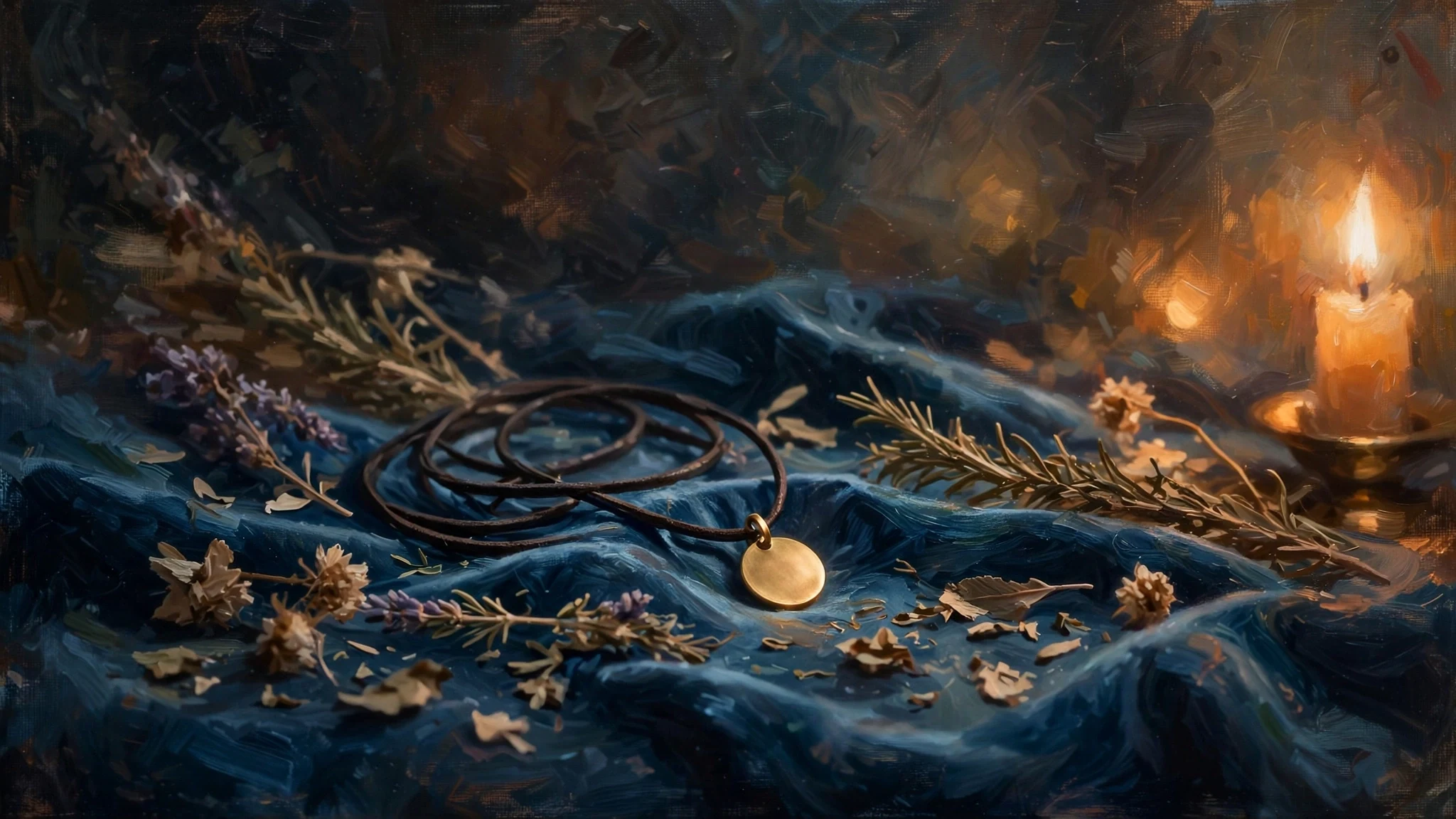
When people ask what is a talisman, they mean an object made or chosen to carry a power and to bring that power into the life of the person who keeps it. A talisman can be a ring, a pendant, a coin, a stone, a piece of paper with a symbol, or a small figure kept in a pocket. The object itself is ordinary. The meaning comes from the symbol on it, the material it is made from, the time it was made, and the intention held by the person who made or chose it. A talisman is not only a decoration. It is a tool for focus, a reminder of a goal, and in the belief of its keeper, a source of help.
The idea is ancient and wide. People in Egypt, Greece, Rome, India, China, and the medieval Islamic world all made objects that were meant to protect, to attract love or luck, or to mark a person as under the care of a god, a saint, or a planet. A talisman differs from a lucky charm in one key way: a charm is often found by chance, while a talisman is made on purpose, with a symbol, a word, or a time chosen for a reason. That deliberate making is what gives the word its meaning, and it is what this page explains, from the history of the word to the way people choose a talisman today.
Where the Word Talisman Comes From
The word talisman has traveled a long way. It begins in ancient Greek with telos, which means end or completion, and with the verb telein, to perform a rite or to fulfill. From those roots came telesma, which first meant completion and later meant consecration, the act of making a thing sacred. In Byzantine Greek, telesma also came to mean a talisman. Arabic borrowed the word as tilsam, and through Arabic it entered French, Spanish, and Italian, and then English. The first known use of talisman in English dates to 1638, in the sense of a magical figure cut or engraved on stone or metal.
That history explains why a talisman is tied to a symbol. In the older tradition, a talisman was not a plain stone. It was a figure, a sign, or a set of words engraved at a chosen time, often when a planet was in a favorable position. The writer Charles W. King, in a study of talismans and amulets, drew a clear line: a talisman was by nature a sigil, a symbolic figure engraved in stone or metal or drawn on parchment, made to procure love and to avert danger. An amulet, by contrast, was made only to avert danger. The two words are often used as if they mean the same thing, yet the older distinction is useful: a talisman is made to bring something in, as well as to keep something out.
Talisman or Amulet: How to Tell Them Apart
A talisman and an amulet look alike on a market stall, yet they serve different aims in the tradition. A talisman is active. It is made for a purpose, such as attracting love, courage, wealth, or clear thought, and it carries a symbol that matches that purpose. A planet talisman carries the sign of a planet. A love talisman carries a heart, a pair of figures, or a word linked to love. The maker chooses the time, the material, and the symbol to match the goal, and the keeper uses the object as a focus for that goal.
An amulet is protective. It is worn or carried to turn away harm, envy, illness, or bad luck, and it often carries an eye, a hand, a tooth, or a sacred word. The Egyptian scarab, the Greek phylacterion, the Turkish evil eye, and the Hand of Fatima are all amulets in this sense. Many objects serve both aims at once, and modern sellers often use the two words for the same item. That is not a fault in a shop, yet a reader who knows the difference can ask a better question: was this object made to bring a good thing closer, or to keep a bad thing away? The answer shapes how the object is used, where it is kept, and what it is expected to do.
Talismans in History
In ancient Egypt, magic was called heka, a divine creative force, and amulets and talismans were part of daily life and of burial. The scarab beetle held pride of place among Egyptian amulets, often made as a gem engraved on one side with many devices, and placed on the body to protect the dead on the journey after death. Words spoken in a precise way, inscribed signs, and ritual were believed to wake the power in the object. A talisman without the right words was, in that view, only a stone.
In the medieval world, the great handbook of talisman making was the Picatrix, known in Arabic as Ghayat al-Hakim, or the Goal of the Wise. The Picatrix gave instructions for making talismans under specific stars and planets, with images, materials, and fumigations matched to each aim. In Renaissance Europe, writers on magic continued the same art, linking a talisman to the position of the Moon or a planet at the moment of making. In India and China, talismans took other forms: written charms, knotted cords, jade figures, and coins with sacred words. The forms differ, yet the pattern is the same: a chosen object, a chosen time, a chosen symbol, and a clear intention.
Famous Types of Talismans
Several types of talismans appear again and again in history and in shops today. A planetary talisman carries the sign or image of a planet, such as the Sun for vitality, the Moon for intuition, Venus for love, or Mars for courage, and it is made when that planet is strong in the sky. A zodiac talisman carries the sign under which a person was born, or the sign linked to a goal, and it is worn as a personal marker. A word talisman carries a sacred name, a verse, or a short phrase, written on paper, metal, or cloth, and folded into a pouch or a locket.
Other types include a stone talisman, where the stone itself is the symbol, such as clear quartz for clarity or rose quartz for love, and a figure talisman, where the object takes the shape of an animal, a god, or a saint. A modern talisman may be a simple ring engraved with a word that matters to the keeper, a coin from a meaningful year, or a small object found at a turning point and kept with intention. The material matters less than the meaning. A talisman works, in the belief of its keeper, because the keeper knows what it stands for and returns to that meaning in daily life.
How People Choose a Talisman Today
Choosing a talisman today starts with a clear question: what do I want this object to remind me of? A person seeking courage may choose a red stone, a lion figure, or a Mars symbol. A person seeking calm may choose a blue stone, a moon symbol, or a smooth pebble from a quiet walk. A person seeking love may choose rose quartz, a heart, or a pair of linked rings. The choice is personal, and the best talisman is often the one that already carries a memory, a gift, or a moment that matters.
The next step is to give the object a clear role. Some people clean a new talisman in water, in smoke, or in moonlight, then hold it and speak a short intention aloud. Some people wear it daily, some keep it on a desk or a bedside table, and some carry it only at a difficult moment, such as an interview or a medical visit. The object should be cared for like any valued item: kept clean, stored safely, and checked for damage. If a talisman breaks, many traditions say to thank it and replace it, rather than to fear the break. A talisman is a focus for attention, not a guarantee, and its value lies in the daily reminder it gives.
An Illustrative Example: Nora and the Brass Coin
This example is illustrative, not a real person's story.
Nora is a 47 year old librarian who keeps a small brass coin in her coat pocket. The coin is not old or valuable. It is a token from a fair she visited with her late father, and it carries the image of a lighthouse. Nora chose it as a talisman for steady work, because the lighthouse reminds her of a light that stays on through a storm. She does not claim the coin changes events. She says that touching it before a hard meeting reminds her to speak slowly, to listen first, and to keep the light on the task rather than on the fear.
Nora cleans the coin once a month, keeps it in the same pocket, and replaces it with a note if she forgets it at home. The example shows how a modern talisman works in practice: an ordinary object, a clear meaning, a daily habit, and a test in real life. The coin has not made Nora fearless, yet it has made her more consistent, and that consistency is the result she wanted. A reader who wants a talisman can start the same way, with an object that already means something, and a single clear intention.
Caring for a Talisman and Staying Grounded
A talisman needs little care, yet a little care keeps it meaningful. Keep it clean, keep it safe, and keep it in a place where it will be seen or touched at the right moment. Do not buy a talisman that promises a guaranteed result, a lottery win, or a medical cure, because no object can promise those things, and a seller who makes such a promise is selling a hope, not a talisman. Do not spend more than you can afford on a single object, and do not let a talisman replace a practical step, such as a doctor visit, a job application, or an honest conversation.
If a talisman brings comfort, keep it. If it brings anxiety, dependence, or a feeling that nothing can be done without it, set it aside for a week and see how life feels without it. A talisman should support a decision, not make the decision for you. The best test is simple: does the object help you act with more courage, calm, or clarity? If the answer is yes, the talisman is doing its work. If the answer is no, the work belongs to you, and the object can wait in a drawer until it is needed again.
For more context, start with the spiritual awakening signs hub, then read what is a crystal grid for another object built with intention. What is crystal healing covers stones used for calm and focus, what are chakras maps the body points many practices use, and clear quartz meaning explains the clear stone most often set in a talisman.
First 3 minutes FREE — every time, for every reading, with all advisors.
For a simple next step, try a One-Card Tarot reading and reflect on what a symbol may mean for you.
Frequently Asked Questions
What is a talisman?
A talisman is an object made or chosen on purpose to carry a power and bring it into the life of its keeper, through a symbol, a material, a chosen time, and a clear intention.
What is the difference between a talisman and an amulet?
A talisman is made to bring a good thing closer, such as love or courage, while an amulet is made mainly to turn away harm, though many objects serve both aims at once.
Where does the word talisman come from?
The word comes from Greek telesma, meaning consecration, through Arabic tilsam, and entered English in 1638 in the sense of a magical figure engraved on stone or metal.
What is a famous historical talisman?
The Egyptian scarab is a famous example, often made as an engraved gem and placed on the body for protection, while the medieval Picatrix gave instructions for planetary talismans.
How do I choose a talisman?
Start with a clear intention, choose an object or symbol that matches it, give the object a daily role, and judge it by whether it helps you act with more courage, calm, or clarity.
Last updated: November 12, 2026
