
What Is a Spirit Orb? Meaning and How to Tell
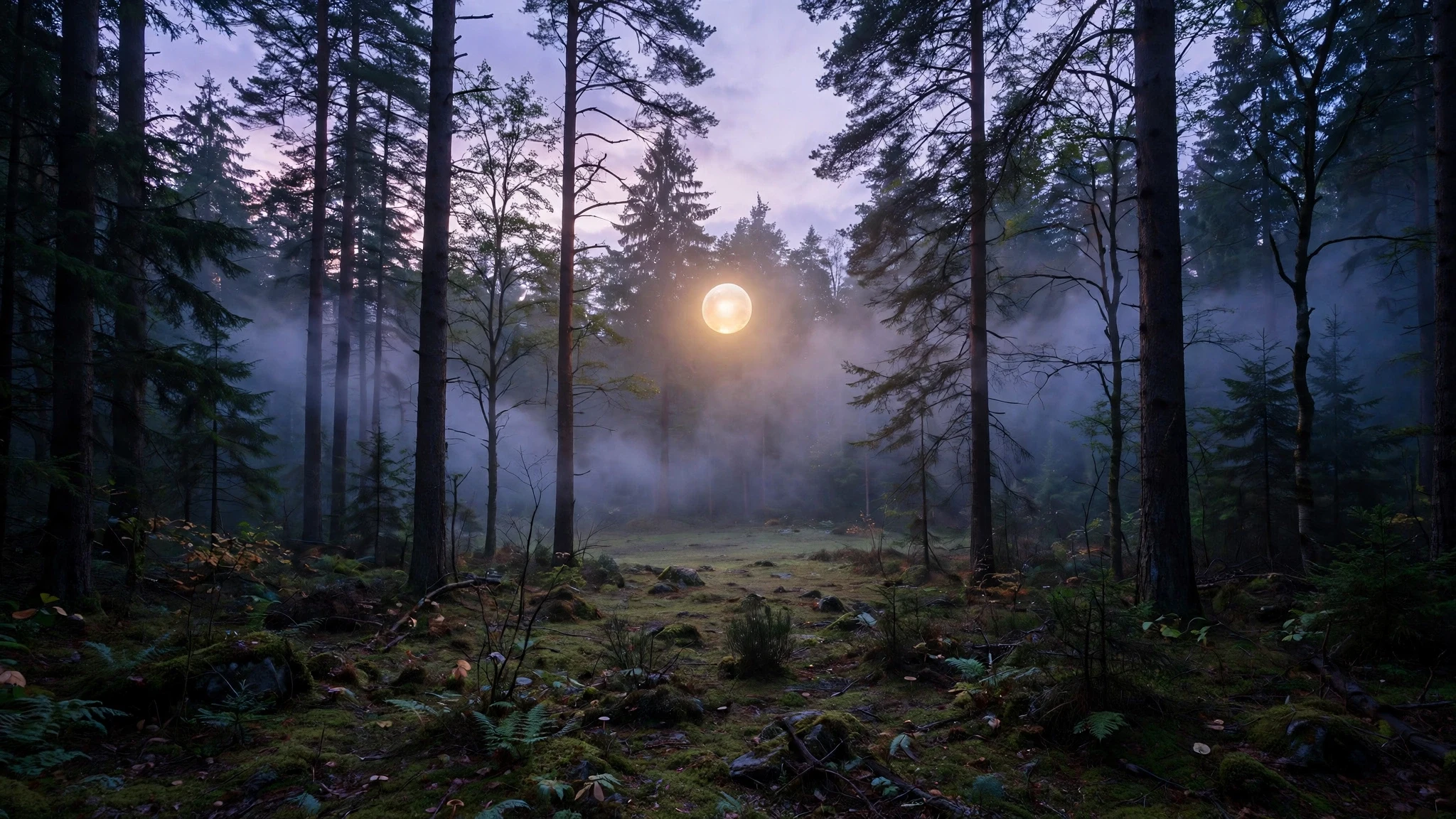
What Is a Spirit Orb? The Claim in Plain Terms
What is a spirit orb? In the words of people who believe in them, it is a ball of light or energy that shows the presence of a spirit, a guide, or a loved one who has died. It is described as round, glowing, and often translucent, sometimes seen with the naked eye as a flash of light in a dark room, and more often caught on camera as a bright circle in a photograph or a moving light in a video. The claim is simple: the orb is the visible form of something unseen, a spirit making itself known in the only way it can. This page explains what people report, how the claim is said to work, and how to tell an orb that is worth a second look from one that has an ordinary cause. The companion page on orbs in photos meaning covers the camera checks in full; this page covers the meaning people give to orbs, and the limits of that meaning.
The idea of a visible spirit light is old, even if the word orb is new. Accounts of lights seen at graves, in churches, and in sickrooms appear in folklore from many countries, and the will o the wisp, a pale flame said to hover over marshes at night, has been reported for centuries. What changed was the camera. When compact digital cameras put a flash next to the lens, round glowing circles began appearing in ordinary photographs, and ghost hunters adopted them as evidence. The word orb, borrowed from optics, became the standard name for the circles, and a whole system of meanings grew up around them: colors, sizes, and movements, each said to carry a message. That system is a belief, not a measurement, and this page reports it as a belief throughout. Where a claim can be checked, it says so. Where it cannot, it says that too.
An orb is not the same as every strange light in a photo. A streak is usually an insect or a hair crossing the flash. A row of circles is usually lens flare from a bright lamp. A hazy glow across the whole frame is usually breath, fog, or a dirty lens. An orb, in the strict sense people use the word, is a single round disc, brighter than its surroundings, with a soft edge and a sense of depth, as if it floats in the room rather than sitting on the glass. Keep that picture in mind, because much of the confusion about orbs comes from calling every round light by the same name. Precision helps in the checking that follows.
What People Report Seeing: Size, Color, and Movement
The reports share a pattern. Size varies widely: some orbs are described as small as a marble, others as large as a beach ball, and the size is said to reflect the strength or closeness of the presence. Most reports describe orbs between the size of a coin and the size of an orange, floating at about head height or near the ceiling. Color is the feature people discuss most. White orbs are the most common, and they are said to mean peace, protection, or a loved one nearby. Blue orbs are said to mean calm, healing, or a guide offering comfort. Gold orbs are said to mean guidance, celebration, or a higher presence. Green orbs are said to mean growth, nature, or a healing energy. Red orbs are said to mean strong emotion, warning, or a spirit that needs attention. These meanings differ from one writer to the next, and no two lists agree exactly, which is worth remembering before you pay anyone to interpret a color for you.
Movement is the second feature people report. An orb that drifts slowly across a room, changes direction, or hovers in one place is described as more interesting than one that sits still, because dust drifts with the air while a spirit is said to move with purpose. Some reports describe orbs that pulse, growing brighter and dimmer in a slow rhythm, or that split into two and rejoin. Others describe orbs that appear in video but not in still photos from the same moment, or that move against the direction of a draft. All of these details are reported by witnesses, not measured by instruments, and they should be read as witness statements, with all the strengths and weaknesses that witness statements carry. A person who has just lost someone is a sincere witness, and sincerity is not the same as accuracy.
There is also a pattern in when orbs are reported. They cluster around grief: the weeks after a death, the anniversary of a loss, a birthday the person did not live to see. They cluster around places tied to the dead: a bedroom, a favorite chair, a grave, a hospital corridor. They cluster around prayer, meditation, and seances, when people are already looking for a sign. That clustering cuts both ways. Believers say it proves the orbs follow the living and the dead. Skeptics say it proves the orbs follow expectation: people look hardest when they are grieving, and they find what they are looking for. Both readings fit the pattern, and an honest page leaves the question open rather than pretending it is settled.
How a Spirit Orb Differs From Dust and Lens Flare
The difference between a spirit orb and an ordinary orb is not a feeling. It is a set of testable features, and they are worth learning before you decide what you saw. A dust orb is out of focus, because the particle is inches from the lens, so its edges are soft and its inside shows no detail. A spirit orb, as described by believers, is in focus, with a sharper edge and sometimes a visible structure inside, like rings or a bright core. A dust orb appears when the flash fires and vanishes when the flash is off. A spirit orb is said to appear without flash, in daylight, and on video taken with no flash at all. A dust orb appears in one frame and is gone in the next, because the particle drifts. A spirit orb is said to appear in several frames in a row, holding its place or moving steadily. A dust orb sits in front of the furniture, because it is between the camera and the room. A spirit orb is said to sit behind objects, or to be partly hidden by them, which would place it in the room rather than on the lens.
None of these features proves a spirit on its own. A sharp-edged orb can be a water droplet catching the light. An orb in several frames can be a speck on the lens that has not moved. An orb without flash can be a reflection from a window. But the features together form a useful screen: the more of them an orb shows, the more it deserves a second look, and the fewer it shows, the more likely the ordinary explanation is. The full six step photo check is on the companion page, and it takes about two minutes to run. Run it before you ask anyone what your orb means, because a reader who interprets an unchecked photo is guessing, and a reader who charges for the guess is selling.
Where Orbs Are Most Often Reported
Orbs are reported most often in old buildings, cemeteries, churches, and hospitals, which are also the dustiest, dampest, and most disturbed places a camera can visit. An old house holds decades of dust in its carpets and curtains, and every footstep lifts it into the air. A cemetery holds pollen, moisture, and insects, especially at dusk when most orb photos are taken. A hospital corridor holds bright lights, reflective floors, and constant movement. That overlap is the strongest argument for the ordinary explanation, and it should be faced honestly: the places where orbs are most often reported are exactly the places where backscatter is most likely. If orbs were purely spiritual, they would appear just as often in clean, bright, modern rooms, and they are reported far less often in clean, bright, modern rooms.
There are exceptions that believers point to, and they deserve a mention. Orbs are sometimes reported in clean rooms, in daylight, and in photos taken with professional cameras whose flash sits far from the lens. Orbs are sometimes reported by people who were not looking for them, who noticed the circle only when they reviewed their photos at home. Orbs are sometimes reported alongside other signs: a smell of perfume with no source, a song playing at a meaningful moment, a dream of the same person on the same night. Our page on the smelling perfume sign covers one of those companion signs, and loved one visiting in dreams covers another. When several different kinds of sign cluster around the same person and the same week, the pattern is harder to dismiss than a single orb in a single photo, and it is worth recording in full.
An Illustrative Example: Elena and the Hallway Light
This example is illustrative, not a real person's story. Elena, a 47 year old librarian, saw a soft blue light drift across her hallway one evening, three weeks after her father died. It moved slowly from the front door toward his old bedroom, and it was gone before she could reach for her phone. She wrote down the time, the direction, and the color, and she checked the hallway the next night at the same hour: a car passing outside threw a blue reflection from a neighbor's window across the same wall, moving in the same direction. She concluded that the light had a likely ordinary cause, and she felt relieved rather than disappointed, because the checking itself had calmed her. Her story shows the right attitude toward an orb sighting: record it carefully, check the ordinary causes first, and let the answer be whatever it is. A checked orb that turns out to be a reflection is not a loss. It is a clean answer, and clean answers are what let the unexplained cases stand out.
What an Orb Does Not Prove
An orb, even one that passes every camera check, does not prove that a specific person is present, that the spirit is happy or at peace, or that it wants anything from you. It does not prove that a house is haunted, that a place is safe or dangerous, or that a message has been delivered. It proves only that a round light was recorded and that the ordinary causes were checked and set aside. That is a real result, but it is a small one, and anyone who builds a large claim on it is overreaching. A reader who looks at one orb photo and tells you that your grandmother is trapped, or angry, or asking for money to be spent on a cleansing, is not reading the orb. They are reading your grief, and they are charging for it.
The same caution applies to orb color meanings. Because different writers give different meanings to the same colors, a color reading says more about the reader than about the orb. If a blue orb brings you comfort because blue was your father's favorite color, that comfort is real and personal, and it needs no system to justify it. If a red orb frightens you because a writer said red means danger, that fear comes from the writer, not from the orb, and you are free to set it aside. Personal meaning is stronger than borrowed meaning, and it is also safer, because it does not hand your judgment to a stranger.
If You Think You Saw One: A Calm Next Step
If you think you saw an orb, start with the record, not with a reading. Write down the date, the time, the place, the weather, whether the flash was on, and what you were doing and feeling. Save the original file, not a screenshot, because the original holds the camera data that the checks need. Take comparison shots from the same place, with and without flash, and keep them with the original. Then wait a week and look at the whole set again with fresh eyes. If the orb still stands out after a week, and it passes the checks, you can treat it as a personal sign and keep it as one. If it fades into an ordinary explanation, let it go, and keep the memory of the person rather than the mystery of the light.
If the experience leaves you frightened, or if orbs and other signs are appearing often and making it hard to sleep or to feel at ease in your own home, talk to a person you trust, and consider a counselor or a grief support group before you consider a medium. Fear is a signal that you need support, not that a spirit is threatening you, and support from a living person is faster and surer than any reading. Our page on how to spot a fake medium lists the pressure tactics to avoid, and the mediumship hub gathers the wider guidance, including how to prepare for a reading if you decide to have one. For the question of guides who may be near, see what are spirit guides. If you would like a live reader to talk through what you saw, a short session is a reasonable first step. First 3 minutes FREE — every time, for every reading, with all advisors.
If you want one gentle next step, try a One-Card Tarot reading and reflect on the card before you settle on any meaning for the orb.
Frequently Asked Questions
What is a spirit orb?
A spirit orb is described by believers as a ball of light or energy that shows the presence of a spirit, a guide, or a loved one who has died. It is usually reported as a round, glowing circle in a photo or video, or as a flash of light seen in a dark room. The claim is a belief, not a proven fact.
Are orbs in photos real spirits?
No evidence proves that orbs are spirits. Most orbs are caused by dust, moisture, or insects near the lens reflecting the camera flash, an effect called backscatter. An orb that passes careful checks, including shots without flash and from several angles, is unexplained rather than proven.
What does a blue orb mean?
In the spiritual reading, blue is said to mean calm, healing, or a guide offering comfort. Color meanings differ between writers, so they should be treated as belief traditions, not facts. A personal meaning, such as blue being a loved one's favorite color, is more reliable than a borrowed list.
Can you see a spirit orb with your naked eye?
Some people report seeing orbs as flashes of light in a dark room, usually at the edge of vision. These reports are hard to check, because the eye has no recording. A sighting is worth writing down with the time, place, and conditions, and worth checking against ordinary causes like car headlights and reflections.
What should I do if I photograph an orb?
Save the original file, note the conditions, wipe the lens, and take comparison shots with and without flash from different angles. If the orb appears only with flash or in one frame, it is most likely dust. If it passes the checks, keep it as a personal sign, and never pay anyone to interpret or cleanse it.
Last updated: November 12, 2026
