
What Is a Spirit? Meaning, Types and Signs
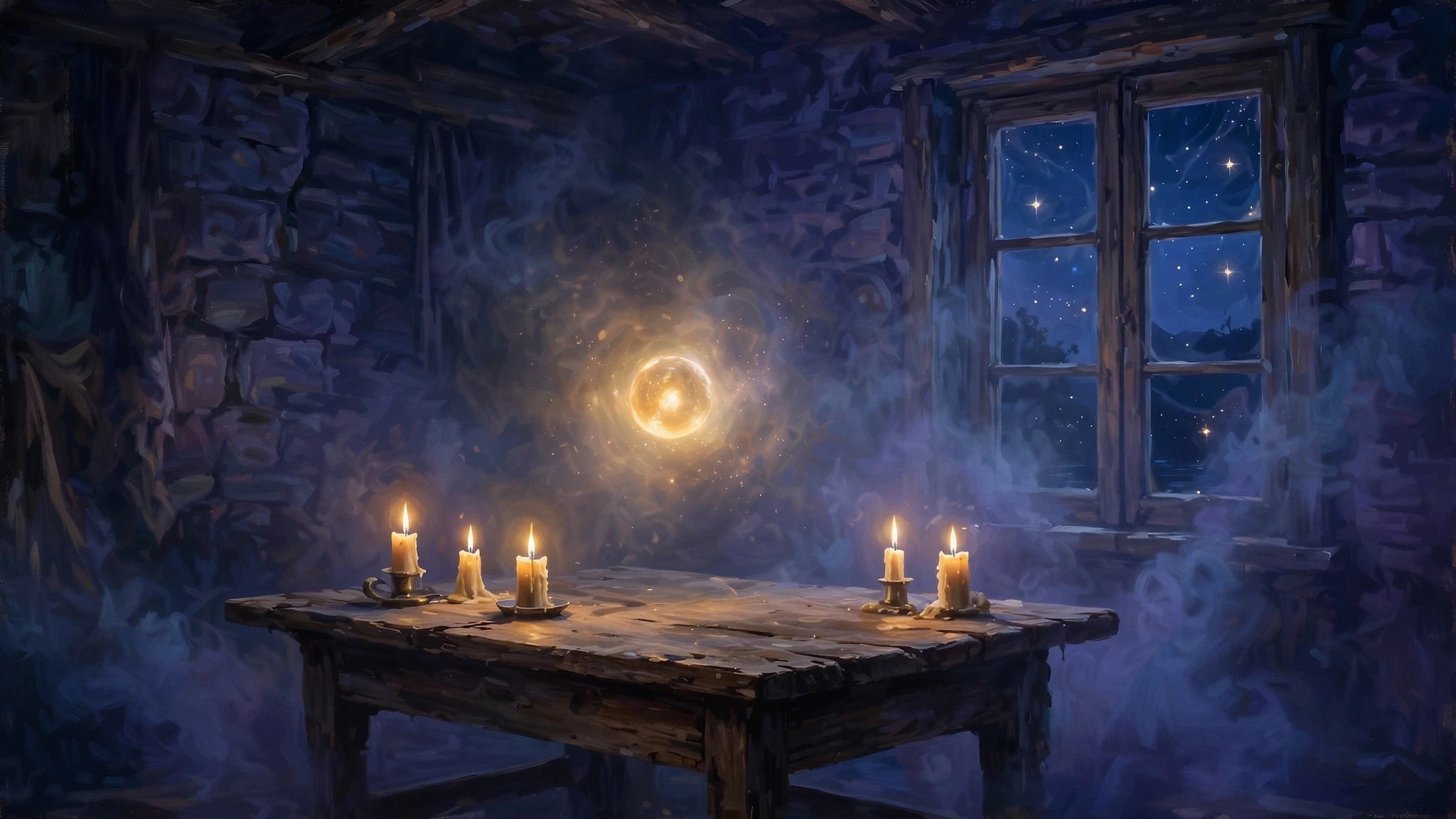
What Is a Spirit in Plain Language
When people ask what is a spirit, they usually mean a being without a physical body that is said to exist apart from the living world. In spiritualist teaching, a spirit is the continuing part of a person after death, still able to think, feel, and communicate. In other traditions the word covers a wider set of beings, including guides, ancestors, nature spirits, and unseen presences that were never human at all. The word itself comes from the Latin spiritus, meaning breath, which is why so many cultures link the spirit with the breath of life and with the part of a person that leaves the body at death.
That broad use is exactly why the question needs care. A spirit in a seance room, a spirit in a folk tale, and a spirit in a religious text are not always the same idea, even though they share one word. Practitioners usually sort the idea into three groups: the spirits of people who have died, spirit guides who are said to help the living, and nonhuman spirits tied to places, nature, or old stories. Keeping those groups separate makes the rest of the subject much easier to follow, because each group is described, approached, and talked about in a different way.
How Spiritualist Tradition Describes a Spirit
Modern Spiritualism gives the clearest public description of what a spirit is, and its history is well documented. The movement took shape in the United States after March 31, 1848, when sisters Maggie and Kate Fox, aged 14 and 11, reported rapping sounds in their farmhouse at Hydesville, New York, and neighbors began treating the sounds as communication from a spirit. Within a few years, seances were being held across the United States and Britain, and mediums were the people who claimed to carry the conversation between the living and the dead. The Fox sisters later said in 1888 that the raps had been a trick, yet the movement they helped start kept growing, and its description of spirits shaped the language still used today.
In that tradition, a spirit keeps the character, memories, and feelings it had in life, and it can choose to visit, to send a sign, or to speak through a medium. Allan Kardec, a French teacher who wrote The Spirits Book in 1857, gave the idea a different shape, describing spirits as souls at different stages of progress, learning and improving over many lives. The Society for Psychical Research, founded in London in 1882 under Henry Sidgwick, took yet another approach, setting out to investigate reports of spirits and hauntings with the methods of science rather than accepting them on faith. Those three starting points, belief, philosophy, and investigation, still frame most public discussion of spirits.
The Main Types of Spirits People Describe
The most commonly described type is the spirit of a deceased person, often a relative or a close friend. People who report contact with such a spirit usually say the contact feels personal: a familiar smell, a voice, a dream, or a sense of presence in a room that once belonged to that person. Mediums who work in this area describe the experience as receiving impressions, images, or words that they then pass on, and they usually ask the sitter to confirm details rather than offering a full story at once. This is the type most often meant when someone says they felt a spirit in the house after a loss. The mediumship hub gathers the guides on this site that explain each of these groups in more detail.
A second type is the spirit guide, a being described as a helper rather than a relative. Guides are said to offer direction, warning, or comfort, and they appear in many traditions under different names, from guardian angels in Christian teaching to ancestral guides in other cultures. A third type is the place spirit or nature spirit, tied to a house, a wood, a river, or a stretch of land. Folk stories across Europe and North America are full of such beings, and they are usually described as neutral or watchful rather than friendly or hostile. A fourth, smaller group covers spirits that practitioners describe as troubled or stuck, connected to a sudden death or an unfinished matter, and these are the ones most often named in haunting reports.
What People Report When They Sense a Spirit
Reports of sensing a spirit share a surprising amount of pattern, even when the people involved have never met. The most common report is a sudden change in a room: the air feels colder in one spot, a smell appears with no source, or a sound repeats at the same hour. Next come the personal signs, such as dreaming of a person who has died and waking with the dream still vivid, or hearing a familiar voice, a name called, or a song linked to that person playing at an odd moment. Mediums add a third set of reports, describing impressions that arrive as pictures in the mind, a sudden emotion that does not feel like their own, or a physical sensation such as pressure on the chest or tingling in the hands. Many of these reports overlap with the signs a deceased loved one is visiting that people describe after a loss.
None of those reports proves a spirit is present, and honest practitioners say so. A cold spot can come from a draft, a smell can come from a hidden source, and grief itself can sharpen dreams and heighten awareness of anything linked to the person who died. The value of the reports is that they show what people actually notice, and that noticing is the first step in deciding what to do next. Keeping a short written record, with the date, the time, and exactly what happened, turns a vague feeling into something that can be checked, compared, and discussed calmly with someone experienced.
Spirits in Religion, Folklore, and Everyday Belief
Almost every religious tradition has its own account of spirits, and the differences matter. In Christianity, spirits include angels, who are messengers, and the Holy Spirit, understood as part of God, while the spirits of the dead are generally not described as returning to visit the living. In Hindu and Buddhist teaching, the soul moves on after death, and the idea of a lingering spirit is treated differently again, often through ideas of rebirth and release. In the folk traditions of Britain, Ireland, and Scandinavia, spirits of place, water, and woodland appear in stories told for centuries, and in the traditions of the Americas, ancestral spirits are honored in ceremony and family remembrance.
That variety is worth knowing before anyone judges a report of a spirit. A person raised in one tradition may hear the same event described in completely different words by a neighbor from another tradition, and both descriptions can be sincere. The common thread is that people across cultures have long believed that something of a person, or of a place, continues beyond what the eyes can see. Whether that belief is taken literally, symbolically, or as a way of holding on to memory, it shapes how people grieve, how they remember, and how they make sense of experiences that ordinary explanation does not cover.
How a Medium Says Contact With a Spirit Works
A medium describes the work as a form of listening rather than a form of summoning. In a sitting, the medium usually begins quietly, paying attention to impressions as they arrive, and then offers the sitter small details, a name, a habit, a memory, a description of a room, and waits to see which details the sitter recognizes. The approach is called evidential mediumship when the medium tries to give specific facts that the sitter can confirm, rather than general comfort alone. Sessions are usually short, and a careful medium will say plainly when nothing clear is coming through, rather than filling the silence with guesses. Mediums describe several ways of working, and the guide to the types of mediumship sets out the main ones.
That caution matters, because the field has a long history of fraud alongside sincere practice. The Fox sisters confession in 1888 is the best known example, and investigators from the Society for Psychical Research onward have exposed many tricks, from hidden wires to confederates in the audience. A genuine sitting, by the standards practitioners themselves set, is calm, specific, and honest about its limits. It does not demand belief, it does not frighten the sitter, and it does not claim to prove anything beyond the experience itself. Anyone considering a sitting can read more in the guide to what a medium does and in the history of mediumship before deciding.
An Illustrative Example: Ruth and the Smell of Lavender
This example is illustrative, not a real person's story.
Ruth, a 58 year old retired nurse, said she began noticing the smell of lavender in her kitchen about three months after her mother died. The smell appeared in the early evening, near the chair where her mother used to sit, and it faded after a few minutes. Ruth checked the obvious sources first: she looked for soap, cleaning products, and dried flowers, and she asked her daughter to visit and see whether she noticed the same smell. Her daughter noticed nothing on her first two visits, then caught the same scent on a third visit, standing in the same corner of the room.
Ruth did not treat the smell as proof of anything. She wrote down each time it happened, with the date and the time, and she noticed that it came most often on evenings when she had been thinking about her mother. She later spoke with a medium, who described a woman who liked lavender and who used to sit in that corner, which matched what Ruth already knew. The example shows the pattern most reports follow: a specific sensory detail, a link to a known person, a check against ordinary causes, and a meaning the person takes from it rather than a claim that can be tested by anyone else.
What to Do If You Think a Spirit Is Present
The first step is practical and calm. Check the ordinary explanations before anything else: drafts, plumbing, electrical faults, animals, and the normal sounds of a house settling at night. Keep a short log for two weeks, noting the date, the time, the room, and exactly what happened, and ask anyone else in the house to keep their own notes without comparing them first. If the notes line up, you have something worth discussing; if they do not, the pattern may be smaller than it first felt.
The second step is to decide what you want. Some people want reassurance after a loss, and a quiet conversation with a trusted medium or a counselor can help. Others want the feeling to stop, in which case the protection and cleansing guides on this site are the next place to look, starting with how to protect yourself from spirits. If the experience is frightening, persistent, or affecting sleep and daily life, speak with a doctor or a mental health professional as well, because fear and grief deserve support in their own right. If you would like to talk it through with a reader, PsychicSmile offers a first conversation where you can describe what happened and hear a calm, honest response. First 3 minutes FREE — every time, for every reading, with all advisors.
For a simple next step, try a One-Card Tarot reading and reflect on what the card brings up about the presence you have been sensing.
Frequently Asked Questions
What is a spirit, in one sentence?
A spirit is a being without a physical body that practitioners describe as the continuing part of a person after death, or as a nonhuman presence tied to a place or a tradition. The word covers several different ideas, so the meaning depends on which tradition is speaking.
Do spirits only mean the dead?
No. The spirits of people who have died are the most commonly described type, but practitioners also describe spirit guides, ancestral spirits, and spirits tied to places or nature. Some traditions include angels and other nonhuman beings under the same word.
Is there scientific proof that spirits exist?
No, there is no scientific proof that spirits exist. The Society for Psychical Research, founded in 1882, investigated reports for decades without producing proof accepted by mainstream science. Belief in spirits rests on personal experience, tradition, and faith rather than on tested evidence.
What is the difference between a spirit and a ghost?
The two words are often used for the same idea, but many practitioners use ghost for a spirit that is seen or felt in a place, often tied to a haunting, and spirit for the wider idea of a being without a body. In everyday speech the words overlap, and the distinction is a matter of use rather than a fixed rule.
Can a spirit be dangerous?
Most reports describe spirits as neutral or comforting, and practitioners say harmful encounters are rare. If an experience feels frightening or threatening, the sensible steps are to check ordinary causes, keep a written log, use the protection steps on this site, and seek support from a professional if fear or sleep problems continue.
Last updated: November 12, 2026
