
Vision Board Manifestation: How to Use One
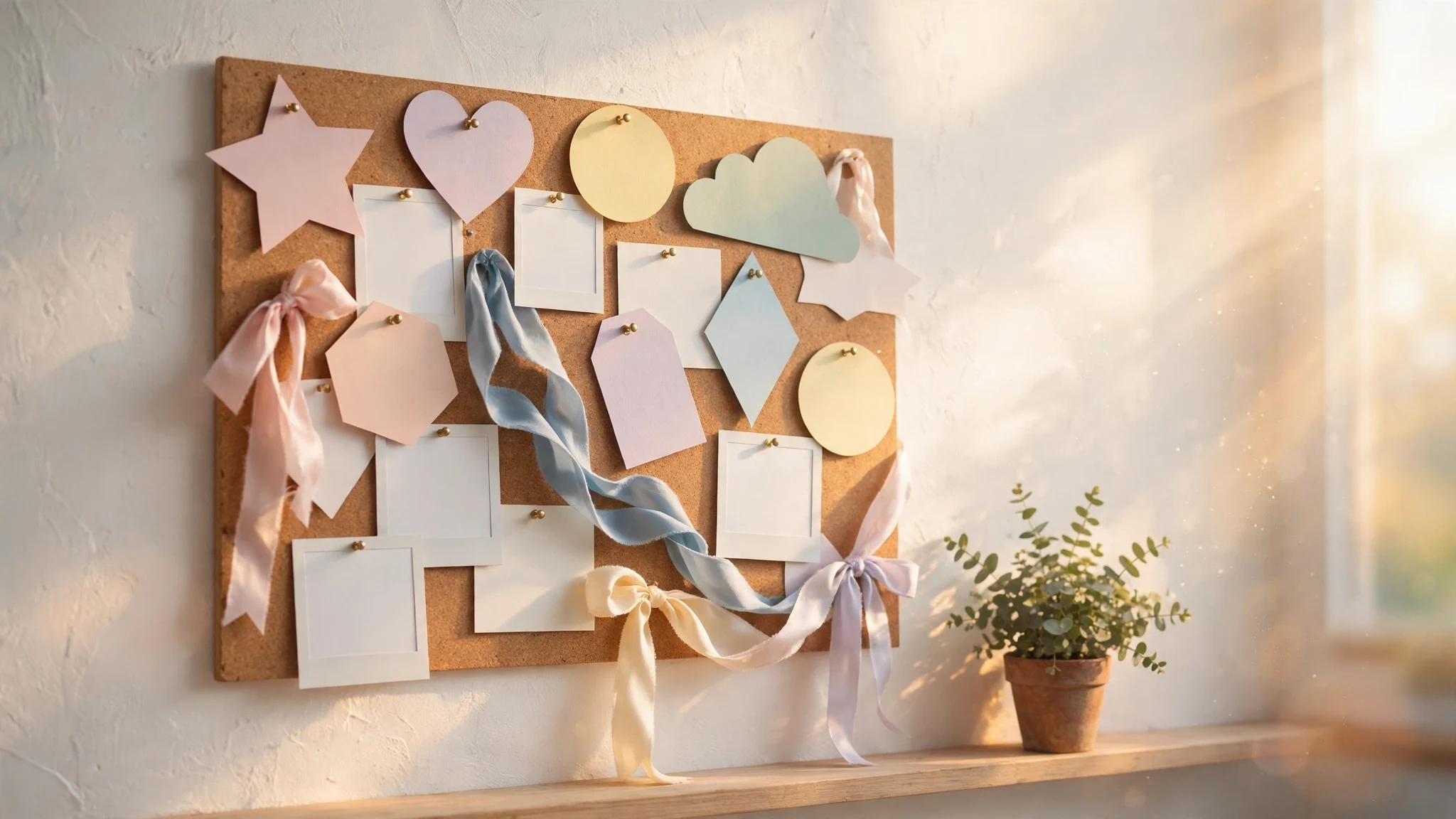
Vision Board Manifestation: The Method, Step by Step
Vision board manifestation is the method of using a board covered with images, words, and symbols to focus on a goal every day, so that the goal stays in front of you and shapes the choices you make. A vision board itself is a simple object, a corkboard, a poster board, or a digital screen, filled with pictures of the life you want, a home, a job, a trip, a healthier body, a calmer mind, and words that name what matters to you. The manifestation part is the practice around the board, looking at it daily, picturing yourself living the images, feeling the emotions of that life, and then acting on the opportunities that fit it. This page is about that method, how to build a board that actually works, how to use it day by day, and where people go wrong. It does not repeat a general definition of vision boards at length, because the method is the point here. The idea reached a wide audience through the 2006 film The Secret, by Rhonda Byrne, in which the teacher John Assaraf described living in the exact home he had once placed on his vision board years earlier, a story that made the practice famous. The method itself is older than that film, and it rests on a simple claim, that what you look at daily shapes what you notice, what you want, and what you do.
Before You Build: Choosing One Clear Goal
The most common mistake in vision board manifestation is starting with too many goals. A board that tries to cover a new career, a new home, a new relationship, a marathon, and a business all at once ends up saying nothing clearly, and the person looking at it feels scattered rather than focused. The method works better when it starts with one clear goal, or at most two or three closely related ones. Ask yourself three questions before you touch a magazine. What do I actually want, in plain words? What would change in my daily life if I had it? How would I feel living that life? Write the answers down in a sentence each. A vague goal such as more money becomes a clear one such as saving enough for a deposit on a small flat within two years. A vague goal such as better health becomes a clear one such as walking thirty minutes each morning and cooking at home five nights a week. The clearer the goal, the easier it is to choose images that mean something, and the easier it is to know whether the board is working. If you cannot state the goal in one sentence, spend more time on this step, because everything after it depends on it.
Gathering Images and Words That Mean Something
Once the goal is clear, the next step is gathering images and words, and the rule here is to choose pictures that stir a feeling, not just pictures that look nice. Flip through magazines, search for printed images, or browse photos online, and set aside anything that makes you pause, even if you cannot explain why. A photograph of a kitchen may matter because it shows the morning light you want, not because the kitchen is expensive. A single word, such as steady, free, or home, may matter more than a whole paragraph. Practitioners recommend including three kinds of images. First, images of the outcome itself, the home, the job, the trip, or the state of health. Second, images of the actions that lead there, a person running at dawn, a desk with a notebook, a hand holding a key. Third, images of the feeling, a calm sea, a laughing family, a quiet room, because the feeling is what the daily practice works with. Avoid images that make you feel small, envious, or inadequate. A board should lift you when you look at it, not remind you of what you lack. If a glossy image of a mansion makes you feel poor, it does not belong on your board, whatever it shows.
Arranging the Board: Layout That Guides the Eye
Arranging the board is a creative step, and it deserves unhurried time. Lay the images out on the board before you attach anything, and move them around until the arrangement feels right. Many people group images by theme, with one area for home, one for work, and one for health, while others place the single most important image in the center and build outward from it. Both approaches work. What matters is that the eye can travel across the board and find the key images quickly, because you will look at it daily, often for only a minute or two, and a cluttered board that needs studying will not be used. Leave some empty space. A board packed edge to edge feels noisy, while a board with room to breathe feels calm and clear. Add a short written statement of your goal, in the present tense, such as I live in a bright, quiet flat near the park, and place it where you will read it. Then attach everything, with glue, pins, or tape, and step back. If the board makes you smile and feel steadier when you look at it, the arrangement is right. If it makes you feel overwhelmed, remove a third of the images and try again.
The Daily Practice: Looking, Feeling, and Acting
A vision board works, in the terms of the practice, through daily use, not through being built and forgotten. The daily practice has three parts, and it takes only a few minutes. First, look at the board, slowly, and let your eyes rest on each image. Second, picture yourself living the images, in detail, walking through the home, doing the work, feeling the morning light, hearing the sounds of that life. The Secret describes this as the heart of the method, and its three step process is Ask, Believe, Receive, which means define what you want clearly, believe it is already yours, and stay open to it arriving. Third, feel the emotions of that life, relief, pride, calm, joy, and hold them for a minute, because the practice holds that feeling is what gives the images their force. Then comes the part most guides skip, act. A vision board is a reminder, not a replacement for action. If the board shows a new job, the action is updating your resume that week. If it shows a fitter body, the action is the walk that morning. The board keeps the goal visible, and the action moves you toward it. Without the action, the board is decoration.
Physical Boards, Digital Boards, and Single Goal Boards
Vision boards come in several forms, and the best one is the one you will actually look at. A physical board, made from a corkboard or poster board with cut out images, has the advantage of being present in a room, where you see it without trying, and of being made by hand, which many people find grounding. Its disadvantage is that it is fixed in one place, and it can fade or get cluttered over time. A digital board, made on a phone or computer, has the advantage of being portable and easy to update, and it can serve as a phone wallpaper or a desktop background, so you see it many times a day. Its disadvantage is that it competes with every other screen, and it is easy to stop noticing it. A single goal board focuses on one aim, such as a home or a career change, and is often the most effective form for a beginner, because it is clear and uncluttered. A yearly board covers a whole year and several goals, and suits people who already know the practice. Whichever form you choose, place it where you will see it daily, a bedroom wall, a desk, or a phone screen, and update it when a goal changes or is reached, because a stale board is a board that has stopped speaking.
An Illustrative Example: Grace and the Flat by the Park
This example is illustrative, not a real person's story. Grace, a 33 year old nurse from Seattle, wanted to move out of a noisy shared house into a small flat of her own near a park. She had saved a little money, but the goal felt far away, and she kept putting off the search. She built a single goal board on a corkboard above her desk, with a photograph of a bright living room, a picture of a park in autumn, the words quiet mornings, and a short statement in the present tense, I live in a bright, quiet flat near the park. Each morning she looked at the board for two minutes, pictured herself making coffee in that kitchen, and felt the calm she wanted. Then she acted. She set up alerts for flats in the area she wanted, saved a fixed amount each week, and viewed three flats in a month, turning down two that were too noisy. On her fourth viewing, she found a small flat two streets from a park, within her budget, and she took it. Grace does not claim the board found the flat. What she says is that the board kept the goal in front of her every morning, so that when the right flat appeared, she recognized it at once and acted without hesitating, instead of letting another month pass.
Mistakes That Make a Vision Board Fail
Vision boards fail for predictable reasons, and knowing them helps you avoid them. The first is too many goals, which scatters attention and leaves the board saying nothing clearly. The second is vague images, pictures that look pleasant but do not connect to a specific goal, so the daily practice has nothing to hold on to. The third is hiding the board, in a cupboard or a drawer, where it is never seen, which defeats the whole method. The fourth is building the board and then doing nothing, treating it as a wish rather than a focus for action, and then blaming the board when nothing changes. The fifth is never updating it, so that it shows goals you no longer want, or goals you have already reached, and becomes invisible through familiarity. The sixth is copying someone else's board, with images that mean something to them and nothing to you. The fix for each mistake is simple, one clear goal, images that stir a real feeling, a board placed where you see it daily, a small action each week, and a review every few months. A vision board is a tool, and like any tool it works when it is used well and fails when it is not.
Boards work best when the idea behind them is clear, so start with the spiritual awakening signs hub for the wider context and then read what is manifestation to see what the word actually covers. With words, scripting manifestation turns a goal into written detail, the 369 manifestation method gives that detail a daily rhythm, and how to journal your daily tarot card shows how a card can sharpen the focus each morning. A short sit with meditation for beginners before you work on the board keeps the images honest and the goal in view.
If you want to talk about a goal you are working toward, or explore your direction with a reader, a short conversation can help you think it through. First 3 minutes FREE — every time, for every reading, with all advisors.
For a simple next step, try a One-Card Tarot reading and reflect on what the card brings up for you about the goal on your board and the next small step toward it.
Frequently Asked Questions
What is vision board manifestation?
Vision board manifestation is the method of using a board of images, words, and symbols to focus on a goal daily. You look at the board, picture yourself living the images, feel the emotions of that life, and then act on the opportunities that fit it.
How do you use a vision board to manifest?
Choose one clear goal, gather images that stir a real feeling, arrange them on a board you will see daily, and spend a few minutes each day looking, picturing the life in detail, and feeling it as real. Then take a small practical action toward the goal each week, because the board is a focus for action, not a replacement for it.
Does a vision board really work?
There is no scientific proof that a board alone causes outcomes. What the practice is said to do is keep a goal visible, so you notice opportunities, stay motivated, and act more consistently. The stories linked to it, such as the one in the 2006 film The Secret, are personal accounts, not controlled evidence.
Should a vision board be physical or digital?
Either can work, and the best choice is the one you will actually look at daily. A physical board is present in a room and made by hand, while a digital board is portable and easy to update. A single goal board is often the most effective form for a beginner.
How often should I look at my vision board?
Daily, even for only a few minutes, is the usual advice. Look at it slowly, picture the life in detail, and feel the emotions of it. Review the board every few months, remove goals that no longer fit, add new ones, and replace images that have become invisible through familiarity.
Last updated: November 12, 2026
