
Hierophant and Justice Tarot Combination
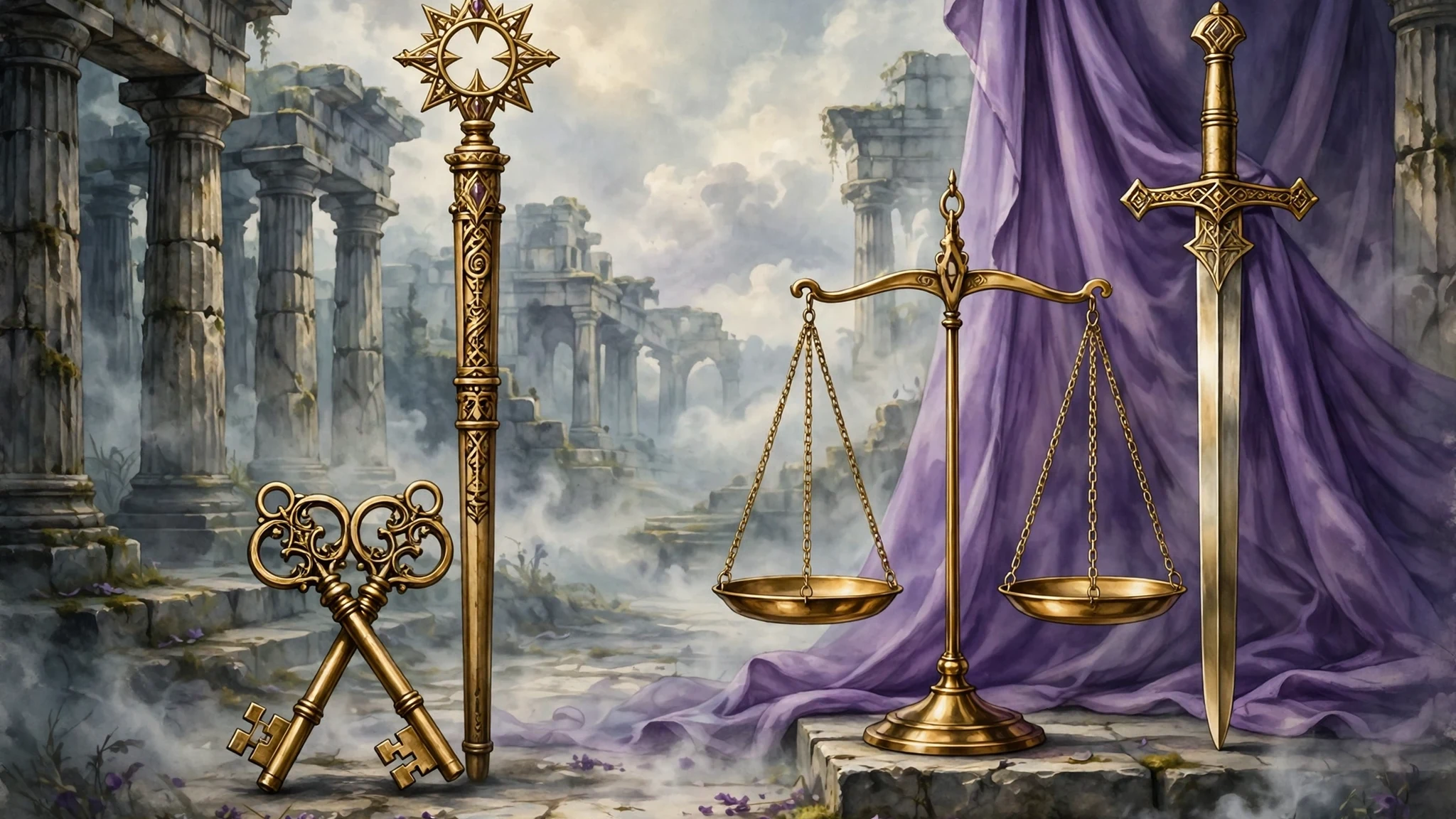
Rules, Vows, and Fair Outcomes: The Hierophant and Justice Tarot Combination
The hierophant and justice tarot combination is the pair of the formal agreement. The Hierophant brings the institution, the ceremony, and the recognized form: the marriage license, the signed contract, the oath, the official process. Justice brings the balance, the weighing of evidence, and the outcome that matches the facts. Together they say that a formal step is coming, and that its result will be fair if the process is followed honestly. This pair shows up around weddings, divorces, contracts, court matters, admissions, and any decision made by a body that keeps records. It also shows up for personal vows, the private promise you make and keep because your word matters. The message is not mysterious. It is procedural: read the document, follow the process, tell the truth, and let the outcome be what it is. When this pair appears, the smartest move is usually the least dramatic one. Gather the paperwork, check the dates, and do the honest thing, even when no one is watching. Fairness in this pair is not luck. It is the result of a process done properly.
How Institution and Fairness Work as One
The Hierophant without Justice can become empty ritual, a ceremony with no substance behind it. Justice without the Hierophant can become abstract fairness, a principle with no procedure to deliver it. Combined, they give you both the form and the substance. A wedding is the clearest example: the Hierophant supplies the vows, the witnesses, and the license, while Justice supplies the equality inside the marriage, the shared decisions, and the honest division of responsibility. A court case works the same way: the Hierophant supplies the court, the filing, and the hearing, while Justice supplies the weighing of evidence and the verdict. In a reading, the order adds a shade of meaning. The Hierophant first often means the institution came first and the fair outcome follows from it, as when a signed agreement protects both sides. Justice first often means the question of fairness came first and the formal step is the way to settle it, as when a couple writes a clear agreement after a period of imbalance. Either way, the pair asks you to respect the process. Shortcuts around a formal process rarely produce a fair result, and they often produce a second problem later. For single card background, see The Hierophant tarot card meaning and Justice tarot card meaning.
Love: Commitment, Vows, and Equal Partnership
In love, this pair is one of the clearest marriage signals in tarot, but it is a particular kind of marriage signal. It is not about passion or romance. It is about a partnership that is formal, equal, and built on shared agreements. An engagement, a wedding, a civil partnership, or a decision to write down how money, chores, and family time will be shared all fit. For a couple already married, the pair can point to a renegotiation: a fairer division of labor, a shared account with clear rules, or a vow renewed after a hard year. The work is to make the invisible visible. Many couples run on unspoken agreements that one person remembers differently from the other, and the pair asks you to write them down and agree them together. For a single person, the combination suggests a partner who values commitment and fairness, often someone who takes vows seriously and expects the same. It also warns against a relationship where the forms exist but the fairness does not: a marriage where one person makes all the decisions, or a partnership where the paperwork favors one side. The remedy is not to abandon the form. It is to fix the balance inside it, with a conversation, a written agreement, or outside help if needed. A fair commitment is worth more than a romantic one that collapses under its own imbalance.
Contracts, Court, and Formal Decisions
Outside love, the hierophant and justice tarot combination is the pair to take seriously whenever paper is involved. Signing a lease, an employment contract, a business partnership, a loan, or a settlement all sit in its territory. The advice is plain and practical. Read every clause, especially the ones about ending the agreement, and ask what happens if things go wrong. Get a second pair of eyes on any document that commits you for more than a year or for a large sum. Keep copies of everything, and note the dates that matter: renewal dates, notice periods, and deadlines. If a legal matter is already running, this pair suggests the process will work as it should, provided you cooperate with it honestly. That does not mean every outcome will be the one you want. It means the outcome will track the facts and the paperwork, not favoritism or luck. For money, the pair favors documented agreements over handshakes: a loan to a family member with a written repayment plan, a freelance rate in an email before the work starts, a shared purchase with both names recorded. These habits feel formal and slightly awkward, and they prevent most of the disputes that destroy relationships. Readers planning a formal step can use the tarot spreads guide to lay out the decision clearly before they sign.
The Personal Vow: Keeping Your Word to Yourself
There is a quieter side to this pair, and it matters as much as the legal one. The Hierophant is the card of vows, and Justice is the card of balance and accountability. Together they ask about the promises you have made to yourself. A promise to stop a habit, to finish a course, to tell the truth in a hard conversation, or to treat your own time as valuable. These vows have no witnesses and no paperwork, which makes them easy to break and costly to break. The pair suggests a small ritual to make them real: write the vow in one sentence, sign it, date it, and put it where you will see it each morning. Then track it daily with a single mark. The ritual is the Hierophant's contribution. The daily honest accounting is Justice's. Over weeks, the marks add up into evidence, and the evidence becomes self respect. This is not about perfection. A broken day is not a broken vow if you return the next day and mark it honestly. What matters is the pattern, not any single day. The pair also asks you to check whether your vows are fair to yourself. A vow that demands sixteen hour days and no rest is not a vow. It is a punishment. Justice would not sign it. Make the vow one you can keep, then keep it.
An Illustrative Example: The Agreement That Saved a Friendship
This example is illustrative, not a real person's story.
Picture two friends, Maya and Jon, who decide to start a small catering business together. They trust each other completely, so they skip the paperwork. They agree verbally to split everything evenly, and for a year it works. Then the business grows. Maya works weekends. Jon handles the accounts. Maya feels she does more. Jon feels his bookkeeping is invisible. The resentment builds quietly until a catering job goes wrong and they argue about whose fault it was. In a reading about the business, Maya pulls the Hierophant and Justice. The Hierophant names the missing piece: a formal agreement, a partnership document, a written division of roles. Justice names the real issue: the split was never actually equal, and both of them know it. They sit down with an accountant, write a partnership agreement that names each person's duties, hours, and pay, and agree to review it every six months. The business does not become easy, but it becomes fair, and the friendship survives because the fairness is now written down instead of guessed at. The cards did not punish anyone. They showed two people that trust without a form is fragile, and that a fair agreement is a kindness, not a sign of suspicion.
When the Pair Points to an Unfair System
Sometimes this pair arrives when the system itself is the problem. A workplace policy that treats people unequally, a family rule that favors one child, a religious community that applies its standards selectively, or a contract that was fair when signed and unfair now. In those cases, obedience is not what the pair is asking of you. It is showing you the structure and the imbalance together, so you can decide what to do about them. Three questions help. First, what does the rule actually say, in writing, as opposed to how it is applied. Second, who benefits from the gap between the rule and its application. Third, what formal route exists to challenge it: an appeal, a grievance process, a mediation, a renegotiation. The Hierophant knows the routes. Justice knows the standard. Use the route, and document everything as you go. If no formal route exists, the pair may be pointing to an exit: leaving the group, the job, or the agreement, and doing it cleanly, with notice and records, so the ending is as fair as the beginning was not. A fair ending matters. It protects your reputation and your peace, and it leaves the door open for a better arrangement later.
Reading This Pair by Position
The slot the pair falls in fixes the timing of its message. In the past, it often points to a marriage, a contract, a court matter, or a vow that still shapes your life, and the lesson is to honor what was agreed or to repair what was not. In the present, it means a formal step is due now: sign, file, register, or make the vow explicit. In the future, it points to a formal decision coming, so prepare the paperwork and the facts before the date arrives. As advice, the pair says to follow the process and tell the truth. As an obstacle, it can mean a rigid rule, an unfair agreement, or a refusal to commit. As an outcome, it suggests a decision that is formal and fair, a verdict, a signed agreement, or a commitment that both sides can live with. A third card names the field: Cups for a marriage or a family agreement, Pentacles for a contract or a financial settlement, Swords for a legal matter or a written decision, Wands for a business partnership or a creative agreement. How a pair's message shifts from past to future is covered in how to read tarot cards. Note the date when this pair appears. Formal matters have deadlines, and the pair is often an early warning to meet one. The combinations index holds the rest of the pair guides.
Formal steps feel heavier when you carry them alone. If a contract, a commitment, or a legal question is weighing on you, a live reader can help you think it through calmly. First 3 minutes FREE — every time, for every reading, with all advisors.
For a simple next step, try a One-Card Tarot reading and reflect on the one agreement in your life that deserves to be written down clearly.
Frequently Asked Questions
What does the hierophant and justice tarot combination mean?
It means a formal agreement with a fair outcome. The Hierophant supplies the institution, ceremony, or process, while Justice supplies the weighing of facts and the balanced result. It shows up around marriages, contracts, court matters, and personal vows, and it advises following the process honestly.
Does this combination mean marriage?
It can, but it points to a particular kind of marriage: formal, equal, and built on shared agreements rather than passion alone. It also covers engagements, civil partnerships, and renegotiations inside a marriage, such as a fairer division of money, chores, and family time.
What does this pair mean for legal matters?
It suggests the process will work as it should if you cooperate honestly, and that the outcome will track the facts and the paperwork. Read every clause, get a second pair of eyes on long or costly documents, keep copies of everything, and note renewal dates and deadlines.
Can this combination describe a personal vow?
Yes. It also asks about promises made to yourself, such as finishing a course or keeping a habit. Make the vow concrete by writing it in one sentence, signing and dating it, and tracking it daily. A broken day is not a broken vow if you return the next day and mark it honestly.
What if the system this pair shows is unfair?
Then the pair is showing you both the structure and the imbalance. Check what the rule actually says in writing, who benefits from the gap, and what formal route exists to challenge it, such as an appeal, a grievance process, or mediation. If no route exists, a clean, documented exit may be the fair ending.
Last updated: November 12, 2026
