
Tarot Reading vs Psychic Reading | PsychicSmile
Tarot Reading vs Psychic Reading: The Short Answer
A tarot reading vs psychic reading comparison comes down to one simple difference: a tarot reading works through a deck of cards, while a psychic reading works through the direct impressions of the reader, without a fixed tool in between. In a tarot session, the reader shuffles and lays out cards, and each card carries a picture, a set of traditional meanings, and a position in the spread that shapes how it is read. In a psychic session, the reader describes what they sense about your situation, often as images, feelings, or impressions that arrive without a card to point at. Both formats can address love, work, timing, and personal decisions. Both depend heavily on the skill of the reader and the clarity of your question. Neither one is a better service in general, and the right choice depends on what kind of session you want: a structured conversation built around visible symbols, or an open conversation built around impressions. If you like seeing the cards on the table and following how each one connects to your question, tarot will probably feel more comfortable. If you prefer a free flowing conversation where the reader follows whatever comes up, a psychic reading will probably suit you better. This page walks through what each service offers, how the two sessions feel different in practice, and how to choose between them for a specific question.
What a Tarot Reading Offers
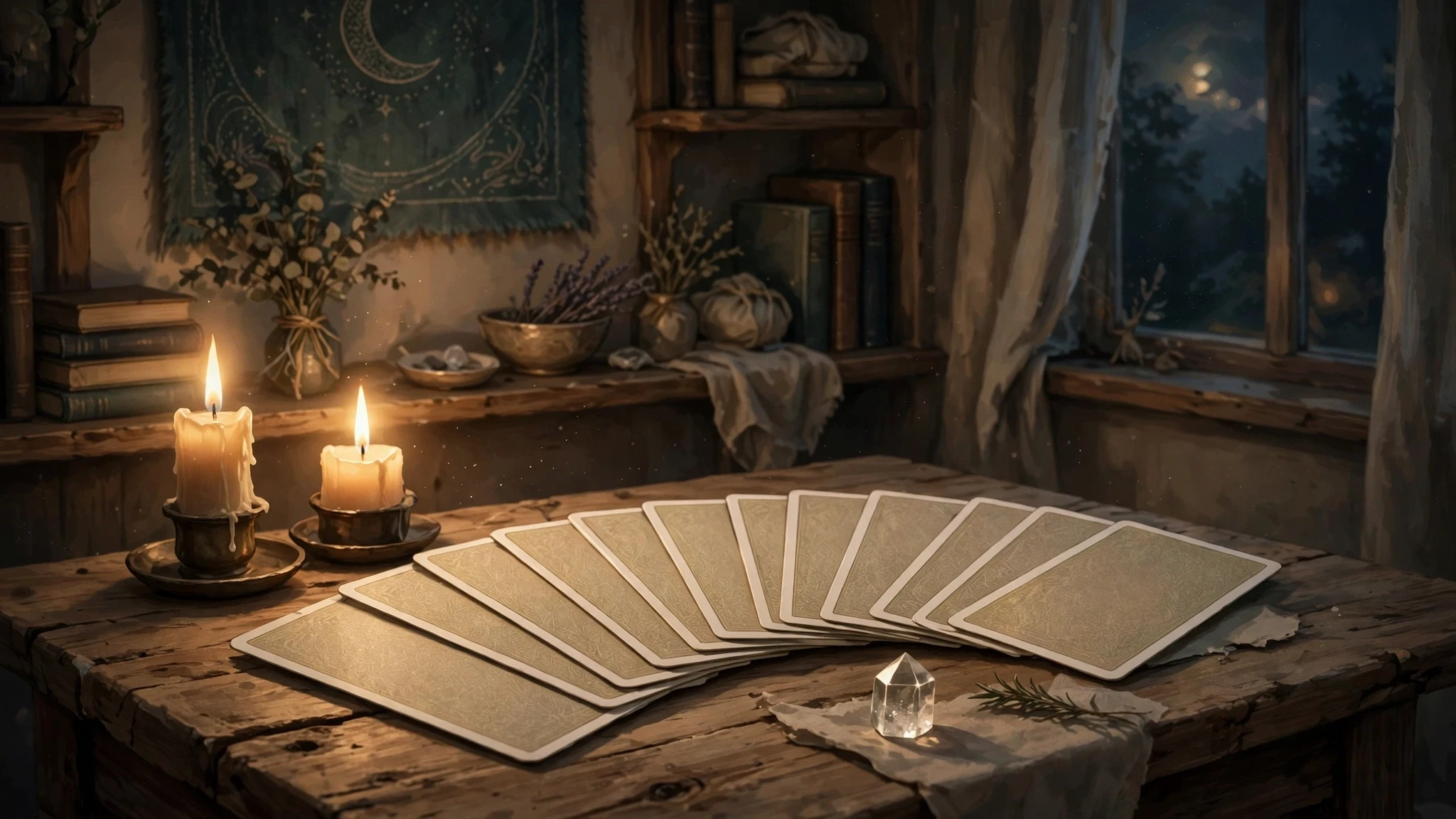
A tarot reading offers structure. The deck most readers use has 78 cards: 22 Major Arcana cards, which cover large life themes such as beginnings, change, and endings, and 56 Minor Arcana cards, which cover day to day experience through four suits. The suits are Cups, Wands, Swords, and Pentacles, and each suit carries 14 cards. A reader draws a set number of cards into positions, called a spread, and each position has a job, such as the present situation, the challenge, or the likely next step. That structure gives you something visible to follow. You can see the cards, hear why each one matters in its position, and ask about a card that catches your eye. The cards also give the reading a shared language. When a reader mentions the Tower or the Ten of Cups, you can look at the image and the position together, and the meaning becomes a conversation rather than a statement handed down from nowhere. Tarot works well for questions with several moving parts, because a spread can hold a past, present, and future position at the same time, or a you, them, and the connection position for a relationship question. It also works well when you want to explore options side by side, since different positions can hold different paths. The how tarot cards are read explains the basic mechanics of a spread in more detail, and the tarot reading online covers how the same format works when the cards are drawn on screen rather than on a physical table.
What a Psychic Reading Offers
A psychic reading offers flexibility. Without a deck to lay out, the reader can follow your question wherever it leads, move between topics without resetting a spread, and spend more time on the part of the situation that turns out to matter most. That freedom suits questions that are hard to frame in advance, or situations where you are not sure what the real question is yet. A psychic reader may describe impressions about a person, a place, a feeling, or a pattern, and then connect those impressions to the choices in front of you. Some readers work with specific abilities, such as clairvoyance, clairsentience, or clairaudience, which are different ways of sensing information, and the what a psychic reading is gives a plain introduction to the format and what it can cover. Because there is no visible tool, a psychic session can feel more personal and more direct, like a conversation with someone who is tuned in to your situation. It can also feel less anchored, because there is no card on the table to return to if the conversation drifts. That is why the quality of a psychic reading depends so much on the reader and on your own clarity. A clear question and a willingness to say when something does not fit will keep the session on track. If you are deciding between a psychic and a medium, rather than between a psychic and a tarot reader, the psychic or medium lays out that separate comparison, since mediums focus on contact with people who have died, while psychics focus on living situations and guidance.
How the Two Sessions Feel Different in Practice
The practical difference shows up in the first few minutes. A tarot session usually starts with the reader asking your question, shuffling, and laying out the spread, and the first minutes are spent describing the cards in front of you. You will hear the names of cards, the meaning of each position, and how the cards relate to each other. A psychic session usually starts with the reader asking your question and then speaking about what they sense, and the first minutes are spent building a picture of the situation from impressions. In a tarot session, you can point at a card and ask what it means in that position. In a psychic session, you are more likely to ask the reader to say more about a feeling or an image they just described. Tarot sessions tend to move at a steadier pace, because the spread sets the order of topics. Psychic sessions tend to move in a looser order, following whatever impression feels strongest. Both formats allow questions during the session, and both work better when you speak up. If a tarot card puzzles you, ask about it. If a psychic impression does not match your experience, say so plainly, so the reader can adjust. A good reader in either format will welcome that feedback, because it helps them focus on the parts of the situation that are real for you. Session length also feels different. A three card tarot spread can fill a short session neatly, while a psychic reading may take a little more time to build a full picture, since there is no spread to structure the first minutes.
Which One Fits Your Question
Choosing between the two starts with the shape of your question, not with the reputation of either service. Tarot fits well when your question has a clear structure: a choice between two paths, a relationship with several people involved, or a situation where past, present, and future all matter. The spread gives each part of the question a place, and the cards give you a way to compare the parts. Psychic reading fits well when your question is open ended or emotional: a sense that something is changing but you cannot name it, a worry about a person that has no clear cause, or a need to talk through a situation that has many small details and no single decision point. Tarot also fits well if you are a visual person who likes to see the symbols and follow the logic of a spread. A psychic reading fits well if you prefer conversation and you are comfortable with a session that moves by feel rather than by layout. Some questions suit either format, and in that case the reader matters more than the tool. A skilled tarot reader and a skilled psychic reader can both help you think through the same love or career question, and the difference will be in how the session feels rather than in what it can cover. If you are still unsure, the questions to bring can help you shape your question first, and a clear question will make either format work better.
Can You Combine Tarot and Psychic Insight in One Session
Many readers combine the two approaches in a single session, and that combination is common enough that you should know how it works before you book. A reader may start with a tarot spread to map the situation, then set the cards aside and speak from impressions about the parts of the spread that need more depth. Or a reader may start with impressions and then draw one or two cards to clarify a point that came up in conversation. In either order, the cards act as a map and the impressions act as detail on the map. The combination can work well when a spread raises a question that the cards alone cannot answer, such as the feeling behind the actions of a person, or when an impression needs a card to give it a concrete anchor. It can also work badly if the session jumps between tools without a clear reason, so pay attention to how the reader moves between them. A reader who explains the shift, such as drawing a card to check a specific impression, is using the combination with purpose. A reader who shuffles and draws cards at random while also speaking in impressions may be filling time rather than adding clarity. When you book a combined session, ask the reader how they work, so you know what to expect. If you want a pure tarot session or a pure psychic session, say so at the start, and a professional reader will respect that choice. The prepare for your reading page has practical steps for setting expectations before any session, whichever format you choose.
How to Choose a Reader for Either Service
Choosing a reader matters more than choosing a format, and the same checks apply to both. Start with the reader profile: look for a clear description of how they work, which tools they use, and which topics they cover, rather than vague claims about power or accuracy. A tarot reader should be able to explain their spreads in plain language, and a psychic reader should be able to explain how they receive impressions and how a session usually runs. Next, look at reviews from real clients, and read them for detail rather than for star counts alone. A review that describes a specific session, a specific question, and a useful outcome tells you more than a dozen short reviews with no detail. Then consider a short first session before a long one. A brief session lets you feel how the reader works, whether their style suits you, and whether their answers connect with your situation, without a large commitment of time or money. During the session, notice whether the reader asks clear questions, listens to your answers, and adjusts when something does not fit. Notice whether they respect boundaries around medical, legal, and financial decisions, and whether they avoid pressure or fear based claims. Those signs matter in both formats, and they matter more than any claim about a single tool. A reader who is honest about the limits of a reading, in tarot or in psychic work, is usually a safer choice than a reader who promises certainty.
A tarot reading and a psychic reading are two different ways of holding the same kind of conversation, one through cards and one through impressions, and either one can help when the question is clear and the reader is skilled. Pick the format that matches how you like to think, bring a question you can act on, and judge the session by whether it leaves you clearer about your next step. If you want a gentle way to try the card format first, PsychicSmile makes the first step easy for every new session. First 3 minutes FREE — every time, for every reading, with all advisors.
For a simple next step, try a One-Card Tarot reading and see how a single card frames the question you plan to bring to a full tarot or psychic session.
Frequently Asked Questions
Is a tarot reading the same as a psychic reading?
No, they are different formats. A tarot reading uses a deck of 78 cards laid out in a spread, while a psychic reading relies on the direct impressions of the reader without a fixed tool. Both can address similar topics, but the session feels and works differently.
Which is more accurate, tarot or psychic reading?
Neither format is more accurate in general. Accuracy depends on the skill of the reader, the clarity of your question, and how openly you share feedback during the session. Choose the format that fits your question and your preferred style.
Can a psychic reader also read tarot cards?
Yes, many readers work with both. Some readers use tarot as their main tool and add impressions, while others work mainly from impressions and draw cards to clarify a point. Ask the reader how they work before you book so you know what to expect.
Do I need to choose between tarot and psychic reading before I book?
It helps to have a preference, because the reader can prepare the right format, but you can also ask the reader which format they would suggest for your question. A short first session is a good way to try one format before you commit to a longer one.
What should I ask in a tarot reading compared with a psychic reading?
In a tarot reading, ask questions with a clear structure, such as a choice between paths or the parts of a relationship. In a psychic reading, open ended questions work well, such as what is happening in a situation and what would help it improve. Clear, open questions help in both formats.
Last updated: November 12, 2026
